For shoppers comparing Black Friday hearing aids, my best overall pick is the ELEHEAR Beyond for its AI speech enhancement, while the Audien Atom X stands out for its touchscreen charging case and the Rechargeable OTC RIC model with 6 Listening Modes for people who want more ways to adjust listening. The main tradeoffs are discreet fit versus easier handling, simple controls versus customization, and extra connectivity features versus a simpler device. These are over-the-counter options, so fit, return terms, and whether your hearing needs suit OTC devices matter as much as the feature list. I compare all 15 picks by design, controls, charging, and listening features to help match a device to your priorities. Continue reading for the full breakdown and a practical guide to choosing.

Get health and wellness essentials delivered free with Prime
- Fast, free delivery on millions of items
- Prime Video, Amazon Music and more included
- Member-only deals all year
Complete the kit


Key Takeaways
- ELEHEAR Beyond is the clearest feature-led overall choice in this group because it pairs rechargeable OTC design with AI speech enhancement; shoppers who want fewer controls may prefer a simpler model.
- Audien Atom X differentiates itself with a touchscreen charging case, while Atom One offers a more stripped-back alternative for buyers who do not need that interface.
- Several picks emphasize portability through rechargeable cases, but a case is only useful if its size, charging method, and daily routine fit how you plan to use the aids.
- The lineup spans discreet in-ear options and more visible ear-hook or RIC designs, so comfort, dexterity, and ease of placing the device may matter more than appearance alone.
- Bluetooth, multiple listening modes, and adaptive noise processing appear across different models, but added features can bring more setup and control decisions; choose them only when they address a real listening situation.
| METIKO Rechargeable OTC Hearing Aids with Noise Reduction, Cream |  | Best Compact Pick | Style: In-ear | Material: Medical-grade silicone | Controls: Single button; three volume levels | VIEW LATEST PRICE | See Our Full Breakdown |
| Oction GM-321T Rechargeable Hearing Aids with Charging Case |  | Best for Long Time Between Charges | Fit: Behind-the-ear | Intended hearing loss: Mild to moderate | DSP channels: 32 | VIEW LATEST PRICE | See Our Full Breakdown |
| Rechargeable Bluetooth Hearing Aids with Ear Hooks |  | Best for Bluetooth Features | Model: F-aid8 | Type: In-ear hearing amplifiers with Bluetooth | Volume levels: 5 | VIEW LATEST PRICE | See Our Full Breakdown |
| Audien Atom One OTC Hearing Aids |  | Best for Manual Fine-Tuning | Fit type: In-ear | Intended users: Adults with mild to moderate hearing loss | Battery life: Up to 24 hours per charge | VIEW LATEST PRICE | See Our Full Breakdown |
| Rechargeable Digital Hearing Aids with Noise Reduction, Two Listening Modes, and Charging Case | 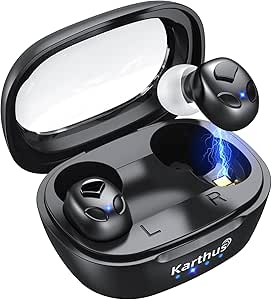 | Best Simple Behind-the-Ear Option | Type: Behind-the-ear hearing aids | Processing: 16-channel digital DSP | Listening modes: Quiet Mode and Noise Mode | VIEW LATEST PRICE | See Our Full Breakdown |
| Audien Atom X OTC Hearing Aids with Touchscreen Charging Case |  | Best for App-Free Adjustments | Type: Over-the-counter hearing aids | Fit: In-ear | Listening modes: Conversation, Crowd, TV, Comfort | VIEW LATEST PRICE | See Our Full Breakdown |
| BIBIED Rechargeable In-Ear Hearing Aids with Noise Cancellation |  | Best for Long Per-Charge Runtime | Fit: In-ear | Weight: 2 g | Dimensions: 0.8 × 0.5 in | VIEW LATEST PRICE | See Our Full Breakdown |
| Oricle Rechargeable In-Ear Hearing Aids with Noise Reduction and Portable Charging Case |  | Best for Extended Stated Runtime | Model: Standard 3.0 Hearing Aids, HA-JHA490-3.0 | Fit: In-ear | Material: Silicone | VIEW LATEST PRICE | See Our Full Breakdown |
| Oction Rechargeable Touchscreen Hearing Aids with Bluetooth |  | Best for Bluetooth Streaming | Fit: Behind-the-ear | Connectivity: Bluetooth 5.4 | Digital chip: 16-channel | VIEW LATEST PRICE | See Our Full Breakdown |
| NOLGESK Rechargeable OTC Hearing Aids for Seniors |  | Best for Simple, Bluetooth-Free Use | Model: GM-901T | Fit: In-ear | Recommended hearing loss: Mild to moderate | VIEW LATEST PRICE | See Our Full Breakdown |
| Qnmittry Rechargeable Hearing Aids with Adaptive Noise Cancellation and Charging Case, Blue and Red |  | Best for Simple, Long-Running Wear | Model: JH-A260 | Fit: In-ear | Controls: Button control; 5 volume levels | VIEW LATEST PRICE | See Our Full Breakdown |
| Auiioes OTC Rechargeable Hearing Aids with Bluetooth 5.3, Noise Reduction, and 8-Level Volume Control |  | Best for Bluetooth and Adjustable Listening | Model: ZR-H718A | Fit: In-ear | Connectivity: Bluetooth 5.3 | VIEW LATEST PRICE | See Our Full Breakdown |
| Rechargeable OTC RIC Hearing Aids with 6 Listening Modes |  | Best for Hands-On Control and Listening Modes | Design: Receiver-in-canal, behind-the-ear | Digital sound processing: 48 channels | Maximum gain: Up to 48 dB | VIEW LATEST PRICE | See Our Full Breakdown |
| Rechargeable OTC Hearing Aids with Noise Cancellation | 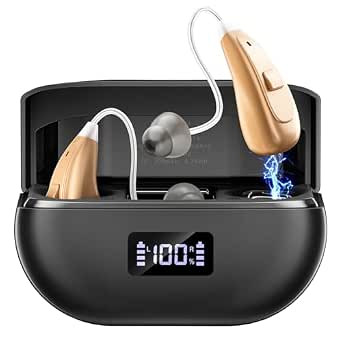 | Best for Straightforward In-Ear Use | Type: OTC rechargeable hearing aids | Fit: In-ear | Audio processing: 16-channel | VIEW LATEST PRICE | See Our Full Breakdown |
| ELEHEAR Beyond OTC Rechargeable Hearing Aids with AI Speech Enhancement |  | Best for App-Based Speech Customization | Technology: VocClear AI | Design: Receiver-in-the-canal | Maximum gain: Up to 50 dB | VIEW LATEST PRICE | See Our Full Breakdown |
| black friday hearing aid | Fit |
|---|---|
| METIKO Rechargeable OTC Hearin | — |
| Oction GM-321T Rechargeable He | Behind-the-ear |
| Rechargeable Bluetooth Hearing | Flexible ear hooks; three ear-tip sizes |
| Audien Atom One OTC Hearing Ai | — |
| Rechargeable Digital Hearing A | — |
| Audien Atom X OTC Hearing Aids | In-ear |
| BIBIED Rechargeable In-Ear Hea | In-ear |
| Oricle Rechargeable In-Ear Hea | In-ear |
| Oction Rechargeable Touchscree | Behind-the-ear |
| NOLGESK Rechargeable OTC Heari | In-ear |
| Qnmittry Rechargeable Hearing | In-ear |
| Auiioes OTC Rechargeable Heari | In-ear |
| Rechargeable OTC RIC Hearing A | — |
| Rechargeable OTC Hearing Aids | In-ear |
| ELEHEAR Beyond OTC Rechargeabl | — |
More Details on Our Top Picks
METIKO Rechargeable OTC Hearing Aids with Noise Reduction, Cream
For a buyer focused on a small, simple in-ear option during Black Friday shopping, the METIKO makes more sense than the more feature-heavy TTQ F-aid8. Its compact shape, medical-grade silicone, and one-button control keep day-to-day handling straightforward, while the noise-reduction chip is intended to help speech stand out. The tradeoff is limited adjustment: METIKO specifies only three volume levels, whereas the TTQ offers five levels and three noise modes, along with Bluetooth. Battery life is up to 18 hours per charge, with 80+ additional hours supported by the case, so the case is part of the routine rather than an optional extra. I’d shortlist this for someone who values a discreet fit and uncomplicated controls over fine-tuning or connectivity.
Pros:- Compact in-ear form is designed to stay discreet.
- Medical-grade silicone and an ergonomic shape support a comfortable fit.
- One-button operation avoids complicated setup.
- Up to 18 hours per charge, with 80+ additional hours from the case.
Cons:- Only three volume levels are specified, limiting adjustment.
- The additional 80+ hours depend on carrying and using the charging case.
Best for: Adults seeking a discreet in-ear rechargeable aid with simple controls and who are comfortable using a charging case for extended use.
Not ideal for: Buyers who want Bluetooth, several listening adjustments, or a stated battery life longer than 18 hours per charge.
- Style:In-ear
- Material:Medical-grade silicone
- Controls:Single button; three volume levels
- Battery life:Up to 18 hours per charge
- Charging case usage:80+ additional hours
- Charging time:1–2 hours
- Color:Cream
Our verdict“Choose METIKO for a compact, uncomplicated in-ear option; pick the TTQ F-aid8 instead if Bluetooth and more listening adjustments matter more.”
Oction GM-321T Rechargeable Hearing Aids with Charging Case
The Oction GM-321T stands apart in this group for its stated endurance: up to 40 hours per charge and up to 280 hours total with its case. That makes it a stronger fit for people who dislike frequent charging than the METIKO, which lists up to 18 hours per charge. Its 32-channel DSP, noise and feedback control, and maximum 50 dB gain give it a more specified processing profile, though these figures alone do not establish suitability for every hearing need. Two-button controls, voice alerts, and four dome sizes make it less bare-bones than METIKO, and the case adds UV cleaning while charging. The tradeoffs are a behind-the-ear fit with in-ear domes and a stated intended range of mild to moderate hearing loss; it is not a substitute for professional assessment.
Pros:- Up to 40 hours of use per charge, with up to 280 hours total stated with the case.
- Two-button controls and voice alerts support app-free operation.
- Four dome sizes offer more fit options than the METIKO’s listed configuration.
- Charging case includes UV cleaning.
Cons:- The behind-the-ear body and in-ear dome fit may not suit every wearer.
- Specified for mild to moderate hearing loss, limiting its stated audience.
- Long total-use figures depend on carrying and recharging from the case.
Best for: Adults with mild to moderate hearing loss who want long stated runtime, physical controls, and multiple dome sizes without relying on an app.
Not ideal for: People who dislike behind-the-ear aids or dome tips, or anyone seeking a device specified for hearing loss beyond the mild-to-moderate range.
- Fit:Behind-the-ear
- Intended hearing loss:Mild to moderate
- DSP channels:32
- Maximum gain:50 dB
- Battery life:Up to 40 hours per charge
- Total use with case:Up to 280 hours
- Controls:Two buttons with voice alerts
- Dome sizes:4
- Charging case:Includes 5–6 extra recharges and UV cleaning
Our verdict“Choose the Oction GM-321T if long stated runtime and straightforward physical controls outweigh its behind-the-ear dome fit.”
Rechargeable Bluetooth Hearing Aids with Ear Hooks
Among these five options, the TTQ F-aid8 is the clear choice for someone who wants Bluetooth calls and music alongside amplification. It also offers five volume levels and three noise-reduction modes, giving it more adjustment than METIKO’s three-level control or the Audien Atom One’s separate analog dials. Flexible ear hooks and three ear-tip sizes aim to keep the aids secure, while the 2000 mAh case can recharge them up to 17 times and also power small devices. Those extras come with a tradeoff: the product is described as an in-ear hearing amplifier with Bluetooth, so buyers should not assume it has the same positioning or support as a conventional OTC hearing aid. Its plastic construction may also feel less substantial than a more polished device. I’d favor it for connectivity, not minimalism.
Pros:- Bluetooth supports calls and music as well as amplification.
- Five volume levels and three noise-reduction modes provide more adjustment than METIKO.
- Flexible ear hooks and three ear-tip sizes support a more secure fit.
- The 2000 mAh case can provide up to 17 aid recharges and charge small devices.
Cons:- Described as an in-ear hearing amplifier, so its positioning differs from the OTC aids in this roundup.
- Plastic construction may feel less premium.
- The case takes about one hour to fully charge.
Best for: Adults who want one device for amplification, Bluetooth calls, and music, and who value multiple volume and noise-mode adjustments.
Not ideal for: Buyers who want a simple, conventional OTC hearing-aid setup or who prefer a less feature-dense device with premium-feeling construction.
- Model:F-aid8
- Type:In-ear hearing amplifiers with Bluetooth
- Volume levels:5
- Noise-reduction modes:3
- Maximum voice gain:42 dB
- Maximum noise reduction:18 dB
- Charging case capacity:2000 mAh
- Case recharge capacity:Up to 17 hearing-aid charges
- Fit:Flexible ear hooks; three ear-tip sizes
Our verdict“Pick the TTQ F-aid8 when Bluetooth and flexible listening controls are priorities, but choose a simpler OTC model if connectivity is unnecessary.”
Audien Atom One OTC Hearing Aids
The Audien Atom One is the most hands-on adjustment option here: separate analog dials for volume and frequency let users change sound without an app. That makes it a better match for someone who wants direct control than METIKO’s single button and three volume levels. It also includes three silicone dome sizes, a removal pull wire, and an expert-guided setup session, giving new OTC users more support around fit and setup. Battery life reaches up to 24 hours, but recharging takes about three hours—longer than the METIKO’s stated one-to-two-hour charge time. The key compromise is that the Atom One has no specified noise-control feature, unlike the Oction GM-321T and other noise-reduction picks in this batch. I’d choose it for manual tuning, not for busy environments or app-style convenience.
Pros:- Separate analog dials adjust volume and frequency without an app.
- Three dome sizes and a pull wire help with fit and removal.
- Expert-guided setup session can support first-time OTC users.
- Up to 24 hours of use per charge.
Cons:- No noise-control feature is specified, unlike the Oction GM-321T.
- About three hours are needed to recharge.
- Manual dials may be less convenient for buyers who prefer simple one-button operation.
Best for: Adults with mild to moderate hearing loss who prefer physical, separate volume and frequency adjustments and want guided setup.
Not ideal for: People who need stated noise reduction for busy surroundings, want app-based controls, or prioritize faster recharging.
- Fit type:In-ear
- Intended users:Adults with mild to moderate hearing loss
- Battery life:Up to 24 hours per charge
- Charging time:About 3 hours
- Charging connector:USB-C
- Controls:Analog volume and frequency dials
- Ear domes:Small, medium, and large silicone sizes
- Warranty:1 year
Our verdict“Choose the Atom One for direct manual tuning and setup support, but look to the Oction GM-321T if noise and feedback control are higher priorities.”
Rechargeable Digital Hearing Aids with Noise Reduction, Two Listening Modes, and Charging Case
This behind-the-ear model keeps its feature set focused: Quiet and Noise modes, digital processing, and feedback suppression, with a portable case for added runtime. Compared with the Oction GM-321T, it offers fewer specified controls and no channel count or gain figure, but its two-mode approach may suit buyers who would rather switch between broad listening settings than manage more adjustments. The listed use per charge is over 24 hours after a two-hour charge, with up to 80 additional hours from the case. That is less stated case-supported time than Oction’s up-to-280-hour total, though the figures are presented differently and are not directly equivalent. A notable gap is that adjustable volume controls are not specified. I’d shortlist it for adults wanting a simple BTE design and noise modes, but check the controls and fit details before choosing.
Pros:- Quiet and Noise modes offer a simple way to adapt settings to different surroundings.
- Digital processing is described as reducing background noise and whistling feedback.
- Behind-the-ear design is described as lightweight and discreet.
- Case provides up to 80 additional hours of use.
Cons:- Adjustable volume controls are not specified.
- Two-hour charging time may not suit buyers seeking a quicker recharge.
- The product data gives less detail on processing and amplification than the Oction GM-321T.
Best for: Adults who prefer a behind-the-ear design and want a basic choice between quieter and noisier listening settings.
Not ideal for: Buyers who need clearly specified volume adjustment, detailed gain or channel information, or the longer stated case-supported runtime of the Oction GM-321T.
- Type:Behind-the-ear hearing aids
- Processing:16-channel digital DSP
- Listening modes:Quiet Mode and Noise Mode
- Charging time:2 hours
- Use per charge:Over 24 hours
- Additional case battery life:Up to 80 hours
- Color:Black
- Intended users:Adults 18 and older
Our verdict“Choose this model for a simple BTE fit with two listening modes, but favor the Oction GM-321T if control details and longer stated case-supported use matter more.”
Audien Atom X OTC Hearing Aids with Touchscreen Charging Case
I’d shortlist the Audien Atom X for buyers who want to change settings without opening a phone app. Its touchscreen case handles volume and four preset modes, including Conversation, Crowd, TV, and Comfort, so adjustments are accessible from the case itself. That makes it more guided than the BIBIED, which relies on a manual switch and dial, while offering more mode choices than the simpler NOLGESK.
The tradeoff is that the modes are pre-programmed, not custom sound profiles, and each charge provides up to 16 hours—less than the listed per-charge runtime for BIBIED or Oricle. The case adds up to 48 hours of use, and included dome sizes plus an expert-guided setup session may help first-time OTC buyers get started. I’d choose it for hands-on case controls, not maximum battery endurance.
Pros:- Touchscreen case adjusts volume and modes without an app
- Four presets cover conversations, crowds, TV, and quieter moments
- Portable case provides up to 48 hours of hearing aid use
- Multiple dome sizes and an expert-guided setup session are included
Cons:- Up to 16 hours per charge is shorter than the stated runtime for BIBIED and Oricle
- Listening modes are preset rather than individually customizable
Best for: First-time OTC hearing-aid buyers who want guided setup and easy volume and mode changes without using a smartphone app.
Not ideal for: People who need longer stretches between charges or want to create personalized listening profiles rather than use preset modes.
- Type:Over-the-counter hearing aids
- Fit:In-ear
- Listening modes:Conversation, Crowd, TV, Comfort
- Controls:Touchscreen charging case
- Runtime per charge:Up to 16 hours
- Charging case runtime:Provides up to 48 hours of hearing aid use
- Battery:Lithium-ion; 2 included
- Included accessories:USB charging cable, wall adapter, multiple ear dome sizes, replacement wax guards, cleaning brush
Our verdict“Choose the Audien Atom X if you value app-free touchscreen controls and guided setup more than long per-charge runtime.”
BIBIED Rechargeable In-Ear Hearing Aids with Noise Cancellation
The BIBIED is the endurance-focused option in this group: its stated runtime reaches up to 36 hours per charge, well beyond the Audien Atom X’s 16 hours. An LED battery display and a case described as providing four to five additional recharges also make it easier to keep track of power. For buyers who prefer physical controls, the manual switch and volume dial are more direct than the Audien’s touchscreen case.
DSP processing and noise reduction are intended to support speech clarity, but the supplied information doesn’t describe selectable listening modes or personalized tuning. That leaves it less adaptable on paper than the Oction, which lists four modes and Bluetooth, though Oction’s playback runtime differs by use. The BIBIED’s light 2 g design and ten pairs of double-layer silicone domes give fit options; still, an in-ear shape won’t suit every ear, and real-world runtime can vary.
Pros:- Up to 36 hours of use per charge is the longest stated per-charge runtime among these five
- Manual switch and volume dial offer straightforward physical control
- LED case display and four to five additional recharges help with battery planning
- Ten pairs of double-layer silicone ear domes provide several fit options
Cons:- In-ear fit may be uncomfortable or unsuitable for some wearers
- The supplied details do not list selectable listening modes or Bluetooth
- Actual battery life and fit can vary by user and use
Best for: Adults who prefer physical volume controls and want long stated runtime between charges, with multiple dome sizes to refine the fit.
Not ideal for: Buyers who need Bluetooth streaming, clearly defined listening presets, or an over-ear style instead of an in-ear device.
- Fit:In-ear
- Weight:2 g
- Dimensions:0.8 × 0.5 in
- Runtime per charge:Up to 36 hours
- Charging:USB Type-C
- Charging case capacity:300 mAh
- Controls:Manual switch and volume dial
- Ear domes:10 pairs of double-layer silicone
Our verdict“Pick BIBIED if long stated per-charge runtime and simple physical controls matter more to you than streaming or multiple listening presets.”
Oricle Rechargeable In-Ear Hearing Aids with Noise Reduction and Portable Charging Case
Oricle’s defining claim is up to 60 hours on a single charge, making it the most compelling pick here for shoppers prioritizing the advertised runtime. That figure is longer than the BIBIED’s stated 36 hours and the Audien Atom X’s 16 hours, though the descriptions don’t provide a common testing basis for comparing those claims. Five volume levels, automatic on/off, and smart memory add everyday convenience: settings can be retained rather than reset each time.
Its soft silicone tips and noise reduction are aimed at a comfortable in-ear fit and clearer listening, but the product data doesn’t spell out different listening environments or a charging-case runtime. By comparison, the Audien explicitly lists four modes and a 48-hour case contribution, while BIBIED gives an LED battery display and additional recharges. I’d favor Oricle for simple adjustment and its stated single-charge endurance, while treating the missing case details as a planning limitation.
Pros:- Advertised runtime is up to 60 hours on a single charge
- Five volume levels allow incremental adjustments
- Smart memory retains settings, while automatic on/off simplifies daily handling
- Soft silicone tips and noise reduction are designed for comfort and clearer listening
Cons:- Charging-case recharge time and added runtime are not specified
- The in-ear style may not suit every wearer
- The stated runtime does not clarify conditions or settings used
Best for: Buyers who want a rechargeable in-ear option with several volume steps, retained settings, and a long stated single-charge runtime.
Not ideal for: People who need clearly specified charging-case capacity, multiple environment-specific modes, or a fit that avoids in-ear tips.
- Model:Standard 3.0 Hearing Aids, HA-JHA490-3.0
- Fit:In-ear
- Material:Silicone
- Volume levels:5
- Runtime per charge:Up to 60 hours
- Battery:Lithium-ion
- Controls and features:Button control, noise reduction, smart memory, automatic on/off
- Included components:Hearing aids, case, charger
Our verdict“Choose Oricle if its stated 60-hour per-charge runtime and retained volume settings appeal more than detailed case-battery information.”
Oction Rechargeable Touchscreen Hearing Aids with Bluetooth
The Oction is the clear choice in this batch for buyers who want hearing aids to double as Bluetooth audio devices. Bluetooth 5.4 supports calls and streaming from compatible iOS and Android devices, a capability the Audien Atom X, BIBIED, Oricle, and NOLGESK descriptions don’t list. Its behind-the-ear fit also gives shoppers an alternative to the three in-ear designs here, while the touchscreen handles volume, four modes, and battery checks.
That extra versatility comes with a runtime distinction to track: the case supports up to 30 hours of Bluetooth playback, versus up to 100 hours in standard hearing mode. The NOLGESK offers up to 80–100 hours total with its case but no Bluetooth, so it suits simpler listening and longer listed use better. Oction also lists 10 volume levels and a 16-channel chip, but it takes an hour to charge the aids and two hours for the case.
Pros:- Bluetooth 5.4 supports calls and audio streaming on compatible iOS and Android devices
- Touchscreen controls volume, four listening modes, and battery checks
- Behind-the-ear fit offers an alternative to in-ear models in this batch
- Case supports up to five recharges
Cons:- Bluetooth playback is listed at up to 30 hours, compared with up to 100 hours in standard hearing mode
- Hearing aids take one hour to charge and the case takes two hours
- Behind-the-ear hardware may be less discreet than an in-ear style
Best for: People who want behind-the-ear OTC hearing aids that can also stream calls and audio from a compatible phone.
Not ideal for: Buyers focused on the longest Bluetooth playback time, a compact in-ear fit, or the fewest charging details to manage.
- Fit:Behind-the-ear
- Connectivity:Bluetooth 5.4
- Digital chip:16-channel
- Volume levels and modes:10 volume levels; 4 listening modes
- Hearing aid weight:3.5 g
- Battery life:Up to 30 hours Bluetooth playback or 100 hours standard hearing mode
- Charging time:1 hour for hearing aids; 2 hours for charging case
- Charging case:Supports up to 5 recharges
Our verdict“Choose Oction if phone calls and audio streaming are priorities and you accept shorter listed runtime during Bluetooth playback.”
NOLGESK Rechargeable OTC Hearing Aids for Seniors
NOLGESK keeps the controls uncomplicated: a simple on/off switch and four volume levels make it a straightforward option for buyers who don’t want touchscreen or phone-based settings. It’s listed for adults with mild to moderate hearing loss, and its case provides up to 80–100 hours of total use, depending on volume and settings. That case-based figure compares favorably with the Audien Atom X’s stated 48 hours of case-supported use, but it isn’t a per-charge runtime claim.
Noise reduction, feedback suppression, six pairs of silicone tips, and a 15-second activation delay support fitting and everyday use. The delay may give a wearer time to position the device before it starts operating. Unlike the Oction, NOLGESK has no Bluetooth, so it won’t serve as a phone-streaming option; it also offers fewer listed adjustment levels than Oction’s ten. I’d pick it for basic controls and fit options, not wireless extras.
Pros:- Simple on/off switch and four volume levels keep operation straightforward
- Charging case provides up to 80–100 hours of total use, depending on settings
- Six pairs of silicone tips offer several fit sizes
- Noise reduction, feedback suppression, and a 15-second activation delay are included
Cons:- No Bluetooth connectivity for phone calls or audio streaming
- Actual total runtime varies with volume and settings
- Four volume levels provide fewer adjustment steps than Oction’s ten
Best for: Adults with mild to moderate hearing loss who want simple physical controls, multiple tip sizes, and extended use from a charging case.
Not ideal for: Shoppers who want Bluetooth calls or streaming, fine-grained volume adjustment, or a behind-the-ear design.
- Model:GM-901T
- Fit:In-ear
- Recommended hearing loss:Mild to moderate
- Volume control:4 levels
- Total use with charging case:Up to 80–100 hours, depending on settings
- Noise control:Environmental noise reduction and feedback suppression
- Ear tips:6 pairs of detachable silicone tips
- Bluetooth:No
Our verdict“Choose NOLGESK for uncomplicated in-ear use and case-supported runtime, but skip it if Bluetooth or finer volume control is a priority.”
Qnmittry Rechargeable Hearing Aids with Adaptive Noise Cancellation and Charging Case, Blue and Red
For Black Friday shoppers who want straightforward controls and less frequent charging, the Qnmittry JH-A260 pairs five button-selected volume levels with adaptive noise cancellation. Its case is listed for over 110 hours of backup, giving it a longer stated reserve than the ELEHEAR Beyond’s up-to-100-hour total with its case. That figure may appeal to people who prefer a simple routine over app-based adjustments, but the Qnmittry listing does not specify how long the aids run on a single charge, so the overall battery comparison is incomplete.
The automatic power on and off and silicone in-ear fit keep daily handling simple. In return, buyers give up the ELEHEAR’s app settings and the RIC design of the Rechargeable OTC RIC Hearing Aids with 6 Listening Modes. The listing also gives conflicting weight information and no software-update support date, so I would treat fit and long-term support as open questions.
Pros:- Adaptive noise cancellation is designed to reduce background noise and emphasize speech.
- Five volume levels are controlled with a single button.
- Case supports automatic power on and off and is listed with over 110 hours of backup.
- Lightweight in-ear design uses a silicone fit.
Cons:- The listing does not state the hearing aids’ runtime on a single charge.
- Listed item weight differs from the description’s stated 2 g.
- No software update support date is provided.
Best for: Shoppers seeking button-only controls, an in-ear fit, and a charging case with a long stated backup reserve.
Not ideal for: Buyers who want app-based fine-tuning, a clearly stated per-charge runtime, or a behind-the-ear RIC design.
- Model:JH-A260
- Fit:In-ear
- Controls:Button control; 5 volume levels
- Noise control:Adaptive noise cancellation
- Charging case backup:Over 110 hours
- Weight:1 ounce listed; description also states 2 g
- Material:Plastic; silicone fit
- Color:Blue and red
Our verdict“Choose the Qnmittry if you want simple in-ear controls and a generous stated case reserve, but skip it if you need app adjustments or a clearly documented per-charge runtime.”
Auiioes OTC Rechargeable Hearing Aids with Bluetooth 5.3, Noise Reduction, and 8-Level Volume Control
The Auiioes is the most connection-focused pick in this group: Bluetooth 5.3, three listening modes, and eight volume levels give users more ways to tailor TV watching, calls, and everyday listening than the Qnmittry’s five-level, button-led setup. That flexibility could matter to Black Friday buyers who want one pair for several settings rather than a basic volume adjustment. The listing names smartphones, tablets, and televisions as compatible devices, though it does not explain the exact Bluetooth functions or give a per-charge runtime.
Compared with the ELEHEAR Beyond, Auiioes provides fewer specified sound-processing details and no stated app compatibility; ELEHEAR’s app offers more explicit sound customization. Auiioes instead keeps its headline features to listening modes, noise reduction, and volume control. It suits shoppers who prioritize wireless connectivity, but the unknown software-update support date and sparse battery details make it harder to judge long-term support and day-to-day charging needs.
Pros:- Bluetooth 5.3 connectivity is listed for smartphones, tablets, and televisions.
- Three listening modes support different listening situations.
- Eight volume levels provide more adjustment steps than the five-level Qnmittry and B0HMKYVL94 models.
- Rechargeable design includes lithium polymer batteries.
Cons:- The listing does not state runtime per charge or total case capacity.
- Software update support date is unknown.
- The description does not clarify Bluetooth functions or app-based adjustments.
Best for: People who want rechargeable in-ear aids with Bluetooth connectivity for compatible phones, tablets, or televisions and several listening adjustments.
Not ideal for: Buyers who need a clearly documented battery runtime, detailed app controls, or published software-update support.
- Model:ZR-H718A
- Fit:In-ear
- Connectivity:Bluetooth 5.3
- Listening modes:3
- Volume control:8 levels
- Noise reduction:Noise canceling
- Compatible devices:Smartphones, tablets, televisions
- Battery:2 included lithium polymer batteries
Our verdict“Pick Auiioes if Bluetooth and multiple listening adjustments matter more than detailed battery information or app customization.”
Rechargeable OTC RIC Hearing Aids with 6 Listening Modes
Unlike the in-ear Qnmittry and B0HMKYVL94 options, this model uses a receiver-in-canal design with tactile physical controls. Its six listening modes, memory function, and 48-channel processing make it the strongest fit here for someone who wants several preset choices without relying on an app. The listing describes amplification up to 48 dB for adults with perceived mild to moderate hearing loss, while the case provides up to 45 hours of total use—less stated case capacity than Qnmittry’s over-110-hour reserve or ELEHEAR Beyond’s up-to-100-hour total.
That more structured feature set comes with practical compromises: runtime is listed as up to 11 hours per charge, and the RIC profile is not an ultra-mini invisible option. Battery life can fall at higher volume, and fit depends on ear shape and canal size. For Black Friday shoppers comparing convenience with adjustability, this pick favors tactile controls and modes over the compact simplicity of one-button in-ear models.
Pros:- Six listening modes and a memory function support repeatable adjustments across settings.
- Tactile physical buttons work without an app.
- 48-channel processing, noise reduction, and feedback cancellation are specified.
- Case provides up to 45 hours of total use and includes UV-assisted cleaning support.
Cons:- The RIC design is not an ultra-mini invisible profile.
- Up to 11 hours per charge is shorter than the total-use figures listed for several in-ear options.
- Battery life decreases at higher volume, and fit may vary by ear shape and canal size.
Best for: Adults with perceived mild to moderate hearing loss who want physical controls, several listening presets, and a RIC fit without app operation.
Not ideal for: Shoppers seeking an invisible-style in-ear aid or long use between charges, or anyone whose fit needs cannot be met by the RIC form.
- Design:Receiver-in-canal, behind-the-ear
- Digital sound processing:48 channels
- Maximum gain:Up to 48 dB
- Listening modes:6
- Battery life:Up to 11 hours per charge; up to 45 hours with case
- Charging time:Approximately 1.5 hours
- Controls:Tactile physical buttons; no app required
- Warranty:2-year limited warranty
Our verdict“Choose this RIC model if physical controls and six listening modes outweigh a less discreet shape and more frequent charging.”
Rechargeable OTC Hearing Aids with Noise Cancellation
For shoppers who want a simpler alternative to the six-mode RIC model, this pair combines one-button controls, five volume levels, and adaptive noise cancellation in an in-ear design. Its 16-channel processing is less detailed than the 48-channel specification on the Rechargeable OTC RIC Hearing Aids with 6 Listening Modes, but the simpler control scheme may suit buyers who prefer fewer choices at the ear. The stated 25+ hours per charge and 100+ hours with the case also make its power information clearer than Auiioes’s listing.
The tradeoff is that five volume levels and one-button operation offer less hands-on flexibility than Auiioes’s eight levels or the RIC model’s six modes and memory function. It is intended for mild to moderate hearing loss, not more significant needs, and charging takes about two hours. For a Black Friday shortlist, I’d put it ahead of more feature-heavy models only when easy controls and stated runtime matter more than advanced customization.
Pros:- Adaptive noise cancellation and 16-channel processing are designed to support speech clarity.
- One-button controls offer five volume levels and a memory function.
- Listed runtime is 25+ hours per charge and 100+ hours with the case.
- LED display shows charging-case power status.
Cons:- Five volume levels offer fewer adjustment steps than Auiioes’s eight.
- About two hours are required to charge.
- Designed for mild to moderate hearing loss.
Best for: Adults with mild to moderate hearing loss who want an in-ear fit, simple button controls, and clearly stated battery figures.
Not ideal for: People seeking many listening presets, app customization, or support beyond the stated mild-to-moderate hearing-loss range.
- Type:OTC rechargeable hearing aids
- Fit:In-ear
- Audio processing:16-channel
- Noise control:Adaptive noise cancellation
- Volume levels:5
- Battery life:25+ hours per charge; 100+ hours with case
- Charging time:About 2 hours
- Weight:3 g per hearing aid
- Warranty:1 year
Our verdict“Choose this model for straightforward in-ear operation and stated long battery life, but pick a more adjustable option if you want more modes or finer volume steps.”
ELEHEAR Beyond OTC Rechargeable Hearing Aids with AI Speech Enhancement
The ELEHEAR Beyond stands apart from the button-only Qnmittry and B0HMKYVL94 with VocClear AI speech enhancement and an iOS and Android app for sound adjustments. Its receiver-in-canal design and multiple dome sizes also offer a different fit approach from those in-ear models. For Black Friday shoppers who are comfortable configuring settings on a phone, the app may provide more control than the simpler physical buttons elsewhere in this group. The listing specifies up to 50 dB maximum gain and 24 dB noise attenuation, though those figures do not replace a professional assessment of hearing needs.
Battery life is listed at up to 20 hours per charge and up to 100 hours with the case—more total case-supported use than the 45-hour RIC model, but below Qnmittry’s stated case reserve. App features depend on having a compatible iOS or Android device. The aids are intended for mild to moderate hearing loss, so buyers seeking more powerful support should look beyond this OTC option.
Pros:- VocClear AI is designed to enhance speech and reduce background noise.
- App compatibility with iOS and Android allows sound-setting adjustments.
- Charging case supports up to 100 hours of total use.
- RIC design includes multiple dome sizes and automatic on/off operation with the case.
Cons:- App features require a compatible iOS or Android device.
- Intended for mild to moderate hearing loss and may not suit severe hearing loss.
- Up to 20 hours per charge is less than the 25+ hours stated for B0HMKYVL94.
Best for: Adults with mild to moderate hearing loss who want app-based sound adjustments, AI speech enhancement, and a RIC fit with multiple dome sizes.
Not ideal for: People without a compatible iOS or Android device, shoppers who prefer physical-only controls, or those with severe hearing loss.
- Technology:VocClear AI
- Design:Receiver-in-the-canal
- Maximum gain:Up to 50 dB
- Noise attenuation:24 dB
- Connectivity and app:Bluetooth; iOS and Android compatibility
- Battery life:Up to 20 hours per charge; up to 100 hours with case
- Fit options:Multiple dome sizes
- Intended hearing loss:Mild to moderate
Our verdict“Choose ELEHEAR Beyond if you want app-based speech and sound customization in a rechargeable RIC design, and skip it if you need phone-independent controls or support for severe hearing loss.”

How We Picked
I ranked these products by how clearly their stated features address common OTC hearing-aid needs: speech understanding, ease of controls, fit style, charging convenience, and flexibility across listening situations. I also looked at what each design may ask of the buyer, including handling small in-ear devices, learning a touchscreen or app-linked controls, and keeping a charging case in the daily routine. Since the product information supplied does not establish clinical performance, fit outcomes, or independent test results, I do not treat feature claims as proof that one device will work for every listener.
The order gives more weight to useful differentiation and practical control than to a long feature list. ELEHEAR Beyond leads for its speech-focused feature; the Atom X ranks for its unusually clear case-interface distinction; and the six-mode RIC option suits shoppers who want adjustment choices. Simpler or more narrowly described models can still make sense for buyers who value straightforward operation, but they rank below options with more clearly stated ways to tailor use. Before buying, check current product details, compatibility, return terms, and whether OTC hearing aids are appropriate for your hearing concerns.
| black friday hearing aid | Fit |
|---|---|
| METIKO Rechargeable OTC Hearin | — |
| Oction GM-321T Rechargeable He | Behind-the-ear |
| Rechargeable Bluetooth Hearing | Flexible ear hooks; three ear-tip sizes |
| Audien Atom One OTC Hearing Ai | — |
| Rechargeable Digital Hearing A | — |
| Audien Atom X OTC Hearing Aids | In-ear |
| BIBIED Rechargeable In-Ear Hea | In-ear |
| Oricle Rechargeable In-Ear Hea | In-ear |
| Oction Rechargeable Touchscree | Behind-the-ear |
| NOLGESK Rechargeable OTC Heari | In-ear |
| Qnmittry Rechargeable Hearing | In-ear |
| Auiioes OTC Rechargeable Heari | In-ear |
| Rechargeable OTC RIC Hearing A | — |
| Rechargeable OTC Hearing Aids | In-ear |
| ELEHEAR Beyond OTC Rechargeabl | — |
Factors to Consider When Choosing Black Friday Hearing Aids
Black Friday can make it tempting to choose by headline features or a limited-time offer, but a hearing aid is only a useful match if it fits your hearing needs and daily habits. I would narrow the field by checking suitability, fit, controls, support, and the conditions attached to the purchase.
Check Whether OTC Is the Right Route
OTC hearing aids are intended for adults with perceived mild to moderate hearing loss, not every cause or degree of hearing difficulty. A sudden change, pain, drainage, dizziness, or hearing loss that is much worse in one ear calls for medical attention rather than a shopping comparison. A hearing professional can help identify whether a device is suitable and whether an underlying issue needs care. A common mistake is to treat amplification as a substitute for finding out why hearing has changed. If you already use hearing aids or have more complex hearing needs, ask a qualified professional before switching to an OTC model. This check can matter more than any seasonal offer.
Choose Fit for Handling and Comfort, Not Just Appearance
In-ear devices may be less visible, but their small size can make insertion, removal, and cleaning harder for people with limited dexterity. Ear-hook and RIC-style designs are more visible, yet some users may find them easier to handle or position. Fit also depends on ear shape, tip options, and whether the device stays comfortable over a full day. Do not assume a compact shell will feel comfortable simply because it looks discreet. Check what sizes or replacement tips are included and whether the seller allows returns after a fit trial. If the device causes persistent soreness or pressure, a different style may be a better choice.
Match Controls to Your Willingness to Adjust
Volume steps, listening modes, touch controls, and Bluetooth can offer more ways to adapt, but each adds a decision or setup task. A buyer who wants to put devices in and get on with the day may prefer basic controls over a touchscreen or several modes. Someone moving between quiet conversation, television, and noisier settings may value the ability to change programs. Ask whether adjustments happen on the hearing aid, case, or phone, and whether a phone is required for the features you want. A common misstep is buying the longest feature list without checking how those features are controlled. Favor functions you expect to use often rather than options that sound impressive on a product page.
Treat Noise Features as Situational Tools
Noise reduction, noise cancellation, and speech enhancement are not identical claims, and a label alone cannot tell you how a device will sound in your surroundings. Background-noise processing may help in some settings while still leaving busy group conversations difficult. Speech-focused processing can be appealing, but it does not promise clear speech in every room or from every speaker. Think about where hearing is hardest for you: one-to-one conversation, television, restaurants, or outdoor activity. Select features that match those situations, and check whether the device offers a way to adjust them. If your main challenge is understanding speech in complex noise, discuss expectations with a hearing professional instead of relying on marketing language.
Compare the Whole Charging Routine
Rechargeable models can reduce the need to keep spare disposable batteries, while a portable case may make top-ups easier away from home. Yet case size, charging time, battery runtime, and how the case itself recharges can shape everyday convenience. Check the maker’s stated runtime and charging instructions rather than assuming all rechargeable devices last the same length of day. Consider whether you can manage the case and charging cable, especially if dexterity or vision is a concern. A compact case may travel well but can be easier to misplace. Think through where the aids will charge overnight and what you will do if the case is unavailable.
Read the Return, Support, and Warranty Terms Before Checkout
Hearing aids often need a period of adjustment, and initial sound can feel unfamiliar even when the fit is comfortable. A clear return window gives you a way to judge fit and usability in real routines, but policies may have time limits, condition requirements, or fees. Check whether the seller provides setup guidance, troubleshooting, and access to replacement parts or ear tips. Confirm warranty coverage and who handles service before placing an order. Black Friday buying can create urgency, but an offer is less useful if you cannot try the device or get help when controls are confusing. Keep the order details and policy terms until you know the aids work for you.
Frequently Asked Questions
Should I choose a Black Friday hearing aid based on the advertised deal alone?
No. First confirm that the device is appropriate for your hearing needs, then compare fit, controls, charging routine, return terms, and support. A seasonal offer does not compensate for an uncomfortable style or controls you will not use. Check the seller’s current policy and the exact model details, since product names and included accessories can vary. If you cannot test the fit under a workable return policy, the purchase carries more risk.
Can I buy OTC hearing aids without a hearing test?
OTC hearing aids are sold for adults who perceive mild to moderate hearing loss, and they do not require a prescription. That does not mean a hearing evaluation has no value: it can clarify the type and degree of loss and help identify conditions that need medical care. Seek professional advice if hearing loss is sudden, uneven between ears, or accompanied by pain, dizziness, or drainage. If you are unsure whether your needs fit the OTC category, get guidance before choosing a device.
Are Bluetooth hearing aids worth choosing if I mainly want help with conversation?
Bluetooth can be useful if you regularly stream calls or audio from a compatible phone, but it is not automatically a speech-clarity feature for every face-to-face conversation. Check which devices and phone functions are supported, and whether setup requires an app. If streaming is not part of your routine, comfort, fit, and accessible volume controls may matter more. Compare the added convenience against the extra pairing and troubleshooting you may need to manage.
Do multiple listening modes mean a hearing aid will work better in every setting?
No. More modes provide choices, but their usefulness depends on how well they match your listening situations and how easy they are to switch. A mode designed for a particular environment may still sound different from what you prefer, and no feature guarantees clear speech in all background noise. If you often move between settings, look for controls you can operate comfortably and learn how to adjust them. If you tend to keep one setting all day, a simpler model may be easier to live with.
What should I verify about returns before ordering hearing aids online?
Check the return deadline, whether the devices must be in original condition, and whether shipping or restocking costs apply. Confirm whether the policy allows a real-world fit trial and how to contact the seller for return instructions. Also look for warranty length, repair coverage, and the availability of replacement tips or charging accessories. Keep packaging and order records until you have tested the devices within the allowed period. These details can determine whether you have a practical way to address poor fit or difficult controls.
Conclusion
For the best overall feature-led choice, I would start with ELEHEAR Beyond and its stated AI speech enhancement. The best for beginners is Audien Atom One for shoppers drawn to a simpler in-ear option; choose it over Atom X if a touchscreen case is not useful to you. For a best premium-feature pick, consider Audien Atom X for its touchscreen charging case, while the six-mode RIC model is the better fit for listeners who want more listening adjustments. I cannot name a reliable best value from the supplied product details alone, so compare current included accessories, support, and return terms before deciding. For specific needs, look at the ear-hook or RIC designs if handling and placement are priorities, and at Bluetooth models only if streaming matters to your routine. The right Black Friday choice is the one that fits your hearing needs, ears, and daily habits—not simply the one with the longest feature list.