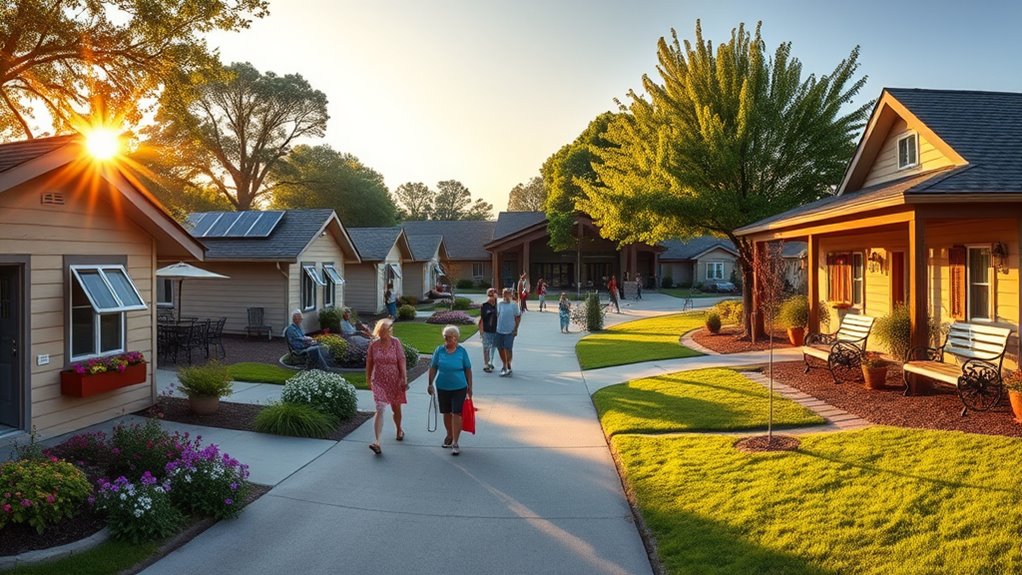

Elder villages, based on the village model, offer a supportive community that helps you age in place comfortably and independently. They encourage intergenerational living, where you connect with people of all ages through shared activities and social programs. This proactive approach fosters stronger bonds, keeps you active, and reduces loneliness. If you want to discover how these models transform aging into a vibrant, community-centered experience, there’s more to explore beyond this overview.
Key Takeaways
- Elder Villages utilize the Village Model to promote aging in place through community-based support and services.
- The Village Model emphasizes intergenerational living, fostering social connections and mutual support among residents of all ages.
- Community engagement activities within Elder Villages help maintain residents’ physical and mental well-being, reducing isolation.
- This proactive approach empowers seniors to stay independent, active, and engaged, minimizing reliance on institutional care.
- Overall, Elder Villages offer a sustainable, community-centered solution that enhances quality of life and supports aging in place.
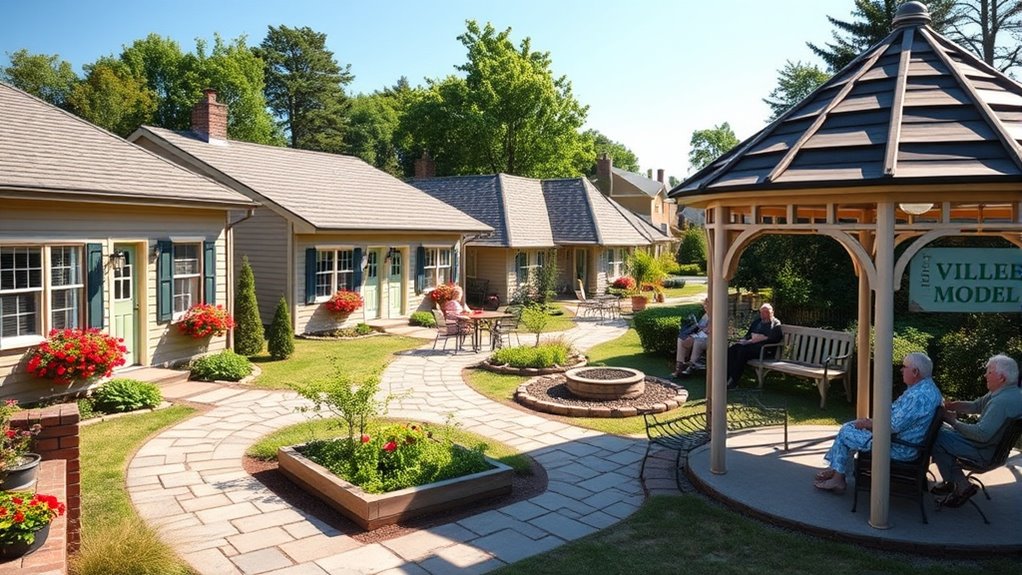
As more seniors choose to age in place, communities are exploring innovative ways to support this desire, and elder villages have emerged as a promising solution. These villages operate on the “village model,” which emphasizes creating a supportive network that allows older adults to stay in their homes while accessing services and community connections. A key aspect of this model is fostering intergenerational living, where people of different ages live, work, and socialize together. This approach not only combats loneliness but also enriches community engagement for everyone involved. When you participate in an elder village, you become part of a vibrant, interconnected community that values mutual support and active participation.
Intergenerational living is at the heart of the village model because it encourages interactions across age groups. You might find younger families, middle-aged adults, and seniors sharing common spaces, participating in activities, or even living in the same neighborhood. This setup creates natural opportunities for mentoring, learning, and companionship, which benefits all generations. For seniors, it means not feeling isolated or dependent; instead, they’re actively contributing and engaging with others. For younger residents, it offers a chance to learn from seniors’ life experiences and develop stronger community bonds. This blend of ages fosters a more inclusive environment where everyone’s needs and contributions are recognized.
Community engagement is another essential component of elder villages. As a resident, you’re encouraged to take part in various social, educational, and recreational activities tailored to your interests. These programs help maintain physical and mental health, promote lifelong learning, and create a sense of purpose. You might join a gardening club, participate in group outings, or volunteer to help organize events. Such involvement keeps you connected, reduces feelings of loneliness, and strengthens the social fabric of the village. The community’s intentional design makes it easier for you to access resources, receive assistance when needed, and develop friendships that extend beyond formal activities. Emphasizing the importance of positive thinking can also enhance your outlook and resilience in adapting to new community environments.
The village model also promotes a proactive approach to aging. Instead of relying solely on formal care facilities, you have the opportunity to remain active and independent within a supportive environment. This model reduces the need for disruptive moves to nursing homes by providing flexible, community-based solutions. When you’re part of an elder village, you’re empowered to maintain control over your life, fostering dignity and autonomy. The focus on intergenerational living and community engagement transforms aging from a period of decline into one of connection, contribution, and continued growth.
Frequently Asked Questions
How Are Elder Villages Funded and Sustainable Long-Term?
You fund Elder Villages through a mix of funding models, including membership fees, grants, and donations. Building strong community partnerships helps sustain the programs long-term by providing ongoing support and resources. You also leverage volunteer contributions to reduce costs and foster community engagement. Diversifying funding sources guarantees stability, so your Elder Village remains active and effective over time, adapting to changing needs and maintaining a vibrant, supportive environment for seniors.
What Safety Measures Are Implemented Within Elder Villages?
In an elder village, you’re protected by thorough safety measures like community safety protocols and emergency preparedness plans. For example, a neighborhood might have a 24/7 emergency response system and regular safety drills. These systems ensure residents can quickly access help when needed, reducing risks and fostering a secure environment. Such proactive safety strategies help residents feel confident and safe, knowing the community is prepared for emergencies.
How Do Elder Villages Accommodate Residents With Varying Health Needs?
You find that elder villages accommodate residents with varying health needs by offering tailored support and flexible services. They promote intergenerational activities and community engagement, creating an inclusive environment where everyone can participate comfortably. Staff members coordinate personalized care plans, ensuring each resident receives appropriate assistance. This approach fosters a vibrant, supportive community that adapts to individual health requirements while encouraging social interaction and active involvement.
Are There Legal or Zoning Challenges to Establishing Elder Villages?
You might face legal hurdles and zoning restrictions when establishing elder villages, as about 60% of communities have specific zoning codes that complicate new developments. These challenges often delay or block projects, requiring you to work closely with local authorities. You’ll need to navigate these regulations carefully, possibly seeking variances or amendments, to successfully create a supportive environment for aging residents while complying with all legal and zoning requirements.
How Do Elder Villages Integrate Technology for Aging in Place?
You can integrate technology into elder villages by installing smart home systems that promote safety and independence. These systems include sensors, voice-activated devices, and remote monitoring. Virtual health services enable residents to consult healthcare providers without leaving their homes, ensuring timely care. By combining smart home technology with virtual health options, you support aging in place, making daily life safer, more convenient, and connected for seniors.
Conclusion
By embracing the elder village model, you empower seniors to stay connected and independent within their communities. Imagine Mrs. Smith, who, through her local elder village, receives daily help and companionship, enabling her to age comfortably at home. This approach fosters a sense of belonging and support, proving that aging in place isn’t just a dream but a practical, community-driven solution. Together, you can build resilient, caring environments where elders thrive.