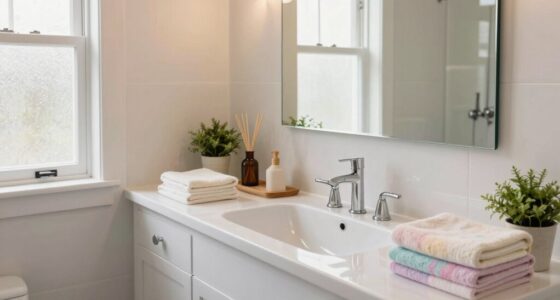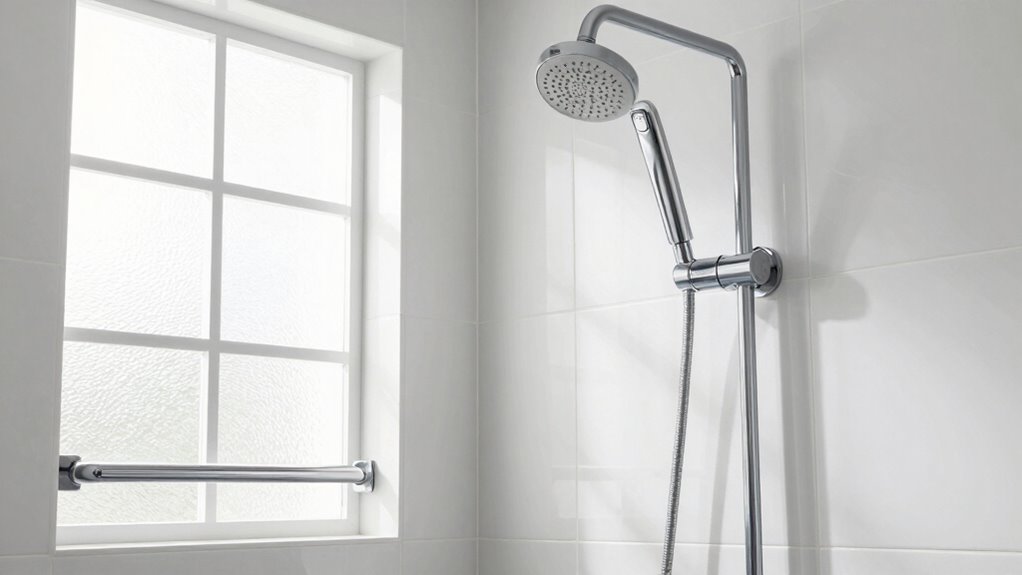

Start by upgrading safety and accessibility features, like installing grab bars, non-slip mats, and raised or automatic toilets. Focus on creating a secure environment that minimizes fall risks and makes daily routines easier. Touchless faucets and smart fixtures can further reduce germ transmission and improve hygiene. These initial improvements set a solid foundation for a safer, more supportive bathroom. Keep going to find out how you can make additional upgrades for comfort and independence.

Get health and wellness essentials delivered free — and shop member deals
- Fast, free delivery on millions of items
- Access to Prime Big Deal Days deals on October 6–7
- Prime Video, Amazon Music and more included
Key Takeaways
- Install grab bars near toilet, shower, and bathtub for immediate support and fall prevention.
- Upgrade to non-slip flooring or mats to reduce wet surface accidents.
- Introduce touchless fixtures like faucets and toilets to minimize contact and enhance hygiene.
- Add raised toilet seats and shower benches for easier access and comfort.
- Improve lighting to increase visibility and reduce the risk of trips and falls.
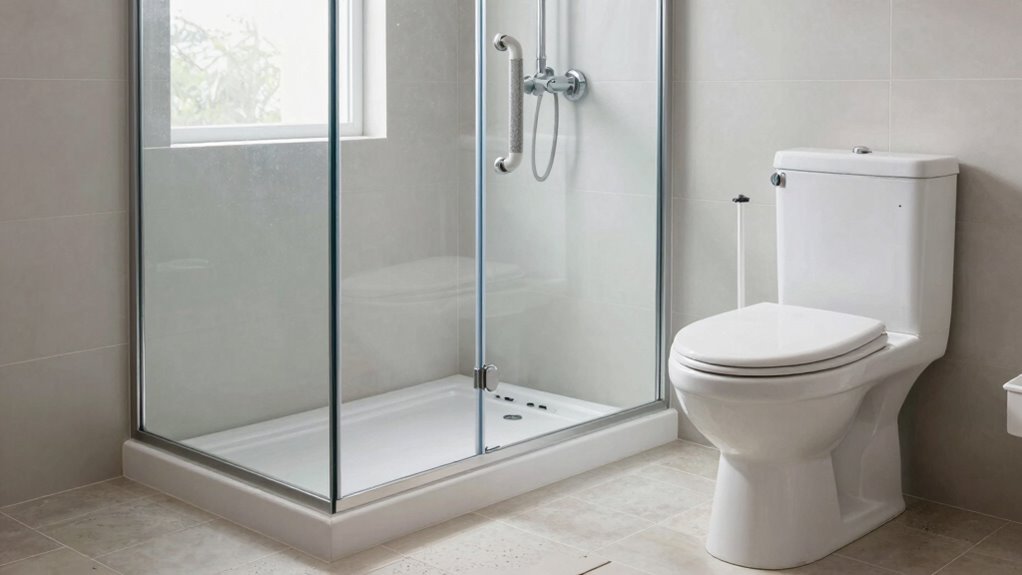
Creating a safe and accessible bathroom is essential when caring for a loved one at home. The right upgrades not only improve safety but also make daily routines smoother for both of you. When considering what to upgrade first, focus on features that enhance safety and independence, such as installing smart fixtures and accessibility tools. These additions can markedly reduce the risk of falls and accidents, giving everyone peace of mind.
Start by upgrading your bathroom with smart fixtures. Modern technology offers innovative solutions that make caregiving easier. For example, smart toilets with automatic lids, flushes, and heated seats provide comfort and hygiene without requiring manual operation. These fixtures reduce contact points, lowering the risk of germ transmission, which is especially important when caring for someone with a compromised immune system. Smart faucets with touchless activation can also help prevent contact with potentially contaminated surfaces, making handwashing safer and more convenient. By integrating these fixtures, you create a more hygienic environment that minimizes the need for physical effort and contact, which is especially beneficial for individuals with limited mobility.
Smart fixtures like touchless faucets and automatic toilets enhance hygiene and safety for easier, contact-free caregiving.
Next, prioritize accessibility tools that facilitate easier movement and use of the bathroom. Installing grab bars near the toilet and in the shower or bathtub provides essential support, helping prevent slips and falls. Consider adding a shower seat or bench so your loved one can sit comfortably while bathing, reducing fatigue and the risk of losing balance. Raised toilet seats are another simple yet effective upgrade that makes sitting down and standing up easier for individuals with mobility challenges. These tools are simple to install and can be customized to suit specific needs. Ensuring proper lighting is also vital; bright, non-glare lights help maintain clear visibility, reducing accidents caused by poor illumination.
Beyond these immediate upgrades, think about the overall layout and flooring. Non-slip tiles or mats can prevent dangerous slips, especially when surfaces are wet. Widening doorways or installing barrier-free entries can make the bathroom more accessible for wheelchairs or walkers, promoting independence. Remember, the goal is to create an environment where your loved one feels safe, supported, and as independent as possible. Focusing on smart fixtures and accessibility tools first lays a strong foundation for a safer, more comfortable home care environment. These upgrades are practical, effective, and can be implemented gradually, making your bathroom a secure haven for everyday routines.
As an affiliate, we earn on qualifying purchases.
Frequently Asked Questions
How Do I Assess My Bathroom’s Safety Needs?
You should start with a hazard assessment, checking for slippery floors, sharp edges, and loose fixtures. Evaluate your bathroom’s safety features like grab bars, non-slip mats, and adequate lighting. Make sure the space is accessible and free of obstacles. Address any hazards you find by installing or upgrading safety features, ensuring your bathroom becomes a secure environment for home care. Regular assessments help maintain safety over time.
What Budget Should I Set for Bathroom Upgrades?
Think of your bathroom upgrade budget as a roadmap for your renovation journey. Start with a clear cost estimation to guide your spending, then plan your budget accordingly. For home care needs, allocate funds for essential safety features first, like grab bars or non-slip flooring. Depending on your priorities, setting aside around 10-20% of your overall home improvement budget guarantees you’re prepared for unexpected costs, making your upgrades both safe and affordable.
Are There Eco-Friendly Upgrade Options for Home Care Bathrooms?
Yes, there are eco-friendly upgrade options for your home care bathroom. You can start by installing eco-friendly fixtures like low-flow toilets and faucets that conserve water. Opt for sustainable materials such as recycled glass or bamboo for countertops and cabinetry. These upgrades not only reduce your environmental impact but also save you money long-term on water and energy bills. Making these choices creates a greener, more sustainable bathroom space.
How Long Does a Typical Bathroom Renovation Take?
It usually takes about 1 to 3 weeks to complete a bathroom renovation. You’ll want to focus on upgrades like improved bathroom lighting and smart storage solutions first, as they make a big difference in daily use. Keep in mind, unexpected delays can pop up, so plan for a little extra time. Staying flexible helps you get through the project smoothly and avoid feeling like you’re chasing your tail.
Can I Upgrade Without Professional Help?
Yes, you can upgrade your bathroom without professional help, but be aware of DIY challenges like plumbing or electrical work. Doing it yourself saves money, but consider a thorough cost analysis beforehand to guarantee it’s worth the effort. Start with simple upgrades like fixtures or paint, and gradually tackle more complex tasks. Proper planning and patience can make your home care bathroom upgrade successful without professional assistance.
As an affiliate, we earn on qualifying purchases.
Conclusion
So, go ahead—prioritize those bathroom upgrades. After all, what’s more vital than making your loved ones’ daily routines safer and easier? But don’t forget, all the fancy grab bars and walk-in tubs won’t help if you forget to install a mirror at the right height—because sometimes, the biggest upgrade is simply seeing things clearly. Turns out, the real home care upgrade might just be realizing it’s the little things that matter most.
As an affiliate, we earn on qualifying purchases.
As an affiliate, we earn on qualifying purchases.
Evergreen bestsellers Picks
bestsellers
As an affiliate, we earn on qualifying purchases.