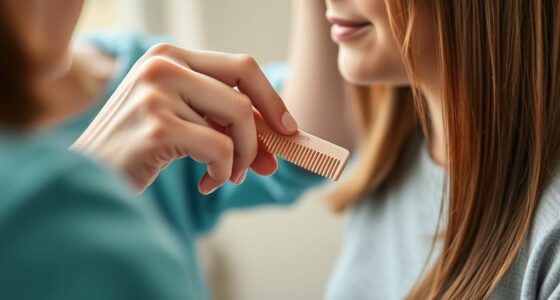
To support oral care when grip and mobility are limited, use adaptive tools like ergonomic electric toothbrushes and finger brushes that are easier to handle. Take your time with gentle, slow motions to prevent discomfort and focus on hard-to-reach areas. Make certain the environment feels safe and stress-free, and gather all supplies beforehand. Regularly check in and adjust your approach based on the person’s needs. Keep going to discover more helpful strategies for providing effective care.

Get health and wellness essentials delivered free with Prime
- Fast, free delivery on millions of items
- Prime Video, Amazon Music and more included
- Member-only deals all year
Key Takeaways
- Use adaptive tools like ergonomic electric toothbrushes and finger brushes for easier handling.
- Assist with slow, gentle motions to prevent discomfort and accommodate limited mobility.
- Gather all supplies beforehand to streamline the oral care process.
- Regularly check and adjust techniques to suit individual sensitivity and needs.
- Encourage routines twice daily and seek professional advice for personalized support.
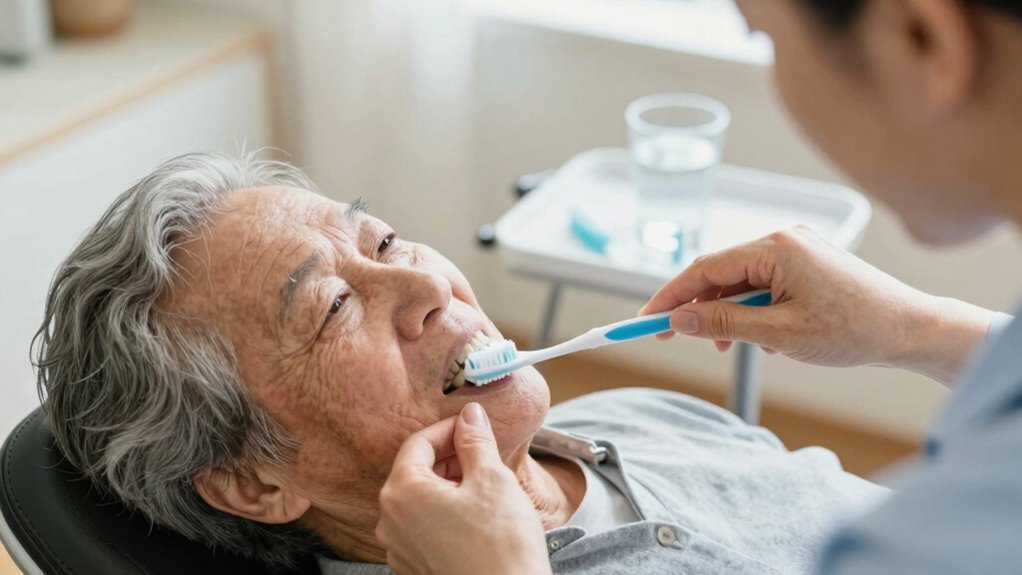
When mobility is limited, maintaining good oral hygiene can become a challenge, but it’s essential for overall health and comfort. If you’re caring for someone with restricted movement, you realize how difficult it can be to keep up with daily dental hygiene routines. Without proper care, plaque builds up, leading to cavities, gum disease, and bad breath. That’s why providing effective support is crucial, and caregiver assistance plays a vital role in ensuring oral health isn’t neglected.
Start by creating a comfortable environment where the person feels safe and at ease. Use a chair with good back support or a bed if standing is difficult. Gather all necessary supplies beforehand—soft-bristled toothbrushes, fluoride toothpaste, mouthwash, and, if needed, dental wipes or swabs. These tools are easier to handle when mobility is limited and can help maintain oral cleanliness without causing discomfort. When assisting with dental hygiene, take slow, gentle motions to prevent gagging or injury, paying particular attention to areas that are harder to reach.
If grip strength or coordination is an issue, consider adaptive tools designed for easier handling. Electric toothbrushes with large, ergonomic handles can make brushing more effective and less strenuous. You might also use a finger brush, which slips onto your finger, giving you more control while cleaning the person’s teeth. For those who cannot tolerate traditional brushing, dental wipes or swabs soaked in mouth rinse can help remove debris and reduce bacteria. Always ensure the mouth is thoroughly rinsed afterward to eliminate residue and freshen breath. Incorporating emerging trends in digital publishing can provide caregivers with access to instructional videos and virtual support for better techniques.
Caregiver assistance isn’t just about using the right tools; it’s about understanding the person’s needs and making the process as stress-free as possible. Some individuals may have sensitive gums or experience discomfort, so check in regularly and adjust your approach accordingly. Encourage regular oral care routines, ideally twice daily, to prevent oral health issues and promote comfort. If brushing becomes difficult, consult a dental professional for tailored advice or alternative methods.
ergonomic electric toothbrush for limited mobility
As an affiliate, we earn on qualifying purchases.
As an affiliate, we earn on qualifying purchases.
Frequently Asked Questions
How Often Should Oral Care Be Performed for Limited Mobility Individuals?
You should perform oral care at least twice daily, following the frequency guidelines for individuals with limited mobility. Establish a consistent oral hygiene routine, including brushing and rinsing, to prevent infections and maintain oral health. If you’re unable to do this yourself, assist or encourage a caregiver to help. Regularly scheduled care guarantees your mouth stays clean and healthy, reducing discomfort and potential complications.
Are There Specific Tools Designed for Individuals With Grip Limitations?
Yes, there are specific tools designed for individuals with grip limitations. Adaptive tools like grip aids and ergonomic toothbrushes help you hold and maneuver toothbrushes more easily. These tools reduce the effort needed, making oral care safer and more effective. Using grip aids can enhance control, ensuring thorough cleaning even with limited dexterity. Incorporate these tools into your routine to maintain good oral hygiene comfortably and independently.
How Can Caregivers Ensure Thorough Cleaning With Limited Dexterity?
Did you know that nearly 50% of adults with limited mobility face oral health challenges? To guarantee thorough cleaning, you can use adaptive techniques like stabilizing the person’s hand or using a modified toothbrush. Caregiver training is essential; it teaches you proper methods to improve reach and control. These strategies help maintain oral health, even with limited dexterity, by making the process easier and more effective for both of you.
What Signs Indicate Oral Health Issues in Those With Mobility Challenges?
You’ll notice signs like redness, swelling, bleeding, or persistent bad breath, which indicate oral health issues. Watch for discomfort or complaints of pain, as they suggest dental problems needing attention. Maintaining good dental hygiene is essential, and pain management can help ease discomfort. Regularly check the mouth for sores or signs of infections, and consult a dental professional promptly to prevent further complications.
Are There Professional Services Specializing in Oral Care Support for Limited Mobility?
Professional programs provide personalized, practical support for people with limited mobility. Caregiver support services often include specialized training, tailored techniques, and tools to promote proper oral hygiene. You can find dental professionals, home health aides, and community clinics that specialize in assisting with oral care, ensuring safety and comfort. These services help bridge gaps, bolster confidence, and build better oral health, making daily routines easier and more effective for both caregivers and those needing care.
As an affiliate, we earn on qualifying purchases.
Conclusion
Now, imagine yourself gently guiding your loved one through their oral care routine, even when their grip and mobility falter. With the right tools and a little patience, you can turn what seems overwhelming into a moment of trust and comfort. Picture their smile brightening, confidence restored, and a sense of independence returning. The key lies in your support—what’s next could be the most meaningful step yet, transforming challenges into moments of connection.
As an affiliate, we earn on qualifying purchases.
As an affiliate, we earn on qualifying purchases.
Halloween Picks
halloween
As an affiliate, we earn on qualifying purchases.