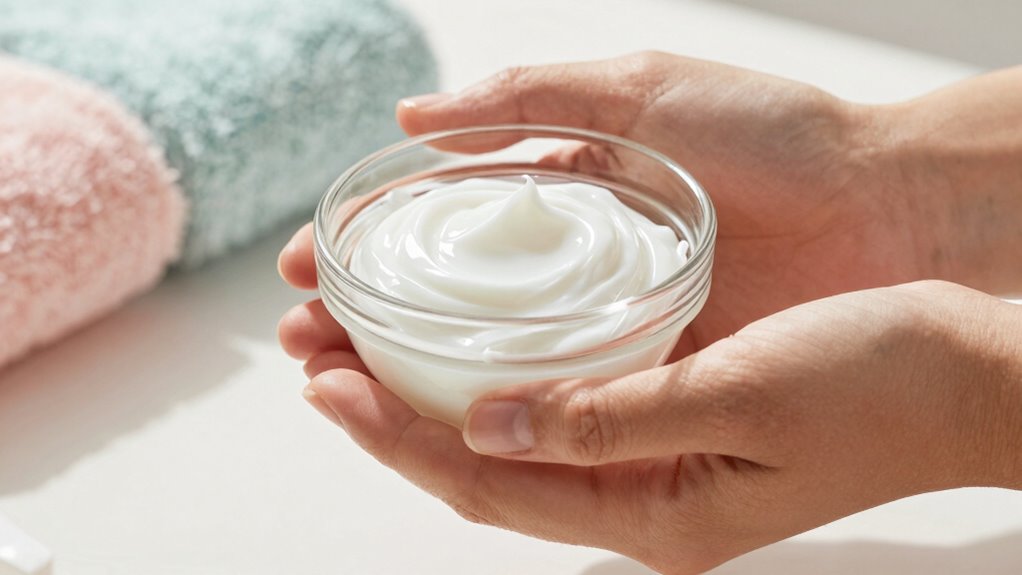

To care for sensitive or fragile skin, use gentle cleansing products formulated for delicate skin and rinse with lukewarm water. Avoid harsh scrubbing and abrasive cloths, and pat your skin dry gently. Choose fragrance-free products with soothing ingredients like aloe vera or chamomile, and stick to a simple routine with moisturizer and sunscreen. Protect your skin from harsh environmental factors like cold, wind, and pollution. Keep exploring for more tips to maintain healthy, comfortable skin.

Get health and wellness essentials delivered free with Prime
- Fast, free delivery on millions of items
- Prime Video, Amazon Music and more included
- Member-only deals all year
Key Takeaways
- Use gentle, fragrance-free cleansers with lukewarm water and avoid harsh scrubbing to prevent irritation.
- Moisturize immediately after cleansing to lock in hydration and support the skin barrier.
- Protect skin from environmental stressors like sun, wind, and pollution with suitable barriers or clothing.
- Keep routines simple with minimal, high-quality products tailored for sensitive skin.
- Avoid harsh ingredients like alcohol, artificial dyes, and preservatives to reduce risk of reactions.

If you have sensitive skin, maintaining good hygiene can sometimes feel challenging, but with the right approach, you can keep your skin clean and healthy without irritation. The key is to prioritize gentle cleansing techniques that respect your skin’s delicate nature. You should always choose products labeled as gentle cleansing, specifically formulated for sensitive skin. These products are designed to remove dirt and excess oils without stripping away natural moisture or disrupting your skin’s barrier. Look for fragrance-free products, as added fragrances can often cause irritation or allergic reactions in sensitive skin. Fragrance-free options help minimize the risk of redness, itching, and inflammation, making your skincare routine safer and more comfortable.
When cleansing, avoid hot water, as it can dry out and irritate sensitive skin. Instead, opt for lukewarm water, which is gentler and less likely to strip your skin of essential oils. Use your fingertips to gently massage the cleanser onto your face in circular motions, avoiding harsh scrubbing or abrasive washcloths that can cause microtears or redness. Rinsing thoroughly and patting your skin dry with a soft, clean towel—never rub vigorously—are essential steps. This gentle approach ensures your skin stays calm and protected after cleansing. Incorporating proper hygiene practices can significantly help reduce irritation and maintain skin health. Additionally, choosing a suitable cleansing method that minimizes mechanical stress can further support your skin’s delicate balance. Being mindful of environmental factors, such as wind or cold weather, can also help prevent unnecessary irritation and keep your skin comfortable.
Another important aspect of maintaining hygiene with sensitive skin is to keep your routine simple. Over-cleansing or using multiple products can lead to irritation or imbalance. Stick to a basic regimen: a gentle cleanser, a moisturizer suited for sensitive skin, and a broad-spectrum sunscreen during the day. Incorporating fragrance-free moisturizers that hydrate without causing irritation can help strengthen your skin’s natural barrier. Applying moisturizer while your skin is still slightly damp can lock in moisture and keep your skin soft and supple. It’s also beneficial to understand your skin type so you can tailor your routine to your specific needs and avoid unnecessary products that might cause reactions.
Additionally, avoiding harsh environmental conditions such as excessive sun exposure or pollution can help protect your skin’s health, supporting its natural barrier and reducing irritation. When choosing skincare products, always read labels carefully. Avoid ingredients known to irritate sensitive skin, such as alcohol, artificial dyes, and harsh preservatives. Instead, look for soothing ingredients like aloe vera, chamomile, or ceramides, which can help calm inflammation and restore skin health. Remember that less is more—using fewer, higher-quality products tailored to sensitive skin can prevent unnecessary reactions and keep your skin feeling comfortable. Maintaining a consistent skincare routine with gentle, nourishing products is essential for long-term skin health.
fragrance-free gentle cleanser for sensitive skin
As an affiliate, we earn on qualifying purchases.
As an affiliate, we earn on qualifying purchases.
Frequently Asked Questions
Can Certain Fabrics Worsen Sensitive Skin?
Yes, certain fabrics can worsen sensitive skin. You might experience fabric allergies or synthetic irritation from materials like polyester or nylon, which can cause redness, itching, or rashes. To protect your skin, opt for natural, breathable fabrics like cotton or silk. Always check labels for hypoallergenic options and wash new clothing before wearing to reduce chemical residues that could trigger sensitivity.
Are Natural Remedies Safe for Fragile Skin?
You’re right to ask if natural remedies are safe for fragile skin—sometimes, they’re a double-edged sword. Herbal infusions and mineral masks can soothe or irritate, depending on your skin’s sensitivity. Always do a patch test first, and choose gentle, fragrance-free options. Natural remedies can be safe if you listen to your skin and avoid harsh ingredients. It’s better to tread carefully than to end up with a skin that’s worse for wear.
How Often Should I Change My Skincare Products?
You should change your skincare products every 3 to 6 months, considering product expiration dates and ingredient stability. As products age, their effectiveness diminishes, and ingredients may degrade or cause irritation, especially for sensitive or fragile skin. Always check the packaging for expiration dates and note any changes in texture or smell. Replacing products regularly helps maintain their safety and efficacy, reducing the risk of adverse reactions.
Is It Necessary to Avoid All Fragrances?
Did you know that up to 30% of fragrance allergies are caused by synthetic perfumes? It’s wise to avoid all fragrances if you have sensitive or fragile skin. Fragrance allergies can cause irritation, redness, or even dermatitis. By choosing fragrance-free products, you reduce the risk of reactions. Always check labels and opt for gentle, fragrance-free options to keep your skin calm and healthy.
What’s the Best Way to Soothe Irritated Skin?
To soothe irritated skin, start by using gentle cleansers that won’t strip your skin’s natural oils. Follow with a soothing routine that includes applying cool, fragrance-free moisturizers or aloe vera gel to reduce redness and inflammation. Avoid harsh scrubs or hot water, which can worsen irritation. Consistency is key—making these gentle, calming steps part of your daily routine helps your skin recover and stay healthy.
As an affiliate, we earn on qualifying purchases.
Conclusion
Taking care of sensitive skin is like tending a delicate garden—you must handle it gently and give it the right nourishment. Stick to gentle routines, avoid harsh products, and listen to your skin’s whispers. With patience and care, you’ll nurture a healthy glow that shines as softly as morning dew. Remember, your skin’s well-being is a journey, not a sprint. Treat it with kindness, and it’ll reward you with radiant, resilient beauty.
broad-spectrum sunscreen for sensitive skin
As an affiliate, we earn on qualifying purchases.
As an affiliate, we earn on qualifying purchases.
gentle face wash for fragile skin
As an affiliate, we earn on qualifying purchases.
As an affiliate, we earn on qualifying purchases.
Halloween Picks
halloween
As an affiliate, we earn on qualifying purchases.