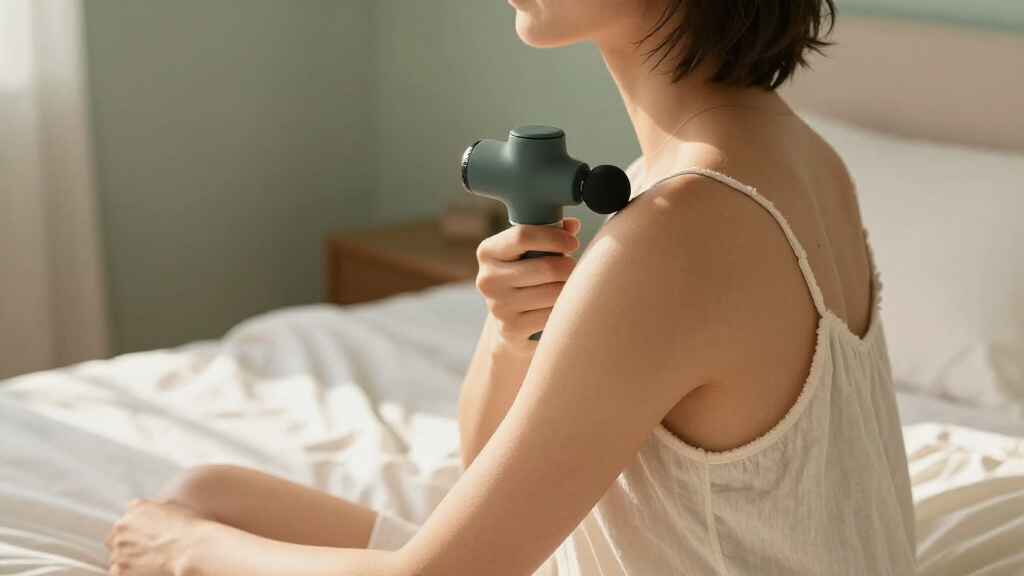

This guide shows beginners how to prepare for and use a personal massager for general relaxation, then clean and store it. You will choose a suitable device and setting, apply light pressure to comfortable areas, and check how your body responds. Allow about 15–30 minutes, including preparation and cleanup. This guide covers external massage for comfort; it does not diagnose or treat pain or medical conditions.

Get health and wellness essentials delivered free with Prime
- Fast, free delivery on millions of items
- Prime Video, Amazon Music and more included
- Member-only deals all year

HoMedics Handheld Back Massager with Heat
- ✔ Massage type: Percussion
- ✔ Massage heads: Dual pivoting heads
- ✔ Intensity: Adjustable

MEGAWISE Handheld Back Massager
- ✔ Motor speed: 3600 RPM
- ✔ Massage heads: 6 interchangeable heads
- ✔ Design: Curved ergonomic handle
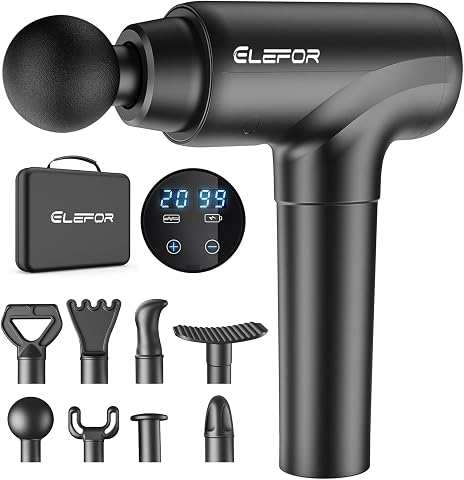
Elefor Deep Tissue Massage Gun with 8 Heads and 20 Speeds, Matte Black
- ✔ Massage heads: 8
- ✔ Speed levels: 20
- ✔ Strike rate: 1,200–3,200 strikes per minute
Difficulty: Beginner | Time: 15–30 minutes
What You’ll Need
Tools & Materials:
- A personal massager with an intact body and working controls
- The charger or batteries recommended by the manufacturer
- A clean, dry towel
- A mild soap or device cleaner suitable for the massager’s material
- A quiet, comfortable place where you can sit or lie down
Knowledge:
- Basic familiarity with the device’s power button and intensity controls
- Ability to notice and respond to discomfort, numbness, or irritation
Read the device instructions before use, especially the cleaning directions, water-resistance rating, and any limits on continuous operation. Check which materials the device contains. If you have reduced sensation, a skin condition, a recent injury or surgery, or a health concern that affects massage, ask a qualified clinician whether this activity is suitable. Do not use a device on broken, irritated, swollen, or bruised skin.
HoMedics Handheld Back Massager with Heat
The HoMedics is our strongest all-around match for relaxation because it lets us adjust the percussion and choose whether to add soothing heat. That combination offers a more flexible routine than the MEGAWISE, whose listed 3600 RPM motor does not come with stated speed adjustment. Four attachment sets also give us options for changing the feel, although the supplied description does not explain the shape or intended use of each set.Its dual pivoting heads and rubberized ergonomic grips are aimed at neck, back, shoulder, and leg use. The front grip may help us guide the massager toward areas that are otherwise difficult to reach. Still, the handheld format means solo back sessions can take some arm work, and the product details leave its power source unspecified. Compared with Elefor’s 20-level massage gun, HoMedics gives up fine-grained speed selection, but its optional heat makes it the more rounded relaxation pick.
Pros:
- Adjustable percussion intensity
- Optional heat for a warmer session
- Four attachment sets provide different massage feels
- Front grip and pivoting heads support positioning
Cons:
- Handheld use may strain the arm when reaching some areas
- Power source and cord details are not provided
- No exact speed range is listed
Best for: People who want a flexible home massager with adjustable percussion, optional heat, and several attachment choices.
Not ideal for: Anyone who needs verified cordless operation, effortless solo reach, or a clearly specified range of speed settings.
Bottom line: We recommend HoMedics as the most adaptable relaxation choice here, especially if heat and intensity control both matter.
“We recommend HoMedics as the most adaptable relaxation choice here, especially if heat and intensity control both matter.”
MEGAWISE Handheld Back Massager
MEGAWISE suits us when we want a straightforward handheld massager with multiple contact options. Its six interchangeable heads give it the broadest stated head selection among these three, exceeding HoMedics’ four attachment sets and Elefor’s eight heads only in neither count nor range; Elefor actually includes more. The distinction is that MEGAWISE pairs its heads with a curved handle and simple controls, making ease of handling its clearest selling point.The description also calls its operation low-noise, a useful quality when we want a calmer-feeling session at home. However, the motor is specified at 3600 RPM without a stated adjustment range, so we have less information about dialing the sensation down than with either HoMedics or Elefor. If we want heat, HoMedics is the better fit; if we want many intensity steps, Elefor is more precise. MEGAWISE makes most sense when a quiet, uncomplicated design matters more than fine speed control.
Pros:
- Six interchangeable massage heads
- Curved ergonomic handle supports grip and reach
- Listed for several body areas
- Described as low-noise with simple controls
Cons:
- 3600 RPM is listed without adjustable speed levels
- Handheld format may make solo back massage tiring
- Power source and battery life are unspecified
Best for: People who value a curved grip, multiple head choices, and stated low-noise operation for everyday use.
Not ideal for: Buyers who want optional heat, adjustable speed levels, or confirmed battery and charging information.
Bottom line: MEGAWISE is a practical pick for quieter, simple sessions, provided its fixed stated motor speed suits our comfort preference.
“MEGAWISE is a practical pick for quieter, simple sessions, provided its fixed stated motor speed suits our comfort preference.”
Elefor Deep Tissue Massage Gun with 8 Heads and 20 Speeds, Matte Black
Elefor stands apart with 20 speed levels and a stated range of 1,200–3,200 strikes per minute. That gives us more explicit control over percussion than the MEGAWISE, which lists one motor speed, and more levels than the HoMedics description specifies. For people who like to start gently and adjust in small steps, this is the most configurable option in the lineup.The tradeoff is its massage-gun format and deep-tissue positioning. Its eight heads and carrying case suit a routine that moves between muscle areas or travels with us, but this is the most percussion-focused choice here. HoMedics is more rounded for relaxation thanks to optional heat, while MEGAWISE emphasizes low-noise operation. Elefor’s motor is described as ultra-quiet, but no noise figure is provided, and the listing details do not state battery life or charging. We should choose it for control and portability, not assume those missing practical details.
Pros:
- 20 speed levels for detailed intensity adjustment
- Eight interchangeable heads
- Strike-rate range is specified
- Carrying case supports portable storage
Cons:
- No heat feature is listed
- Noise level is not quantified
- Battery life and charging details are missing
Best for: People who want many percussion intensity steps and a portable massage gun for varied muscle areas.
Not ideal for: Those who prefer heat, want a simple low-intensity device, or need confirmed charging and noise information.
Bottom line: Elefor is our pick for adjustable, portable percussion, though HoMedics is the more balanced option for relaxation-focused features.
“Elefor is our pick for adjustable, portable percussion, though HoMedics is the more balanced option for relaxation-focused features.”
As an Amazon Associate we earn from qualifying purchases.
Before You Start
Set aside enough time to move slowly and stop whenever the sensation feels unpleasant. Charge the device or install its batteries in advance. Place the towel and cleaning supplies within reach. Keep the device away from water unless its instructions state that it is safe for wet use. If you share a device, clean it before and after each person’s use, and follow the maker’s instructions about barriers or covers. Do not share a device that cannot be cleaned properly.
Step-by-Step Instructions
Step 1: Check the device
Inspect the massager, cable, plug, and controls for cracks, loose parts, exposed wires, or other damage. Confirm that it has enough charge or fresh batteries. Read the control labels and locate the lowest setting before turning it on.
Tip:Do not use a damaged device or a charger that the manufacturer has not approved for it.
Check: The device looks intact, powers on, and responds to its controls.
Step 2: Prepare your space
Choose a private, calm place with a stable seat or a bed where you can relax without rushing. Put the towel and cleaning supplies nearby. Adjust the room temperature and position so you can reach the area you want to massage without twisting or stretching uncomfortably.
Tip:Keep cords clear of walkways and away from sinks, baths, and other water sources.
Check: You can sit or lie comfortably, reach your chosen area, and stop the session easily.
Step 3: Choose a comfortable area
Start with a broad, easy-to-reach muscle area such as the shoulders, upper back, forearms, thighs, or calves. Avoid the front and sides of the neck, spine, joints, bones, and any area that is injured, inflamed, numb, or tender to touch. Do not press the device into an area just because it feels tight.
Tip:If you are unsure whether a particular area is suitable, choose another area or ask a clinician for guidance.
Check: You have chosen a comfortable area with intact skin and soft tissue that you can reach without strain.
Step 4: Test the lowest setting
Turn the massager on at its lowest intensity before placing it lightly against the chosen area. Hold it in one spot briefly, then move it slowly over the muscle. Keep your grip relaxed and use only enough pressure to maintain contact.
Tip:A relaxing sensation should feel manageable. Stop at once if you feel sharp pain, burning, tingling, numbness, or a sudden increase in discomfort.
Check: The sensation feels mild and controlled, and your skin is not becoming irritated.
Step 5: Move slowly and check in
Glide the device over a small area for a few minutes, pausing to notice how your body feels. Keep the device moving when that feels more comfortable, and do not hold it on one spot for longer than the manufacturer recommends. You can lower the intensity, change position, or stop at any time.
Tip:More pressure or a stronger setting does not automatically make a massage more relaxing. Follow the device’s time limits and let comfort guide the session.
Check: You can breathe normally and keep your muscles relaxed while the device is in use. No pain or skin reaction is developing.
Step 6: Finish and check your skin
Turn the device off before setting it down. Look at the massaged area and check for lasting redness, swelling, bruising, or irritation. Give yourself a moment to sit comfortably and notice whether the area feels calm or more sensitive.
Tip:End the session early if you develop discomfort. Do not repeat massage over a sore or irritated area while it recovers.
Check: The device is off, and your skin has no concerning reaction.
Step 7: Clean and store the massager
Unplug or switch off the device, then clean it using the method and products listed by its manufacturer. Dry it fully before storing it in a clean place away from heat, moisture, and direct sunlight. Do not submerge it unless the instructions confirm that it is waterproof and safe to immerse.
Tip:Harsh cleaners, soaking, or moisture near a charging port can damage some devices. Check the care instructions when in doubt.
Check: The device is clean, dry, switched off, and stored safely.
Common Mistakes to Avoid
- Starting at a high intensity or pressing hard right away. — Begin at the lowest setting with light contact. Increase intensity only if the sensation remains comfortable, and return to a lower setting as soon as it feels too strong.
- Using the massager on an injury, sensitive skin, or a bony area. — Choose a comfortable muscle area with intact skin. Avoid injured, swollen, bruised, numb, or irritated areas, as well as bones, joints, and the spine.
- Holding the device in one place for too long. — Move it slowly and follow the maker’s time limits for a spot and for continuous use. Stop if the area becomes sore, hot, or irritated.
- Cleaning the device with an unsuitable product or getting its electronics wet. — Use only the cleaning method recommended for its materials and water-resistance rating. Disconnect it from power before cleaning and let it dry fully.
Troubleshooting
Problem: The device will not turn on.
Solution: Check the charge level or battery placement and confirm that the controls are unlocked if the device has a travel lock. Use the recommended charger. Stop using it if a cable, plug, or housing appears damaged.
Problem: The massage feels uncomfortable even at a low setting.
Solution: Turn the device off, remove it from the area, and check your skin. Try a different, less sensitive muscle area another time. Do not continue through pain, tingling, numbness, or burning.
Problem: The device becomes unusually hot, smells odd, or makes a new rattling sound.
Solution: Switch it off and unplug it if safe to do so. Let it cool in a clear area and check the instructions. Do not use it again if the unusual heat, smell, or noise continues; contact the manufacturer or replace the device.
Problem: Redness or soreness remains after the session.
Solution: Stop massaging that area and allow the skin to settle. Avoid another session there until it feels normal. Seek medical advice if the reaction is severe, worsens, or does not improve.
What Success Looks Like
You have completed the task when you used an intact device at a comfortable setting on an appropriate area, stopped without pain or skin irritation, and cleaned and stored the device according to its instructions. Relaxation varies from person to person; a successful session can simply mean the process felt comfortable and gave you a calm break. Stop and seek medical advice for severe or persistent symptoms.
Next Steps
After a comfortable first session, note which area, setting, and duration felt pleasant so you can use a similar approach next time. Clean the device after each use and check its condition before the next session. Keep sessions within the maker’s time limits, and leave time between sessions if your skin or muscles feel sensitive. If you are using massage to manage ongoing pain, or symptoms worsen or persist, contact a qualified clinician for advice.
Frequently Asked Questions
How long should I use a personal massager?
Follow the device instructions for continuous use and for each area. If the instructions do not give a duration, keep the first session brief, move the device regularly, and stop sooner if the area becomes uncomfortable or irritated.
Can I use a personal massager every day?
That depends on the device, the area, and your body’s response. Follow the maker’s guidance, avoid repeated use on sore or irritated skin, and allow the area to recover if it feels tender. Ask a clinician if you have a health condition or persistent pain.
Should the massage hurt to be effective?
No. For a relaxation session, aim for a comfortable sensation. Pain, burning, tingling, or numbness are reasons to stop, not signs that the device is working better.
Can I use the massager in the shower or bath?
Only if the manufacturer clearly rates that model for the specific kind of water exposure. Water-resistant does not always mean safe to submerge. Keep chargers and plugged-in devices away from water.
What should I do if I feel sore afterward?
Stop using the device on that area and let it recover. Avoid adding pressure to soreness or bruising. Contact a clinician if pain is severe, lasts, or comes with swelling, weakness, or another concerning symptom.
Halloween Picks
halloween
As an affiliate, we earn on qualifying purchases.