
To plan balanced meals over a week, start by creating a variety of meals that include lean proteins, whole grains, colorful vegetables, and healthy fats. Prepare ingredients ahead of time, like chopping vegetables and portioning proteins, to save time. Use meal templates to stay organized and control portions, filling half your plate with veggies. Stay flexible with your choices to keep things interesting. Keep exploring tips to make your meal planning easier and more sustainable.
Key Takeaways
- Incorporate a variety of food groups, including lean proteins, whole grains, vegetables, and healthy fats.
- Use a weekly meal plan template to organize balanced meals and prevent last-minute unhealthy choices.
- Prepare ingredients in advance and cook in bulk to save time and ensure healthy options are available.
- Control portions with measuring tools and fill half your plate with vegetables to promote balanced intake.
- Rotate different proteins, grains, and vegetables weekly to maintain diversity and prevent meal fatigue.
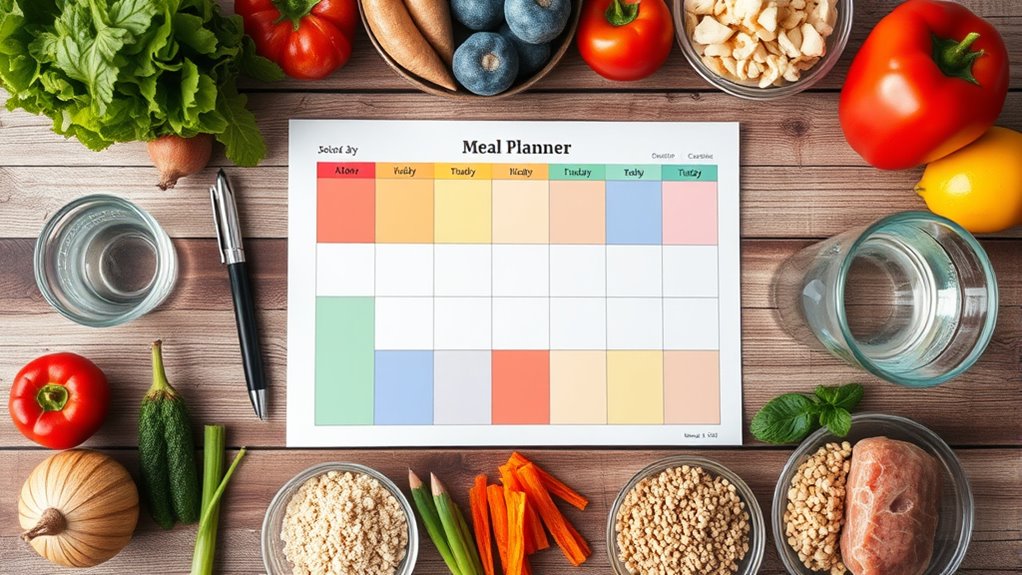
Have you ever wondered how to create meals that fuel your body and satisfy your taste buds? Planning balanced meals over a week can seem overwhelming at first, but with the right approach, it becomes a manageable and rewarding task. Start by establishing meal prep tips that streamline your process. Prepare ingredients in advance—chop vegetables, cook grains, or portion out protein—so when mealtime arrives, you can assemble meals quickly and efficiently. This not only saves time but also helps you stay on track with your nutritional goals. Incorporating meal prep services can further simplify your planning process by providing ready-to-assemble ingredients tailored to your dietary needs. When planning your weekly menu, focus on incorporating a variety of food groups to ensure balanced nutrition. Include lean proteins like chicken, fish, or beans, whole grains such as brown rice or quinoa, plenty of colorful vegetables, and healthy fats from sources like avocados or nuts. A diverse plate guarantees you’re getting essential nutrients while keeping your meals interesting. To make this process even smoother, create a simple meal plan template, noting what you’ll eat each day. This helps prevent last-minute decisions that might lead to less healthy options. Portion control strategies are crucial in maintaining balanced meals throughout the week. Use measuring cups or a food scale to get a sense of appropriate serving sizes, especially when you’re just starting out. Filling half your plate with vegetables can naturally regulate portions of other foods and increase fiber intake. When packing meals ahead of time, divide portions into containers to avoid overeating and to keep your calorie intake in check. This consistency ensures you’re not only fueling your body properly but also managing your weight effectively. Another helpful tip is to cook in bulk and reuse ingredients across multiple meals. For example, roasted vegetables can be added to salads, wraps, and bowls, reducing prep time and minimizing waste. Keep your fridge organized so you can easily find pre-portioned ingredients, making it easier to assemble quick, balanced meals throughout the week. Remember, variety is key—rotating different proteins, grains, and vegetables prevents mealtime boredom and encourages a broader spectrum of nutrients. Finally, stay flexible. Sometimes plans change, or cravings shift. Having a few healthy go-to snacks or quick meals on hand can help you stay aligned with your goals without feeling restricted. By combining meal prep tips with effective portion control strategies, you’ll find it easier to plan and enjoy balanced meals all week long. With practice, it becomes second nature, turning meal planning into a simple, sustainable part of your routine.
Frequently Asked Questions
How Can I Accommodate Food Allergies in Meal Planning?
You can accommodate food allergies by carefully selecting ingredients and exploring gluten-free options to guarantee meals are safe. Always read labels to avoid cross-contamination and include nut allergy considerations, such as removing nuts or replacing them with seeds or other safe alternatives. Planning ahead helps you create balanced meals that cater to your allergy needs while maintaining variety, so you stay healthy and safe throughout the week.
What Are Budget-Friendly Options for Balanced Meals?
Your wallet isn’t a bottomless pit, so opt for budget-friendly, balanced meals. You can create delicious, nutritious dishes using affordable ingredients like beans, rice, seasonal vegetables, and eggs. Look for cost-effective recipes that maximize flavor and nutrients without breaking the bank. Buying in bulk and planning meals around sales helps stretch your dollars further. With a little creativity, you’ll enjoy wholesome meals that fuel your body without draining your savings.
How Do I Plan Meals for Picky Eaters?
To plan meals for picky eaters, start with picky eater strategies like offering familiar foods with new twists and involving them in meal prep. Use meal presentation tips, such as colorful plates and creative plating, to make meals appealing. Keep portions small and introduce one new ingredient at a time. By keeping meals simple, visually appealing, and including their favorites, you encourage kids to try and enjoy balanced foods.
How Can I Incorporate Cultural Cuisines Into Meal Planning?
You can incorporate cultural cuisines into your meal planning by exploring diverse recipes that highlight flavor integration from different traditions. To add cultural diversity, try rotating dishes like Mexican tacos, Indian curries, or Mediterranean salads throughout the week. This approach keeps meals exciting, introduces new flavors, and guarantees variety. Plus, it helps you appreciate global culinary traditions while maintaining a balanced diet with fresh, wholesome ingredients.
What Are Quick, Healthy Meal Ideas for Busy Weekdays?
Your busy weekdays don’t have to be a chaos of unhealthy choices. Whip up quick, healthy meal ideas like veggie wraps, stir-fries, or overnight oats. Snack options like nuts, fruit, or yogurt keep you energized. Use meal prep techniques—pre-chopping veggies or batch-cooking grains—to save time. These strategies make healthy eating effortless, helping you stay nourished even on the busiest days.
Conclusion
By planning your meals thoughtfully, you take control of your health and happiness. With each balanced plate, you’re building a foundation stronger than ever—nourishing your body, satisfying your taste buds, and fueling your day. Remember, every meal is a chance to nurture yourself; every choice echoes your commitment to well-being. So, embrace this rhythm of planning, and let your weekly meals be a symphony of nourishment, harmony, and energy.