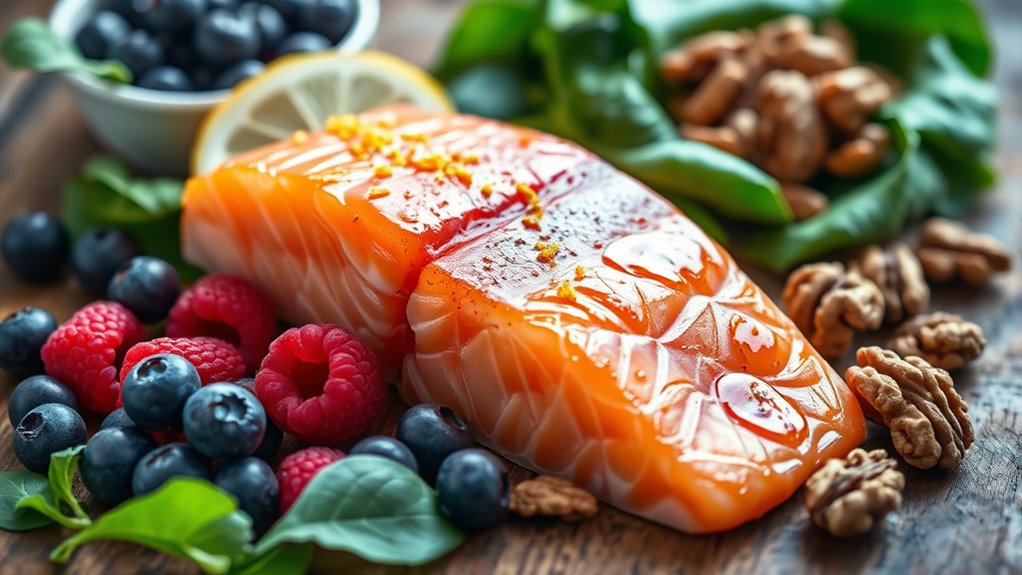

To boost your cognitive health, try recipes that combine omega-3-rich ingredients like salmon or walnuts with antioxidant-packed foods such as berries and leafy greens. For example, enjoy a salmon and spinach salad topped with blueberries or make a smoothie with chia seeds, strawberries, and walnuts. Incorporating these nutrient-dense meals into your routine supports brain function and protects against age-related decline. Keep exploring to discover more tasty ways to nourish your mind effectively.

Get health and wellness essentials delivered free with Prime
- Fast, free delivery on millions of items
- Prime Video, Amazon Music and more included
- Member-only deals all year
Key Takeaways
- Incorporate fatty fish like salmon or mackerel into meals for a rich source of omega-3 fatty acids.
- Add berries such as blueberries or strawberries to smoothies or salads for antioxidant benefits.
- Include walnuts, flaxseeds, or chia seeds in breakfast bowls or snacks to boost plant-derived omega-3 intake.
- Prepare leafy green dishes with spinach or kale for high antioxidant content supporting brain health.
- Create nutrient-dense salads or bowls combining fish, berries, nuts, and greens for a comprehensive cognitive-boosting meal.

Maintaining cognitive health is essential as you age, and the foods you eat play a significant role in supporting brain function. But supporting your brain isn’t just about eating the right foods; it also involves engaging in brain exercises and practicing good sleep hygiene. These habits work together to keep your mind sharp and resilient over time. When it comes to diet, focusing on foods rich in omega-3 fatty acids and antioxidants can provide powerful benefits. Omega-3s, found in fatty fish like salmon, mackerel, and sardines, are crucial for maintaining the fluidity of brain cell membranes and supporting neural communication. Including these in your meals regularly can help improve memory and cognitive performance. Additionally, plant-based sources like walnuts, flaxseeds, and chia seeds offer plant-derived omega-3s, making them excellent options for variety and added antioxidants.
Antioxidants are vital because they combat oxidative stress, which damages brain cells and accelerates cognitive decline. Berries, especially blueberries and strawberries, are packed with antioxidants, including flavonoids, which have been shown to enhance memory and protect brain tissue. Leafy greens like spinach and kale also contain high levels of antioxidants, along with other nutrients that support brain health. Incorporating these into your daily diet ensures your brain gets a consistent supply of protective compounds. It’s also important to understand that top home theatre projectors can dramatically improve your viewing experience, providing sharp, vibrant images that make entertainment more immersive. Alongside a nutrient-rich diet, engaging in brain exercises—such as puzzles, learning new skills, or memory games—can stimulate neural pathways, helping to keep your brain agile. These activities challenge your mind, promote neuroplasticity, and can delay cognitive decline. Combining these mental workouts with healthy eating creates a comprehensive approach to cognitive health.
Sleep hygiene is another critical factor. Quality sleep allows your brain to recover, consolidate memories, and clear out toxins that accumulate throughout the day. Establishing a consistent sleep schedule, avoiding screens before bed, and creating a calming bedtime routine can markedly improve sleep quality. When you’re well-rested, your brain is better equipped to process information, maintain focus, and perform complex tasks. This synergy of good sleep, brain exercises, and a diet rich in omega-3s and antioxidants creates a robust foundation for lifelong cognitive health. Remember, small daily habits—like choosing omega-3-rich foods, challenging your mind regularly, and prioritizing sleep—can have a profound impact on your mental clarity and resilience as you age. By integrating these practices into your routine, you’re taking proactive steps to keep your mind sharp and healthy for years to come.
As an affiliate, we earn on qualifying purchases.
Frequently Asked Questions
Can These Recipes Improve Memory Immediately?
These recipes may offer some immediate effects, but their primary benefits are usually seen over the short term with consistent consumption. You might notice slight improvements in focus or mental clarity soon after eating, but lasting memory enhancement requires ongoing nutrient intake. Remember, short-term benefits can boost your mental performance temporarily, but for lasting cognitive health, integrate these recipes into your regular diet.
Are There Specific Age Groups That Benefit Most?
You might think age doesn’t matter, but age-specific benefits matter greatly. Younger adults gain foundational cognitive support, building resilience early. Older adults, meanwhile, often see more noticeable improvements in memory and mental clarity, making these recipes essential for lifelong cognitive support. No matter your age, incorporating omega-3s and antioxidants provides tailored advantages, but older individuals tend to benefit most, especially in preserving mental agility as they age.
How Often Should I Consume These Recipes?
You should aim to include these cognitive health recipes regularly, ideally several times a week, to support best brain function. Focus on consistent meal timing and mix up your recipe variety to guarantee you get a broad range of nutrients. Incorporating these recipes into your daily routine helps maintain steady energy levels and cognitive sharpness, making it easier to enjoy the benefits long-term.
Are There Any Side Effects From High Omega-3 Intake?
Consuming too much omega-3, especially from fish oil supplements, can lead to potential bleeding risks since it thins your blood. You might notice easy bruising or bleeding gums. While omega-3s are beneficial, overdoing it can cause these side effects. It’s best to stick to recommended amounts and consult your doctor if you’re taking blood thinners or have bleeding issues. Moderation keeps your cognitive health benefits safe and effective.
Can Vegetarians Incorporate These Ingredients Effectively?
Imagine a vibrant salad bursting with color and flavor; yes, you can effectively incorporate plant-based omega-3s and vegetarian antioxidant sources. Flaxseeds, chia seeds, walnuts, and hemp seeds are excellent vegetarian omega-3 options, while berries, nuts, and dark leafy greens supply powerful antioxidants. By including these ingredients regularly, you nourish your brain and boost cognitive health without sacrificing your vegetarian lifestyle.
As an affiliate, we earn on qualifying purchases.
Conclusion
Think of your brain as a finely-tuned orchestra; each nutrient plays a crucial instrument. When you fuel it with omega-3s and antioxidants, you’re fundamentally tuning the strings for a harmonious performance. I once met an elderly friend whose sharp memory and quick wit seemed as vibrant as a symphony—proof that nourishing your brain isn’t just food, it’s crafting a masterpiece. So, choose these recipes and let your mind compose its most beautiful symphony yet.
As an affiliate, we earn on qualifying purchases.
As an affiliate, we earn on qualifying purchases.
Halloween Picks
halloween
As an affiliate, we earn on qualifying purchases.