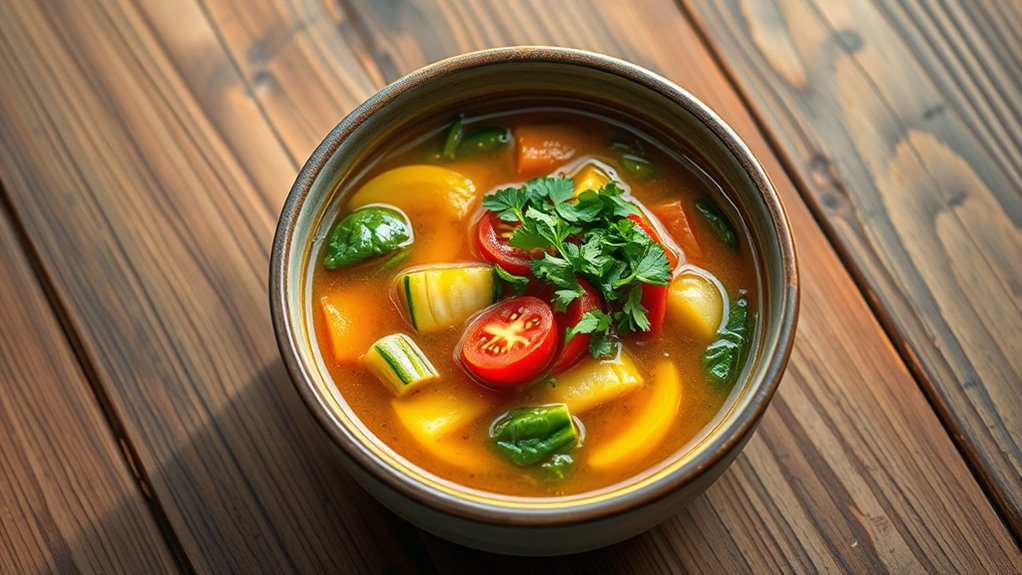

To make a Mediterranean diet soup for two, start by sautéing aromatic vegetables like onions, carrots, and garlic in olive oil until fragrant. Add chopped fresh tomatoes, herbs like basil and oregano, and a mix of seasonal vegetables such as zucchini or spinach. Pour in vegetable broth, simmer until flavors meld, then adjust seasonings. Garnish with fresh herbs or a splash of lemon. Keep exploring for detailed steps to create a delicious, wholesome soup.
Key Takeaways
- Use ripe tomatoes, seasonal vegetables, and herbs like basil and oregano to create a flavorful, healthful Mediterranean soup for two.
- Sauté aromatics like onions and garlic in olive oil before adding vegetables and broth for layered flavor.
- Incorporate protein sources such as chickpeas or lentils, and season with salt, pepper, and herbs to taste.
- Simmer gently until vegetables are tender, allowing flavors to meld without overcooking.
- Garnish with fresh herbs, a drizzle of olive oil, and serve with crusty bread for a balanced meal.
Ingredients Needed for the Soup
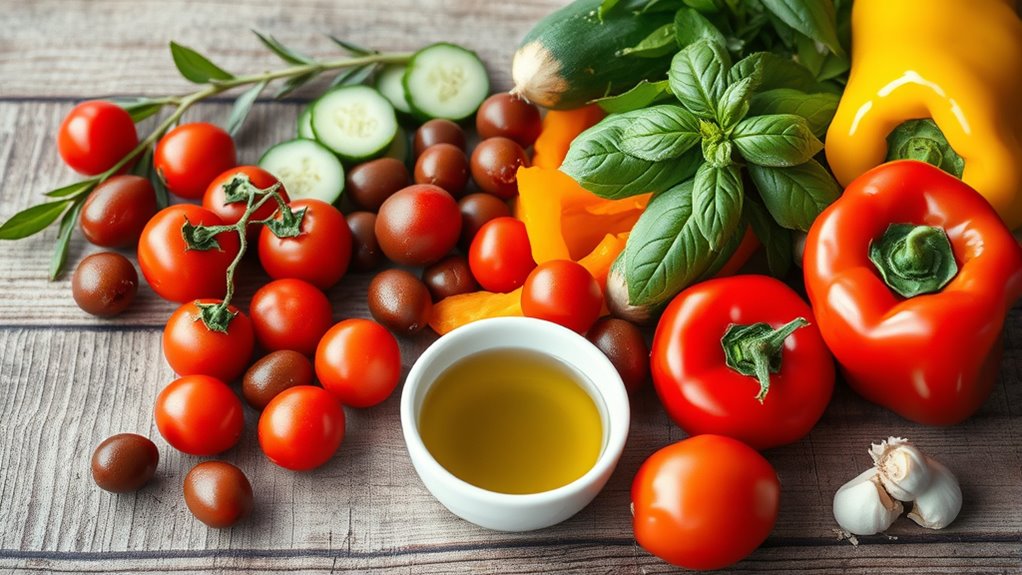
To make this delicious Mediterranean diet soup, you’ll need a selection of fresh, wholesome ingredients. Start with ripe tomatoes, which form the base, but if fresh aren’t available, canned crushed tomatoes work well. Use olive oil for richness and flavor, and feel free to substitute with avocado oil if desired. Add in vegetables like carrots, zucchini, and spinach—these can be swapped for other seasonal produce to vary your soup. For protein, include chickpeas or lentils, which can be replaced with cannellini beans or other legumes. When it comes to cooking techniques, simmering the ingredients gently helps develop flavors without overcooking. Ingredient substitutions allow flexibility, ensuring you can customize the soup based on your pantry while maintaining authentic Mediterranean flavors. Incorporating essential oils for health benefits into your cooking can enhance both flavor and wellness, making your soup not only delicious but also beneficial.
Preparing the Vegetables
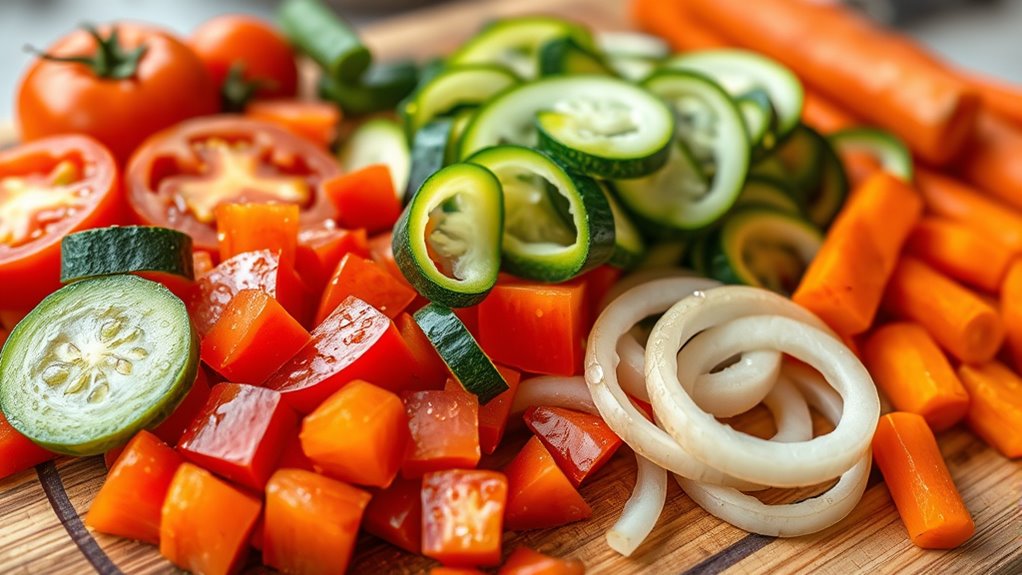
Choose fresh vegetables to enhance the flavor and nutrition of your soup. When chopping, aim for uniform pieces so they cook evenly. Proper preparation makes a big difference in the final taste and texture.
Fresh Vegetable Selection
Before you start chopping and preparing your vegetables, wash them thoroughly under cold running water to remove dirt and any residual pesticides. Choosing fresh vegetables is key to making a flavorful, nutritious soup. Look for produce with vibrant colors, firm textures, and no signs of spoilage. Opt for seasonal produce whenever possible, as it tends to be at its peak vegetable freshness and offers better flavor and nutrients. Select vegetables that feel firm and crisp, avoiding any that are wilted or soft. Freshness makes a noticeable difference in taste and texture, so take your time to pick the best-looking ingredients. Using seasonal, fresh vegetables ensures your Mediterranean diet soup will be delicious, healthy, and full of natural flavors. Additionally, selecting fresh produce can contribute to more sustainable shopping habits and support local farmers.
Proper Vegetable Chopping
Once you’ve selected your fresh, vibrant vegetables, it’s time to prepare them for cooking. Begin by washing each vegetable thoroughly. Use a vegetable peeler to remove the skin when necessary, such as for carrots or zucchini, to ensure a smooth texture and better flavor. When chopping, always prioritize knife safety: keep your fingers tucked in and grip the knife firmly. Use a stable cutting board to prevent slipping. Cut vegetables into uniform pieces to ensure even cooking; for example, dice tomatoes or chop onions into small, manageable pieces. Take your time, and avoid rushing to prevent accidents. Proper vegetable peeling and careful chopping make your soup not only safer to prepare but also more delicious and visually appealing. Additionally, paying attention to kitchen safety practices helps prevent injuries during food prep.
Sautéing the Aromatics
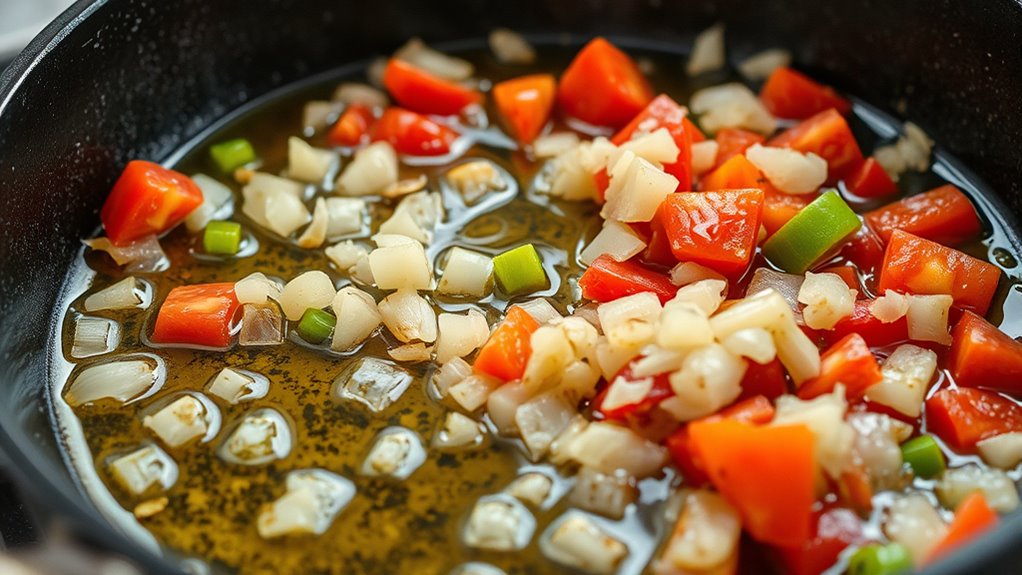
Sautéing the aromatics creates the flavor foundation for your soup, so it’s key to make sure it’s right. Use a good quality pan and heat your oil properly before adding garlic, onions, or other aromatics. Keep an eye on the heat to prevent burning and ensure they release their full aroma.
Aromatic Base Preparation
Starting your aromatic base involves heating a bit of olive oil in a large pot over medium heat. Once warm, add your aromatic herbs like thyme, oregano, or bay leaves, and cook until fragrant. Next, incorporate your spice combinations—paprika, cumin, or cinnamon—to deepen flavor. Stir frequently to prevent burning and ensure even cooking. This step unlocks the essential oils and aromas that form the foundation of your soup’s taste. Keep in mind, the right balance of herbs and spices enhances the Mediterranean profile. Additionally, engaging in sound healing science techniques during this process can promote mindfulness and elevate your cooking experience.
Optimal Sautéing Techniques
After you’ve infused your aromatic herbs and spices into the oil, it’s time to bring out their full flavor through proper sautéing. Use olive oil as your base, as it provides the authentic Mediterranean taste and a healthy fat. Keep your sautéing temperature moderate—around medium heat—to prevent burning the aromatics. If the oil starts to shimmer and gently bubbles, you’re at the right temperature. Stir frequently to ensure even cooking and avoid scorching. Sauté until the aromatics become fragrant and slightly translucent, usually about 2-3 minutes. This step releases their essential oils, boosting your soup’s flavor. Proper sautéing at the right temperature guarantees your aromatics don’t burn and develop a rich, layered taste that sets the foundation for your Mediterranean diet soup. Monitoring the heat level can also help optimize air purifier features by maintaining a clean cooking environment and reducing airborne particles.
Building the Broth Base
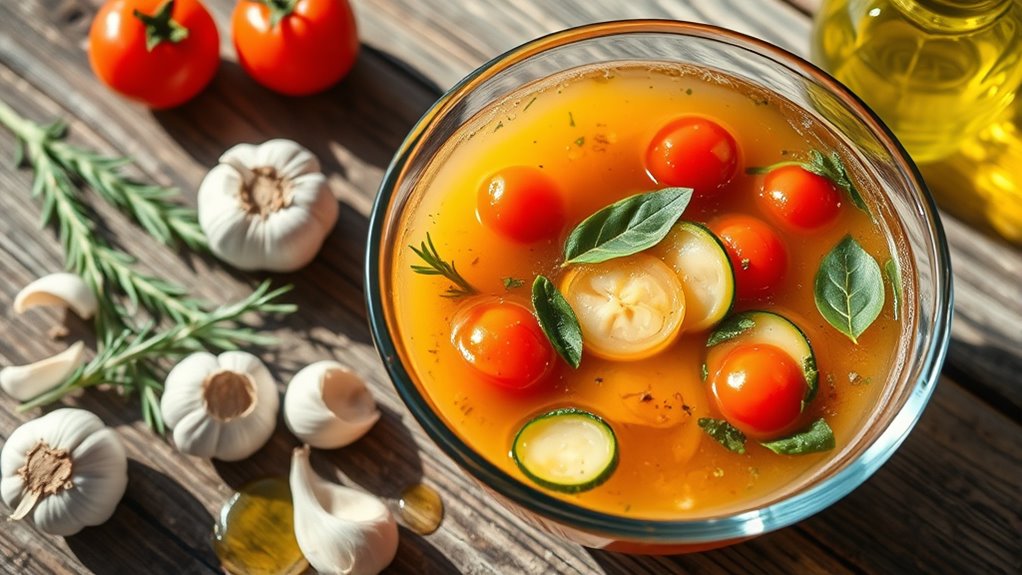
To build a flavorful broth base for your Mediterranean soup, begin by combining high-quality vegetables and herbs in a large pot. Add water and bring it to a gentle simmer. As the stock simmers, focus on broth seasoning—adding salt, pepper, and herbs like thyme or bay leaves to enhance flavor. Keep the heat low enough to allow flavors to meld without boiling vigorously, which could cloud the broth. Regularly skim off any impurities or foam that rise to the surface. This process guarantees a clear, rich foundation. The longer you simmer, the more the flavors concentrate, creating a robust broth. Once the stock has developed depth, strain out the solids and set the flavorful liquid aside for your soup. This careful process guarantees a savory, well-seasoned broth base.
Incorporating the Vegetables

You should choose a variety of colorful vegetables to make your soup visually appealing and nutritious. Adding fresh produce naturally boosts flavor without extra salt or seasoning. By selecting seasonal and vibrant vegetables, you’ll enhance both taste and health benefits. Incorporating self-watering planters can help keep your garden vegetables consistently healthy and well-hydrated.
Colorful Vegetable Selection
Adding a variety of colorful vegetables not only enhances the visual appeal of your Mediterranean diet soup but also boosts its nutritional value. Aim for a vibrant vegetable color palette by including ingredients like red bell peppers, orange carrots, yellow squash, green zucchini, and purple eggplant. These vegetables provide essential vitamins and minerals, supporting your health. To complement their natural hues, incorporate Mediterranean spices such as paprika, turmeric, and cumin, which deepen the colors while adding subtle flavor. Using a diverse selection ensures your soup is both visually stunning and nutrient-dense. The combination of textures and colors makes each spoonful inviting, encouraging you to enjoy a wholesome, delicious meal that celebrates the rich, flavorful essence of Mediterranean cuisine. Additionally, understanding how color accuracy influences the visual appeal can inspire more vibrant and appealing dish presentations.
Enhancing Flavor Naturally
Incorporating vegetables into your Mediterranean soup naturally enhances its flavor by allowing their fresh, vibrant tastes to shine through. As you add vegetables, focus on spice balancing—using herbs like basil, oregano, or thyme to complement their natural sweetness. During broth simmering, let the vegetables release their flavors gradually, enriching the base without overpowering it. Avoid over-seasoning at this stage; instead, taste periodically and adjust spices as needed. The key is patience: simmering slowly ensures the vegetables meld seamlessly into the broth, creating a harmonious depth of flavor. This natural approach highlights the vegetables’ inherent qualities and reduces reliance on artificial flavorings, giving your soup a wholesome, authentic taste that truly celebrates Mediterranean cuisine. Using herbal infusions can further elevate the depth of flavor in your soup, making it more aromatic and satisfying.
Adding Herbs and Seasonings
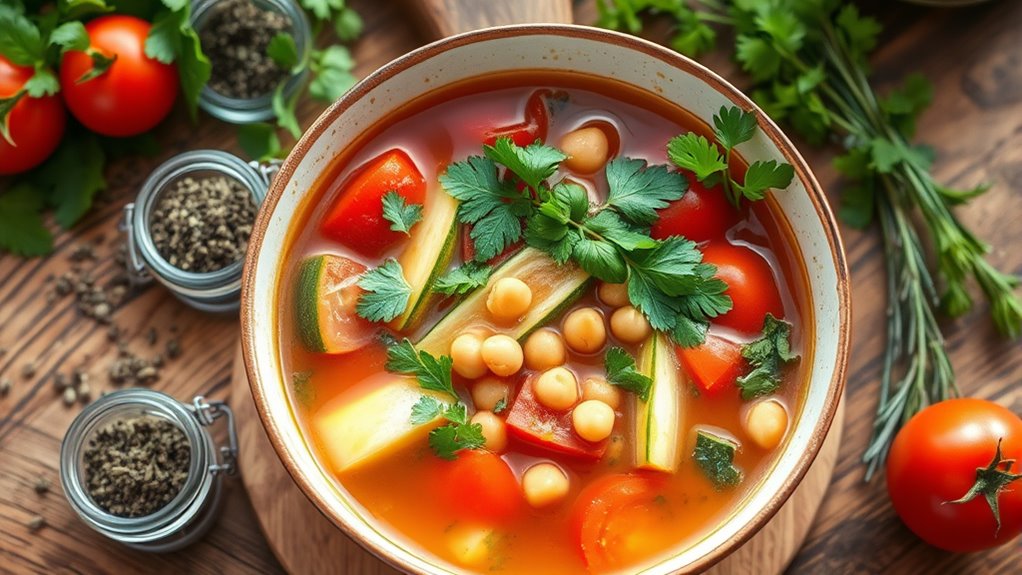
Ever wondered how a simple handful of herbs can elevate the flavor of your Mediterranean soup? The key lies in choosing the right herb combinations to create a vibrant, balanced taste. Fresh herbs like basil, oregano, and parsley work beautifully together, adding layers of aroma and freshness. When adding seasonings, aim for a seasoning balance that enhances rather than overpowers the ingredients. A pinch of thyme or a dash of rosemary can deepen the flavor without overwhelming the soup’s natural qualities. Remember to taste as you go, adjusting herbs and seasonings gradually. This approach *guarantees* your soup develops a harmonious blend of flavors, making each spoonful satisfying and true to the Mediterranean essence. Additionally, understanding home security system costs can help you choose affordable ways to protect your home while enjoying your culinary creations.
Simmering to Perfection

To bring out the best flavors in your Mediterranean soup, simmering it slowly is essential. This gentle process allows the Mediterranean spices to meld, creating a rich, harmonious taste. Keep the heat low and cover the pot partially, so flavors develop without boiling away. As the soup simmers, you’ll notice the ingredients blending beautifully, enhancing the overall depth. Remember, proper soup storage afterward keeps your leftovers fresh and flavorful for later enjoyment.
Slow simmering melds Mediterranean spices, enriching flavors and preventing overcooking for a perfect, harmonious soup.
- Use fresh herbs and spices for maximum aroma
- Stir occasionally to prevent sticking
- Taste and adjust seasoning during simmering
- Let the soup cool before storing in airtight containers
Adjusting Flavor and Consistency
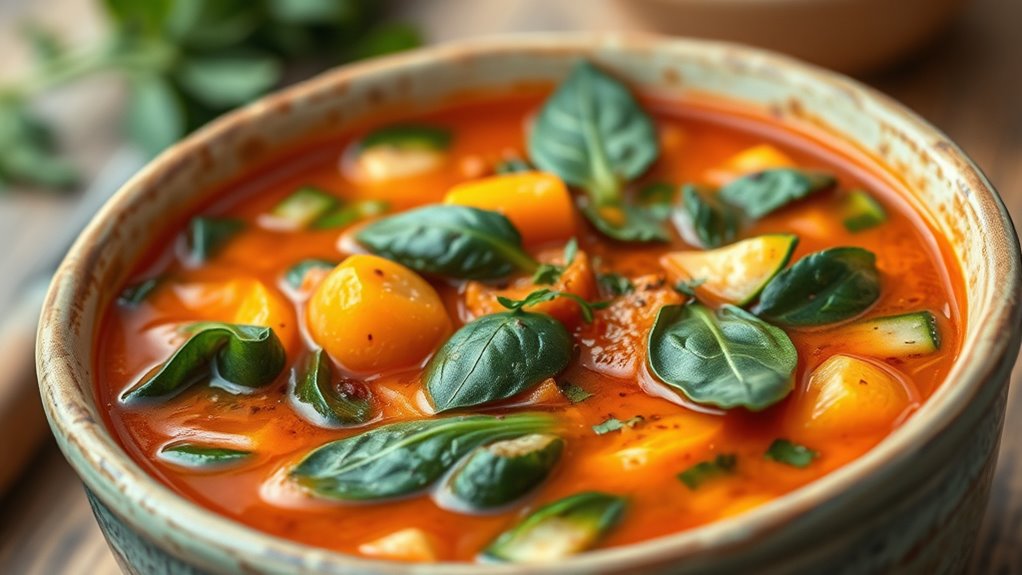
Once your Mediterranean soup has simmered to your desired flavor, adjusting its taste and texture is essential to perfect the dish. To enhance flavor, try spice adjustments like adding a pinch of salt, pepper, or a squeeze of lemon for brightness. If the soup needs more depth, consider stirring in a splash of balsamic vinegar or a dash of smoked paprika. For thickness control, if the soup is too thin, mash some of the cooked vegetables or blend a portion until smooth, then stir back into the pot. Conversely, if it’s too thick, add a little warm water or broth until it reaches your preferred consistency. Tasting frequently as you make adjustments guarantees your Mediterranean soup hits the perfect balance of flavor and texture. Incorporating protective styling benefits can help maintain the soup’s consistency by preventing over-thickening or thinning during storage.
Serving Suggestions and Garnishes
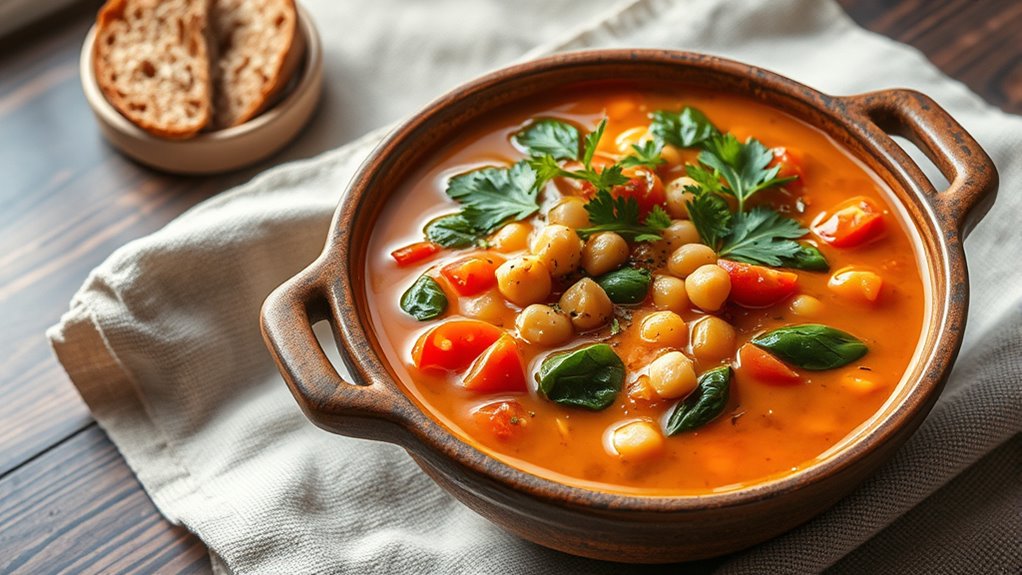
Serving your Mediterranean soup with thoughtful garnishes and complementary side dishes elevates the meal. Garnish options add visual appeal and flavor, making each spoonful more enjoyable. Consider topping the soup with fresh herbs like parsley, basil, or dill for a burst of freshness. A drizzle of good-quality olive oil or a squeeze of lemon juice can brighten the flavors. Crumbled feta or a handful of toasted pine nuts add texture and richness. For serving ideas, pair the soup with crusty whole-grain bread or a simple side salad. These finishing touches turn a basic bowl into a satisfying, well-rounded meal that highlights the vibrant flavors of the Mediterranean. Experiment with garnishes and sides to tailor the experience to your taste.
Tips for Storing and Reheating
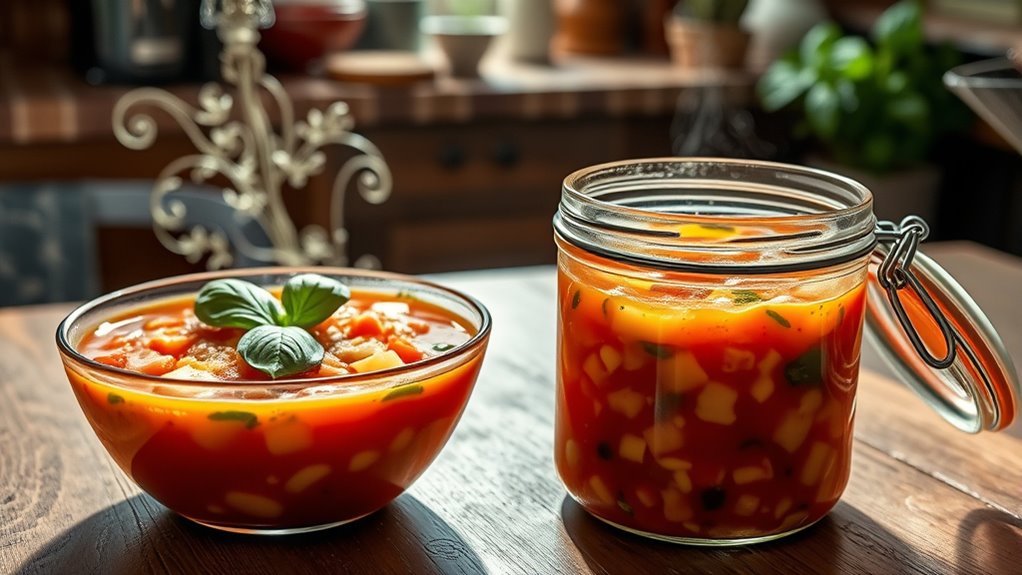
Storing your Mediterranean soup properly guarantees it stays fresh and flavorful for later enjoyment. To store leftovers, transfer the soup to an airtight container and let it cool before refrigeration. This prevents bacterial growth and maintains taste. When reheating, use a stovetop or microwave, and follow reheating tips: heat in short bursts, stirring frequently to ensure even warmth. If reheating in the microwave, cover the container with a microwave-safe lid or paper towel to prevent splatters. Keep in mind, soup stored in the fridge is best enjoyed within 3-4 days. For longer storage, freeze the leftovers in a freezer-safe container, leaving some space for expansion. Always reheat to a rolling boil or an internal temperature of 165°F to guarantee safety and ideal flavor.
Frequently Asked Questions
Can I Make This Soup Vegetarian or Vegan?
You can definitely make this soup vegetarian or vegan. Swap out any meat or seafood with hearty vegetables like beans, lentils, or mushrooms. For herb alternatives, try fresh basil or dill to add flavor. Using vegetable broth instead of chicken or beef broth works well. For vegan modifications, skip dairy or animal-based ingredients, and consider adding plant-based proteins. These changes keep your soup delicious and aligned with vegetarian or vegan diets.
What Are Suitable Substitutions for Mediterranean Herbs?
Imagine your soup as a canvas, waiting for your personal touch. When considering herb alternatives, think of basil, oregano, or thyme as the vibrant colors that bring your masterpiece to life. For flavor modifications, you can swap or add herbs to match your taste. These substitutions can deepen or brighten the dish, making it uniquely yours. Trust your palate, and experiment to find what truly resonates with your culinary vision.
How Long Can I Store Leftovers Safely?
You ask about food safety and storage duration for leftovers. Generally, you should store cooked soup in an airtight container in the fridge for up to 3 to 4 days. If you want to keep it longer, freeze it for up to 2 to 3 months. Always reheat leftovers to a safe temperature, and discard any leftovers with an off smell or appearance to prevent foodborne illness.
Can I Freeze the Soup for Later?
Yes, you can freeze the soup for later. Follow freezing tips like letting it cool completely before transferring it to airtight containers. Use storage guidelines to leave some space for expansion. Label containers with dates, and store in the freezer for up to 3 months. When ready to eat, thaw in the fridge overnight and reheat thoroughly. Proper freezing helps preserve flavor and texture effectively.
What Side Dishes Complement This Mediterranean Soup?
Did you know that pairing healthy Mediterranean flavors with complementary salads can boost nutrient absorption? For this soup, consider serving crunchy whole-grain pita chips or a fresh cucumber and tomato salad. These sides enhance the vibrant flavors and add texture. A simple Greek salad with olives and feta also pairs beautifully. These options make your meal more balanced and satisfying, perfectly complementing the Mediterranean diet soup.
Conclusion
Enjoy your Mediterranean soup as a gentle reminder to savor simple, wholesome moments. With each spoonful, you’re gently embracing flavors that nourish both body and soul. Remember, it’s the small acts of care—like a warm bowl shared with someone special—that truly enrich your day. So, take a moment to appreciate the comforting warmth and vibrant tastes you’ve created, turning everyday dining into a delightful, subtle celebration of health and happiness.