
To make mealtimes easier for someone with cognitive changes, keep routines simple and familiar, with consistent meal choices and prep ahead of time. Create a calm environment by turning off distractions and using appealing, colorful foods served at a steady pace. Support independence with adaptive utensils and gentle prompts, while remaining patient and flexible. Focus on making mealtimes relaxing and positive, so your loved one feels comfortable and confident. For more helpful strategies, explore additional tips beyond this overview.

Get health and wellness essentials delivered free — and shop member deals
- Fast, free delivery on millions of items
- Access to Prime Big Deal Days deals on October 6–7
- Prime Video, Amazon Music and more included
Key Takeaways
- Simplify meal options by offering familiar, nutritious, and visually appealing foods prepared in advance.
- Create a calm, distraction-free environment to promote focus and relaxation during mealtime.
- Use visual cues, contrasting colors, and adaptive utensils to support recognition and ease of handling.
- Encourage independence with simple prompts and pre-cut foods, while maintaining patience and flexibility.
- Make mealtimes positive and social by celebrating small successes and fostering a relaxed atmosphere.
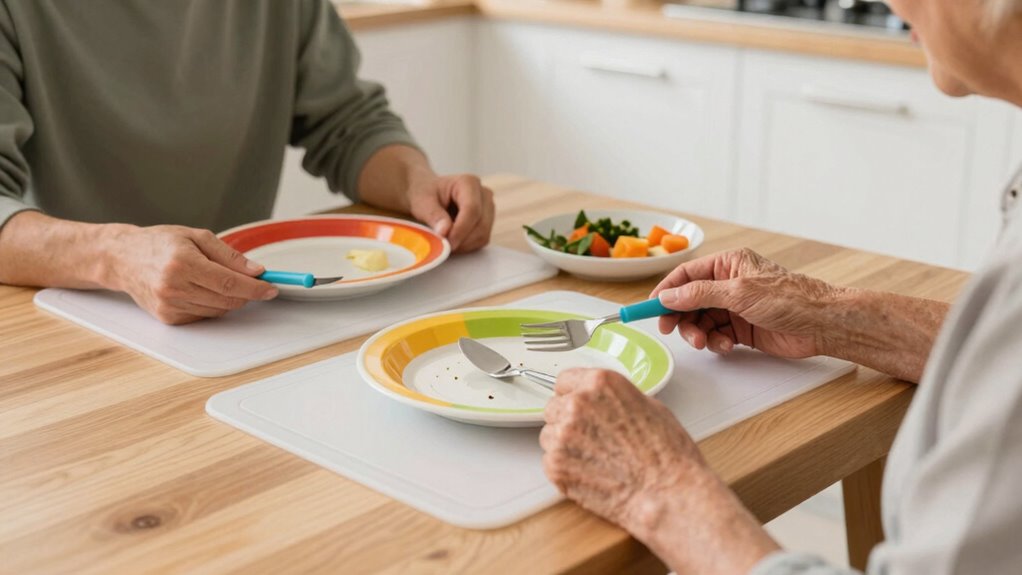
Mealtimes can become challenging when someone experiences cognitive changes, but with simple adjustments, you can make these moments smoother and more enjoyable. One effective approach is to focus on meal planning that simplifies choices and reduces confusion. Keep the meal options consistent and familiar, so your loved one knows what to expect. Preparing meals ahead of time and serving the same dishes regularly can help create a routine, making it easier for them to participate without feeling overwhelmed. Avoid complicated recipes or unfamiliar ingredients, as these can cause frustration or refusal to eat. Instead, focus on nutritious, easy-to-serve foods that are visually appealing and easy to handle.
Simplify meal choices, keep routines consistent, and serve familiar, easy-to-eat foods to reduce frustration during mealtimes.
Sensory stimulation plays an essential role in making mealtimes more engaging and comfortable. Enhance the sensory experience by paying attention to the visual appeal of the plate—use colorful vegetables and neatly arranged foods to stimulate their sight and make the meal more inviting. The aroma of freshly cooked food can also trigger appetite and positive associations with mealtime. You can gently warm foods to improve smell and taste, which can be especially helpful if your loved one’s sense of smell has diminished. The texture of foods matters too; offer a variety of textures that are easy to chew and swallow, such as soft fruits, cooked vegetables, or tender meats. This not only makes eating easier but also stimulates their sense of touch and taste. Additionally, understanding the importance of color accuracy in food presentation can make meals more appealing and encourage better eating habits. Incorporating visual cues can further enhance recognition and comfort during meals. Being mindful of visual clarity and simplicity in food presentation can also help reduce confusion and make it easier for them to identify their meals. Using contrasting colors and familiar plateware can help highlight foods and make the presentation more effective. Paying attention to lighting can also improve visual perception, making the food look more appealing and easier to identify.
Creating a calm, distraction-free environment can considerably improve the mealtime experience. Turn off the television and minimize background noise to help your loved one focus on eating. Sit together at a consistent table and encourage a relaxed atmosphere, which can reduce anxiety or confusion. Using simple, clear verbal cues and gentle prompts can guide them through the meal without overwhelming them. If they struggle with remembering how to use utensils, consider offering pre-cut foods or using adaptive utensils designed for easier grip. Encouraging independence is important, but always be attentive to their comfort and capabilities. Paying attention to their visual needs can also make a significant difference in how they perceive and enjoy their meals. Showing patience and understanding during the process fosters a more positive mealtime experience and helps build trust.
Finally, be patient and flexible. Recognize that their appetite may fluctuate and that they might need more time to finish their meal. Celebrate small successes to boost their confidence and make mealtimes feel less like a chore and more like a pleasant social activity. With thoughtful planning, sensory stimulation, and a compassionate approach, you can transform mealtimes into meaningful, less stressful moments for both of you.
As an affiliate, we earn on qualifying purchases.
Frequently Asked Questions
How Can I Reassure Someone Who Becomes Anxious During Meals?
To reassure someone who becomes anxious during meals, use calming techniques like gentle voice and soft music to create a soothing environment. Employ reassurance strategies such as offering comforting words, maintaining eye contact, and providing familiar foods. Stay patient and attentive, ensuring they feel safe and supported. These approaches help reduce anxiety, making mealtimes more comfortable and encouraging a positive eating experience.
What Are Signs of Nutritional Deficiencies in Someone With Cognitive Changes?
You might notice signs of nutritional deficiencies in someone with cognitive changes like fatigue, weight loss, or irritability. They could also show poor skin health or frequent infections. Using sensory cues, such as bright plates or strong aromas, can encourage eating. Dietary supplements may help fill nutritional gaps, but always consult a healthcare professional first. Keep an eye on their overall well-being to catch deficiencies early.
How Do I Handle Refusal to Eat or Drink?
When faced with refusal to eat or drink, think of meal presentation as a welcoming canvas that sparks curiosity. Gently encourage independence by offering small, manageable portions, and create a calm, distraction-free environment. Use bright, appealing plates to entice them, and softly remind them of the pleasure in mealtime. Patience and gentle reassurance help them feel safe, making it easier for them to accept nourishment willingly.
Are There Specific Foods That Are Easier to Swallow?
Yes, some foods are easier to swallow for those with swallowing difficulties. Focus on texture modifications like pureed, soft, or minced foods that reduce choking risk. Avoid tough, sticky, or dry items. Incorporate thickened liquids if needed. Always observe your loved one during meals, and consult a healthcare professional for tailored recommendations. These adjustments make mealtimes safer and more comfortable, encouraging better eating habits despite swallowing challenges.
How Can Family Members Support Consistent Mealtime Routines?
Imagine a well-oiled machine; consistent mealtime routines keep it running smoothly. You can support this by establishing regular meal times, sticking to familiar foods, and simplifying meal planning. Open family communication helps everyone understand each person’s needs and preferences, reducing confusion. Encourage participation, like setting the table or helping with simple tasks, to foster a sense of routine and comfort, making mealtimes more predictable and supportive for your loved one.
As an affiliate, we earn on qualifying purchases.
Conclusion
By simplifying choices, creating routines, and offering gentle reminders, you make mealtimes more manageable and less stressful. By reducing confusion, increasing confidence, and fostering independence, you help your loved one enjoy each meal. By staying patient, staying positive, and staying present, you provide comfort and support that encourages a sense of normalcy. Ultimately, by being consistent, compassionate, and attentive, you make mealtimes easier, more enjoyable, and more meaningful for both of you.
As an affiliate, we earn on qualifying purchases.
As an affiliate, we earn on qualifying purchases.
Fall Picks
fall essentials
As an affiliate, we earn on qualifying purchases.