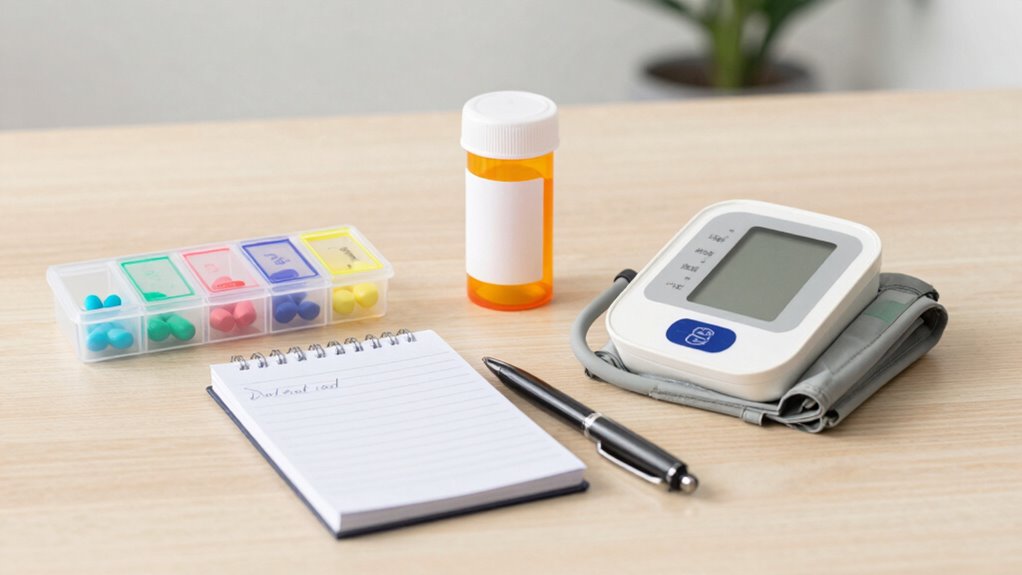

For your medication review appointment, bring an up-to-date list of all your medications, including prescription, OTC, herbal, and vitamins. Carry the actual medication containers to verify dosages and expiration dates. Don’t forget recent test results, records of hospital visits, and notes on side effects or allergies. Prepare questions about your medications and concerns. Being organized and thorough helps your healthcare provider understand your needs better—continue to explore how to maximize your review.
Key Takeaways
- Bring all current medication containers, including prescription, OTC, herbal, and vitamin products, for verification and review.
- Prepare a comprehensive list of all medications, noting recent changes and specific health goals.
- Carry recent lab results and medical records relevant to medication response and adjustments.
- Document any side effects, allergies, or adverse reactions experienced since your last visit.
- Prepare questions about medication safety, interactions, adherence, and cost concerns to discuss with your healthcare provider.
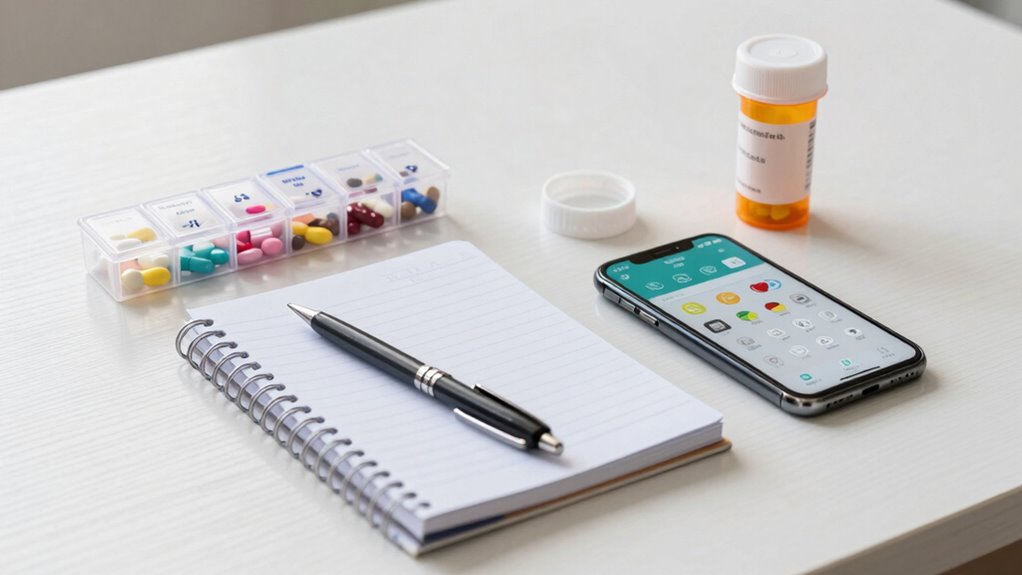
Preparing for a medication review appointment guarantees you get the most out of your visit. To do that, it’s essential to bring the right information and tools with you. One of the most important things to bring is an exhaustive list of all the medications you’re currently taking. This includes prescription drugs, over-the-counter medicines, herbal supplements, and vitamins. Having this list ready helps your healthcare provider quickly review your medication interactions and identify any potential issues. It also ensures that no medication is overlooked, reducing the risk of adverse effects and improving your overall treatment plan.
Along with your medication list, bring the actual containers of your medications if possible. This allows your provider to verify dosages, check expiration dates, and see the exact formulations you’re using. If you’ve recently started or stopped any medications, bring notes about these changes. It helps clarify your medication history and supports better side effect management. Be prepared to discuss how you’re feeling, especially any new or worsening symptoms. Your honesty helps your provider evaluate whether your current medications are working or if adjustments are necessary.
Don’t forget to bring your health records, especially if you’ve had recent lab tests or hospital visits related to your medications. These records can reveal important information about how your body is responding to treatment, which influences medication choices and adjustments. If you’re experiencing specific side effects or concerns, jot down notes beforehand. Detailing when symptoms started and their severity helps your provider determine whether they’re related to medication interactions or other factors. This information is key for effective side effect management.
It’s also helpful to bring a list of any allergies or sensitivities you have, especially to medications. This can prevent adverse reactions and guide safer prescribing. If you’re taking medications for chronic conditions, such as diabetes or hypertension, have recent test results available. These results can help your provider assess the effectiveness of your current regimen and whether changes are needed. Additionally, understanding the brand reputation of certain medication brands can influence your provider’s prescribing decisions, especially for high-cost or specialty drugs. Being aware of medication safety practices can further enhance your understanding and communication with your healthcare team. Staying informed about regulatory updates can also help you understand any recent changes in medication approvals or guidelines that might affect your treatment options.
Finally, prepare a list of questions or concerns. Whether it’s about medication side effects, interactions, or alternative options, having your questions written down ensures you don’t forget important topics during the appointment. Being proactive with this information helps your healthcare provider tailor your medication plan more precisely, which improves your health outcomes. You might also consider medication adherence strategies to ensure you follow your prescribed regimen correctly between visits. By coming prepared with detailed medication information, records, and questions, you’re setting yourself up for a productive and safe medication review. Additionally, understanding medication management strategies can help you maintain better adherence and health consistency between visits.
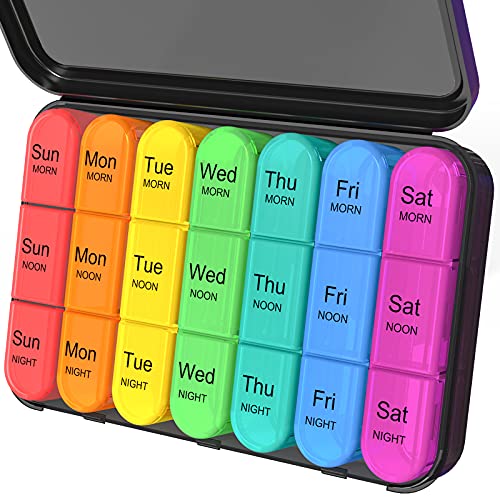
Daviky Pill Organizer 3 Times a Day, Pill Box 7 Day, Weekly Travel Case
- Portable and Spacious: Compact design with ample storage for travel
- Three Daily Compartments: Organize pills three times a day easily
- Durable Labeling: Bold, long-lasting day labels with 3M adhesive
As an affiliate, we earn on qualifying purchases.
As an affiliate, we earn on qualifying purchases.
Frequently Asked Questions
Should I Bring a List of All My Healthcare Providers?
Yes, you should bring a list of all your healthcare providers. Having an all-inclusive medication list helps your provider coordinate care and avoid potential drug interactions. It also makes sure they’re aware of all the healthcare providers involved in your treatment. By sharing this information, you make the review more effective, and your healthcare team can better tailor your medications to suit your needs. Always include contact details if possible.
Is It Necessary to Bring My Health Insurance Information?
Bringing your health insurance information isn’t just a good idea—it’s essential, like a knight bringing their shield. Your insurance documentation helps with coverage verification, ensuring your medications are properly billed and covered. Without it, your provider might face delays or inaccuracies. So, before your appointment, gather your insurance card or details to streamline the process, avoid surprises, and make sure your medication review goes smoothly and efficiently.
How Early Should I Arrive for My Appointment?
You should aim to arrive about 10 to 15 minutes early for your medication review appointment. This allows for any unexpected delays and guarantees you’re on time, demonstrating good appointment punctuality. Timing considerations are important because arriving early gives you a moment to relax and gather your thoughts before the consultation begins. Being punctual helps your healthcare provider start the review promptly, making the most of your appointment time.
Can I Bring a Friend or Family Member for Support?
Of course, you can bring a friend or family member for support—who wouldn’t want an extra set of ears during the conversation? Their presence provides patient emotional support and helps with communication tips, ensuring you understand everything clearly. Sometimes, having someone you trust can make discussing medication changes easier, and they might catch details you miss. So, bring along someone you rely on; it’s your appointment, after all.
Should I Prepare Questions About Specific Medication Side Effects?
Yes, you should prepare questions about medication side effects before your appointment. Think about any symptoms you’ve experienced or concerns you have related to your medications. Writing down specific questions helps guarantee you don’t forget important details during the visit. Asking about side effects allows your healthcare provider to address your concerns, adjust medications if needed, and help you manage any adverse effects effectively.

Personal Health Record Keeper and Logbook
- All-in-One Health Information: Centralized medical and personal data
- Complete Medical History Tracking: Record surgeries, hospitalizations, medications
- Detailed Appointment Records: Track symptoms, test results, treatments
As an affiliate, we earn on qualifying purchases.
As an affiliate, we earn on qualifying purchases.
Conclusion
Being prepared for your medication review guarantees you get the most out of your appointment, just like a trusty squire ready for battle. Bring your list, medications, and questions, and don’t forget to note any side effects or concerns. This way, you’re not lost in the fog of confusion, but rather, steering your health ship through calm waters. With preparation, you’ll be well on your way to better health—no need to be a Robin Hood, just a wise steward of your well-being.
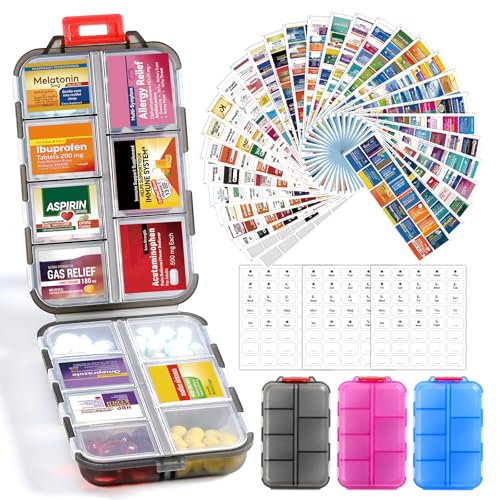
3 Pack 14 Grids Travel Pill Organizer Box with 415-Pcs Medicine Name Labels – Pocket Daily Pharmacy Case Container Kit – Travel Medication Holder Dispenser for Fish Oil Vitamin Supplement – Clear
- NOTE: Please refer to the Overall…
- PRODUCT INCLUDES – You will get 3 PCS…
- FEATURE ABOUT 415 PRE-CUT MEDICINE NAME LABELS -①Include…
As an affiliate, we earn on qualifying purchases.
As an affiliate, we earn on qualifying purchases.

HomEnjoy 4 Pack pH Test Strips, 320 Strips pH 1-14 Universal Litmus Paper
- High Accuracy and Fast Results: Reliable readings within 5 seconds
- Versatile Testing Uses: Suitable for water, soil, and chemical testing
- Full pH Range Coverage: Measures pH from 1 to 14
As an affiliate, we earn on qualifying purchases.
As an affiliate, we earn on qualifying purchases.