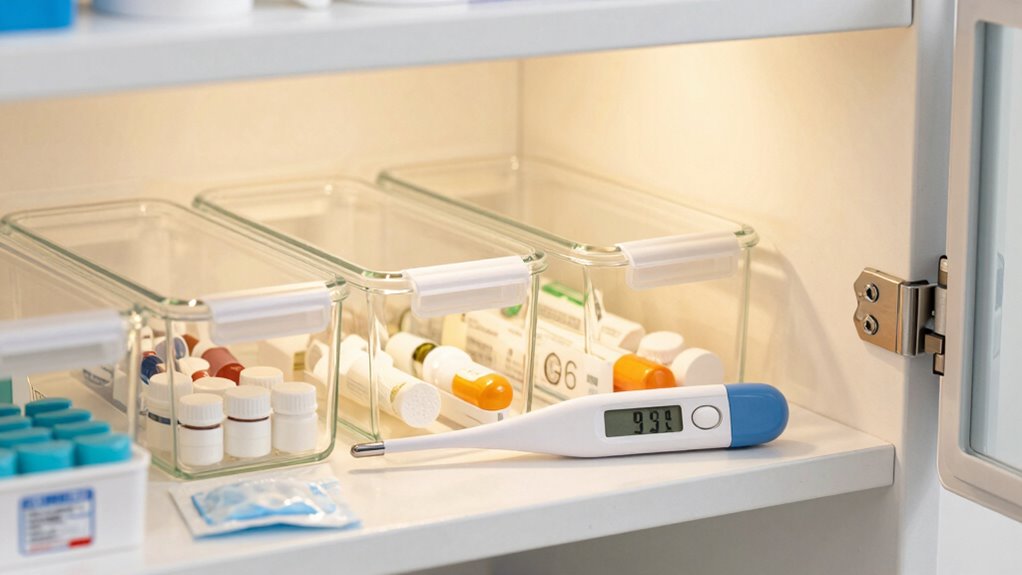

To store temperature-sensitive medications at home, use insulated or specialized pharmaceutical containers that maintain stable temperatures. Keep a reliable digital thermometer with alarm features to monitor conditions constantly. If fluctuations occur, move medications to a controlled environment like a dedicated fridge or cabinet. Be mindful of external factors like seasonal changes or household appliances that affect temperature. Proper storage keeps medications effective and safe, and there’s more to guarantee ideal conditions—keep exploring to learn how to protect your medications best.

Get health and wellness essentials delivered free with Prime
- Fast, free delivery on millions of items
- Prime Video, Amazon Music and more included
- Member-only deals all year
Key Takeaways
- Use insulated or specialized pharmaceutical containers to maintain consistent temperature conditions.
- Keep a reliable digital thermometer with alarm alerts in the storage area.
- Store medications in a dedicated, temperature-controlled environment, avoiding household appliances.
- Regularly monitor storage temperatures, especially during seasonal changes and power outages.
- Avoid repurposing non-medication containers to ensure proper insulation and temperature stability.
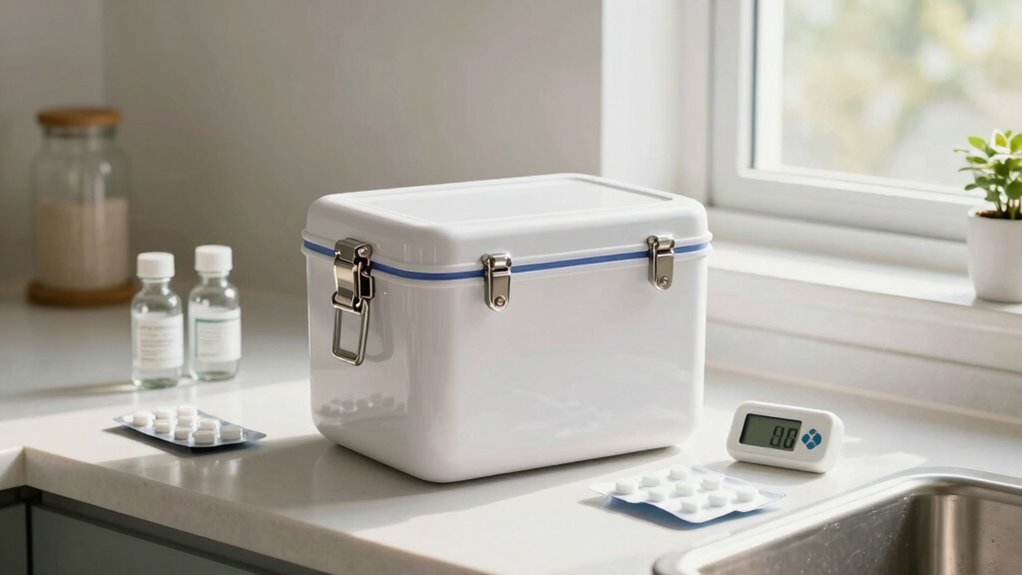
Storing temperature-sensitive medications properly at home is essential to guarantee their effectiveness and safety. When dealing with medications that require specific temperature ranges, using the right storage containers is crucial. Store these medications in containers that are designed to maintain consistent temperatures, such as insulated boxes or specialized pharmaceutical storage containers. These help protect your medicines from temperature fluctuations caused by household appliances or external weather conditions. Avoid repurposing containers that aren’t meant for medication storage, as they may not provide adequate insulation or protection.
Use insulated containers designed for medication to ensure temperature stability and safety at home.
Temperature monitoring is vital when storing sensitive medications. You should always keep a reliable thermometer in your storage area to track the temperature continuously. Digital thermometers with alarm features are ideal because they alert you when the temperature moves outside the recommended range. Regularly check these readings, especially during seasonal changes or power outages, to ensure your medications stay within the safe temperature window. If you notice fluctuations, consider relocating your medications to a more stable environment, such as a dedicated medication fridge or a temperature-controlled cabinet. Additionally, understanding medication temperature sensitivity can help you better manage storage conditions and prevent medication degradation. Being aware of factors like household temperature fluctuations can also help you anticipate and respond to changes that might impact medication stability. Proper storage environments can also be affected by temperature control methods, which help maintain consistent conditions in your home. Knowing how external environmental factors influence storage conditions can further aid in preserving medication effectiveness.
insulated pharmaceutical storage container
As an affiliate, we earn on qualifying purchases.
As an affiliate, we earn on qualifying purchases.
Frequently Asked Questions
Can I Store Temperature-Sensitive Medications in a Regular Home Refrigerator?
Yes, you can store temperature-sensitive medications in a regular home refrigerator if it maintains the correct temperature, typically between 36°F and 46°F. To guarantee medication safety, follow storage guidelines like keeping medicines in their original containers and avoiding door storage where temperature fluctuates. Regularly check your fridge’s temperature with a thermometer, and avoid freezing these medications unless explicitly instructed by your healthcare provider.
How Often Should I Check the Storage Temperature of My Medications?
You should check your medication storage temperature daily to verify it stays within the recommended range. Always follow the storage guidelines on the medication labels, which specify ideal temperatures. Use a reliable thermometer to monitor your refrigerator or storage area regularly. If the temperature fluctuates outside the prescribed range, contact your healthcare provider or pharmacist for advice. Keeping a routine check helps maintain medication effectiveness and safety.
Are There Specific Containers Recommended for Storing These Medications?
Think of your medication container as a safe harbor, protecting precious cargo. Use clear, labeled, airtight containers specifically designed for medication storage, ensuring proper ventilation and insulation. These containers help maintain consistent temperatures and prevent contamination. Always check medication labeling for specific storage instructions, and prioritize storage safety by avoiding direct sunlight or temperature fluctuations. A dedicated, well-chosen container keeps your medications effective and safe, just like a reliable harbor offers security amid stormy seas.
What Should I Do if My Medication Is Exposed to Improper Temperatures?
If your medication is exposed to improper temperatures, act quickly by seeking emergency refrigeration if available. Contact your healthcare provider or pharmacist immediately for guidance. Keep an eye on temperature fluctuation patterns that might have affected the medication’s effectiveness. Do not use the medication if you’re unsure about its safety. Proper storage is crucial, but prompt professional advice helps ensure your medication remains safe and effective.
Can Temperature-Sensitive Medications Be Stored in a Travel Cooler?
Yes, you can store temperature-sensitive medications in a travel cooler, but only if it complies with medication temperature guidelines. Check the medication’s recommended storage range first. Use an insulated cooler with a reliable ice pack or cooling element to maintain a consistent temperature. Avoid frequent opening and make certain the cooler stays within the proper temperature range. This way, your medication remains safe and effective during travel.
digital thermometer with alarm for medication storage
As an affiliate, we earn on qualifying purchases.
As an affiliate, we earn on qualifying purchases.
Conclusion
By following these simple tips, you can become a medication superhero, protecting your medicines from ruin. Remember, a single mistake could turn your essential medications into useless relics—like throwing away gold! Keep them in the right temperature zone, avoid bathroom humidity, and always check storage instructions. With just a little extra care, you’ll guarantee your medications stay effective and safe, saving you from costly trips to the pharmacy and keeping your health on the winning team.
medication temperature controlled fridge
As an affiliate, we earn on qualifying purchases.
As an affiliate, we earn on qualifying purchases.
medication storage temperature monitor
As an affiliate, we earn on qualifying purchases.
As an affiliate, we earn on qualifying purchases.
Halloween Picks
halloween
As an affiliate, we earn on qualifying purchases.