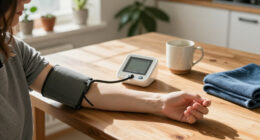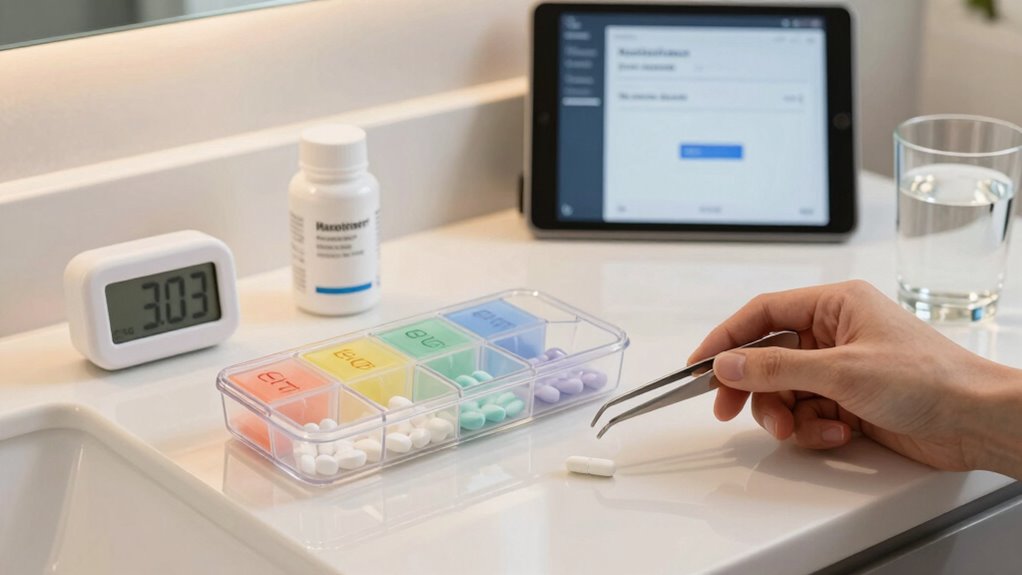

To build a safer medication routine at home, keep your medicines in a consistent, dry, and cool spot out of children’s reach, and always store pills in their original containers with labels intact. Use alarms or apps to set reminders, and double-check labels before taking medications. Maintain an up-to-date list of all your medicines to share with healthcare providers. By following these practices, you’ll reduce errors and guarantee your treatments stay effective—more tips are right ahead.

Get health and wellness essentials delivered free with Prime
- Fast, free delivery on millions of items
- Prime Video, Amazon Music and more included
- Member-only deals all year
Key Takeaways
- Store medications in a consistent, secure location away from children and humidity-prone areas like bathrooms.
- Use reminders such as alarms or apps to maintain a regular medication schedule.
- Keep medications in their original containers with labels intact for easy identification and safety.
- Maintain an updated list of all medications, dosages, and schedules to share with healthcare providers.
- Regularly review medications for expiration, proper storage, and consult professionals for routine adjustments.
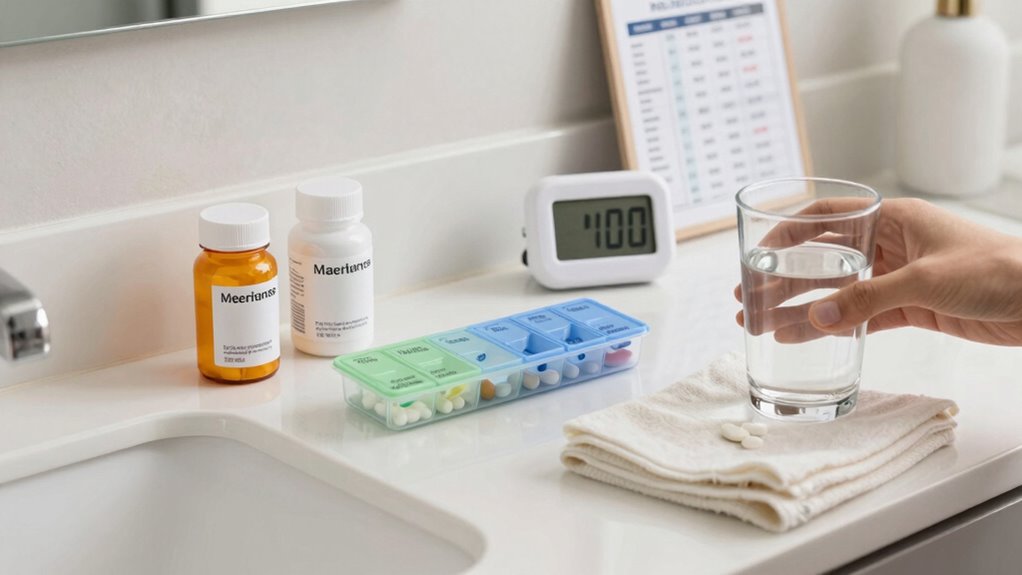
Managing medications safely at home is crucial for maintaining your health and avoiding preventable errors. To do this effectively, you need to pay close attention to medication storage and prescription management. Proper medication storage means keeping your medicines in a safe, consistent place that is out of reach of children and pets. Avoid storing pills in bathrooms or near sinks where humidity can degrade their effectiveness. Instead, choose a cool, dry spot like a cabinet or a dedicated drawer. Keeping medications organized helps prevent mix-ups and ensures you take the right dose at the right time.
Store medications in a cool, dry place out of children’s reach to keep them effective and safe.
Prescription management is equally important. Always keep your medications in their original containers with labels intact. The labels contain essential information such as dosage instructions, expiration dates, and prescribing details. Neglecting to follow these instructions can lead to overdosage, missed doses, or adverse interactions. Make it a habit to regularly review your prescriptions and check expiration dates. Dispose of expired medications properly, and don’t keep leftovers from previous prescriptions unless your healthcare provider advises otherwise. This reduces the risk of confusion and accidental misuse. Proper medication storage and management also help maintain the medication’s efficacy over time. Understanding how environmental factors like humidity and temperature can impact your medications is an important aspect of medication safety.
Creating a medication routine also involves setting reminders. Use your phone alarm or a dedicated medication app to alert you when it’s time to take your pills. Consistency is key to ensuring your treatment remains effective. When it’s time to take your medication, double-check the label to confirm you’re taking the right drug at the right dose. If you’re ever unsure about your prescription, consult your pharmacist or doctor rather than guessing or relying on memory. They can clarify instructions, recommend alternatives, or help you adjust your routine if necessary.
Another step to promote safety is to keep a medication list. Write down all your current medications, including dosages and schedules. Share this list with your healthcare providers during visits and keep it handy at home. This helps prevent dangerous drug interactions and ensures your providers are aware of all the medicines you’re taking. Be cautious with over-the-counter medicines and supplements, as they can interact with your prescriptions. Always inform your healthcare team about any new products you start using. Additionally, understanding the importance of proper medication storage and how it affects drug efficacy can significantly enhance your safety. Being aware of the impact of environmental factors like humidity and temperature can help extend the effectiveness of your medications and ensure safe use over time.
As an affiliate, we earn on qualifying purchases.
Frequently Asked Questions
How Can I Prevent Children From Accessing Medications?
You can prevent children from accessing medications by storing them in childproof containers and keeping them out of reach, such as in high cabinets or locked drawers. Additionally, educate your children about the dangers of medications, emphasizing they’re not for play. Always double-check that containers are secure after use, and never leave medications unattended. Combining proper storage with medication education creates a safer environment at home.
What Should I Do if I Miss a Dose?
Missing a dose can impact your medication adherence. If you miss a dose, take it as soon as you remember—unless it’s close to your next scheduled dose. Skipping doses or doubling up can be dangerous, so stick to your dose timing. Did you know that nearly 50% of patients forget doses? Set reminders to help you stay on track and guarantee your medication works effectively.
Are There Safety Tips for Storing Medications in the Bathroom?
Storing medications in the bathroom isn’t ideal due to humidity and temperature fluctuations. For safe storage, keep medications in their original containers with clear medication labeling, and store them in a cool, dry place away from water and heat. Always follow manufacturer instructions and avoid storing medicines near sinks or tubs. This helps maintain their effectiveness and prevents accidental misuse, ensuring your medication routine remains safe and effective.
How Do I Dispose of Expired or Unused Medicines Safely?
Imagine accidentally taking expired medication, which can be harmful. To dispose of unused or expired medicines safely, follow proper disposal methods like drug take-back programs or mixing medications with undesirable substances before trashing. Always check medication labeling for specific disposal instructions. This approach prevents misuse and environmental harm, ensuring your home remains safe. By staying informed about disposal methods, you protect your loved ones and the planet from potential hazards.
Can I Share My Medications With Family Members?
You should never share your medications with family members, as it can compromise medication adherence and safety. Each person’s prescription management is specific to their health needs, and sharing can cause adverse reactions or incorrect dosing. Always keep your medications separate, follow your healthcare provider’s instructions, and consult them if someone else needs treatment. Protecting your medication routine helps ensure safety and effective treatment for everyone involved.
As an affiliate, we earn on qualifying purchases.
Conclusion
Now that you know the essential steps to create a safer medication routine, remember that consistency is key. But what if a mistake slips through? The real question isn’t just about following the steps—it’s about staying vigilant every single day. Because sometimes, the smallest oversight can have unexpected consequences. So, are you truly prepared to protect yourself and those you love? The next move is yours, and the stakes are higher than you think.
childproof medication storage box
As an affiliate, we earn on qualifying purchases.
As an affiliate, we earn on qualifying purchases.
As an affiliate, we earn on qualifying purchases.
Columbus Day / Indigenous Peoples' Day Picks
long weekend sales
As an affiliate, we earn on qualifying purchases.