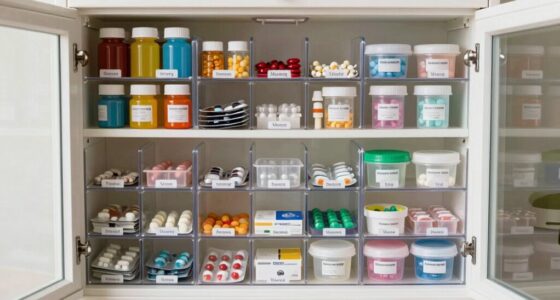

Using clear labels, notes, and proper placement is crucial for safe home medication use. Labels help you quickly identify pills, dosages, and instructions, reducing mix-ups and errors. Notes and reminders keep you consistent in your routine, while organized placement ensures meds are easy to find and access. Proper storage and visual cues create a safe environment and promote correct timing. Keep exploring to discover simple ways to improve your medication safety every day.

Get health and wellness essentials delivered free — and shop member deals
- Fast, free delivery on millions of items
- Access to Prime Big Deal Days deals on October 6–7
- Prime Video, Amazon Music and more included
Key Takeaways
- Clear labels quickly convey essential medication info, reducing errors and preventing mix-ups.
- Notes and reminders reinforce routines, ensuring consistent and correct medication adherence.
- Proper placement and organization enable easy access and minimize the risk of taking the wrong dose.
- Strategic storage away from food and in designated areas prevent contamination and accidental ingestion.
- An integrated system of labels, notes, and placement creates a safe, efficient medication management environment.
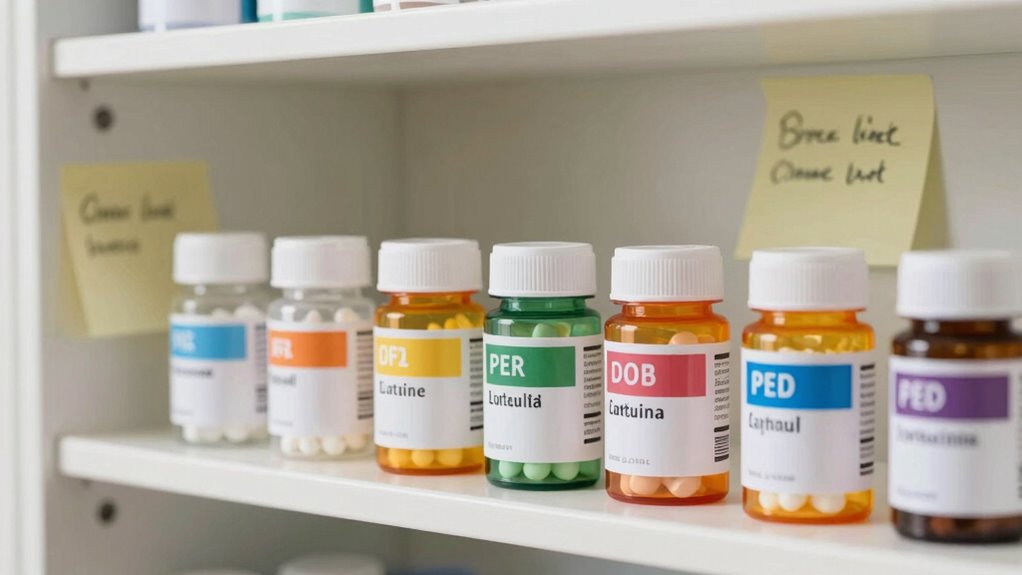
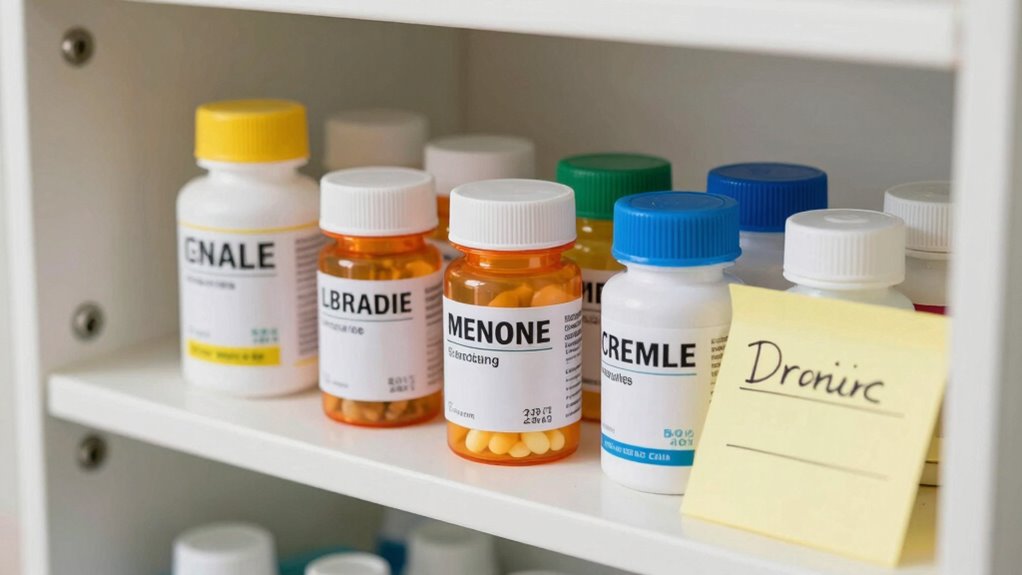
Ensuring medication safety at home starts with clear labels, helpful notes, and strategic placement. When you prioritize these aspects, you reduce the risk of mistakes and make managing medications more straightforward. Labels act as your first line of defense, providing essential information at a glance. They help you distinguish between different pills, dosages, and times of day, preventing accidental mix-ups. Clear, legible labels also include instructions, such as whether to take a medication with food or on an empty stomach, which can make a significant difference in effectiveness and safety.
Clear, legible labels prevent mix-ups and provide vital instructions for safe, effective medication use at home.
Medication reminders are essential in maintaining consistent routines. Using simple notes or sticky notes can alert you or caregivers when it’s time to take a dose. These reminders should be visible and easy to understand, especially if multiple medications are involved. For example, placing a note on the bathroom mirror or fridge can serve as a visual cue, reinforcing the schedule. Combining medication reminders with visual cues creates a reliable system that minimizes missed doses or double dosing. This consistency is critical, especially for medications requiring strict timing, like blood thinners or insulin. Additionally, medication adherence can be improved by incorporating technology, such as smartphone alerts or specialized apps, to further support routines.
Storage organization also plays a significant role in home medication safety. When you keep medications in designated, organized spaces, you immediately know where everything is. Use storage containers that are easy to access but secure enough to prevent children or pets from reaching them. Group similar medications together and store them away from household items like food or cleaning supplies. Label storage compartments if necessary, so everyone in the household knows where to find or return medications. This approach not only prevents accidental ingestion but also makes refilling or checking supplies quicker and easier.
Placement of medications matters just as much as labels and notes. Keep daily medications in a consistent, prominent spot — perhaps on a countertop or in a medicine caddy — so they’re always within reach. Seasonal or less frequently used medications can go in a separate, less prominent area. Avoid storing medications in places prone to temperature fluctuations or humidity, like bathrooms or near kitchen stoves, because this can compromise their effectiveness. When you establish a specific, logical placement for each medication, you build a habitual routine that reduces confusion and enhances safety. Incorporating proper home organization strategies can further streamline medication management and reduce errors. Furthermore, educating all household members about medication safety practices can foster a collective responsibility and vigilance.
All these elements—labels, reminders, storage organization, and placement—work together to create a safer medication environment at home. By paying close attention to how you organize and display your medications, you’re actively reducing errors and ensuring that everyone in your household takes the right medication at the right time. Proper medication management isn’t just about the pills; it’s about creating a system that promotes safety, clarity, and consistency every day.
As an affiliate, we earn on qualifying purchases.
Frequently Asked Questions
How Can Digital Labels Improve Medication Safety at Home?
Digital labels can markedly improve medication safety at home by offering digital label customization, making instructions clearer and tailored to your needs. They integrate medication reminder technology, helping you remember doses and timing precisely. With digital labels, you reduce errors, guarantee proper storage, and stay organized effortlessly. This technology simplifies managing multiple medications, giving you confidence that you’re taking the right drug at the right time, every time.
What Are Common Mistakes in Medication Placement to Avoid Accidents?
You should avoid placing medications within reach of children or in unsafe areas, as accidents can happen quickly—statistics show that child medication ingestions increase during the holidays. Guarantee proper medication storage by keeping drugs in original containers with clear labels, avoiding mixing different meds, and not storing them in areas prone to moisture or heat. Clear label clarity and strategic placement help prevent confusion and accidents at home.
How Often Should Medication Labels Be Updated or Checked?
You should check your medication labels at least once a month to guarantee label accuracy. Regularly reviewing labels helps confirm expiration dates and correct medication details. Keep your medications organized on shelves so you can quickly spot any outdated or misplaced items. Proper shelf organization and consistent label checks reduce the risk of taking the wrong medication or dosage, keeping your home safe and your medication routine reliable.
Are There Specific Color Codes for Different Medication Types?
Yes, there are specific color codes for different medication categories to help you easily identify them. For example, red often indicates emergency or life-saving medications, while blue might be used for non-prescription or OTC drugs. Using consistent color coding helps prevent mix-ups and guarantees you quickly recognize the right medication. Make certain to follow any established guidelines or consult your pharmacist to implement a clear, effective color-coding system at home.
How Do Language Barriers Affect Medication Labeling and Instructions?
Language barriers can substantially hinder your understanding of medication labels and instructions, leading to confusion, misuse, or missed doses. When translation accuracy falters, instructions become unclear, risks increase, and safety diminishes. You need clear, accurate communication—whether through bilingual labels, visual cues, or professional translation—to guarantee you follow proper medication routines. By prioritizing precise, understandable information, you protect your health and enhance safe medication use at home.
As an affiliate, we earn on qualifying purchases.
Conclusion
Paying attention to labels, notes, and placement isn’t just about organization—it’s essential for your safety. Proper labeling can reduce medication errors by up to 60%, helping you avoid dangerous mix-ups. By keeping medications clearly separated and well-documented, you create a safer home environment for yourself and loved ones. Remember, a little extra effort in organizing your meds can make a significant difference in preventing accidents and ensuring your health stays on track.
As an affiliate, we earn on qualifying purchases.
childproof medication storage containers
As an affiliate, we earn on qualifying purchases.
As an affiliate, we earn on qualifying purchases.
Fall Picks
fall essentials
As an affiliate, we earn on qualifying purchases.