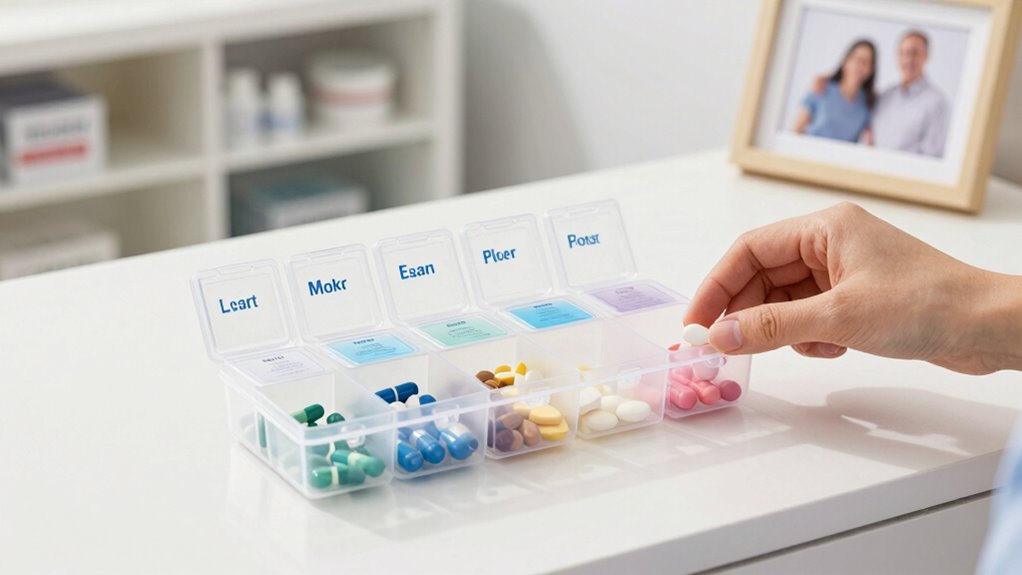

A good medication organizer for family caregivers should prioritize safety with child-proof locks, tamper-evident seals, and spill-proof designs to prevent accidents. It needs clear labels, distinct colors, and transparent compartments for easy identification and organization of medications. Durability and portability are essential, so choose impact-resistant, lightweight models that can handle daily use and travel. Plus, user-friendly features like simple lids and alarms help guarantee medications are taken correctly. Keep exploring to discover more ways to enhance your medication management.

Get health and wellness essentials delivered free with Prime
- Fast, free delivery on millions of items
- Prime Video, Amazon Music and more included
- Member-only deals all year
Key Takeaways
- Clear labeling and color coding for easy identification of medications and schedules.
- Child-proof, tamper-evident, and spill-proof designs ensure safety during storage and transport.
- Organized compartments by day, time, or medication type for efficient management.
- Durable, impact-resistant materials combined with portability for daily use and travel.
- Built-in alarms or digital reminders to support timely medication adherence.
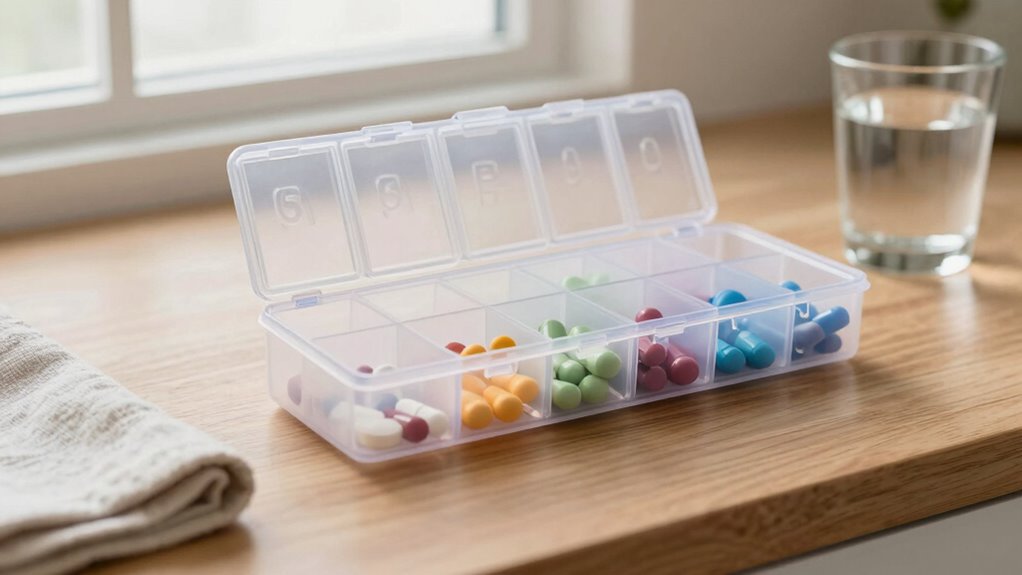
Managing multiple medications for loved ones can be overwhelming, especially when you’re juggling other caregiving tasks. A good medication organizer simplifies pill management by keeping pills sorted, accessible, and easy to track. It’s essential that your organizer helps prevent missed doses and accidental overdoses, which makes safety features a top priority. Look for a container with clearly marked compartments, ideally labeled by day, time, or specific medication. This guarantees you can quickly identify what’s needed without sifting through a jumble of pills, reducing the risk of errors.
Safety features are critical when choosing a medication organizer. Many organizers now come with child-proof locks or secure lids, which are essential if children are around or if you want to prevent accidental spills. Some models include tamper-evident seals, giving you peace of mind that medications haven’t been compromised. An organizer with a sturdy, spill-proof design can prevent accidental leaks, especially if medication bottles are accidentally knocked over. If your loved one has complex medication schedules, look for organizers with built-in alarms or signals. These features can remind you when it’s time to administer a dose, helping you stay on track and avoid missed or double doses. Incorporating medication safety features such as these can significantly enhance overall medication management. Additionally, considering backyard transformation essentials like a designated spot for medication storage can help you keep everything organized and easily accessible in your caregiving space.
Durability is another important aspect. You want a medication organizer made from high-quality, impact-resistant materials that can withstand daily use. Portability is also beneficial—compact, lightweight organizers make it easier to take medications on the go or move them from room to room. Clear, transparent compartments allow you to see the pills at a glance, saving time and reducing mistakes. If your loved one takes multiple medications with different timing requirements, consider an organizer with multiple layers or sections that can be customized to suit their specific needs. Incorporating color accuracy, such as distinct colors for different medications, can further reduce confusion and promote safety. Moreover, choosing an organizer with smart features like digital reminders can help keep track of medication schedules more effectively.
Ease of use plays a significant role too. The best medication organizers are intuitive, with easy-to-open lids or compartments, especially if your loved one has limited dexterity. Some models include labels or icons, which can be helpful for seniors or those with cognitive impairments. Regularly cleaning and maintaining the organizer helps prevent medication contamination and keeps everything hygienic. Choosing a model that is also easy to clean and maintain can help prolong its lifespan and ensure ongoing safety.
Ultimately, a good medication organizer combines practicality with safety. It should streamline pill management, reduce errors, and give you confidence that your loved one’s medications are handled correctly. When you invest in a well-designed organizer with these features, you not only simplify your caregiving role but also promote your loved one’s safety and well-being.
child-proof medication organizer with alarms
As an affiliate, we earn on qualifying purchases.
As an affiliate, we earn on qualifying purchases.
Frequently Asked Questions
How Do I Choose a Medication Organizer for Multiple Family Members?
To choose a medication organizer for multiple family members, start by considering pill sorting features that accommodate different schedules and medication types. Look for one with label customization so you can clearly identify each person’s pills. Opt for a sturdy, easy-to-open design with separate compartments for each individual. This helps prevent mix-ups and guarantees everyone gets the right medication at the right time, making caregiving more manageable.
Can Medication Organizers Prevent Accidental Overdoses?
You might find it a coincidence that a medication organizer can help prevent accidental overdoses, but it really does by promoting pill sorting and dosage accuracy. When you use a well-designed organizer, it keeps medications clearly separated, reducing mix-ups. This way, you’re more likely to give the right dose at the right time, which is essential for safety and avoiding dangerous mistakes with medications.
Are Electronic Medication Organizers More Secure Than Manual Ones?
Electronic medication organizers are generally more secure than manual ones because they prioritize medication security and privacy protection. They often feature password protection, encryption, and access logs, making it harder for unauthorized individuals to access medications. Manual organizers, on the other hand, rely on physical locks or open compartments, which can be easier to open or tamper with. Overall, electronic systems offer better safeguards to guarantee medication safety and privacy.
How Often Should I Clean or Replace My Medication Organizer?
Imagine your medication organizer as a garden needing regular care. You should clean it weekly to keep pill sorting and label clarity sharp and prevent cross-contamination. Replace it every 6 to 12 months, or sooner if you notice cracks or faded labels. Regular cleaning and timely replacement guarantee your loved ones’ medications stay organized, safe, and effective, giving you peace of mind in your caregiving role.
What Features Should I Look for in a Travel-Friendly Medication Organizer?
When choosing a travel-friendly medication organizer, look for a compact pill organizer with secure lids, easy-open compartments, and clear labels for quick identification. Consider one with multiple sections for different doses and a sturdy design to withstand travel. Use travel tips like packing your organizer in your carry-on, keeping it nearby, and checking medication quantities before trips. These features guarantee convenience and safety during your travels.
spill-proof pill storage container
As an affiliate, we earn on qualifying purchases.
As an affiliate, we earn on qualifying purchases.
Conclusion
A good medication organizer can truly ease your caregiving journey, helping you stay on top of medications effortlessly. Sure, some might think it’s just a simple box, but its importance can’t be overstated—you’ll feel more confident and less stressed. And if you worry about complexity, don’t! Choose one with clear labels and easy access. With the right organizer, you’ll provide better care and find peace of mind, knowing you’ve got it all under control.
multi-compartment medication organizer with labels
As an affiliate, we earn on qualifying purchases.
As an affiliate, we earn on qualifying purchases.
portable impact-resistant pill box
As an affiliate, we earn on qualifying purchases.
As an affiliate, we earn on qualifying purchases.
Cold & flu season Picks
humidifiers
As an affiliate, we earn on qualifying purchases.