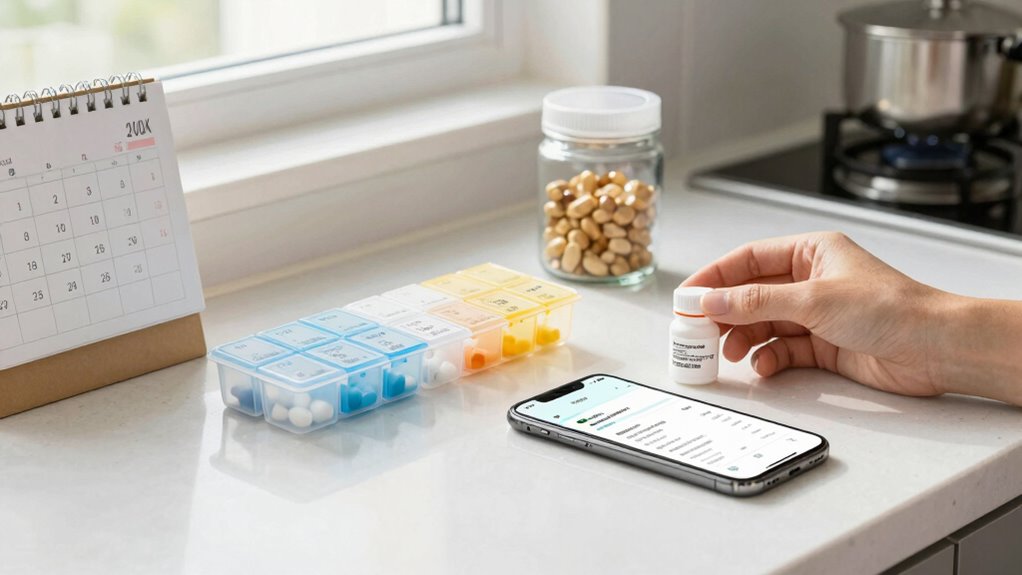

To build a medication refill routine that avoids last-minute stress, set a specific day each week to review your pills and check your supply. Use a pill organizer to easily see your medication levels and set refill reminders on your phone or pharmacy app. Regularly filling and checking your organizer, combined with automatic refill services, keeps your routine smooth. Keep this cycle consistent, and you’ll stay ahead of your needs—discover more tips to keep your routine seamless.
Get ready for Prime Big Deal Days — try Prime free
Exclusive member deals on October 6–7, plus fast free delivery. Cancel anytime.
As an affiliate, we earn on qualifying purchases.
Key Takeaways
- Schedule regular weekly medication reviews to monitor supply and anticipate refill needs early.
- Use automatic refill alerts on pharmacy apps or phone reminders to stay ahead of medication shortages.
- Fill your pill organizer on a set day each week to establish a consistent routine.
- Keep a small medication list for quick reference and proactive communication with healthcare providers.
- Incorporate refill reminders into your routine to ensure timely refills without last-minute stress.
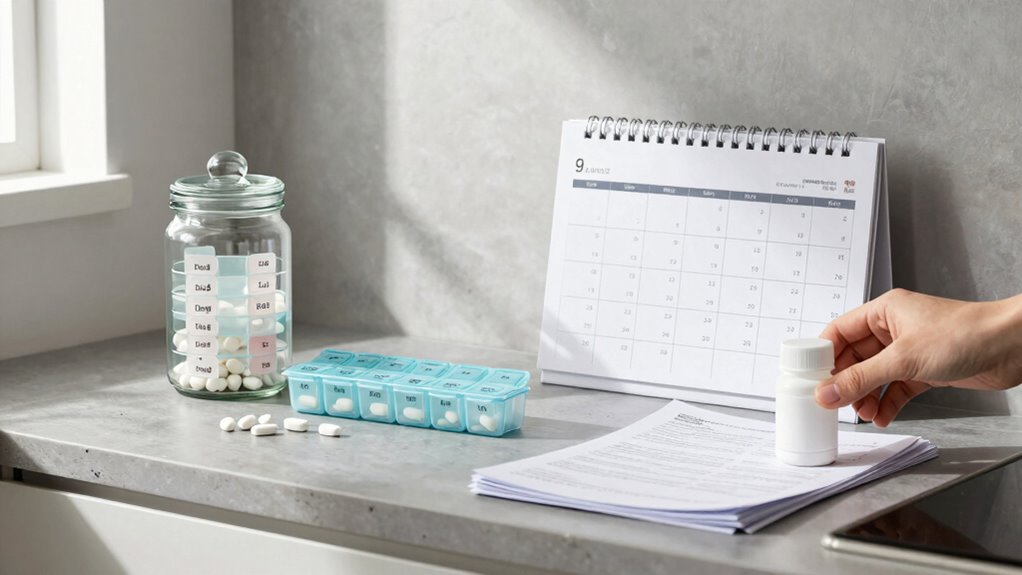
Have you ever run out of medication unexpectedly? It’s a frustrating experience that can disrupt your day and even compromise your health. To avoid this, you need a solid plan in place—something that makes refilling your prescriptions smooth and stress-free. Building a medication refill routine starts with simple tools and habits that keep you on track. One helpful tool is a pill organizer. Not only does it keep your pills sorted by days or times, but it also gives you a visual cue to see when you’re running low. As you fill your organizer each week, you’ll quickly notice if your supply is getting tight, prompting you to take action before you’re completely out. Setting refill reminders on your phone or through your pharmacy’s app can also make a big difference. These alerts serve as gentle nudges, reminding you days before your medication runs out, so you have plenty of time to reorder or visit the pharmacy. Combining a pill organizer with refill reminders helps create a system that’s proactive rather than reactive.
Use a pill organizer and refill reminders to stay proactive and prevent running out of medication unexpectedly.
Additionally, understanding the importance of contrast ratio and how it impacts visual clarity can help you better grasp how to optimize your home environment for medication storage or organization spaces. Establishing a regular schedule is key. Pick a specific day each week—perhaps Sunday or whichever day you restock groceries—and mark it as your medication check-in day. During this time, review your pill organizer and see if you need to refill any medications. By doing this consistently, you turn what could be a chaotic scramble into a routine process. If you use a pharmacy that offers automatic refills, set up alerts so you’re notified when your prescription is ready for pickup. This way, you avoid the last-minute rush, especially if your medication is vital for daily health management. Recognizing the role of medication adherence and how habits influence it can motivate you to stay committed to your routine. Incorporating natural remedies or complementary practices can also support overall health and reduce medication dependency in some cases.
To further support your routine, educate yourself about regulatory compliance and ensure your medication storage methods meet safety standards. It’s also important to communicate with your healthcare provider. If you notice your medication supply is running low earlier than expected, reach out to discuss refills. Some medications require more frequent adjustments, so staying in touch ensures you’re always on the right dosage and schedule. Keep a small list of your medications somewhere handy—perhaps in your wallet or on your phone—so you can quickly reference it when talking to your pharmacist or doctor.
Creating a routine doesn’t have to be complicated. Small, consistent habits like filling your pill organizer at a set time and setting refill reminders can prevent the stress of running out unexpectedly. Over time, these habits become second nature, giving you peace of mind and ensuring your health stays on track without last-minute panic.
As an affiliate, we earn on qualifying purchases.
Frequently Asked Questions
How Early Should I Request Refills Before Running Out?
You should request refills at least a week before running out, giving yourself enough time for prescription management. Set medication reminders to track your supply and avoid last-minute stress. Planning ahead guarantees your doctor has ample time to approve refills, and pharmacies can prepare them promptly. This proactive approach helps you maintain consistent medication use and prevents interruptions in your treatment, keeping your health on track.
What Should I Do if My Pharmacy Is Out of Stock?
When your pharmacy is out of stock, you should contact them immediately to ask about pharmacy inventory updates and possible medication alternatives. Stay proactive by exploring other pharmacies nearby or asking your healthcare provider for guidance on alternative prescriptions. Keep a list of trusted pharmacies, and always verify medication availability beforehand. This way, you reduce delays, guarantee continuous treatment, and avoid last-minute stress caused by unexpected stock shortages.
How Can I Track Multiple Medication Schedules Effectively?
You can track multiple medication schedules effectively by using pill organizers to sort your pills by day and time, making it easier to see what’s due. Complement this with digital reminders on your phone or medication management apps to alert you when it’s time to refill or take your meds. Combining visual organization with timely alerts helps prevent missed doses and keeps your routine smooth and stress-free.
What Are the Risks of Delaying a Refill?
Imagine missing a dose of your medication because you delayed refilling. Delaying a refill risks lapses in medication adherence, which can worsen health conditions or cause dangerous side effects. It also threatens prescription safety, as missed doses can lead to ineffective treatment or overdose if you accidentally double up. To avoid these risks, timely refills guarantee consistent medication adherence and safeguard your health.
How Do I Handle Medication Changes During a Routine?
When handling medication changes during your routine, prioritize medication synchronization to align your refills, making management easier. Keep clear communication with your doctor about any medication adjustments, ensuring you understand dosage and timing. Update your pharmacy with these changes promptly, so they can coordinate refills efficiently. Regularly review your medication list, and don’t hesitate to ask your healthcare provider for clarification, helping you stay organized and avoid last-minute stress.
As an affiliate, we earn on qualifying purchases.
Conclusion
By establishing a consistent medication refill routine, you’ll stay ahead of the game and avoid last-minute stress. Keep track of your refills, set reminders, and plan ahead to guarantee you never run out when you need it most. Remember, a little preparation goes a long way, turning a potential headache into smooth sailing. Don’t wait until the last minute—think of it as planting seeds today for a worry-free tomorrow.
automatic prescription refill service
As an affiliate, we earn on qualifying purchases.
As an affiliate, we earn on qualifying purchases.
As an affiliate, we earn on qualifying purchases.
NFL season / tailgating Picks
team gear
As an affiliate, we earn on qualifying purchases.