
TL;DR

Get health and wellness essentials delivered free with Prime
- Fast, free delivery on millions of items
- Prime Video, Amazon Music and more included
- Member-only deals all year
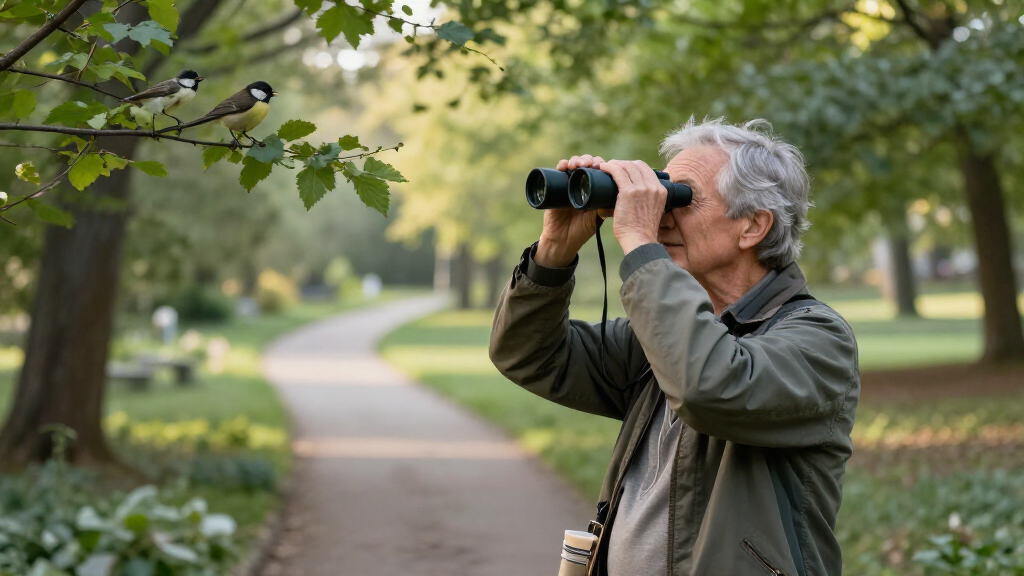
Research described by BBC Future links expert birdwatchers with brain activity and organisation patterns that may be associated with slower age-related decline, but it does not show that birdwatching causes those differences. Separate care-home research reported improvements in residents’ wellbeing and cognitive agility after bird-feeding stations were installed. The evidence is promising but does not establish birdwatching as a treatment for dementia.
Brain-imaging research on birdwatchers has found differences in activity and organisation between experts and novices, while a separate care-home study reported improved wellbeing after residents were given opportunities to watch birds. The findings, reported by BBC Future, suggest birdwatching may support aspects of brain health and social engagement, but do not prove it slows cognitive decline or treats dementia.
In research led by Erik Wing of Baycrest Academy for Research and Education in Toronto, scientists compared MRI scans of expert birders and novices as they identified birds. The report says experts showed different patterns in brain regions associated with attention, visual perception and recognition, with more activity in those areas, particularly when participants were asked to identify unfamiliar birds.
Wing also examined how organised the participants’ brain networks were. Some regions in expert birders showed higher organisation and coherence than in novices of the same age. The report says brain organisation tends to decline with age and that lower measures are associated with reduced cognition. However, the research does not establish whether birdwatching produced the observed differences, or whether people with those brain patterns were more likely to become expert birders.
A separate study led by Elisabeth Kals, a professor of social and organisational psychology at the Catholic University of Eichstätt-Ingolstadt, placed bird-feeding stations outside 65 nursing homes. Residents could watch birds from indoor common areas. The team assessed cognition, mobility and wellbeing using reports from residents, staff and family members. BBC Future reports that improvements were seen after a few weeks, and that after a month birdwatching was a better predictor of wellbeing than residents’ age and level of care. The account does not provide effect sizes or enough methodological detail to assess the scale of those changes.
Brain Findings and Care-Home Benefits
The research matters because it points to a low-barrier activity that may combine mental attention, contact with nature and social interaction. Birdwatching can be adapted for people with limited mobility: residents may watch from a window or a shared indoor space, rather than needing to travel outdoors. The care-home findings suggest that access to local birdlife may support wellbeing even when residents are not skilled birders.
The brain-imaging results offer a possible explanation for why learning to identify birds could engage abilities such as attention and visual recognition. But the difference between an association and a demonstrated effect is important for readers and care providers. The studies described do not show that birdwatching prevents dementia, reverses brain ageing or can replace clinical care. They instead add to questions about whether enjoyable, sustained activities can help maintain engagement and quality of life as people age.
Products Worth Considering

Bowflex PR1000 Home Gym

Garmin Forerunner 165 GPS Running Smartwatch, 43 mm, Black

Garmin Forerunner 55 GPS Running Smartwatch, Black
As an affiliate, we earn on qualifying purchases.
From Expert Birders to Care Homes
The evidence in the report comes from two distinct settings. Wing’s work examined people with established bird-identification expertise using MRI scans; it was not described as a trial in which participants were assigned to take up birdwatching and followed over time. Its findings therefore show a relationship between expertise and brain patterns, not proof that one caused the other.
Kals’s study focused on residents in nursing homes and on access to birds through feeding stations. The reported outcomes included wellbeing and cognitive agility, based on information from residents and people around them. The report also cites a survey of 388 birdwatchers in Poland: people who described birding as important and were especially interested in it were more likely to report psychological restoration than highly skilled but less enthusiastic birders. These findings concern different groups and outcomes, so they should not be treated as one definitive test of birdwatching’s effects.
Birdwatching groups are also being used in some care settings as a shared activity. BBC Future describes a group at Forge Mill Lake in England, where a participant with dementia became more engaged while watching birds with others. That account illustrates an individual experience, not evidence of a clinical outcome.
“a “kind of preservation of organisation””
— Erik Wing, research lead at Baycrest Academy for Research and Education
Causation and Long-Term Effects
Whether birdwatching itself changes the brain remains unresolved. The brain-imaging comparison cannot determine if expertise caused the differences or if other factors influenced both brain patterns and birding skill. The report says further research is needed to establish how the observed preservation relates to broader cognitive function.
The care-home findings, as presented, do not specify the size or duration of the improvements, whether there was a comparison group, or how long any benefits lasted. It is also unclear whether watching birds alone produced the changes or whether other features—such as shared attention, staff involvement or a more engaging environment—contributed. No evidence in the report shows that birdwatching slows dementia progression.
What Further Research Must Establish
Researchers would need to follow participants over time, including people who begin birdwatching, to test whether it leads to lasting brain or cognitive changes. Studies would also need to distinguish the effects of bird identification from social contact, outdoor access and general interest in nature. The report does not identify a specific next trial or publication date.
For care homes, further evaluation could clarify whether bird-feeding stations produce sustained improvements and which residents benefit most. For now, the reported evidence supports birdwatching as a potentially enjoyable and accessible activity, while its role in preventing or slowing cognitive decline remains unconfirmed.
Key Questions
Does birdwatching prevent dementia?
No. The studies described do not show that birdwatching prevents dementia or slows its progression. The brain-imaging research found differences between expert birders and novices but could not determine what caused them.
What did the brain scans find?
Expert birdwatchers showed different activity in regions linked to attention, visual perception and recognition. Some regions also showed higher organisation and coherence than those of novices of the same age.
Can someone benefit without being an expert birder?
The report describes a care-home study in which residents watched birds from indoor common areas, with reported improvements in wellbeing after a few weeks. It does not establish that expertise is needed, or prove that birdwatching caused the changes.
How many care homes took part in the bird-feeding study?
Bird-feeding stations were installed outside 65 nursing homes. Residents could watch the birds from indoor common areas, and cognition, mobility and wellbeing were assessed through reports from residents, staff and family members.
Source: bbc.com