
To create a better indoor walking and balance routine, start with a 5-minute warm-up like arm swings or march-in-place. Incorporate brisk walking, mixing speed and turns for variety, and include gentle stretches for your key muscles before and after. Practice balance exercises, such as standing on one foot or heel-to-toe walks, gradually increasing difficulty. Consistently combining these elements enhances stability, flexibility, and overall health—stay with it, and you’ll discover more ways to improve your routine over time.

Get health and wellness essentials delivered free with Prime
- Fast, free delivery on millions of items
- Prime Video, Amazon Music and more included
- Member-only deals all year
Key Takeaways
- Incorporate varied walking speeds and directions with gentle warm-up and stretching for enhanced cardiovascular and flexibility benefits.
- Use support initially for balance exercises, gradually progressing to unassisted movements to improve stability.
- Structure routines with consistent timing, combining cardio, stretching, and balance exercises for comprehensive fitness.
- Focus on proper technique and body signals, increasing intensity gradually to prevent injury and promote progress.
- Practice regularly to build confidence, improve mobility, and achieve long-term health benefits.
Walking and balance routines can be easily incorporated into your daily indoor activities, providing a simple yet effective way to stay active and improve stability. Creating a consistent routine helps boost your cardiovascular health, enhances flexibility, and strengthens your core muscles—all without leaving your home. To start, focus on integrating cardio exercises that elevate your heart rate. You can do brisk walking or march in place, swinging your arms naturally to mimic outdoor walking. These movements get your blood pumping, improve endurance, and help burn calories. Combining short bursts of faster-paced walking with slower recovery periods keeps your routine dynamic and engaging.
Alongside cardio exercises, flexibility stretches play an essential role in maintaining and improving your range of motion. Incorporate gentle stretches for your calves, hamstrings, hips, and lower back before and after your walking routines. For example, hamstring stretches by reaching for your toes or seated hip openers help loosen tight muscles, reducing the risk of strains and improving overall balance. Consistent stretching also prepares your muscles for activity, making your routine safer and more comfortable. Additionally, understanding natural movement patterns can help refine your routine for better effectiveness and injury prevention. Recognizing how your body naturally moves can help you perform exercises more efficiently and safely.
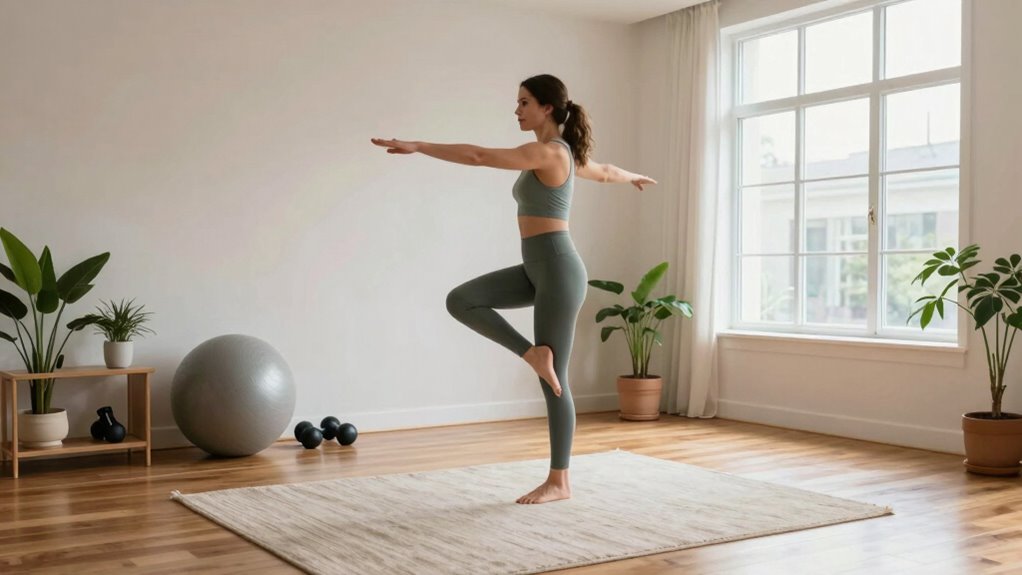
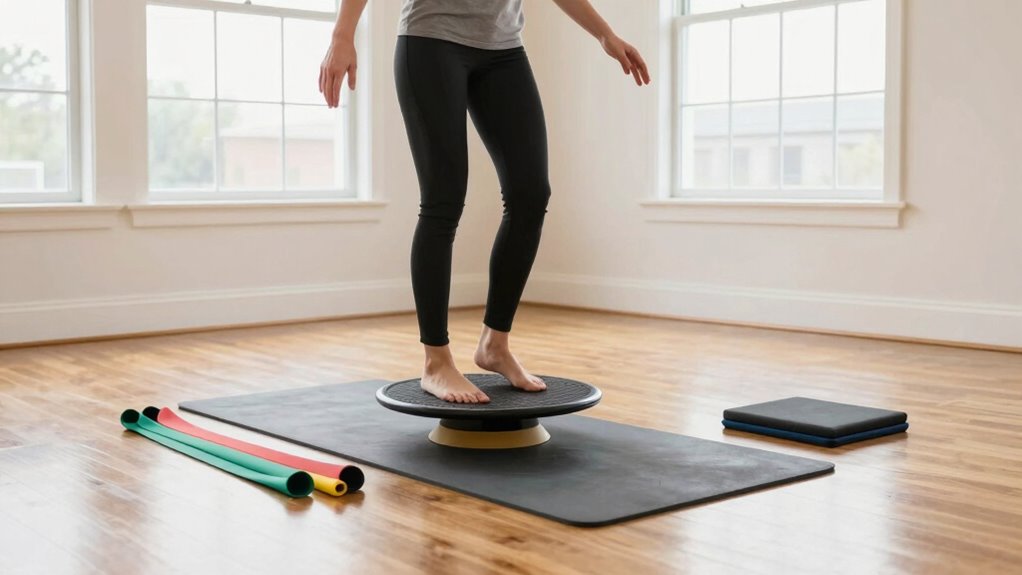
To enhance your balance, include simple stability exercises. Standing on one foot or practicing heel-to-toe walks can markedly boost your proprioception—the sense of how your body is positioned in space. Start by holding onto a sturdy chair or wall for support, then gradually challenge yourself to balance without assistance. Over time, increase the duration and difficulty of these exercises to build better stability, which translates into improved walking confidence and reduced fall risk. Incorporating balance training into your routine can significantly contribute to your overall mobility and safety. Engaging in mind-body awareness techniques such as focused breathing and concentration during balance exercises can further improve your control and stability. Incorporating proper technique is essential to maximize benefits and prevent injury during these exercises.
A well-rounded routine also benefits from consistent practice, which reinforces your progress and helps develop muscle memory for better coordination. Creating a routine that combines these elements seamlessly can make your indoor walking and balance exercises more effective. Begin with a 5-minute warm-up, such as gentle marching in place or arm swings, to prepare your muscles. Follow with 10-15 minutes of brisk walking indoors, incorporating slight turns and varied speeds to mimic outdoor terrain. After your cardio segment, dedicate another 5-10 minutes to flexibility stretches, focusing on areas that feel tight or strained. Finish with balance exercises, holding each position for 15-30 seconds and repeating several times. Regular practice not only improves your physical health but also boosts your confidence in daily activities.
Consistency is key to seeing results. Schedule your indoor walking and balance routine at the same time each day, making it a part of your daily self-care. As you progress, increase the intensity by adding small weights or resistance bands, or by extending your walking time. Remember to listen to your body—if you feel pain or discomfort, adjust your routine accordingly. With dedication, you’ll develop a more stable, flexible, and cardiovascularly healthy body—all within the comfort of your home.
indoor walking shoes for stability
As an affiliate, we earn on qualifying purchases.
As an affiliate, we earn on qualifying purchases.
Frequently Asked Questions
How Often Should I Update My Indoor Walking Routine?
You should update your indoor walking routine every 4 to 6 weeks. Incorporate interval training to boost endurance and make workouts more engaging. Focus on posture correction to prevent strain and improve balance. As your fitness level improves, adjust the intensity, duration, or exercises to keep challenging yourself. Regular updates help prevent boredom, enhance progress, and guarantee your routine remains safe and effective for maintaining balance and fitness indoors.
What Are the Best Shoes for Indoor Walking and Balance?
Think of your shoes as the foundation of a sturdy bridge—crucial for safe, steady crossings. For indoor walking and balance, choose shoes with excellent shoe cushioning to absorb impact and support your arches. Opt for those with non-slip soles for safety. Balance board choices should complement your footwear, offering stability without restricting movement. Your shoes and balance tools work together, creating a secure path to improved walking and balance indoors.
Can I Incorporate Strength Training Into My Indoor Routine?
Yes, you can definitely incorporate strength training into your indoor routine to boost balance improvement. Focus on exercises like squats, lunges, and resistance band workouts that target core and leg muscles. These movements enhance stability and coordination, making walking and balance exercises more effective. Incorporate strength training 2-3 times a week, and you’ll notice better overall balance, strength, and confidence during your indoor activities.
How Do I Prevent Boredom During Indoor Walking Sessions?
You can turn your indoor walks into a lively adventure by mixing up your routine with variety exercises and upbeat music playlists. Think of your sessions as a dance floor—changing steps and rhythms keeps boredom at bay. Switch between brisk walking, gentle stretches, or even light strength moves. Let catchy tunes energize you, making each session feel like a new, exciting journey rather than a repetitive chore.
What Are Signs of Overexertion During Indoor Balance Exercises?
You’ll notice signs of overexertion during indoor balance exercises when your muscles feel excessively fatigued or you experience breathing difficulties. If your muscles shake or weaken quickly, it’s a sign to stop and rest. Difficulty catching your breath or feeling dizzy also indicates you’re pushing too hard. Pay attention to these signals, slow down, and hydrate to prevent injury and guarantee safe, effective workouts.
As an affiliate, we earn on qualifying purchases.
Conclusion
Remember, a journey of a thousand miles begins with a single step. By incorporating these simple indoor walking and balance exercises into your daily routine, you’ll not only boost your strength and stability but also enjoy the comfort of your home. Consistency is key—so keep moving, stay motivated, and trust that small steps lead to big improvements. With patience and perseverance, you’ll find yourself feeling steadier and more confident every day.
walking and balance stretch bands
As an affiliate, we earn on qualifying purchases.
As an affiliate, we earn on qualifying purchases.
supportive balance training aids
As an affiliate, we earn on qualifying purchases.
As an affiliate, we earn on qualifying purchases.
Halloween Picks
halloween
As an affiliate, we earn on qualifying purchases.