
TL;DR

Get health and wellness essentials delivered free with Prime
- Fast, free delivery on millions of items
- Prime Video, Amazon Music and more included
- Member-only deals all year
A Sixty and Me contributor describes older actors working in Netflix’s “A Man on the Inside” and a playwriting class for adults from their late 50s to early 80s. The essay argues that creative work can continue at any age and cites research on possible mental, physical and social benefits, though it does not provide study details.
A Sixty and Me contributor is using older actors in Netflix’s A Man on the Inside and a community playwriting class to make the case that creative work can continue in later life. The essay describes a class for adults from their late 50s to early 80s, whose short plays were presented publicly, and points to research cited by arts organizations on possible benefits of participation.
The contributor says the series prompted her to notice veteran performers, including Ted Danson, Sally Struthers, Lori Tan Chinn, Stephen McKinley Henderson, Margaret Avery and Veronica Cartwright. She describes seeing actors in their 70s and 80s at work as evidence that age need not prevent people from pursuing creative careers. The essay offers personal reflection, not reporting on the performers’ views about aging or the series’ production.
The writer recounts moving through several creative roles over time: writing plays in her 30s, producing theater in her 40s, becoming an author in her 50s and, with writing partner Lillie Evans, later making films. Their work includes the Our Grandmothers, Incorporated mystery novels and plays, featuring older women crime fighters.
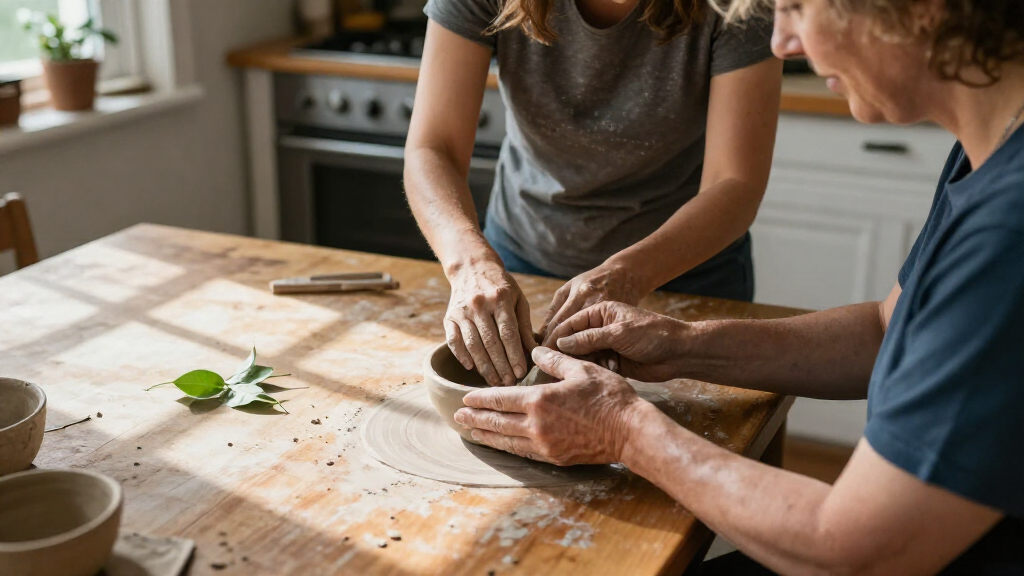
The contributor and Evans also received a grant from Lifetime Arts to teach playwriting at a local art center. Participants developed 10-minute plays drawn from memories and experiences, including family histories, neighborhood institutions and personal relationships. Their work was shared at a public reading. The essay says participants expressed pride and accomplishment, but does not give the class size, location, dates or a formal evaluation.
Creative Classes Bring Stories Forward
The class offers a concrete example of how arts programs can create opportunities for older adults to develop and share work, rather than treating creativity as something limited to youth or a past career. For participants, the public reading made the work visible to an audience and gave writers a shared project. The essay reports their pride, while stopping short of measuring longer-term effects.
It also connects individual experience with a broader demographic concern. Lifetime Arts is described as seeking to expand access to arts programming for older adults. If communities want older residents to participate, accessible classes and places to present work can matter as much as encouragement. The account does not compare program availability across regions or establish how many people are currently served.
Products Worth Considering

Withings BPM Connect Smart Blood Pressure Monitor

Oura Ring 5 Smart Ring, Silver, Size 7

Fitbit Sense 2 Advanced Health and Fitness Smartwatch, Blue Mist/Pale Gold
As an affiliate, we earn on qualifying purchases.
The Essay’s Aging and Arts Frame
The article is a first-person essay, not a new research study or announcement of a national program. Its examples combine the writer’s own career, a television series featuring established performers and one teaching experience supported by a grant. That distinction matters: the anecdotes illustrate the argument but cannot establish how common these experiences are among older adults.
The essay attributes a demographic figure to Lifetime Arts: 61.2 million Americans are 65 or older, and older adults are projected to outnumber children nationwide by 2030. It also summarizes findings attributed to the National Endowment for the Arts, a 2019 World Health Organization review and the Aging and Health Research Center. The source does not provide study titles, methods or links to the specific findings, so the claims cannot be independently assessed from the supplied material.
“61.2 million Americans are 65 or older, and by 2030, older adults are projected to outnumber children nationwide.”
— Lifetime Arts, as quoted in the essay
Evidence and Program Details Missing
The essay does not specify when or where the class took place, how many people participated, how the grant was awarded or whether the program continues. It also does not include participant interviews beyond the writer’s account, or follow-up information on what participants did after the reading.
Research benefits are summarized rather than documented in detail. The source supplies no study names, sample sizes, comparison groups or effect measurements for the reported mental, physical and social outcomes. These statements should be read as claims attributed by the essay to cited organizations, not as proof that every arts activity produces those results or that it treats a health condition.
Access Will Shape Future Participation
The essay does not announce a new class, funding round or scheduled event, and it gives no next milestone for the program. The developments it describes are a past teaching project and the writer’s ongoing creative work.
For readers interested in participating, the account points toward local art centers and organizations such as Lifetime Arts as places to ask about programming. Whether similar opportunities are available nearby, what they cost and who is eligible are not addressed in the source. The writer closes by inviting readers to share a creative activity they have started or hope to begin.
Key Questions
What is the essay’s main point?
The contributor argues that people can pursue creative work at any age, drawing on her own career, older actors in a television series and a playwriting class for older adults.
What happened in the playwriting class?
The writer and her partner taught participants from their late 50s to early 80s to develop 10-minute plays. The pieces were shared in a public reading, according to the essay.
Does the article prove that arts programs improve health?
No. It summarizes benefits attributed to organizations and research, but the supplied account does not provide study details needed to assess those claims.
When and where did the class take place?
The essay says it was held at an art center in the writer’s city but does not name the city or provide dates.
Is another class or event scheduled?
The source does not mention a future class, event or funding announcement.
Source: sixtyandme.com