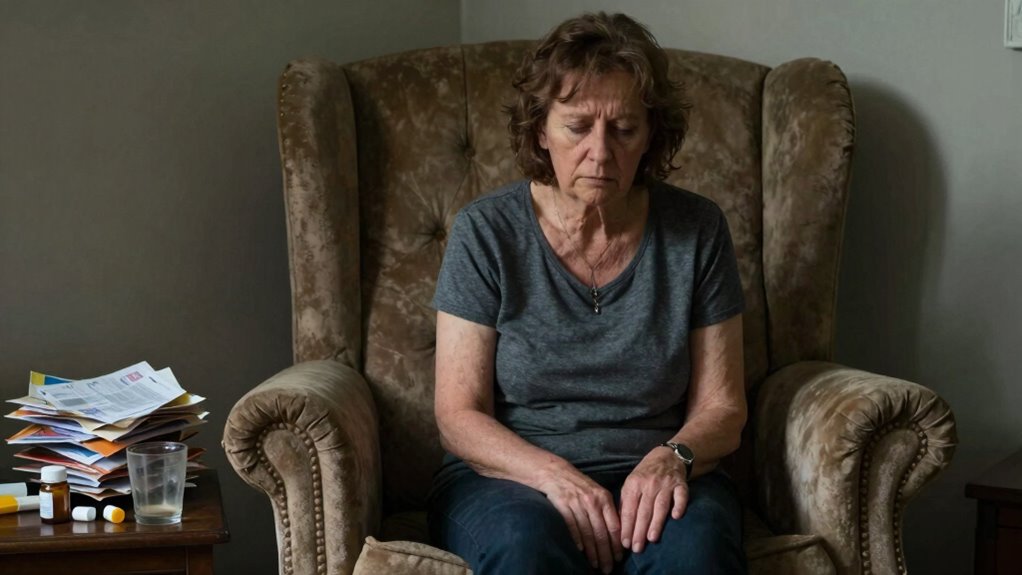

You might notice feelings of being overwhelmed, irritable, or emotionally drained even when you’re not actively caregiving. Patience can wear thin, and you may feel sad, anxious, or guilty more often than usual. Recognizing these signs early helps prevent burnout. If you’re experiencing persistent emotional fatigue, it’s a signal your well-being needs attention. Keep going to learn more about how to identify and manage emotional exhaustion effectively.

Get health and wellness essentials delivered free — and shop member deals
- Fast, free delivery on millions of items
- Access to Prime Big Deal Days deals on October 6–7
- Prime Video, Amazon Music and more included
Key Takeaways
- Persistent feelings of overwhelm, irritability, or sadness even when not actively caregiving.
- Reduced patience and increased emotional responses, such as anxiety or guilt.
- Physical signs like fatigue, sleep disturbances, or loss of interest in activities.
- Feelings of detachment or emotional numbness toward the caregiving role.
- Ignoring personal needs or neglecting self-care, leading to worsening emotional symptoms.

Caring for a loved one can be deeply rewarding, but it often comes with hidden emotional costs. As you dedicate yourself to their well-being, you might start noticing signs of emotional exhaustion creeping in. Recognizing these signs early is essential because it allows you to address your needs before burnout takes over. One of the first steps is understanding that emotional exhaustion isn’t a sign of weakness; it’s a common response to prolonged stress. You may feel overwhelmed, irritable, or drained even when you’re not actively caregiving. You might find your patience wearing thin, or you could experience feelings of sadness, anxiety, or guilt that seem disproportionate to the situation. These emotional signals are your body’s way of telling you to pause and reassess. Developing effective self-care strategies becomes indispensable when you recognize these signs. Simple practices like setting aside time each day for activities that recharge you—whether it’s reading, exercising, or meditating—can make a significant difference. Prioritizing sleep and proper nutrition helps sustain your energy levels, making it easier to manage the demands of caregiving. It’s also essential to acknowledge your limits and avoid taking on more than you can handle. Sometimes, that means learning to say no or asking for help without guilt. You might also find that maintaining social connections, even briefly, can provide emotional relief and prevent feelings of isolation. Additionally, understanding the importance of support systems can play a vital role in maintaining your emotional well-being. Building a strong support network can provide emotional relief, encouragement, and practical assistance when needed. Recognizing the importance of mental health in caregiving can motivate you to seek professional help when necessary. It’s worth noting that the physical and emotional toll of caregiving can sometimes be compounded by factors like financial stress, which can further drain your energy and focus. You don’t have to carry the burden alone. Reaching out to friends, family, or support groups can provide a sense of solidarity and validation. Sharing your feelings, frustrations, or fears with others who understand your situation can lighten emotional loads that feel too heavy to bear alone. Professional counseling or caregiver support services can also offer guidance and coping strategies tailored to your needs. Remember, accepting help isn’t a sign of weakness but a proactive step toward safeguarding your mental health. Recognizing the signs of emotional exhaustion allows caregivers to intervene early and seek appropriate help before burnout worsens. In the end, recognizing emotional exhaustion in caregiving is about tuning into your feelings and honoring your needs. By implementing self-care strategies and leaning on your support system, you protect your well-being while continuing to care for your loved one. You’re not just sustaining their health—you’re also nurturing your own resilience, which is essential for both your happiness and theirs.
self-care journal for caregivers
As an affiliate, we earn on qualifying purchases.
As an affiliate, we earn on qualifying purchases.
Frequently Asked Questions
Can Emotional Exhaustion Affect Physical Health?
Yes, emotional exhaustion can impact your physical health. When you’re emotionally drained, you might notice physical symptoms like headaches, fatigue, or muscle aches. Chronic stress from exhaustion weakens your immune system and increases health risks. To protect yourself, prioritize stress management techniques such as exercise, relaxation, and seeking support. Recognizing these signs early helps you address your emotional needs before physical health issues develop.
How Long Does Emotional Exhaustion Typically Last?
Emotional exhaustion can feel like a storm cloud hanging overhead for weeks or even months. Its duration varies based on your emotional resilience and stress management strategies. If you actively nurture your resilience, seek support, and practice self-care, you may find relief sooner. Without intervention, though, it can linger, draining your energy and patience. Recognizing this, prioritize your well-being to shorten the storm’s stay and restore your balance.
Is Emotional Exhaustion Different From Burnout?
Emotional exhaustion is different from burnout; emotional exhaustion involves feeling drained and overwhelmed, often due to caregiver fatigue, while burnout includes feelings of cynicism and reduced effectiveness. You might notice emotional exhaustion when your emotional resilience weakens, making daily caregiving tasks feel more burdensome. Recognizing these signs helps you take steps to replenish your energy, manage stress, and maintain your well-being during demanding caregiving seasons.
Can Emotional Exhaustion Occur Suddenly?
Think of emotional exhaustion like a sudden storm—unexpected stress can hit you swiftly, bringing on sudden fatigue. Yes, it can happen suddenly, leaving you overwhelmed without warning. This abrupt shift may stem from a crisis or relentless caregiving demands, causing your emotional reserves to drain rapidly. Recognizing this quick onset helps you address it promptly, so you can navigate the storm and find calmer waters before exhaustion takes hold.
How Can Caregivers Prevent Emotional Exhaustion?
To prevent emotional exhaustion, prioritize self-care strategies like taking regular breaks, practicing mindfulness, and setting boundaries. It’s also vital to build a strong support network—reach out to friends, family, or support groups to share your feelings and gain advice. Recognizing your limits and seeking help early on can keep you resilient, ensuring you stay emotionally healthy while caring for others. Remember, caring for yourself is essential for sustainable caregiving.
As an affiliate, we earn on qualifying purchases.
Conclusion
Remember, emotional exhaustion is like a fog that can obscure your inner light. As you navigate caregiving, pay close attention to signs of weariness and emotional drain. Recognizing these moments is like finding a lighthouse in a storm—guiding you back to your strength and resilience. Take time to care for yourself, so your spirit doesn’t burn out. You’re the heart that keeps everything alive—don’t let exhaustion extinguish your shine.
sleep aid supplements for stress
As an affiliate, we earn on qualifying purchases.
As an affiliate, we earn on qualifying purchases.
As an affiliate, we earn on qualifying purchases.
Halloween Picks
halloween
As an affiliate, we earn on qualifying purchases.