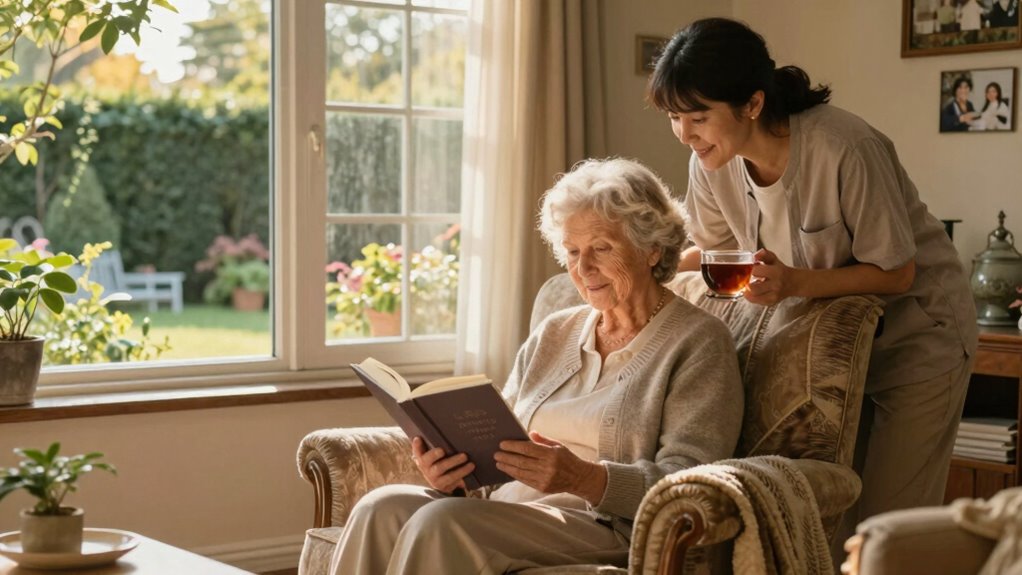

Aging in place means you can stay in your loved one’s familiar home safely and comfortably as they grow older. It involves making simple home modifications like grab bars and ramps, accessing community resources, and staying socially connected. This approach promotes independence, emotional well-being, and security. By planning ahead and utilizing available support, you help your family members maintain their routines and dignity. To understand more about how to effectively support aging in place, keep exploring the key strategies involved.

Get health and wellness essentials delivered free with Prime
- Fast, free delivery on millions of items
- Prime Video, Amazon Music and more included
- Member-only deals all year
Key Takeaways
- Aging in place allows seniors to stay in familiar surroundings, promoting independence and emotional comfort.
- Home modifications enhance safety, accessibility, and reduce fall risks within the existing living environment.
- Community resources support social engagement, transportation, and daily needs, fostering a supportive living situation.
- Planning involves assessing individual needs and creating tailored solutions for health, safety, and well-being.
- Maintaining social connections and support systems is vital for emotional health and reducing loneliness for aging family members.

Aging in place allows families to keep their loved ones in familiar surroundings as they grow older, promoting independence and comfort. It means more than just staying in the same house; it involves creating a safe environment that adapts to changing needs. You’ll find that home modifications play a pivotal role in this process. Simple changes like installing grab bars in the bathroom, widening doorways for wheelchair access, or adding ramps can make a significant difference. These modifications help seniors navigate their homes safely and comfortably, reducing the risk of falls and injuries. The goal is to maintain independence for as long as possible, so your loved ones can continue enjoying their routines and familiar spaces.
Creating a safe, adaptable home with simple modifications helps seniors stay independent and comfortable longer.
But aging in place isn’t solely about physical adjustments. Community resources are equally essential in supporting your family’s decision. Local senior centers, transportation services, and meal delivery programs can supplement home modifications and provide additional support. These resources foster social engagement, which is indispensable for mental and emotional well-being. For example, joining community activities can help seniors stay connected, combat loneliness, and maintain a sense of purpose. Transportation services enable them to attend appointments or visit friends without relying solely on family members or costly services. Meal programs ensure proper nutrition, especially if cooking becomes challenging. Additionally, home safety strategies such as proper lighting and fall prevention measures can further enhance their environment. Incorporating home safety assessments can help identify potential hazards before they cause harm. Implementing assistive devices and technology can also improve safety and independence within the home. Leveraging home modifications and adaptive solutions can significantly enhance their ability to live comfortably and safely. Moreover, understanding affiliate disclosure and other policies related to support services can help families navigate available resources confidently. By leveraging these community resources, you’re creating an all-encompassing support system that promotes health, safety, and independence.
As you plan for aging in place, it’s important to assess your loved one’s specific needs and preferences. Consult with healthcare providers and home modification specialists to develop a tailored approach. You might also explore local programs that offer financial assistance or grants for home improvements. Staying informed about community resources can help you access the right services at the right time, making the transition smoother. Remember, aging in place isn’t just about staying in a house; it’s about creating an environment and support network that empower your loved ones to thrive, regardless of age or ability.
As an affiliate, we earn on qualifying purchases.
Frequently Asked Questions
How Can Families Ensure Safety While Aging in Place at Home?
You can guarantee safety while aging in place by conducting a thorough risk assessment of your home to identify hazards. Implement home safety measures like installing grab bars, removing tripping hazards, and ensuring good lighting. Regularly evaluate your environment and adapt it to changing needs. Staying proactive helps prevent accidents, making your home a secure place to age comfortably while maintaining independence.
What Financial Resources Are Available for Aging in Place Modifications?
Think of your home as a fortress, and aging in place modifications as the reinforcement. You can tap into your home equity to fund upgrades like ramps or grab bars. Additionally, explore government grants designed for home modifications, which can ease financial burdens. These resources act as your support beams, helping you maintain independence and safety, ensuring your home remains a secure sanctuary as you age.
How Does Aging in Place Affect Family Dynamics and Caregiving Roles?
Aging in place can shift family dynamics by increasing caregiving responsibilities, which may lead to feelings of stress or imbalance. You might find that family communication becomes more essential as you coordinate daily care and decision-making. While it can foster closer bonds, it also requires clear roles and open dialogue to guarantee everyone understands their responsibilities, helping to maintain harmony and support as your loved one ages comfortably at home.
What Are the Best Technologies to Support Independent Living?
You should consider smart home technologies and assistive devices to support independent living. Smart home systems can automate lighting, temperature, and security, making daily routines easier and safer. Assistive devices like fall detectors, medication reminders, and mobility aids help you or your loved ones stay autonomous. Combining these tools creates a safer, more comfortable environment, empowering you to age in place confidently and maintain independence longer.
How Do Families Plan for Unexpected Medical Emergencies at Home?
Did you know that nearly 70% of seniors prefer staying at home during emergencies? To prepare, you should establish an emergency plan and keep medical alert systems nearby, so help arrives quickly. Make sure everyone in your family knows how to use the devices and contacts emergency services immediately if needed. Regularly review and practice your plan, ensuring you’re ready for unexpected medical emergencies at home.
widened doorways for wheelchair access
As an affiliate, we earn on qualifying purchases.
As an affiliate, we earn on qualifying purchases.
Conclusion
Aging in place allows your family to stay connected and maintain independence, making life more manageable for everyone. It’s encouraging to know that nearly 90% of seniors prefer to remain at home as they age, highlighting its importance. By creating a safe, accessible environment, you support your loved ones’ comfort and dignity. Embracing this approach guarantees your family can enjoy quality time together, fostering stronger bonds and peace of mind for the years ahead.
As an affiliate, we earn on qualifying purchases.
As an affiliate, we earn on qualifying purchases.
Cold & flu season Picks
humidifiers
As an affiliate, we earn on qualifying purchases.