

Self-check-ins like journaling, art, or voice memos help you gain emotional clarity and build resilience in everyday chaos. Journaling offers a safe space to explore your thoughts and uncover patterns, while art allows you to access subconscious feelings and foster mindfulness. Voice memos capture spontaneous insights and emotional shifts on the go. Incorporating these practices into your routine can deepen your self-awareness and emotional balance—stick around to discover more ways to enhance your self-care journey.
Key Takeaways
- Journaling fosters deep reflection and helps identify emotional patterns through honest written exploration.
- Art provides a non-verbal way to access subconscious feelings and process complex emotions mindfully.
- Voice memos enable spontaneous, on-the-go self-check-ins, capturing fleeting thoughts and emotional shifts quickly.
- Combining these methods with mindfulness enhances emotional awareness and strengthens resilience.
- Each approach offers a unique, accessible tool for enhancing self-understanding and emotional well-being daily.
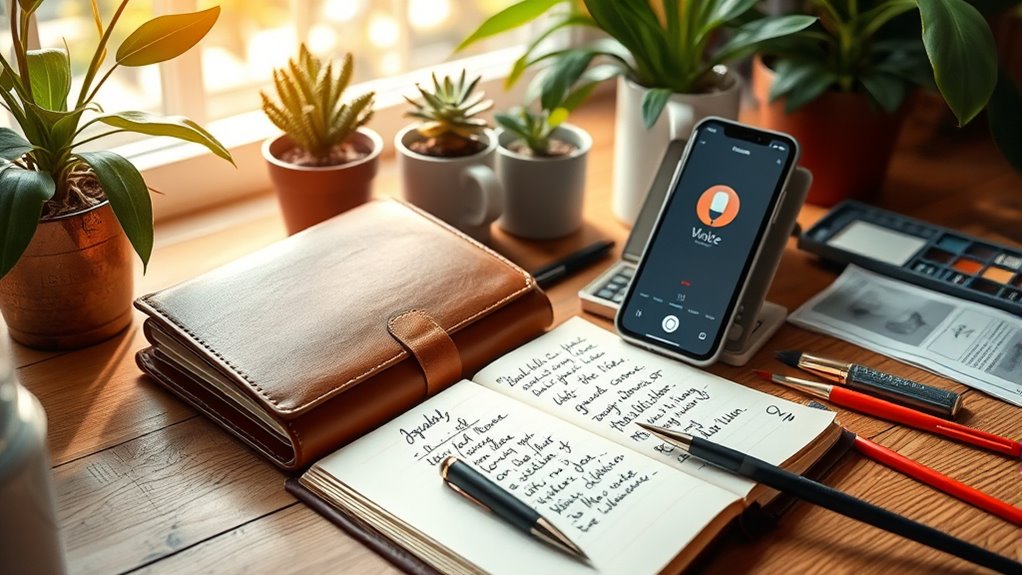
In today’s busy world, taking time for self-check-ins has become essential for maintaining mental clarity and emotional well-being. When you pause to reflect, you gain valuable insight into your feelings, thoughts, and overall state of mind. One of the most effective ways to do this is through journaling, art, or voice memos—tools that foster emotional awareness and creative expression. Each method allows you to connect with yourself in a unique way, helping you process emotions and gain clarity amid daily chaos.
Journaling is a straightforward yet powerful method. When you put pen to paper, you create a safe space to explore your inner world. Writing down your thoughts and feelings makes them tangible, allowing you to observe patterns and triggers that influence your mood. This practice boosts emotional awareness because it encourages honesty and introspection. As you write, you might discover underlying emotions you hadn’t fully acknowledged, helping you understand yourself better. Journaling also sparks creative expression, giving you the freedom to experiment with words, doodles, or even poetry. It’s a flexible outlet that adapts to your mood and needs, whether you want to vent, celebrate, or reflect.
Journaling creates a safe space to explore your inner world and boost emotional awareness through honest reflection.
Art offers another meaningful avenue for self-check-ins. When you create artwork—whether drawing, painting, or doodling—you access a different part of your mind. Artistic expression bypasses the limitations of verbal language, often revealing subconscious feelings and thoughts. Engaging in art can heighten emotional awareness by helping you identify emotions that are hard to articulate. The act of creating itself becomes a meditative process, calming your mind and fostering mindfulness. Plus, art provides a visual diary of your emotional landscape, allowing you to revisit and interpret your feelings over time. It’s especially helpful if you find it challenging to put emotions into words, giving you a non-verbal way to process your experiences.
Voice memos are a quick and accessible way to check in with yourself, especially when you’re on the go. Speaking your thoughts aloud can be liberating, helping you capture fleeting feelings and insights that might get lost otherwise. This method encourages spontaneous emotional awareness, as you simply record what’s on your mind without editing or judgment. Voice memos also facilitate creative expression by allowing your personality and tone to shine through your voice. Listening back to these recordings can reveal shifts in your emotional state and deepen your self-understanding over time. They’re a practical tool for busy days, ensuring you stay connected to your inner world, no matter where you are. Incorporating mindfulness techniques into these practices can further enhance your emotional resilience and present-moment awareness, making each self-check-in even more effective.
Ultimately, whether you choose journaling, art, or voice memos, each self-check-in technique nurtures emotional awareness and creative expression. By regularly engaging in these practices, you build a stronger relationship with yourself—fostering resilience, clarity, and emotional balance in an often chaotic world.

Lanpn Self Care Journal for Women, Self Love Guided Journals with Prompts, Daily Reflection Wellness & Gratitude Planner, 5 Minute Mental Health Notebook, Mindfulness Mood Log, 240 Pages, Beige
Prioritize Your Wellbeing: Designed around the life wheel, this woman's self care journal helps you reflect on key…
As an affiliate, we earn on qualifying purchases.
As an affiliate, we earn on qualifying purchases.
Frequently Asked Questions
How Often Should I Do Self-Check-Ins for Optimal Benefits?
To reap the most benefits, aim for self-check-ins at least once a week. Consistency tips include setting specific days or times, like Sunday evenings or midweek, to reinforce your routine. Frequency planning helps you stay connected with your goals and emotions without feeling overwhelmed. Adjust the schedule based on your needs—more frequent check-ins can boost self-awareness, while less often still maintains progress. Find a rhythm that feels sustainable and supportive.
Can I Combine Journaling, Art, and Voice Memos in One Session?
You can absolutely combine journaling, art, and voice memos in one session—think of it as creating a vibrant, multimedia masterpiece of your feelings. This fusion offers unbeatable creative flexibility, letting you express yourself in words, visuals, and sound all at once. With a little planning, you turn a simple self-check-in into an inspiring, multi-layered journey that deepens your insights and keeps your practice exciting and dynamic.
What Are the Best Prompts for Beginning Self-Check-Ins?
You can start your self-check-in with prompts that focus on mindfulness exercises and emotional exploration. Ask yourself, “How am I feeling right now?” or “What’s my biggest emotion today?” Reflect on recent experiences or what you’re grateful for. These prompts help you connect with your feelings, increase awareness, and foster emotional clarity, setting a mindful tone for your session and encouraging honest self-awareness.
How Do I Stay Consistent With My Self-Check-In Routine?
You think staying consistent is easy? Think again! To master habit formation, set tiny, doable goals and celebrate small wins. Use accountability strategies like reminders or buddy check-ins to keep yourself honest. Make your self-check-in routine unavoidable—link it to daily habits like morning coffee or bedtime. With persistence and clever accountability, you’ll turn these check-ins into a natural part of your day—no more excuses, just steady progress.
Are There Specific Tools Recommended for Digital Self-Check-Ins?
You can use digital tools like mood tracking apps, journaling platforms, or mental wellness apps to support your self-check-ins. These tools offer prompts, reminders, and secure spaces for reflection, helping you stay consistent. Choose apps that resonate with your style and needs, making it easier to integrate mental wellness into your daily routine. Regular use fosters mindfulness and helps you monitor your emotional health effectively.

Mindfulness-Based Art Therapy Activities: Creative Techniques to Stay Present, Manage Difficult Feelings, and Find Balance
As an affiliate, we earn on qualifying purchases.
As an affiliate, we earn on qualifying purchases.
Conclusion
Choose your self-check-in method—whether journaling, art, or voice memo—and embrace it fully. Let each act be your reflection, your release, your renewal. As you write, draw, or speak, you connect with yourself, grounding your thoughts, emotions, and growth. These simple practices become your sanctuary, your space to understand, to heal, to grow. Make them your habit, your ritual, your reminder that you’re always worth checking in on.

136GB Digital Voice Recorder with Playback,9000 Hours Audio Recording Device,Voice Activated Recorder with Noise Reduction,A-B Repeat,Mp3 Player and Password for Lectures Meeting/Classes/Interviews
【PCM Recording and Automatic Noise Reduction】:This digital voice recorder is equipped with advanced dual noise reduction microphones and…
As an affiliate, we earn on qualifying purchases.
As an affiliate, we earn on qualifying purchases.

Fuck It: A Guided Self-Love and Gratitude Journal for Women to Unfuck Your Life, Exhale the Bullshit, and Love Who You Are (Cute Self Care & Self Help Books)
As an affiliate, we earn on qualifying purchases.
As an affiliate, we earn on qualifying purchases.