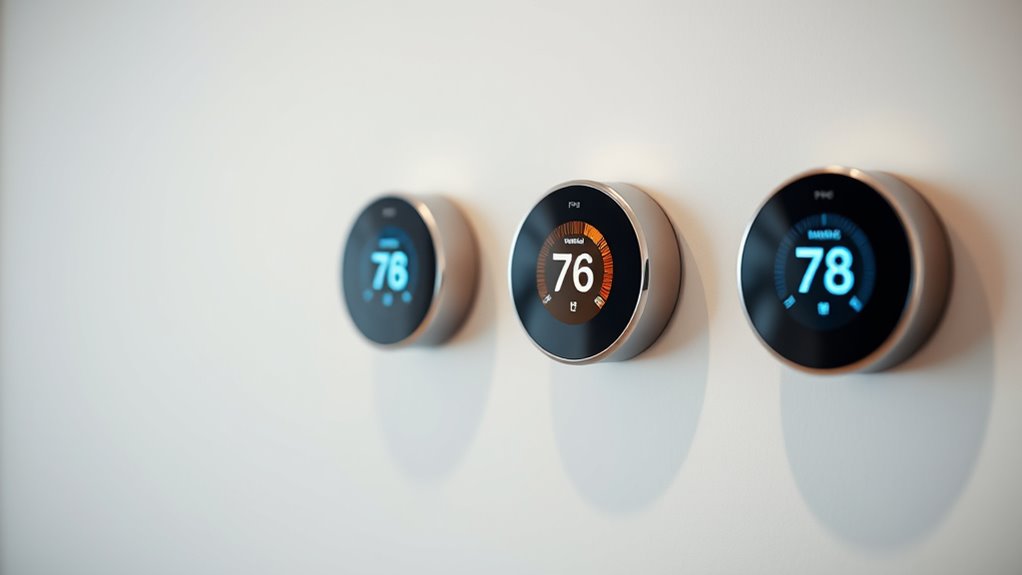

When selecting a smart thermostat for heat-only systems, compatibility and reliability are key. The Google Nest Thermostat stands out as the overall best choice for its seamless integration and user-friendly features. For those seeking premium options, the ecobee Smart Thermostat Premium offers advanced air quality monitoring, while the Honeywell Home X2S provides solid compatibility with traditional heat setups. The main challenge in this category is balancing smart features with system compatibility—many thermostats excel in app controls but may lack proper heat-only system support or require professional installation. Continue reading to explore how these options compare, and find the best match for your heat system needs.
Key Takeaways
- Compatibility with heat-only systems varies; not all smart thermostats support traditional heat-only setups without modifications.
- System integration features, like voice control and app connectivity, often come with tradeoffs in installation complexity or cost.
- Premium models tend to offer advanced sensors and air quality features, but may be unnecessary for basic heat control.
- DIY installation is feasible with some models, but compatibility issues can arise if wiring isn’t standard or C-wire is absent.
- Price does not always correlate with performance; some affordable options provide reliable heat management without extra features.
| Google Nest Thermostat |  | Best Streamlined Smart Pick | Connectivity: Wi-Fi | System compatibility: Most heating, cooling, zoned, and heat-pump systems | C-wire compatibility: Works with most compatible systems without a C wire | VIEW ON AMAZON | See Our Full Breakdown |
| Programmable Thermostat for Home HVAC Systems, 2 Heat/2 Cool |  | Best No-Wi-Fi Alternative | System compatibility: Single-stage and multistage systems | Supported heating: Forced air, electric furnace, hot-water steam, gas fireplaces, and floor or wall furnaces | Stage capacity: 2 Heat / 2 Cool | VIEW ON AMAZON | See Our Full Breakdown |
| ecobee Smart Thermostat Premium |  | Best Overall | System compatibility: Most 24VAC HVAC systems | Energy savings: Up to 26% annually | Certification: ENERGY STAR | VIEW ON AMAZON | See Our Full Breakdown |
| Honeywell Home X2S Smart Thermostat |  | Best Matter Integration | Connectivity: Wi-Fi and Matter | Mobile app: First Alert app | Conventional capacity: Up to 2 Heat / 2 Cool | VIEW ON AMAZON | See Our Full Breakdown |
| Honeywell Home RTH9600WF Smart Color Thermostat |  | Best Color Display | Connectivity: Wi-Fi | Display: High-definition color touchscreen | System compatibility: Forced air, hot water, steam, and heat pumps with electric backup | VIEW ON AMAZON | See Our Full Breakdown |
| Honeywell Home RTH9585WF1004 Wi-Fi Smart Color Thermostat, 7-Day Programmable, Touch Screen, Energy Star, Alexa Ready, Gray |  | Best Overall for Customization and Flexibility | Color: Gray | Programmable: 7-day | Connectivity: Wi-Fi | VIEW ON AMAZON | See Our Full Breakdown |
| ecobee Smart Thermostat Enhanced – Programmable Wifi Thermostat – Works with Siri, Alexa, Google Assistant – Energy Star Certified – Smart Home |  | Best for Automated Comfort and System Monitoring | VIEW ON AMAZON | See Our Full Breakdown | |||
| Google Nest Thermostat – Smart Thermostat for Home – Programmable Wifi Thermostat – Charcoal |  | Best for Simplicity and Energy Savings in Compatible Homes | Compatibility: Most HVAC systems, some with C-wire required | Energy Savings: Automatic when away | Installation: DIY | VIEW ON AMAZON | See Our Full Breakdown |
| Amazon Smart Thermostat – Save Money and Energy, Works with Alexa and Ring |  | Best for Alexa and Ring Ecosystem Users | Compatibility: Alexa, Ring | Installation: DIY | Energy Savings: Up to $90/year | VIEW ON AMAZON | See Our Full Breakdown |
| Sensi Smart Thermostat, Wi-Fi, DIY, Alexa, Energy Star Certified, ST55 |  | Best for Ease of Installation and Cost Savings | Connectivity: Wi-Fi | Compatibility: Most HVAC systems, some with C-wire | Energy Savings: Approximately 23% | VIEW ON AMAZON | See Our Full Breakdown |
| New! Honeywell Home Programmable Thermostat, Single-Stage, 1 Heat/1 Cool Compatibility, 5-2 Day Schedule, X2P, White, RTH20B |  | Best Budget-Friendly Basic Programmable Thermostat | Compatibility: 1 Heat/1 Cool, 750 mV, hot water heat, forced air | Scheduling: 5-2 day programming | Display: Large backlit screen | VIEW ON AMAZON | See Our Full Breakdown |
| Sensi Lite Smart Thermostat, WiFi, Alexa, DIY, Energy Star Certified, ST25 | 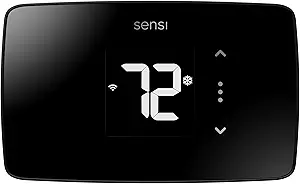 | Best Easy DIY Smart Thermostat with Energy Savings | Connectivity: WiFi | Compatibility: Most HVAC with common wire | Certification: Energy Star | VIEW ON AMAZON | See Our Full Breakdown |
| ecobee Smart Thermostat Essential – Energy Star Certified Wi-Fi Programmable Thermostat |  | Best Mid-Range Smart Thermostat with SmartHome Integration | Energy Star Certified: Yes | Compatibility: Most 24 VAC HVAC systems | Connectivity: Wi-Fi | VIEW ON AMAZON | See Our Full Breakdown |
| Honeywell Home RTH8800WF2022, T5 WiFi Smart Thermostat, 7 Day-Programmable Touchscreen, Alexa Ready, Geofencing Technology, Energy Star, C-Wire Required |  | Best for 7-Day Programmable Flexibility with Smart Features | Compatibility: Most heat-only systems with C-wire | Scheduling: 7-day programmable | Connectivity: Wi-Fi | VIEW ON AMAZON | See Our Full Breakdown |
| smart thermostats for heatonly system | Connectivity | Compatibility |
|---|---|---|
| Google Nest Thermostat | Wi-Fi | — |
| Programmable Thermostat for Ho | — | — |
| ecobee Smart Thermostat Premiu | — | — |
| Honeywell Home X2S Smart Therm | Wi-Fi and Matter | — |
| Honeywell Home RTH9600WF Smart | Wi-Fi | — |
| Honeywell Home RTH9585WF1004 W | Wi-Fi | Forced air, hot water, steam, heat pumps with electric backup |
| ecobee Smart Thermostat Enhanc | — | — |
| Google Nest Thermostat | Wi-Fi | Most HVAC systems, some with C-wire required |
| Amazon Smart Thermostat | — | Alexa, Ring |
| Sensi Smart Thermostat | Wi-Fi | Most HVAC systems, some with C-wire |
| New! Honeywell Home Programmab | — | 1 Heat/1 Cool, 750 mV, hot water heat, forced air |
| Sensi Lite Smart Thermostat | WiFi | Most HVAC with common wire |
| ecobee Smart Thermostat Essent | Wi-Fi | Most 24 VAC HVAC systems |
| Honeywell Home RTH8800WF2022 | Wi-Fi | Most heat-only systems with C-wire |
More Details on Our Top Picks
Google Nest Thermostat
I rank the Google Nest Thermostat as the best streamlined smart pick for heat-only homes because its scheduling, remote control, and HVAC monitoring cover the functions most buyers will use without ecobee Premium’s broader sensor package. Its ability to work with most compatible systems without a C wire is especially useful in older boiler or furnace installations, where spare wiring is often absent. Compared with the Honeywell Home X2S, Nest offers a simpler Google-centered experience and access to Nest Renew, but it lacks Matter certification and a control lock. I would choose it for straightforward app-based heat management, not for balancing temperatures across several rooms. Buyers still need to verify their exact low-voltage system; some installations need extra wiring or an accessory, and line-voltage electric heat is not promised by the supplied compatibility data.
Pros:- Works with most compatible systems without a C wire
- Remote scheduling and control from phones, tablets, and computers
- HVAC monitoring can flag possible equipment problems
- Supports Google Assistant, Alexa, and Nest Renew
Cons:- Some heat-only installations still require extra wiring or an accessory
- No lock prevents people from changing settings at the thermostat
- No included remote sensor for unevenly heated rooms
Best for: Google Home users with a compatible low-voltage furnace or boiler who want uncomplicated scheduling and remote control
Not ideal for: Households needing room sensors, locked controls, or confirmed support for line-voltage electric heating
- Connectivity:Wi-Fi
- System compatibility:Most heating, cooling, zoned, and heat-pump systems
- C-wire compatibility:Works with most compatible systems without a C wire
- Voice control:Google Assistant and Amazon Alexa
- Remote control:Smartphone, tablet, or computer
- HVAC monitoring:Yes
- Certification:ENERGY STAR
Our verdict“I recommend the Nest Thermostat for buyers who favor simple connected heating controls over advanced room-by-room management.”
Programmable Thermostat for Home HVAC Systems, 2 Heat/2 Cool
I treat this 2 Heat/2 Cool Programmable Thermostat as the best no-Wi-Fi alternative, not a full smart thermostat. That distinction matters: it offers flexible 7-day or 5/1/1 scheduling and a readable backlight, yet there is no supplied app, voice-control, or remote-access capability. For a heat-only home, broad support for hot-water steam, gas fireplaces, and floor or wall furnaces makes it more adaptable than many basic programmable models. Compared with the Google Nest Thermostat, it trades connected control and HVAC alerts for simpler operation and fewer networking concerns. The two-stage heating capacity also accommodates multistage conventional equipment, though buyers with heat pumps using auxiliary or emergency heat must skip it. I would also rule it out for line-voltage baseboards and mini-splits. Its claimed sub-30-minute installation is appealing, but correct system identification matters more than speed.
Pros:- Supports several conventional and heat-only system types
- Offers both 7-day and 5/1/1 scheduling
- Backlit LCD is easier to read in dim hallways
- Two heating stages support more equipment than basic 1 Heat models
Cons:- Lacks Wi-Fi, app access, and voice control
- Does not support heat pumps with auxiliary or emergency heat
- Incompatible with line-voltage systems and mini-splits
Best for: Buyers with compatible conventional, steam, fireplace, or low-voltage wall-furnace heating who want scheduling without an app
Not ideal for: Anyone expecting remote control, voice commands, line-voltage baseboard support, or auxiliary heat-pump compatibility
- System compatibility:Single-stage and multistage systems
- Supported heating:Forced air, electric furnace, hot-water steam, gas fireplaces, and floor or wall furnaces
- Stage capacity:2 Heat / 2 Cool
- Heat-pump support:Heat pumps without auxiliary heat
- Programming:7-day or 5/1/1 schedules
- Display:White-backlit LCD
- Installation estimate:Within 30 minutes
Our verdict“I would choose this model only when reliable offline scheduling matters more than genuine smart-home control.”
ecobee Smart Thermostat Premium
I place the ecobee Smart Thermostat Premium first as Best Overall for heat-only systems because the included SmartSensor addresses a common boiler-home problem: the thermostat hallway can feel comfortable while a bedroom stays cold. Built-in occupancy sensing lets heating respond to lived-in spaces, a stronger comfort tool than the Google Nest Thermostat’s simpler single-device setup. The included Power Extender Kit also gives some wiring-challenged homes a clearer installation path, while Alexa, Google Assistant, and Siri support make it the most flexible voice-control choice here. That extra capability brings a higher price and a busier setup. Its air-quality monitor adds context, but it does not control heat as directly as the sensor does, and Siri requires a compatible Apple home hub. I recommend it when room-to-room comfort matters enough to justify premium hardware.
Pros:- Included SmartSensor helps manage temperature away from the thermostat
- Occupancy sensing can focus comfort on rooms that are being used
- Supports Alexa, Google Assistant, and Siri
- Includes a Power Extender Kit, trim plate, and air-quality monitor
Cons:- Costs more than simpler Nest and Honeywell alternatives
- Installation and configuration may feel complex to less technical buyers
- Siri control requires a compatible Apple home hub
Best for: Households with unevenly heated rooms that want occupancy-aware control and broad smart-home compatibility
Not ideal for: Budget-focused buyers or anyone wanting a basic thermostat with minimal setup and few connected features
- System compatibility:Most 24VAC HVAC systems
- Energy savings:Up to 26% annually
- Certification:ENERGY STAR
- Included room sensor:SmartSensor
- Occupancy sensing:Built-in radar technology
- Air-quality monitor:Built in
- Voice control:Siri, Alexa, and Google Assistant
- Installation accessories:Power Extender Kit and trim kit
Our verdict“I recommend ecobee Premium when correcting uneven heat and gaining flexible automation are worth paying more for.”
Honeywell Home X2S Smart Thermostat
I give the Honeywell Home X2S the best Matter integration role for heat-only buyers who want one thermostat to fit into Alexa, Google Assistant, or Apple Home ecosystems. Unlike the Google Nest Thermostat, its Matter certification supports broader cross-platform control, while the First Alert app adds remote access, scheduling, filter reminders, and indoor-humidity viewing. The extended 32°F low-heat setpoint is useful for a workshop, vacant property, or seasonal home where freeze protection matters more than living-room comfort. It is less attractive in an older two-wire boiler installation: a C wire is required, and a power adapter may add cost and labor. Compared with the ecobee Smart Thermostat Premium, the X2S omits a bundled remote room sensor and built-in air-quality monitor. I favor it for platform flexibility and practical heating controls, but not for buyers seeking room-by-room temperature balancing.
Pros:- Matter certification supports several major smart-home platforms
- Flexible 5-1-1, 5-2, 7-day, one-week, and non-programmable modes
- Auto-away can reduce heating when the home is empty
- Extended 32°F setpoint suits freeze-protection use cases
Cons:- Requires a C wire or a separately needed power adapter
- No remote room sensor is included
- Offers less room-level comfort intelligence than ecobee Premium
Best for: Matter-based smart homes and seasonal properties needing remote heating control plus a low 32°F setpoint
Not ideal for: Older two-wire boiler systems without constant power or households needing remote room-temperature sensing
- Connectivity:Wi-Fi and Matter
- Mobile app:First Alert app
- Conventional capacity:Up to 2 Heat / 2 Cool
- Heat-pump capacity:Up to 2 Heat / 1 Cool
- C-wire requirement:Required; a power adapter may be needed
- Smart-home support:Amazon Alexa, Google Assistant, and Apple HomeKit
- Scheduling:5-1-1, 5-2, 7-day, one-week, or non-programmable
- Low-heat setpoint:32°F
- Warranty:2 years
Our verdict“I recommend the X2S for buyers prioritizing Matter compatibility and flexible low-temperature control over remote-room sensing.”
Honeywell Home RTH9600WF Smart Color Thermostat
I assign the Honeywell Home RTH9600WF the best color display role because its high-definition touchscreen makes schedules and status easier to read directly at the wall. That local interface is a real advantage over the plainer Honeywell Home X2S, especially for households that adjust heat manually as well as through an app. It also brings ENERGY STAR certification, remote control, energy tracking, and Alexa readiness to compatible forced-air, hot-water, steam, and heat-pump systems. The tradeoff is strict wiring and equipment fit: a C wire is mandatory, and electric baseboard heating is excluded. Compared with the ecobee Smart Thermostat Premium, it lacks an included remote sensor and built-in air-quality monitor, so it is less capable at correcting room-to-room temperature differences. I would pick it for visible, wall-based control rather than the richest automation package.
Pros:- High-definition color touchscreen supports customized appearance
- Compatible with forced-air, hot-water, steam, and supported heat-pump systems
- Remote access and Alexa integration reduce trips to the wall control
- Energy tracking and personalized tips can guide schedule changes
Cons:- A C wire is mandatory for installation
- Does not support electric baseboard heating
- No included remote sensor for rooms with uneven temperatures
Best for: Households with compatible C-wire heating that want a large, customizable wall display alongside app control
Not ideal for: Electric-baseboard homes, installations without a C wire, or buyers needing temperature sensing in multiple rooms
- Connectivity:Wi-Fi
- Display:High-definition color touchscreen
- System compatibility:Forced air, hot water, steam, and heat pumps with electric backup
- C-wire requirement:Required
- Electric-baseboard support:Not compatible
- Voice platform:Amazon Alexa ready
- Certification:ENERGY STAR
- Included hardware:Wall plate, screws, anchors, and wire labels
Our verdict“I recommend the RTH9600WF when a readable, customizable wall interface matters more than room-sensor automation.”
Honeywell Home RTH9585WF1004 Wi-Fi Smart Color Thermostat, 7-Day Programmable, Touch Screen, Energy Star, Alexa Ready, Gray
This Honeywell model stands out for its vibrant color touchscreen, making daily adjustments intuitive, especially compared to the simpler interface of the Sensi Smart Thermostat. Its support for 7-day scheduling and voice control via Alexa and Google offers high customization, but it hinges on having a C-wire, which might complicate installations in older homes. Unlike the ecobee Smart Thermostat Enhanced, it lacks occupancy sensing and advanced learning, which means less automation. The need for a C-wire is a significant tradeoff for those with incompatible wiring. This pick makes the most sense for homeowners who prioritize a user-friendly interface and flexible programming, willing to handle potential wiring constraints.
Pros:- Vivid color touchscreen for easy navigation
- Supports voice commands with Alexa and Google Assistant
- Flexible 7-day programmable schedule
- Energy Star certified for efficiency
Cons:- Requires existing C-wire for installation
- Not compatible with electric baseboard heat
- Limited to heating and cooling systems that support forced air, hot water, or steam
Best for: Homeowners seeking a highly customizable, visually appealing thermostat with voice control capabilities.
Not ideal for: Those with heat-only oil systems or homes without a C-wire, as it’s not compatible without additional wiring or adapters.
- Color:Gray
- Programmable:7-day
- Connectivity:Wi-Fi
- Compatibility:Forced air, hot water, steam, heat pumps with electric backup
- Energy Star:Yes
- C-Wire Required:Yes
- Fan Control:On, Automatic, Circulate
Our verdict“Best suited for users who want a visually engaging, highly customizable thermostat with broad voice control support and are comfortable with wiring requirements.”
ecobee Smart Thermostat Enhanced – Programmable Wifi Thermostat – Works with Siri, Alexa, Google Assistant – Energy Star Certified – Smart Home
This ecobee model excels at learning your preferences and adjusting automatically, outperforming basic programmable thermostats like the Google Nest Thermostat. Its built-in occupancy sensors preheat or precool rooms, which ensures comfort before you arrive, but it may be overkill for simpler setups. Compared to the Sensi ST55, it offers more advanced automation features, yet it requires a Power Extender Kit for homes lacking a C-wire, adding complexity during installation. Unlike the Amazon Smart Thermostat, it offers more detailed system diagnostics and humidity control, but at a higher price point. This choice makes sense for tech-savvy users who want a learning thermostat that adapts to their schedule and system performance.
Pros:- Learns your schedule and preferences for automatic adjustments
- Includes occupancy sensors for room-specific control
- Integrates with multiple voice assistants (Siri, Alexa, Google)
- Monitors HVAC system health and humidity
Cons:- Requires Power Extender Kit for C-wireless homes
- Higher cost compared to basic models like the Google Nest
- Complex installation process for some systems
Best for: Tech-savvy homeowners wanting a learning, system-monitoring thermostat with occupancy sensing and humidity control.
Not ideal for: Users seeking a simple, budget-friendly setup or those with incompatible HVAC wiring who prefer plug-and-play solutions.
Our verdict“Ideal for users who want a sophisticated, adaptive thermostat with system monitoring and are prepared for a more involved installation.”
Google Nest Thermostat – Smart Thermostat for Home – Programmable Wifi Thermostat – Charcoal
This Nest Thermostat offers a straightforward, sleek interface that appeals to users seeking easy DIY installation, especially compared to the feature-rich ecobee. Its ability to turn itself down when you leave helps save energy, but it doesn’t include occupancy sensors or advanced learning like the ecobee. For homes with a compatible C-wire, setup is quick, but without one, some users find the process less seamless. It’s less customizable than the Honeywell RTH9585WF but compensates with a simple, intuitive experience. This product makes sense for those who prioritize minimal fuss, remote control, and basic energy savings without needing detailed system diagnostics.
Pros:- Sleek, minimalistic design
- Easy DIY installation
- Automatic energy-saving adjustments when away
- Remote control via app
Cons:- Requires C-wire in most cases
- Limited learning and automation features
- Less customizable scheduling than Honeywell or ecobee
Best for: Homeowners who want an easy-to-install, energy-efficient thermostat with smart scheduling and remote control.
Not ideal for: Power users seeking advanced automation, occupancy sensing, or system health diagnostics, which this model lacks.
- Compatibility:Most HVAC systems, some with C-wire required
- Energy Savings:Automatic when away
- Installation:DIY
- Connectivity:Wi-Fi
- Control Method:Remote app
- Energy Star:Yes
Our verdict“Best for users who want a sleek, simple thermostat that’s easy to install and saves energy with minimal fuss.”
Amazon Smart Thermostat – Save Money and Energy, Works with Alexa and Ring
This Amazon model offers straightforward DIY installation and integrates seamlessly with Alexa and Ring, making it an attractive choice for those already invested in those ecosystems. Its energy savings potential of up to $90 per year aligns with budget-conscious homeowners, but it’s less feature-rich than the ecobee or Honeywell models. Its reliance on a C-wire can be a hurdle for some, and setup might be confusing for first-timers. Unlike more advanced thermostats, it focuses on basic scheduling and remote control, which is suitable for users who want simplicity. It makes the most sense for Alexa-centric households seeking a budget-friendly, easy-to-install solution.
Pros:- Simple DIY installation with app guidance
- Compatible with Alexa and Ring for voice control
- Affordable and energy-efficient
- Remote control via app
Cons:- Requires C-wire in most setups
- Limited automation features
- Potential setup challenges for some users
Best for: Amazon and Alexa users looking for a cost-effective, easy-to-install thermostat with energy savings.
Not ideal for: Homeowners wanting advanced automation, occupancy sensors, or detailed HVAC diagnostics, which this model does not provide.
- Compatibility:Alexa, Ring
- Installation:DIY
- Energy Savings:Up to $90/year
- C-wire Required:Yes
- Technology:Honeywell Home Thermostat
Our verdict“Best suited for Alexa users wanting a budget-friendly, straightforward thermostat with decent energy savings.”
Sensi Smart Thermostat, Wi-Fi, DIY, Alexa, Energy Star Certified, ST55
The Sensi ST55 is praised for its straightforward DIY installation, supported by clear instructions and built-in level, making it accessible compared to the more complex ecobee setup. It offers a solid 23% HVAC energy savings, similar to the ecobee but without occupancy sensing or humidity control. Its compatibility with Alexa makes voice control simple, but it may not support certain HVAC systems that require a C-wire, limiting its universal applicability. Unlike the Honeywell RTH9585WF, it lacks a touchscreen, which could be a drawback for users preferring more visual interaction. This thermostat makes the most sense for homeowners who want a balance of affordability, ease of installation, and energy efficiency without advanced automation.
Pros:- Simple DIY installation with clear instructions
- Energy savings of approximately 23%
- Remote access and usage reports
- Compatible with Alexa
Cons:- May require a C-wire in some systems
- Limited advanced automation features
- No touchscreen display for visual control
Best for: DIY-inclined homeowners seeking an easy, cost-effective thermostat with reliable energy savings and Alexa compatibility.
Not ideal for: Homeowners with complex HVAC systems requiring advanced automation or humidity control, or those wanting a touchscreen interface.
- Connectivity:Wi-Fi
- Compatibility:Most HVAC systems, some with C-wire
- Energy Savings:Approximately 23%
- Certification:Energy Star
- Installation:DIY
- Control Method:App and Alexa
Our verdict“Ideal for budget-conscious homeowners who want easy installation, Alexa voice control, and solid energy savings without complex features.”
New! Honeywell Home Programmable Thermostat, Single-Stage, 1 Heat/1 Cool Compatibility, 5-2 Day Schedule, X2P, White, RTH20B
The Honeywell RTH20B stands out for offering reliable 5-2 day scheduling in a straightforward package, making it ideal for those who want a simple, no-fuss thermostat without extra smart features. It compares favorably to more complex models like the ecobee Smart Thermostat Essential by focusing solely on basic programming, but it lacks advanced connectivity or customization options. Its large, backlit display enhances daily usability, and the installation process is simplified with the Honeywell UWP wall plate. However, it doesn’t support Wi-Fi connectivity or smart home integration, which limits remote control and automation. This pick makes the most sense for homeowners seeking an affordable replacement for existing non-programmable thermostats or those who prefer manual control over smart features. Pros include easy installation, clear display, and reliable scheduling. Cons involve limited compatibility (no electric baseboard heat) and the absence of remote control capabilities. For those comfortable with basic programming and seeking a budget-friendly solution, this thermostat offers straightforward performance without extras.Pros:- Easy to install with standard wiring and Honeywell UWP wall plate
- Large, clear display enhances usability
- Reliable 5-2 day scheduling for daily comfort
Cons:- No Wi-Fi or smart home connectivity
- Limited to 1 heat/1 cool systems, excluding electric baseboard heat
Best for: Homeowners needing a simple, reliable programmable thermostat for heat-only systems without smart features
Not ideal for: Tech-savvy users or those wanting remote control and smart home integration, as it lacks Wi-Fi or app connectivity
- Compatibility:1 Heat/1 Cool, 750 mV, hot water heat, forced air
- Scheduling:5-2 day programming
- Display:Large backlit screen
- Power:2 AA batteries (not included)
- Reminders:Change air filter reminder
- Installation:Honeywell UWP wall plate for easy setup
Our verdict“This thermostat is best for those who prioritize simplicity and affordability over smart features.”
Sensi Lite Smart Thermostat, WiFi, Alexa, DIY, Energy Star Certified, ST25
The Sensi Lite ST25 excels for its DIY-friendly installation and compatibility with most HVAC systems requiring a common wire, making it suitable for owners wanting to upgrade to smart control without professional help. Compared with the ecobee Smart Thermostat Essential, it offers fewer advanced features but makes up for that with straightforward setup and reliable scheduling. It helps users save around 23% on energy costs through automation and remote access, all managed via a mobile app. Its limited compatibility with systems without a C-wire means some homes may need additional adapters, which could complicate setup. This thermostat caters to homeowners eager for energy efficiency and remote control at a budget, but it isn’t ideal for those with incompatible wiring or seeking advanced smart features like humidity sensors. Pros include easy installation, energy savings, and remote control. Cons involve C-wire dependency and basic feature set. If you want a simple, smart upgrade with good energy management, this is a solid choice.Pros:- Simple DIY installation with clear instructions
- Energy-saving features that can reduce costs by 23%
- Remote control via smartphone app
Cons:- Requires a C-wire for many systems
- Limited to basic scheduling and controls
Best for: DIY homeowners seeking a straightforward smart thermostat that reduces energy costs
Not ideal for: Homes without a C-wire or users wanting advanced features like smart sensors or extensive customization
- Connectivity:WiFi
- Compatibility:Most HVAC with common wire
- Certification:Energy Star
- Control:Mobile app (Android & iOS)
- Installation:DIY with built-in level
- Features:Scheduling, remote control
Our verdict“This thermostat is ideal for DIYers looking for an affordable, Wi-Fi-enabled upgrade for compatible heat-only systems.”
ecobee Smart Thermostat Essential – Energy Star Certified Wi-Fi Programmable Thermostat
The ecobee Smart Thermostat Essential offers a compelling balance of energy savings—up to 23%—and smart features, making it suitable for owners who want more than basic scheduling. Its compatibility with major voice assistants and smart home ecosystems sets it apart from simpler models like the Honeywell RTH20B or Sensi Lite, providing seamless integration with other devices. The intuitive color touchscreen enhances user experience, and the optional SmartSensor (sold separately) allows for better zone control, a feature missing in basic models. Setup remains straightforward, with a Power Extender Kit option for homes without a C-wire. However, it’s not as feature-rich as ecobee’s premium models, and some users may find additional accessories necessary for full functionality. This thermostat is a good fit for those wanting energy savings combined with smart home connectivity in a DIY package.Pros:- Energy savings up to 23% annually
- Compatible with major smart home ecosystems
- Easy DIY installation with optional accessories
Cons:- SmartSensor sold separately
- Additional accessories needed for non-C-wire homes
Best for: Homeowners seeking a versatile, smart Wi-Fi thermostat compatible with a range of HVAC systems and smart home setups
Not ideal for: Users with very limited budgets or systems incompatible with a C-wire extension, as additional accessories may be needed
- Energy Star Certified:Yes
- Compatibility:Most 24 VAC HVAC systems
- Connectivity:Wi-Fi
- Control:Touchscreen, app, voice
- Features:Schedule, smart sensors (optional)
- Installation:DIY, Power Extender Kit available
Our verdict“This is a versatile choice for those wanting energy efficiency and smart home integration without the premium price.”
Honeywell Home RTH8800WF2022, T5 WiFi Smart Thermostat, 7 Day-Programmable Touchscreen, Alexa Ready, Geofencing Technology, Energy Star, C-Wire Required
The Honeywell RTH8800WF T5 offers a flexible 7-day program, making it well-suited for households with changing schedules. Its touchscreen interface makes setup and daily adjustments straightforward, and geofencing technology adds automation that can reduce unnecessary heating costs. Compared to models like the ecobee Essential, the T5 emphasizes extensive scheduling options and location-based control, but it requires a C-wire, which limits its compatibility with some older systems. While it delivers solid energy savings—up to 16%—it falls short of the more integrated smart home features found in ecobee models, such as voice control or smart sensors. This thermostat makes sense for users who value detailed scheduling and geofencing but don’t need the full smart home ecosystem integration that higher-end models offer.Pros:- 7-day programmable schedule with flexible options
- Geofencing technology to optimize comfort and savings
- Touchscreen interface for easy use
Cons:- Requires a C-wire, limiting compatibility
- Less integrated with voice assistants compared to ecobee or Nest
Best for: Homeowners who prioritize detailed weekly scheduling and geofencing for heat-only systems with existing C-wire wiring
Not ideal for: Users without a C-wire or those seeking extensive smart home ecosystem compatibility and app-based control
- Compatibility:Most heat-only systems with C-wire
- Scheduling:7-day programmable
- Connectivity:Wi-Fi
- Features:Geofencing, touchscreen
- Energy Savings:Up to 16%
- Certification:Energy Star
Our verdict“This thermostat suits households needing detailed scheduling and geofencing for heat-only systems with wired setups.”

How We Picked
The products were evaluated based on compatibility with heat-only systems, ease of installation, user interface, smart features, build quality, and value for money. We prioritized thermostats that support traditional heating setups without requiring extensive modifications and looked for models with reliable connectivity and intuitive controls. The ranking also considers energy-saving features, voice control compatibility, and customer feedback on reliability. Our goal was to identify options that balance performance and practicality for heat-only heating systems, helping buyers find solutions suited to both DIYers and those seeking professional-grade performance.| smart thermostats for heatonly system | Connectivity |
|---|---|
| Google Nest Thermostat | Wi-Fi |
| Programmable Thermostat for Ho | — |
| ecobee Smart Thermostat Premiu | — |
| Honeywell Home X2S Smart Therm | Wi-Fi and Matter |
| Honeywell Home RTH9600WF Smart | Wi-Fi |
| Honeywell Home RTH9585WF1004 W | Wi-Fi |
| ecobee Smart Thermostat Enhanc | — |
| Google Nest Thermostat | Wi-Fi |
| Amazon Smart Thermostat | — |
| Sensi Smart Thermostat | Wi-Fi |
| New! Honeywell Home Programmab | — |
| Sensi Lite Smart Thermostat | WiFi |
| ecobee Smart Thermostat Essent | Wi-Fi |
| Honeywell Home RTH8800WF2022 | Wi-Fi |
Factors to Consider When Choosing Smart Thermostats For Heatonly Systems
Choosing the right smart thermostat for a heat-only system involves understanding several key factors. Compatibility with your specific heating system is non-negotiable, especially since many models are designed primarily for multi-zone or cooling systems. Ease of installation can vary significantly—some models are DIY-friendly, while others may require professional wiring. Features like voice control, scheduling, and remote access add convenience but often come with higher price tags. Additionally, consider whether energy monitoring or air quality sensors are important for your needs, as these can influence overall value. Balancing these factors will help you select a thermostat that fits your system and lifestyle.Compatibility with Heat-Only Systems
Ensure the thermostat explicitly supports heat-only configurations, especially if your system lacks a C-wire. Many thermostats are designed for heat/cool setups and may not work correctly with traditional heating systems without additional wiring or adapters. Confirming compatibility prevents installation issues and ensures reliable operation over time. Some models include adapters or support alternative wiring options, which can be a significant advantage for older or simpler systems. Always verify your system’s wiring and specifications before purchasing.
Ease of Installation and Wiring
Installation difficulty varies greatly among models. Some thermostats are truly DIY-friendly with step-by-step guides and minimal wiring, while others may require professional help, especially if your system has unique wiring or lacks a C-wire. Choosing a model with clear instructions and compatibility with your existing wiring reduces potential frustration and costs. In addition, some thermostats include features like wire labels or adapters that simplify installation for non-experts. Weigh the complexity against your comfort level and consider professional installation if unsure.
Smart Features and Connectivity
Smart features such as voice control, scheduling, and remote access significantly enhance usability. However, these often come at a premium and may require stable Wi-Fi and compatible smart home ecosystems. Consider whether you want integrations with Alexa, Google Assistant, or Apple HomeKit, and verify that the thermostat supports your preferred platform. Keep in mind that more advanced features may lead to higher costs and complexity, so evaluate what you truly need for convenience and energy savings. Simpler models can be just as effective if they meet your system requirements.
Energy Monitoring and Additional Sensors
Many premium thermostats include sensors for air quality, humidity, or occupancy, which can improve comfort and efficiency. These features are beneficial if you want detailed insights into your home environment or need to optimize heating schedules based on occupancy. However, they usually add to the cost and complexity. For basic heat control, such extras may be unnecessary. Assess whether these features align with your goals and budget, or if they are a worthwhile investment for smarter, healthier living.
Price and Value
While budget options are tempting, very inexpensive thermostats may lack essential compatibility or smart features, leading to frustration. Conversely, premium models offer advanced controls and integrations but may be overkill for simple heat-only systems. Focus on the core needs—reliable heat management and basic remote control—and balance that against the additional features that add value for your situation. Often, paying a little more upfront can save time and money later on, especially if it ensures long-term compatibility and ease of use.
Frequently Asked Questions
Can I install a smart thermostat on my heat-only system without a C-wire?
Many heat-only systems lack a C-wire, which is often necessary for smart thermostats to power themselves. Some models support power sharing or have low-power modes, but compatibility isn’t guaranteed. To avoid installation issues, look for thermostats explicitly designed for systems without a C-wire or consider installing a C-wire adapter. Consulting your system’s wiring diagram before purchase can prevent surprises, and professional installation can sometimes simplify wiring modifications if needed.
Are smart thermostats suitable for older heating systems?
Older heating systems can often work with smart thermostats, but compatibility depends on wiring and control interfaces. Some models are specifically designed for legacy systems and include features like low-voltage support or adapters. However, wiring configurations in older homes may require additional work or professional assessment. Ensuring compatibility before buying and possibly consulting an HVAC technician can help you avoid costly mistakes or ineffective installations.
Do I need a Wi-Fi connection for a smart thermostat to work?
Wi-Fi connectivity is essential for remote access, scheduling, and integration with smart home systems. Without Wi-Fi, a thermostat can still control your heating manually or through timers but loses the convenience of remote control and smart features. Consider your internet reliability and whether you value remote management or voice control, as these features often justify the need for a stable Wi-Fi connection. Some models can operate in offline mode for basic functions, but full smart capabilities require internet access.
Is a programmable thermostat enough if I don’t want full smart features?
Yes, a programmable thermostat can effectively manage your heat schedule without smart features or Wi-Fi. They often come at a lower price and are easier to install, making them suitable for those who prioritize simplicity and reliability. However, they lack remote control and learning capabilities that automate adjustments based on your habits. If you prefer straightforward operation and minimal fuss, a programmable model might be the best choice, but keep in mind it won’t offer the convenience of remote access or voice control.
How do I choose between a budget and a premium smart thermostat for my heat-only system?
Budget models typically provide basic scheduling and remote control, which may be sufficient for simple heat management. Premium thermostats offer advanced sensors, voice control, energy insights, and broader integrations, adding convenience and efficiency benefits. Your choice depends on your priorities: if you want straightforward control without extra features, a budget option is adequate. For those seeking smarter home integration, detailed data, or enhanced comfort features, investing in a premium model pays off over time, especially if you value energy savings and system monitoring.
Conclusion
The best overall choice for most users is the Google Nest Thermostat due to its reliable performance and broad compatibility. Those seeking premium features and smarter home integration will find the ecobee Smart Thermostat Premium a compelling option. For budget-conscious buyers or straightforward heat-only systems, models like the Honeywell Home RTH8800WF provide dependable control without unnecessary extras. Beginners or DIYers should prioritize models with clear wiring instructions and minimal setup complexity, while experienced users may prefer advanced features like air quality sensors or extensive app controls. Matching your system’s wiring and your smart home ecosystem will ensure the best long-term experience.