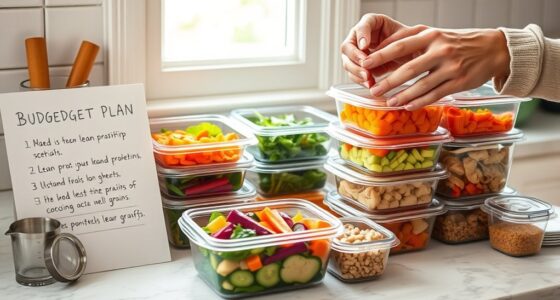
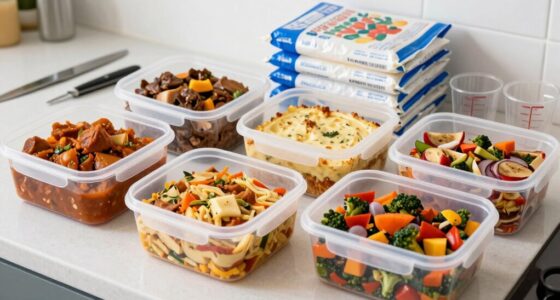
Glass and plastic containers can both support meal prep and organized eating, but they serve different routines. The central choice is whether you value a sturdy, heat-ready container that is easy to inspect and reuse, or a lighter, less expensive set that travels easily and is simpler to replace. Glass generally fits people who store meals at home and reheat them in the same dish; plastic suits packed lunches, commuting, and budgets where weight and breakage matter more.

Get health and wellness essentials delivered free with Prime
- Fast, free delivery on millions of items
- Prime Video, Amazon Music and more included
- Member-only deals all year

Vtopmart 8-Pack Glass Food Storage Containers with Lids – Green
- ✔ Material: Borosilicate glass; plastic lids with silicone seals
- ✔ Set size: 8 containers
- ✔ Capacities: 5, 6.8, 10.8, 12.5, 17.6, 21.6, 27.1, and 35.1 oz

Gladware Plastic Food Storage Containers, Deep Dish, 64 oz (3 Count)
- ✔ Material: BPA-free clear plastic
- ✔ Set size: 3 containers and 3 lids
- ✔ Capacity per container: 64 oz (8 cups / 1.89 L)

Vtopmart Airtight Food Storage Containers with Lids, 24 pcs, Black
- ✔ Material: Plastic and silicone
- ✔ Set size: 24 containers
- ✔ Tall size: 6 containers, 2.5 qt (2.8 L) each
At a Glance
| Criteria | Glass food storage containers | Plastic food storage containers | Winner |
|---|---|---|---|
| Heating and food contact | Many glass containers are microwave-safe; check the lid and manufacturer instructions. Avoid sudden temperature changes. | Microwave suitability varies by product; use only containers labeled for microwave use and follow the instructions. | A |
| Durability and lifespan | Resists staining and odor retention, but can chip or break if dropped. | Can crack, warp, stain, or retain odors over time; quality and care affect lifespan. | Depends |
| Portability | Heavy and more fragile to carry. | Lightweight and convenient for bags, lunchboxes, and travel. | B |
| Cleaning and odor retention | Smooth glass is generally easy to clean and less prone to holding odors. | Scratches and lingering food odors can make some containers harder to keep fresh. | A |
| Cost and replacement | Usually costs more upfront; longer useful life can offset the price for careful home use. | Typically cheaper to buy and replace; a practical choice for larger sets or frequent transport. | B |
| Everyday usability | Easy to see contents; useful for storing and reheating meals in one container. | Less risky to carry and easier to handle, though some may stain or deform. | Depends |
Vtopmart 8-Pack Glass Food Storage Containers with Lids – Green
For a wellness routine built around prepared meals, this set offers the most useful range of formats in the lineup. Its eight borosilicate glass containers span 5 to 35.1 ounces and include both rectangular and square shapes, so we can portion snacks, sides, and fuller meals without relying on one oversized dish. Compared with Gladware’s three matching 64-ounce containers, Vtopmart is better suited to varied individual portions and flexible reheating.The standout is temperature flexibility: the glass is listed as oven-safe up to 752°F, as well as microwave- and freezer-safe. That makes it a stronger fit when food moves between storage and reheating vessels. The four-hinge snap-lock lids with silicone seals are described as airtight and leak-proof, while the clear glass keeps contents visible. Its stackable design also helps organize a set with different shapes.There are practical compromises. Glass is heavier than Gladware’s plastic, and the containers’ plastic lids may discolor over time. This is also less useful for storing a large family dish in one piece than the deep-dish option, while it lacks the pantry set’s labels and dry-goods-oriented uniformity. We would choose it for varied meal prep, but skip it if lightweight handling or all-glass components are essential.
Pros:
- Borosilicate glass is listed as oven-safe up to 752°F and safe for microwave, freezer, and dishwasher use.
- Eight containers in rectangular and square shapes cover a range of portion sizes.
- Silicone-seal snap-lock lids are described as airtight and leak-proof.
- Clear, stackable containers make contents easier to see and store.
Cons:
- Plastic lids may discolor over time.
- Glass is heavier to handle than the Gladware plastic containers.
- The mixed portion sizes do not replace a dedicated large family-size dish.
Best for: People who portion different meals and want containers that can go from freezer storage to microwave or oven reheating.
Not ideal for: Buyers seeking lightweight large-format dishes, glass lids, or a set specifically organized for bulk dry goods.
Bottom line: Choose this set for the broadest prepared-food flexibility, provided you are comfortable handling glass and using plastic lids.
“Choose this set for the broadest prepared-food flexibility, provided you are comfortable handling glass and using plastic lids.”
Gladware Plastic Food Storage Containers, Deep Dish, 64 oz (3 Count)
When wellness means cooking once and saving substantial portions for later, Gladware’s format makes a different kind of sense. Each of the three deep dishes holds 64 ounces, or eight cups, giving us space for a family-sized leftover, a large batch of soup, or a shared prepared dish. Compared with Vtopmart’s glass set, the capacity is far greater per container, though the set offers only three matching sizes rather than options for snacks and smaller meals.The BPA-free clear plastic is listed as microwave-, freezer-, and dishwasher-safe, and the Glad Lock seal and interlocking lids are intended to keep food fresh and help keep lids together in storage. Plastic also makes these large dishes lighter to move than an equivalent glass container. For people who often divide one recipe across a few generous servings, that convenience may matter more than having multiple sizes.The limitation is its narrow range of use. A 64-ounce dish can be awkward for a small lunch or a single portion, and repeated use may leave the clear plastic stained or cloudy. Unlike Vtopmart’s glass set, it is not listed as oven-safe. We would pick Gladware for substantial leftovers and batch portions, but look elsewhere for varied meal sizes, oven-to-table flexibility, or pantry organization.
Pros:
- Three deep containers each hold 64 ounces, accommodating large servings and leftovers.
- BPA-free clear plastic is listed as microwave-, freezer-, and dishwasher-safe.
- Glad Lock seal is designed to help keep food fresh.
- Interlocking lids help keep the matching set organized.
Cons:
- Only one large capacity is offered, so small portions may take up unnecessary space.
- Plastic may stain or turn cloudy with repeated use.
- The supplied details do not list oven safety, unlike the Vtopmart glass set.
Best for: Households that store large leftovers or batch-cooked meals and want lightweight containers for freezer storage and microwave reheating.
Not ideal for: People who need small portion containers, oven-safe storage, or organizers for cereal, pasta, and other dry goods.
Bottom line: Choose Gladware when generous, lightweight containers for batch-cooked food matter more than portion variety or oven use.
“Choose Gladware when generous, lightweight containers for batch-cooked food matter more than portion variety or oven use.”
Vtopmart Airtight Food Storage Containers with Lids, 24 pcs, Black
This set addresses a different part of a wellness routine: keeping everyday dry ingredients visible, orderly, and easy to reach. With 24 containers across four sizes, it is built for cereal, pasta, snacks, and similar pantry goods rather than plated leftovers. Compared with Gladware, it gives us more containers and a much broader size mix; compared with Vtopmart’s glass set, it prioritizes cabinet organization over reheating flexibility.Each container has a side-locking lid with a silicone gasket, and the clear plastic lets us check contents without opening the lid. The 24 reusable labels help identify what we have and make a coordinated pantry easier to maintain. Stackable shapes can also make better use of shelf space. These details support routines around planning and restocking, though the product description focuses on dry food rather than liquid leftovers or heat.The tradeoff is that this is the most specialized choice here. It is not the set to reach for when we want oven-safe meal prep containers, and the lids may feel flimsy after repeated use. Its four capacity groups are useful for pantry staples, but they do not provide the small-to-large variety of meal portions found in the glass set. Choose it for dry storage and visible organization; skip it if your priority is cooked meals and reheating.
Pros:
- Twenty-four containers in four sizes support organizing a range of pantry staples.
- Side-locking lids with silicone gaskets are designed to keep dry goods fresh.
- Clear plastic and reusable labels make contents easier to identify.
- Stackable design helps organize cabinet space.
Cons:
- Lids may feel flimsy after repeated use.
- The set is intended for dry goods and is less suited to meal reheating than the glass set.
- Uniform groups of pantry sizes do not offer the same portion flexibility as the glass containers.
Best for: People organizing dry pantry staples who value clear containers, coordinated sizes, and reusable labels.
Not ideal for: Meal preppers looking for oven-safe dishes, varied individual meal portions, or containers mainly intended for wet leftovers.
Bottom line: Choose this set to make dry pantry storage more visible and organized, rather than as your main meal-prep system.
“Choose this set to make dry pantry storage more visible and organized, rather than as your main meal-prep system.”
As an Amazon Associate we earn from qualifying purchases.
Key Differences
The clearest difference is how the containers behave around heat and repeated use. Glass is often the more practical choice for a meal that moves from refrigerator to microwave, provided the specific container is labeled for that use and its lid is handled according to instructions. It also tends to resist staining and lingering odors. Plastic varies more by product: microwave suitability, durability, and resistance to staining depend on the material and manufacturer guidance. For wellness-minded buyers, the useful habit is to follow the label rather than assume all containers of either type are interchangeable.
Plastic has a strong everyday advantage when food must travel. Its lighter weight makes packed meals easier to carry, and a dropped plastic container is less likely to shatter than glass. Glass rewards careful home use with a sturdy, easy-to-clean storage surface, but the extra weight and breakage risk can make it inconvenient for a crowded commute or children’s lunch bag. Price follows a similar split: plastic usually costs less at checkout, while glass may deliver better long-term value for people who reuse containers regularly and handle them carefully.
Neither material alone makes a diet healthier. The better choice is the one that makes storing planned meals easy and reliable. Choose glass for home meal prep and reheating; choose plastic for portable meals and lower upfront cost. If you need both, a small glass set for home and a few labeled, durable plastic containers for transport can match the uses without forcing one material to do everything.
Detailed Comparison
Heating and food contact (Glass food storage containers wins — moderate)
Glass wins for straightforward reheating because many glass containers are microwave-safe and do not warp like some plastics can. The gap is moderate: plastic products vary, and some are labeled for microwave use. Check the container and lid instructions, and do not heat anything unless its maker permits it.
Durability and lifespan (moderate difference)
There is no universal winner. Glass resists scratches, stains, and odors, but can chip or break from impact or sudden temperature shifts. Plastic is less likely to shatter when dropped, though it can scratch, warp, or crack. The better fit depends on whether careful long-term home use or impact resistance matters more.
Portability (Plastic food storage containers wins — major)
Plastic wins by a clear margin because it weighs less and tolerates the bumps of a bag better. This is a major practical difference for commuting, school lunches, and travel. Glass is easier to manage when containers stay in the kitchen or move only a short distance.
Cleaning and odor retention (Glass food storage containers wins — moderate)
Glass wins moderately: its smooth surface is less likely to retain food smells or stains, and it is typically easy to wash. Plastic can still clean well, but scratches and staining may accumulate with use. Follow the cleaning instructions for either container, especially for lids and seals.
Cost and replacement (Plastic food storage containers wins — moderate)
Plastic wins on upfront cost and is often easier to replace individually. Glass usually costs more at purchase, but can be better value for someone who reuses it often and avoids breakage. The price premium is worth paying when heat-ready home use and repeated reuse are priorities; otherwise, plastic is the more economical starting point.
Everyday usability (minor difference)
This is a close call. Glass makes contents easy to see and can go from storage to reheating in one dish when labeled for that use. Plastic is easier to lift, pack, and hand to children. The winner depends on whether most meals stay at home or leave it.
Glass food storage containers: Pros and Cons
Pros:
- Often suitable for microwave reheating when labeled accordingly
- Resists food stains and odors
- Sturdy for repeated home storage and meal prep
- Contents are easy to see
Cons:
- Heavier to carry
- Can chip or break if dropped
- Usually costs more upfront
- Needs care around sudden temperature changes
Plastic food storage containers: Pros and Cons
Pros:
- Lightweight for lunch bags and travel
- Usually costs less upfront
- Less likely to shatter when dropped
- Easy to replace or buy in larger sets
Cons:
- Microwave use depends on the product label
- May stain, scratch, or retain odors over time
- Can warp or crack with heat or wear
- May need replacing sooner with frequent use
Who Should Choose What
Choose Glass food storage containers if:
- You prep meals at home and want to reheat them in the same container, subject to the product label.
- You value easy cleaning and resistance to stains or lingering food smells.
- You are comfortable paying more upfront and handling containers carefully.
Choose Plastic food storage containers if:
- You regularly carry meals to work, school, or on trips and want to keep bag weight down.
- You need a lower-cost set or expect containers to be dropped or misplaced.
- You want convenient everyday storage and can follow product-specific heating instructions.
Skip both if: Neither material is a good fit if your routine requires containers that can be heated, frozen, or handled in a specific way but you cannot verify those uses from the product label. Choose a product designed for your actual storage and heating needs.
Value for Money
Plastic is usually the better value at checkout, especially when you need many containers for packed meals or want a low-cost set. Glass asks for a larger initial spend, but the price can make sense for frequent home use: it resists staining and odors and may stay useful for years if handled carefully. Pay more for glass when reheating and repeated kitchen use are central to your routine. For portable meals, the lighter and cheaper plastic option is often the more sensible buy.
Final Verdict
For a wellness-focused home meal-prep routine, choose glass if you want a durable, easy-to-clean container that can also serve for reheating when the label permits. Choose plastic if your main concerns are carrying meals, avoiding breakage, and keeping the initial cost down. The deciding factor is where meals are used: glass suits the kitchen, while plastic suits the commute. Most buyers do not need to pay more for glass if portability is the daily priority.
Frequently Asked Questions
Are glass containers better for meal prep?
They are often a strong fit for home meal prep because they are easy to inspect, clean, and reuse. If you plan to reheat food in them, verify that the container is labeled for microwave use and follow its instructions.
Can plastic food containers go in the microwave?
Some can, but suitability depends on the specific container. Use only products labeled for microwave heating, follow the maker’s guidance, and check whether the lid should be removed.
Which material is better for taking lunch to work?
Plastic is usually more convenient because it is lighter and less likely to break in a bag. Glass can work for a short, careful commute, but its weight and breakage risk make it less practical for frequent travel.
Is glass worth the higher price?
It can be if you mostly store and reheat meals at home, reuse containers often, and handle them carefully. If you need lightweight containers for transport or a low upfront cost, plastic is likely the better value.