
TL;DR

Get health and wellness essentials delivered free with Prime
- Fast, free delivery on millions of items
- Prime Video, Amazon Music and more included
- Member-only deals all year
A MedPage Today opinion article by Terry Adirim argues that federal Medicaid reductions and a proposed $103,265 H-1B petition fee could add pressure to rural hospitals already facing closures and staffing shortages. The policy estimates and effects cited are projections and concerns, not confirmed outcomes; the article says a five-year rural health program may not replace sustained funding.
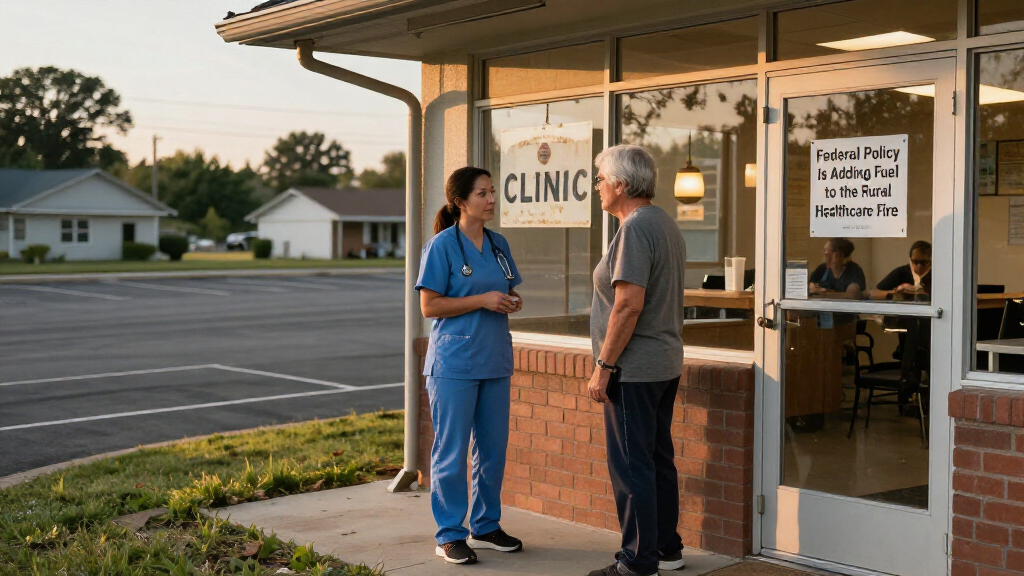
Federal Medicaid reductions and a proposed fee on some H-1B visa petitions could deepen funding and staffing pressures on rural hospitals, according to a MedPage Today opinion article published October 18 by Terry Adirim, a physician and former leader of the military health system. The article warns that a temporary federal rural health program may not make up for projected Medicaid losses, though the financial and staffing effects described are estimates and concerns, not established outcomes.
Adirim writes that the 2025 budget reconciliation law, signed by President Donald Trump, is estimated to reduce federal Medicaid spending by $911 billion over 10 years and leave 10 million more people uninsured nationwide. KFF estimates that federal Medicaid spending in rural areas would fall by $137 billion over the same period. Those figures are projections cited in the opinion article, rather than observed reductions already completed.
Rural providers may be particularly exposed because Medicaid covers one in four rural adults, half of rural births and about one-fifth of inpatient hospital discharges, according to the figures cited by Adirim. He argues that lower reimbursements could contribute to hospitals cutting staff or services, or closing, but the article does not quantify how many facilities would close as a result of the law.
The article also points to a Department of Homeland Security proposal for a $103,265 fee on H-1B petitions subject to the annual visa cap, in addition to other fees. Adirim cites a 2025 JAMA study finding that more than 11,000 physicians were sponsored by H-1B visas in fiscal year 2024 and that rural counties relied on such physicians at higher rates than urban counties. The proposed fee’s implementation and its eventual effect on physician recruitment are not established in the source material.
Rural Hospitals Face Funding Risks
The stakes are not limited to hospital budgets. In communities with few nearby alternatives, the loss of a facility or a service line can mean longer journeys for emergency, maternity and specialist care. Adirim says Medicaid functions as part of rural health infrastructure because it helps sustain the providers that serve residents with limited access to other services.
The article cites 193 rural hospital closures between 2005 and 2024, and a decline in rural hospitals offering obstetric services from 57% in 2010 to 48% in 2022. It also cites an estimate from the Center for Healthcare Quality and Payment Reform that more than 700 rural hospitals—about one-third of rural facilities—are at risk of closure. These figures describe existing strain; they do not establish that federal policy alone caused the closures or will cause every at-risk hospital to shut.
For patients, reduced local capacity can affect whether care is available in time. Adirim describes arranging remote specialist advice for a military family in a rural area, followed by travel for an in-person evaluation. He notes that most families cannot relocate through an employer to obtain services. The example illustrates the access problem, while the broader data in the article show how funding and workforce pressures could compound it.
rural hospital emergency medical supplies
As an affiliate, we earn on qualifying purchases.
As an affiliate, we earn on qualifying purchases.
Closures and Access Gaps
Rural communities already face poorer health outcomes on some measures cited in the article. The CDC’s age-adjusted mortality comparison showed rural death rates were 7% higher than urban rates in 1999 and 20% higher in 2019. Adirim also cites CDC estimates that tens of thousands of rural deaths from major causes in 2022 were potentially preventable. These statistics provide context for the policy debate; they do not show that the Medicaid law caused the mortality gap.
Congress and the administration point to a $50 billion Rural Health Transformation Program as support for rural care. Adirim welcomes investment but argues that the program’s five-year duration and limits on how funds can reach providers make it an incomplete replacement for continuing Medicaid revenue. KFF estimates the program represents little more than one-third of projected rural Medicaid reductions. The American Hospital Association has urged the Centers for Medicare & Medicaid Services to loosen restrictions, according to the article.
Adirim also argues that telehealth and new care models cannot substitute for all local services: remote consultations cannot perform emergency surgery or create a nearby specialist workforce. His article is an opinion piece advocating sustained funding and workforce support, not a government assessment of the policies’ eventual effects.
“Medicaid is not simply an insurance program in these communities. It is part of the infrastructure that keeps hospitals open.”
— Terry Adirim, writing in MedPage Today
As an affiliate, we earn on qualifying purchases.
Policy Effects Still Unsettled
The article cites projections for Medicaid spending and insurance coverage, but it does not establish the final effects on individual rural hospitals, staffing levels or patient access. The extent to which the Rural Health Transformation Program will reach providers, or whether federal agencies will change its funding restrictions, also remains unclear in the source material.
The H-1B fee is described as a DHS proposal. The article does not provide a final rule, implementation date or details about any exemptions. It is therefore not possible to say how many physician hires would be affected or how much the proposal would change recruitment in rural areas. The article also does not report new hospital closure decisions tied directly to either policy.
rural healthcare staffing equipment
As an affiliate, we earn on qualifying purchases.
As an affiliate, we earn on qualifying purchases.
Funding Rules and Visa Proposal
Relevant next developments include how CMS administers the five-year Rural Health Transformation Program and whether it changes the restrictions on direct support to hospitals and other providers. The American Hospital Association’s request for more flexible funding is one sign of the dispute over how the program should work.
For the visa issue, the next key information would be a final DHS decision on the proposed fee, including its scope and effective date. Hospitals and policymakers will also need to assess how Medicaid funding changes and workforce costs affect rural services over time. The MedPage Today article does not give a timeline for those outcomes.
medical equipment for rural clinics
As an affiliate, we earn on qualifying purchases.
As an affiliate, we earn on qualifying purchases.
Key Questions
What federal policies does the article say could affect rural health care?
It focuses on projected Medicaid spending reductions in the 2025 budget reconciliation law and a proposed DHS fee of $103,265 on certain H-1B petitions. The article argues both could add pressure to rural providers, but does not establish their eventual effects.
How much could federal Medicaid spending in rural areas fall?
KFF estimates, as cited by Adirim, that federal Medicaid spending in rural areas will be reduced by $137 billion over 10 years. This is a projection, not a report of reductions already fully realized.
Does the $50 billion rural health program replace those Medicaid funds?
Adirim argues it does not. The program runs for five years, and KFF estimates the amount is little more than one-third of projected rural Medicaid reductions. The article also points to restrictions on how the money can reach providers.
Is the H-1B physician fee already in effect?
The source describes the $103,265 fee as a DHS proposal for petitions subject to the annual visa cap, in addition to other fees. It does not state that the proposal has been finalized or provide an effective date.
Source: rss
Cold & flu season Picks
humidifiers
As an affiliate, we earn on qualifying purchases.