
Creating a sensory-friendly home helps you feel calmer, more grounded, and better able to handle daily stresses. By incorporating soft textures, calming scents, and gentle lighting, you support emotional stability and resilience. Mindful breathing and tactile engagement can quickly soothe your nerves, making your space a true refuge. Small adjustments can turn your environment into a sanctuary for relaxation and mindfulness. Keep exploring to discover more ways to make your home a comforting haven.
Key Takeaways
- Sensory comfort creates a calming environment that reduces stress and promotes emotional stability throughout the day.
- Incorporating tactile objects and textures helps ground individuals, enhancing focus and relaxation at home.
- Mindful breathing practices regulate the nervous system, fostering a sense of safety and emotional resilience.
- Thoughtfully designed sensory spaces support routines for self-regulation and stress relief.
- Sensory-friendly elements like lighting, scents, and textures nurture well-being and improve overall mood.
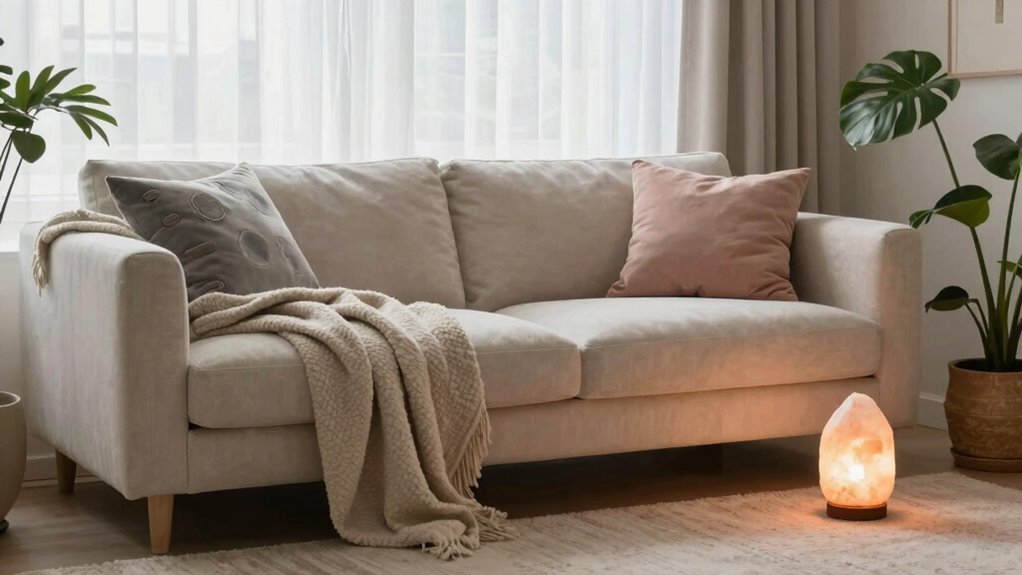
Creating a comfortable home environment can substantially improve your daily well-being, especially when you pay attention to your sensory needs. When your surroundings support your senses, you’re more likely to feel calm, focused, and resilient against stress. One effective way to do this is through mindful breathing, which helps regulate your nervous system and brings a sense of calm amidst daily chaos. By intentionally taking slow, deep breaths, you signal to your body that everything is okay, reducing anxiety and creating a foundation of emotional stability. Pairing this with tactile engagement—using soft fabrics, textured objects, or cozy blankets—further enhances your sensory comfort. These physical sensations ground you in the present moment, helping you disconnect from overwhelming thoughts and regain focus.
Enhance well-being through mindful breathing and tactile comfort for a calm, focused, and resilient home environment
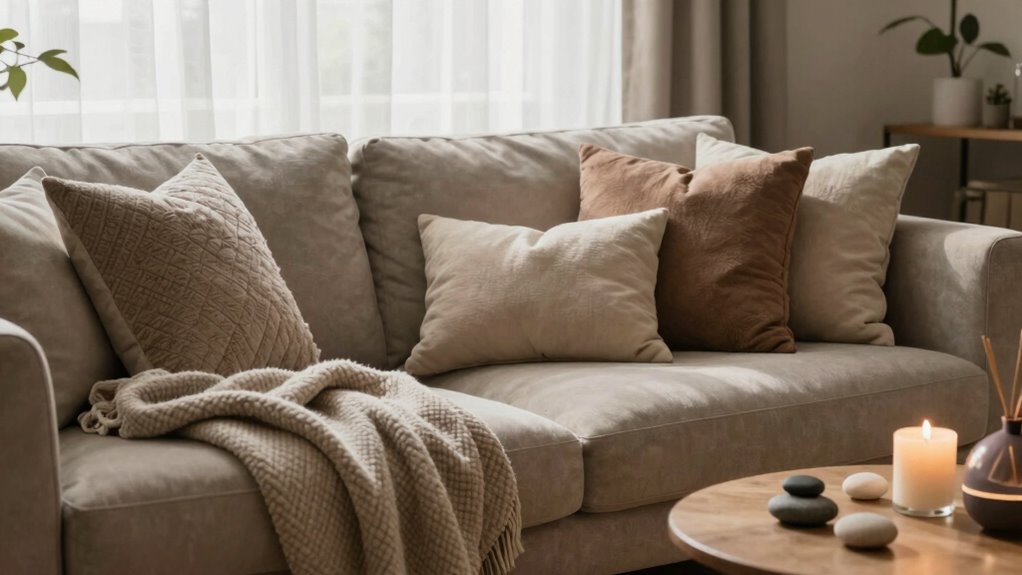
As you incorporate mindful breathing into your routine, you notice how it can transform your mood and energy levels. You might practice it during moments of stress, or simply as a daily ritual to set a peaceful tone for your day. When you combine this with tactile engagement, such as feeling the warmth of a textured throw or running your fingers over a smooth stone, you create a multisensory experience that anchors you in the present. This tactile stimulation can serve as a quick, accessible way to soothe your nervous system and promote relaxation. It’s about creating a sensory environment that invites comfort and calm, making your home a sanctuary. Additionally, understanding the importance of contrast ratio in visual setups can help you optimize your space for relaxing visual experiences, further supporting your sensory comfort. Incorporating visual harmony into your decor can also enhance the soothing atmosphere of your environment. Paying attention to hormetic stimuli, such as gentle exposure to herbal baths or spices like turmeric and ginger, can also strengthen your resilience and overall well-being. Creating a space with good lighting design can help reduce eye strain and promote a more peaceful ambiance.
You have the power to tailor your space to support these practices. For instance, keep soft, textured objects within reach—like plush cushions or fidget toys—that encourage tactile engagement. Designate a cozy corner with gentle lighting and calming scents to foster mindful breathing and relaxation. Creating a dedicated space for sensory regulation can make it easier to incorporate these calming practices into your daily routine. These small adjustments make a big difference because they actively involve your senses in your well-being. When you’re mindful of your sensory needs and use techniques like mindful breathing and tactile engagement, you’re more equipped to handle daily challenges with patience and clarity.
Ultimately, sensory comfort isn’t just about aesthetics; it’s about creating an environment that nurtures your mind and body. By intentionally cultivating these sensory experiences, you set the stage for better days at home. You’ll find yourself more resilient, more centered, and better able to enjoy the comfort of your personal space—turning your home into a true refuge from the stresses of everyday life.

Weighted Lap Pad for Kids, 5 lb Sensory Blanket with Sequin Fabric
- Calming Sensory Experience: Provides gentle pressure for relaxation
- Interactive Sequin Fabric: Features flip sequin for tactile engagement
- Comfortable Size: Measures 20×17 inches for kids' laps
As an affiliate, we earn on qualifying purchases.
As an affiliate, we earn on qualifying purchases.
Frequently Asked Questions
How Can I Identify My Personal Sensory Triggers at Home?
You can identify your personal triggers by paying close attention to your sensory awareness. Notice which sounds, textures, lights, or smells make you feel overwhelmed or uncomfortable. Keep a journal to track your reactions throughout the day. Experiment with adjusting or avoiding certain stimuli, and observe how your feelings change. Over time, you’ll recognize your specific triggers and create a sensory-friendly environment that promotes comfort and better days at home.
What Are Quick Tips to Improve Sensory Comfort Instantly?
Remember, a quick fix is often just a breath away. To instantly boost sensory comfort, try sensory integration techniques like deep breathing or gentle stretches. Use calming techniques such as dimming lights, playing soft background music, or applying a calming scent. These simple actions can soothe your senses and create a more comfortable environment. In moments of overwhelm, these tips help you regain control and find instant calm.
Are There Specific Sensory Tools Recommended for Different Age Groups?
Yes, different age groups benefit from specific sensory tools. For children, sensory toys like textured balls and soft plushies help promote calmness and focus. Teens and adults often prefer calming textures such as weighted blankets or fidget tools that provide gentle pressure. By choosing age-appropriate sensory toys and calming textures, you can create a soothing environment tailored to individual needs, encouraging relaxation and better days at home.
How Often Should Sensory Environments Be Reassessed for Comfort?
You should revisit your sensory environment regularly, ideally every few months, to accommodate subtle sensory adaptation and maintain environmental consistency. As your needs evolve, small adjustments can make a significant difference in comfort. Pay attention to any signs of discomfort or overstimulation, and re-evaluate promptly. Keeping your sensory spaces aligned with your current preferences ensures a calming, supportive atmosphere that promotes well-being and better days at home.
Can Sensory Comfort Practices Help With Mental Health Issues?
Yes, sensory comfort practices can help with mental health issues by reducing sensory overload and supporting emotional regulation. When you create a calming environment and use gentle sensory inputs, you can better manage stress, anxiety, and mood swings. These strategies help you stay grounded and maintain emotional balance, making it easier to cope with daily challenges. Incorporating sensory comfort into your routine can promote a sense of safety and well-being.

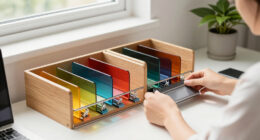
luckdoor Silicone Magnetic Balls Fidget Toys for Adults & Teens,4PCS Stress Relief Sensory Toys for Autism ADHD Anxiety,Fun Textures Gadgets,Office Desk Toy,Stocking Stuffers for Women Men Teen Gift
- Creative Magnetic Design: Encased magnet with textured silicone exterior
- Enhances Motor Skills: Promotes fine motor skills and coordination
- Sensory Stimulation: Provides varied textures for sensory needs
As an affiliate, we earn on qualifying purchases.
As an affiliate, we earn on qualifying purchases.
Conclusion
By prioritizing sensory comfort, you create a calm, cozy corner that cushions your days with consistency and care. Small changes, like soft lighting or soothing scents, seamlessly support your mental and physical well-being. When you nurture your senses, you nurture your spirit, turning your home into a sanctuary of serenity. So, embrace these easy enhancements and experience the transformative power of sensory comfort—because a peaceful space paves the way for better, brighter days.

AOOVOO Calm Candles Set for Women – 4 Pack Soy Candles for Home Scented
- Healing Candle Set with Crystals: Includes four aromatherapy candles with crystals
- Natural Soy Wax with Essential Oils: Made from 100% soy wax with 10% essential oils
- Long-Lasting & Clean Burn: Each candle burns 40-50 hours, total 200 hours
As an affiliate, we earn on qualifying purchases.
As an affiliate, we earn on qualifying purchases.

Home Brilliant Cushion Cover for Chair Decor Striped Plush Chenille Velvet Supersoft Handmade Decorative Pillowcase, Set of 2, 18"x18"(45cm), Jeans Blue
- Design: Textured striped chenille blend fabric
- Application: Suitable for sofa, chair, bed, floor
- Package: Set of 2 covers, 18×18 inches
As an affiliate, we earn on qualifying purchases.
As an affiliate, we earn on qualifying purchases.