To maintain simple yet effective hygiene routines as you age, focus on daily skincare with gentle cleansers, rich moisturizers, and sunscreen to protect against aging and sun damage. Keep oral health strong by brushing twice a day, flossing, and visiting your dentist regularly. Adjust routines for skin and oral care as needed to address changes. Staying consistent is key, and if you continue exploring, you’ll discover more ways to support your health through your hygiene habits.
Key Takeaways
- Use gentle cleansers and rich moisturizers to protect and hydrate aging skin daily.
- Apply sunscreen every morning to prevent UV damage and skin aging.
- Brush teeth twice daily with fluoride toothpaste and floss regularly to maintain oral health.
- Incorporate antimicrobial mouthwash and schedule biannual dental checkups for optimal oral hygiene.
- Tailor routines to changing skin and oral needs, monitoring for issues like dryness, spots, or sensitivities.

Have you ever wondered how hygiene routines should adapt as you age? As your body changes, so do your needs for maintaining good hygiene. Staying consistent with simple routines can significantly impact your overall health and well-being. It’s essential to pay attention to skincare essentials and oral health, which become even more critical over time. The key is to keep things straightforward and tailored to your evolving needs.
Adapting your hygiene routines as you age supports your health and well-being over time.
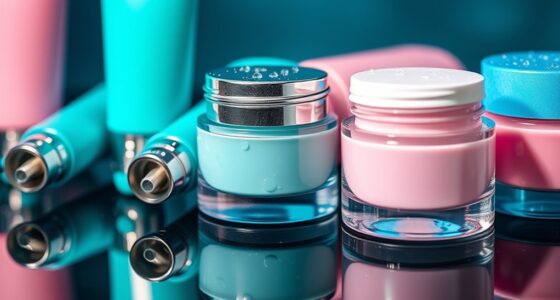
When it comes to skincare, your skin becomes thinner and drier with age, making it more vulnerable to irritation and damage. Using gentle skincare essentials like a mild cleanser and a rich moisturizer helps protect your skin’s barrier. Don’t forget to apply sunscreen daily; UV rays can accelerate aging and cause skin damage, even if it’s cloudy outside. Incorporate these simple steps into your routine: wash your face with lukewarm water, pat dry, and apply a moisturizer suited for mature skin. If you notice changes like age spots or increased dryness, consider adding products with ingredients like hyaluronic acid or ceramides to boost hydration. Regularly inspecting your skin for any unusual spots or changes is also vital, as early detection of skin issues can be life-saving. Additionally, understanding the importance of color accuracy in skincare products can help you choose the most effective options for your skin type. Incorporating natural ingredients into your skincare can further support your skin’s health and resilience as you age. Staying aware of skin sensitivities that develop over time can help prevent irritation and discomfort.
Oral health becomes increasingly important as you age. Maintaining a consistent oral hygiene routine prevents problems like gum disease, tooth decay, and bad breath. Brush your teeth at least twice a day with fluoride toothpaste, making sure to reach all surfaces. Floss daily to remove plaque and food particles stuck between your teeth that your toothbrush can’t reach. Consider using an antimicrobial mouthwash to reduce bacteria and keep your mouth fresh. Regular dental checkups are essential—visit your dentist at least twice a year for cleanings and examinations. As you age, you might experience dry mouth or other oral health issues, so discuss these concerns with your dentist for personalized advice. Using a gentle toothbrush and replacing it every three to four months ensures cleaning remains effective without damaging your gums.
gentle facial cleanser for mature skin
As an affiliate, we earn on qualifying purchases.
As an affiliate, we earn on qualifying purchases.
Frequently Asked Questions
How Often Should Seniors Change Their Bedding for Optimal Hygiene?
You should change your bedding at least once a week for ideal hygiene. Regular bedding maintenance helps prevent the buildup of dust mites, bacteria, and sweat, which can cause skin irritation or infections. Maintaining a consistent hygiene frequency ensures you stay comfortable and healthy. If you sweat heavily or have allergies, consider changing your sheets more often, such as every 3-4 days, to keep your sleeping environment clean and fresh.
Are There Specific Hygiene Products Recommended for Aging Skin?
Yes, for aging skin, choose hygiene products with gentle skincare ingredients like aloe vera, glycerin, or ceramides. Avoid harsh soaps and fragrances that can irritate sensitive skin. When selecting hygiene products, look for those specifically formulated for mature skin, offering hydration and barrier protection. Your goal should be to maintain moisture and prevent dryness, so opt for mild cleansers and moisturizing products that support healthy aging skin.
How Can Caregivers Assist With Daily Hygiene Without Causing Discomfort?
Like a gentle hand guiding a delicate brush, you can assist with daily hygiene by respecting personal dignity and privacy concerns. Use soft, respectful communication, and involve your loved one in decisions. Offer help patiently, ensuring comfort and autonomy are prioritized. Keep routines simple, private, and reassuring, so they feel in control. Your mindful approach fosters trust, making hygiene a respectful, dignified experience rather than an uncomfortable obligation.
What Are Common Hygiene Challenges Faced by Seniors With Limited Mobility?
You might notice seniors with limited mobility struggle with personal hygiene, often due to difficulty reaching or standing. Using mobility aids like walkers or shower chairs can help them maintain cleanliness comfortably. You should assist with tasks such as bathing, brushing teeth, and grooming, ensuring they feel supported without feeling rushed. Encouraging independence while providing gentle help can make hygiene routines easier and less stressful for both of you.
When Should Aging Adults See a Healthcare Professional About Hygiene Issues?
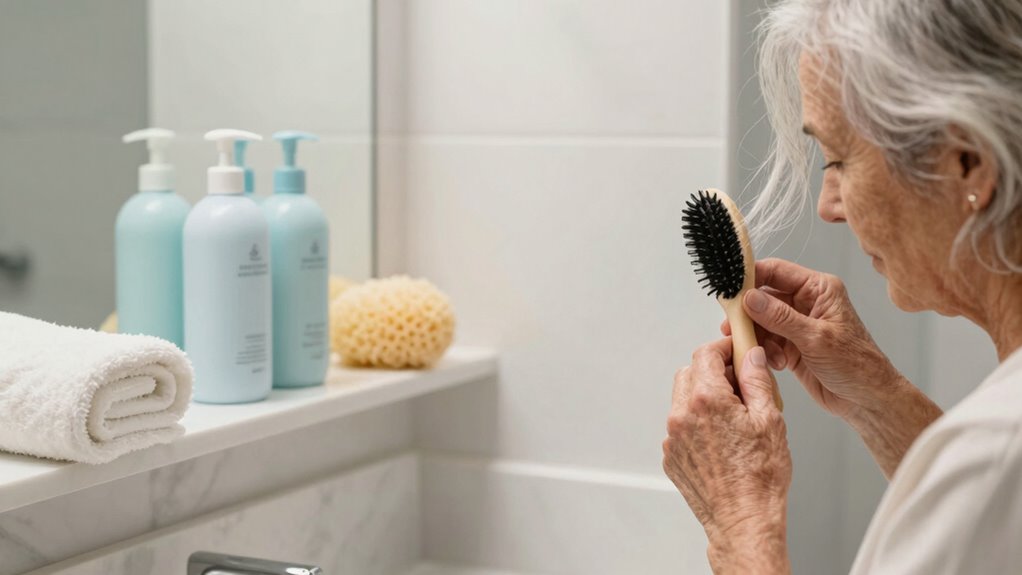
You should see a healthcare professional if you notice persistent issues with dental care or hair grooming, as over 30% of seniors face hygiene challenges that impact health. Addressing problems early prevents infections and discomfort. If brushing becomes painful or hair grooming feels overwhelming, don’t wait—prompt professional advice guarantees you maintain good hygiene, comfort, and confidence as you age.
As an affiliate, we earn on qualifying purchases.
Conclusion
Maintaining simple hygiene routines isn’t just about looking good—it’s about feeling confident and staying healthy as you age. Think of it like a daily power-up, much like how a morning coffee energizes you. Even if some believe hygiene routines lose importance over time, science shows they’re essential for preventing infections and boosting mental well-being. Stick to these easy habits, and you’ll enjoy a fresher, more vibrant life every day.
As an affiliate, we earn on qualifying purchases.
As an affiliate, we earn on qualifying purchases.