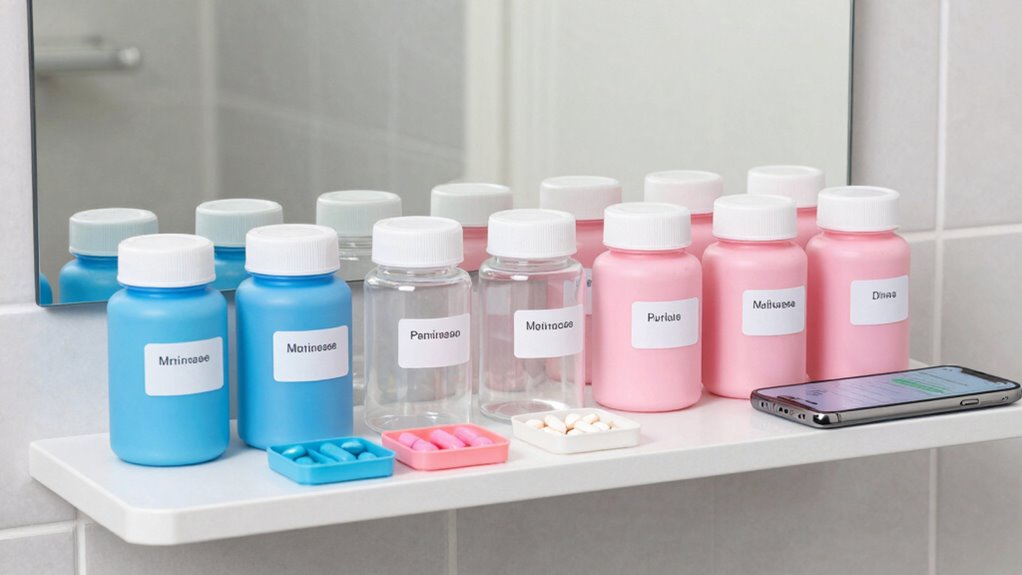

To avoid medication mix-ups at home, keep all medicines organized in a designated, clearly labeled space, storing bottles upright and separate allergy meds from others for quick access. Regularly review expiration dates and update your list of medicines with doses and schedules. Use childproof containers, double-check medications before use, and develop routines for taking them. Following these simple steps can greatly reduce errors—continue to explore more tips to keep your family safe.
Prime for Young Adults — start your free trial
Fast free delivery, streaming and member deals for eligible 18–24 year olds.
As an affiliate, we earn on qualifying purchases.
Key Takeaways
- Use clearly labeled, transparent containers and organize medications by type or time of day for quick identification.
- Store allergy medications separately and prominently to prevent accidental misuse or delays in emergencies.
- Regularly review and update your medication list, noting expiration dates and prescription changes.
- Keep medications out of children’s reach using childproof containers and bright labels for allergy meds.
- Implement routines with pill organizers and reminders to ensure correct and consistent medication intake.

Keeping track of multiple medications at home can be challenging, but taking simple steps can considerably reduce the risk of mix-ups. The first step is to establish a consistent medication storage system. Use a designated area, like a specific drawer or shelf, where all your medications are stored. Keep bottles upright and avoid stacking them to prevent accidental spills or confusion. Label each container clearly, and consider using transparent containers so you can see the medications inside easily. Organize your medications by type or time of day to make it easier to find what you need quickly. This organization minimizes the chance of taking the wrong medication or dosage, especially when you’re in a hurry.
Establish a dedicated, organized storage space for medications to reduce confusion and prevent errors.
Medication storage also plays a vital role in allergy awareness. Store allergy medications, like antihistamines or epinephrine auto-injectors, separately from other medicines to avoid accidental misuse. Make sure these emergency medications are easily accessible, especially if allergies are severe. If you have children or visitors, use childproof containers and keep medications out of their reach. Clearly label allergy medications with bright stickers or write “ALLERGY MEDICATION” on the label to draw attention. Knowing exactly where your allergy medications are and ensuring they’re stored correctly prevents dangerous mix-ups that could lead to allergic reactions. Being aware of medication safety can help you make better decisions about storage and handling. Additionally, understanding proper storage practices supported by healthcare professionals can further enhance medication safety at home.
Another essential aspect is to regularly review your medication list and storage setup. Take the time to check expiration dates and discard expired medications. If you notice any changes in your prescriptions, update your storage labels and organization system accordingly. Keeping an updated list of your medications, including dosages and scheduled times, helps you stay aware and reduces the risk of taking incorrect doses or missing medications altogether. Sharing your medication list with family members or caregivers also helps prevent errors. Additionally, understanding the importance of proper medication storage can significantly improve safety at home.
In addition to proper storage, develop a routine for medication management. Use pill organizers or electronic reminders to help you adhere to your schedule. Always double-check before taking any medication to verify it’s the correct one. By maintaining a clean, organized storage space and staying aware of your allergies, you markedly lower the chances of medication errors. These small but consistent practices create a safer environment at home, giving you peace of mind and reducing the risk of harmful mix-ups.
medication storage containers with labels
As an affiliate, we earn on qualifying purchases.
As an affiliate, we earn on qualifying purchases.
Frequently Asked Questions
How Can I Identify Expired Medications at Home?
To identify expired medications at home, check the medication’s expiration date printed on the packaging or bottle. If it’s faded or missing, examine the pills for changes in color, shape, or texture, which can signal expiration. Remember, expired medication may be less effective or unsafe. When in doubt, safely dispose of expired pills and consult your healthcare provider for replacements or guidance on medication safety.
What Should I Do if I Miss a Dose?
Missing a dose happens to 23% of medication users, so don’t panic. If you miss a dose, take it as soon as you remember unless it’s close to your next scheduled dose. Avoid doubling up, as it can be dangerous. Guaranteeing medication timing and dose consistency is key. If unsure, consult your healthcare provider or pharmacist for personalized advice. Staying vigilant helps ensure your medication works safely and effectively.
Are There Apps to Help Manage My Medications?
Yes, there are apps that help manage your medications effectively. They send medication reminders, ensuring you take your pills on time. You can also find pill organizer suggestions within these apps to help you stay organized. Using these tools, you reduce the risk of mix-ups and missed doses. Set up notifications and choose a pill organizer system that suits your routine to stay on top of your medication schedule effortlessly.
How Do I Store Medications Safely From Children?
Storing medications safely is like securing treasures from curious hands. You should use child proof storage containers and keep them out of reach, ideally in high cabinets or locked drawers. Always label medications clearly to prevent mix-ups, and never leave pills unattended. Regularly check that containers are secure and intact. Teaching children about the dangers of medicines also helps reinforce safety, ensuring they understand these substances aren’t for play.
Can I Share Medications With Family Members?
You should avoid medication sharing with family members because it risks incorrect dosages and adverse reactions. Sharing medications can compromise family safety, especially if someone has allergies or different health conditions. Always use your prescribed medications and encourage family members to get their own prescriptions. This practice helps prevent medication mix-ups and guarantees everyone stays safe. Remember, only take medications that are prescribed specifically for you.
As an affiliate, we earn on qualifying purchases.
Conclusion
By staying organized and attentive, you can steer clear of medication mix-ups like a captain steering through tricky waters. Keep your pills sorted, double-check labels, and create a routine to prevent mistakes. Remember, your health is your ship’s anchor—taking simple precautions guarantees smooth sailing. With a little care and vigilance, you’ll keep your medication voyage trouble-free, avoiding hazards and arriving safely at good health.
automatic medication reminder device
As an affiliate, we earn on qualifying purchases.
As an affiliate, we earn on qualifying purchases.
medication expiration date tracker
As an affiliate, we earn on qualifying purchases.
As an affiliate, we earn on qualifying purchases.
NFL season / tailgating Picks
team gear
As an affiliate, we earn on qualifying purchases.