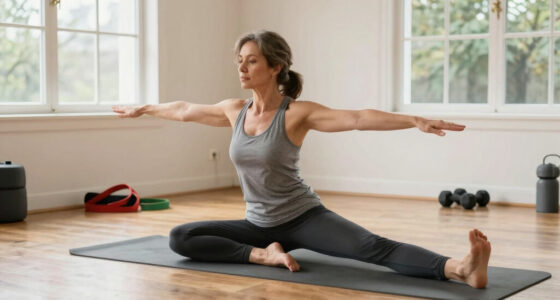

To support healthy movement at home without overdoing it, focus on establishing a balanced routine that includes regular breaks, gentle stretches, and natural movement like walking or light exercises. Use ergonomic furniture to promote good posture and guarantee your environment is safe. Remember to listen to your body, avoid pushing into pain, and wear supportive footwear. Incorporating these simple habits can boost your well-being—continue exploring ways to make movement safe and sustainable.
Key Takeaways
- Incorporate regular, gentle movement breaks and stretch routines to avoid prolonged sedentary periods.
- Use proper ergonomics to maintain correct posture during daily activities and work.
- Engage in light, dynamic activities like walking or resistance exercises, avoiding overexertion.
- Listen to your body signals and adjust activity levels to prevent discomfort or fatigue.
- Maintain a safe environment and wear supportive footwear to promote safe, sustainable movement habits.
Maintaining healthy movement habits at home is essential for your overall well-being, especially as daily routines shift and access to gyms or outdoor spaces may be limited. One of the most effective ways to support this is by creating an ergonomic desk setup. If you spend hours working at your computer, investing in an ergonomic desk and chair can make a significant difference. Guarantee your monitor is at eye level, your feet are flat on the floor, and your wrists are in a neutral position. These small adjustments help prevent strain and discomfort, encouraging you to sit correctly for longer periods. Taking regular breaks from your desk is equally important. Stand up, stretch, and change positions frequently to avoid stiffness and promote circulation.
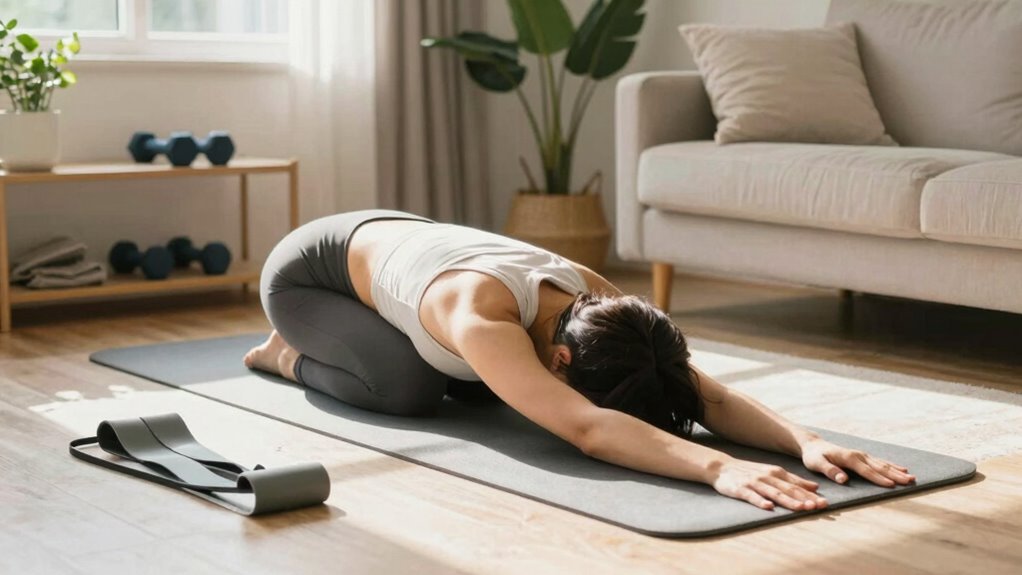
In addition to setting up your workspace properly, incorporating mindful stretching into your daily routine can help keep your muscles flexible and reduce tension. Stretching doesn’t need to be time-consuming or complicated. Simple, mindful movements—like gentle neck rolls, shoulder shrugs, or hamstring stretches—can be done in a few minutes. The key is to pay attention to how your body feels and avoid pushing into pain or discomfort. Stretching mindfully encourages you to listen to your body’s signals, preventing overstretching or injury. Make it a habit to stretch when you start your day, during breaks, or after long periods of sitting. This approach promotes better posture, reduces muscle tightness, and enhances your overall sense of well-being. Incorporating natural movement into your routine can further support your physical health and prevent stagnation. Engaging in dynamic activities like walking or light exercises can help break up sedentary periods and boost your energy levels. Being aware of and practicing ergonomic principles in your daily activities can also reduce strain and improve comfort throughout the day. Additionally, understanding proper body mechanics ensures that you move safely and efficiently during daily tasks, reducing the risk of injury. Incorporating movement awareness into your habits can help you recognize and correct poor postural patterns before they cause discomfort.
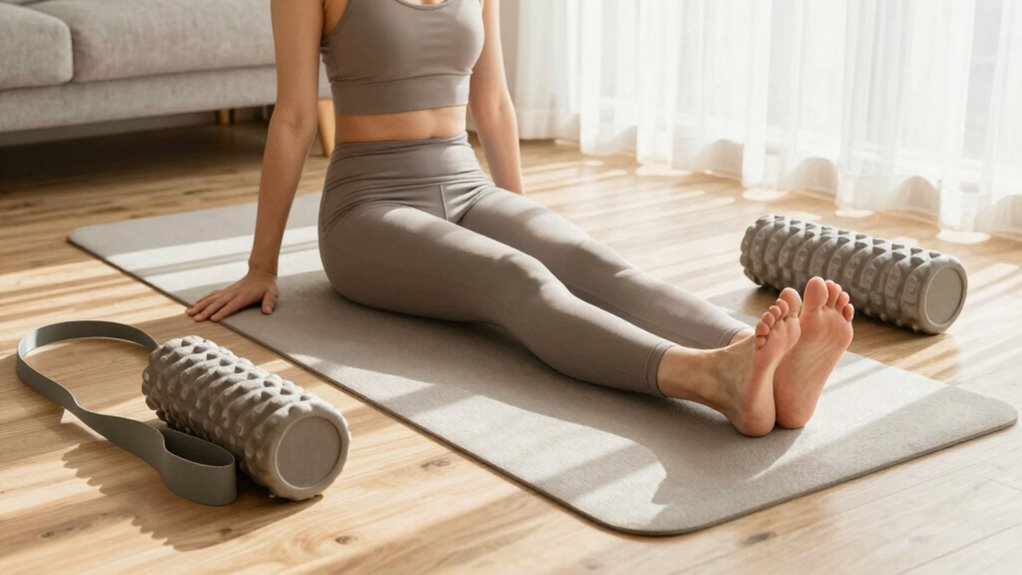
Supporting healthy movement at home also involves establishing daily routines that balance activity and rest. Incorporate movement into your schedule by setting reminders to stand, stretch, or walk around every hour. Even short walks around your home or yard can boost circulation and energy levels. If space allows, consider adding simple equipment like resistance bands or small weights to diversify your exercises. Consistency is key, but it’s equally important to listen to your body and avoid pushing yourself too hard. Overdoing physical activity can lead to fatigue or injury, which undermines your goals.
Finally, prioritize your comfort and safety. Assure your environment is free of hazards, and wear supportive footwear when moving around. Remember, supporting healthy movement isn’t about intense workouts but about creating sustainable habits that keep your body active, flexible, and pain-free. By integrating ergonomic desk setups, mindful stretching, and regular movement into your daily life, you’ll foster healthier habits without risking burnout or injury. Small, consistent efforts can make a big difference in maintaining your physical health from the comfort of your home.
As an affiliate, we earn on qualifying purchases.
Frequently Asked Questions
What Are Signs of Overexertion During Home Workouts?
You might notice signs of overexertion during home workouts if you feel excessive fatigue, dizziness, or muscle pain beyond normal post-exercise soreness. Proper stretching and breath control help prevent overdoing it, but if you experience shortness of breath or cramping, it’s a sign to slow down. Listen to your body, rest when needed, and avoid pushing too hard to keep your workouts safe and effective.
How Can I Prevent Injuries While Exercising at Home?
Accidents happen when you rush into exercise, risking injuries that can sideline your progress. To prevent that, always start with a proper warm-up to prepare your muscles and joints, then finish with cool-down stretching to ease tension. Listen to your body, avoid pushing through pain, and don’t skip key steps. By respecting your limits, you protect yourself and make each workout safer and more effective.
What Equipment Is Essential for Safe Home Movement?
You need basic exercise equipment like resistance bands, a yoga mat, and light weights to support safe movement at home. Always wear safety gear, such as supportive shoes and, if needed, wrist or knee braces, to prevent injuries. Make sure your equipment is in good condition, and set up a clear, clutter-free space. Properly using your exercise equipment and safety gear helps you move confidently while minimizing injury risks.
How Often Should I Vary My Movement Routines?
You should vary your movement routines every 1 to 2 weeks to keep your muscles engaged and prevent boredom. Incorporate movement variety by trying different exercises and activities, which promotes overall fitness and reduces overuse injuries. While routine consistency is important for progress, changing your routine regularly keeps your body challenged and helps you stay motivated. Listen to your body, and adjust the frequency based on how you feel and your fitness goals.
Are There Specific Exercises for Different Age Groups?
Yes, there are age-specific exercises designed to match your body’s needs. For kids, playful movements and balance activities work well. Adults benefit from strength and flexibility routines, while seniors should focus on gentle stretching and low-impact cardio. Tailored movement routines help prevent injury and promote health. Always choose exercises suited to your age and fitness level, and consider consulting a professional to guarantee you’re doing the right activities safely.
supportive footwear for standing
As an affiliate, we earn on qualifying purchases.
As an affiliate, we earn on qualifying purchases.
Conclusion
By incorporating simple, consistent movement routines, you can substantially boost your health without risking injury. Remember, over 60% of adults experience some form of musculoskeletal discomfort, often due to inactivity or improper movement. So, listen to your body, stay mindful of your limits, and keep moving regularly. Small daily efforts add up—supporting long-term wellness and preventing pain. Stay active at home, and enjoy the benefits of a healthier, happier you!
As an affiliate, we earn on qualifying purchases.
As an affiliate, we earn on qualifying purchases.