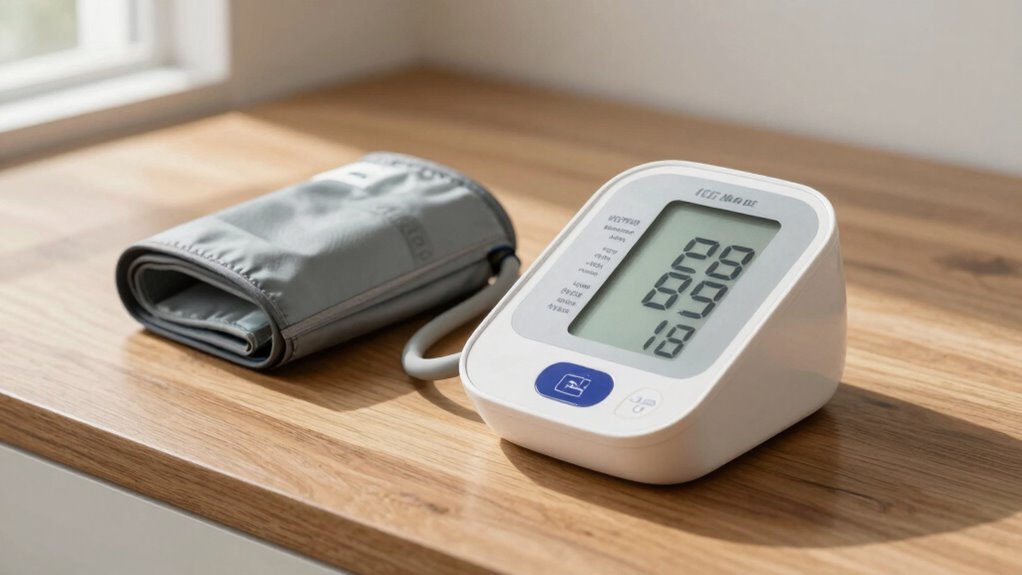

When choosing a home blood pressure monitor, prioritize one with proven digital accuracy and proper validation by reputable organizations. Make sure it has a cuff that fits your arm comfortably—measure your arm first. Simple operation, clear display, and memory features help you track your progress easily. Opt for a device with good power options and portability for convenience. Keep reading to discover more tips on selecting a reliable monitor that suits your needs.

Get health and wellness essentials delivered free with Prime
- Fast, free delivery on millions of items
- Prime Video, Amazon Music and more included
- Member-only deals all year
Key Takeaways
- Ensure the monitor has proven digital accuracy and is validated by reputable organizations for reliable readings.
- Choose a device with the correct cuff size and adjustable fit for precise measurements.
- Opt for user-friendly features like clear displays, simple controls, and memory functions.
- Consider power options and portability for convenience in different locations.
- Prioritize durability, quality assurance, and proper maintenance for long-term accuracy and reliability.
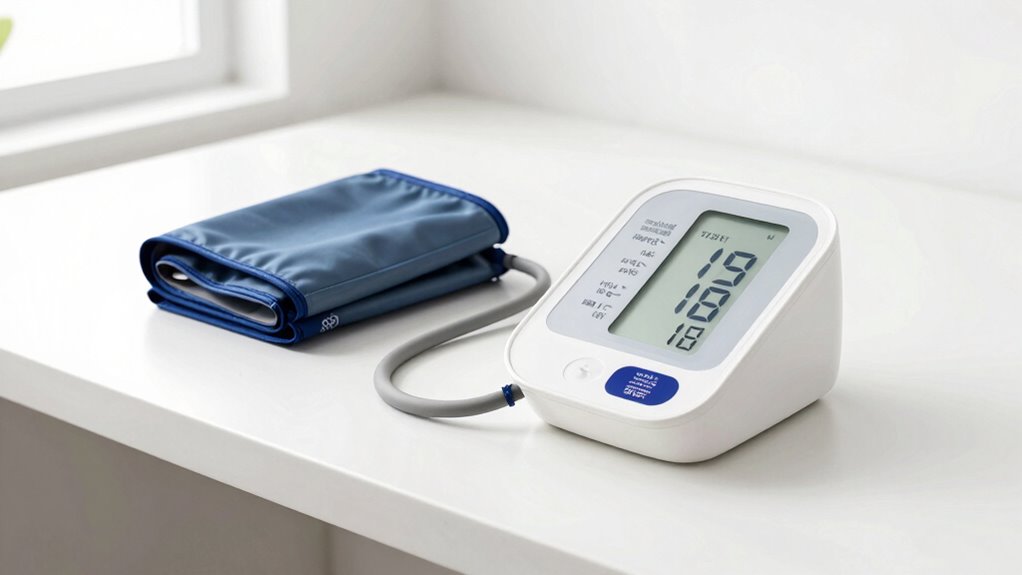
Monitoring your blood pressure at home can be an effective way to stay on top of your health and catch potential issues early. When choosing a home blood pressure monitor, one of the most important features to evaluate is digital accuracy. You want a device that provides reliable, consistent readings, so you can trust the numbers you record. Digital monitors with proven accuracy help you track your blood pressure over time without the worry of faulty measurements skewing your health assessments. Look for models that have been validated by reputable organizations, as this certification indicates they meet strict standards for accuracy.
Choose validated digital monitors for reliable, accurate blood pressure readings and better health tracking.
Another critical factor is cuff size. If the cuff is too small or too large for your arm, your readings may be inaccurate, leading to misdiagnosis or missed health concerns. Many monitors come with adjustable cuffs or offer different sizes, so it’s vital to select one that fits your arm properly. Take the time to measure your upper arm circumference and check the cuff size recommendations for the device before purchasing. A well-fitting cuff ensures the device can properly compress your artery, resulting in precise readings. Remember, even the most advanced monitor won’t perform at its best if the cuff doesn’t fit correctly. Additionally, selecting a monitor with validated digital accuracy can give you added confidence in your readings. Ensuring the device also has quality assurance can help verify its reliability and durability over time. Incorporating proper maintenance can further extend the lifespan and accuracy of your monitor.
Ease of use is also worth evaluating. Opt for a monitor with a straightforward interface, clear display, and simple operation. If you plan to use it daily, you want a device that’s quick to set up and easy to read. Features like one-button operation, large digital screens, and clear instructions can make your routine smoother. Some monitors also come with memory functions, allowing you to store readings and track your progress over days or weeks without needing a separate notebook. Furthermore, ensuring the device has easy-to-understand instructions can help new users operate it correctly and consistently.
Battery life and power options matter as well. Look for a device with long-lasting batteries or the ability to connect to a power source if needed. This ensures your monitor remains ready whenever you need it without frequent replacements or interruptions. Additionally, consider portability if you want to take your monitor to different locations, such as work or travel. Compact, lightweight models are convenient for on-the-go use.
validated digital blood pressure monitor
As an affiliate, we earn on qualifying purchases.
As an affiliate, we earn on qualifying purchases.
Frequently Asked Questions
How Often Should I Calibrate My Blood Pressure Monitor?
You should calibrate your blood pressure monitor at least once a year to guarantee monitor accuracy. Follow the manufacturer’s calibration schedule, especially if you notice inconsistent readings. Regular calibration helps maintain precision and trust in your measurements. If you experience sudden changes or suspect inaccuracies, calibrate it sooner. Proper maintenance, including calibration, ensures your monitor provides reliable data for managing your health effectively.
Can I Use a Home Monitor for Medical Diagnosis?
You shouldn’t rely solely on a home monitor for medical diagnosis—think of it as a superhero sidekick, not the main hero. Home monitoring helps you track trends and share info with your doctor, but it isn’t a substitute for professional medical diagnosis. Always consult your healthcare provider for accurate diagnosis and treatment plans. Your home device is a valuable tool, but it’s not a replacement for expert medical advice.
Are There Specific Cuff Sizes for Different Arm Types?
Yes, there are specific cuff sizes for different arm types. You should choose a cuff that matches your arm circumference for accurate readings. Cuffs come in various sizes, from small to large, and are made from different materials like nylon or fabric. Using the correct cuff size and material guarantees comfort and precise measurements, especially if your arm is larger or smaller than average. Always measure your arm before buying a cuff.
How Do I Ensure Accurate Readings at Home?
Did you know that improper cuff placement can lead to readings 10-20 mm Hg off? To guarantee accuracy, position the cuff correctly on your bare arm, about an inch above the elbow, with the cuff snug but not too tight. Keep the monitor at heart level, and sit quietly for five minutes before measuring. Proper cuff placement and monitor positioning are key to reliable readings.
What Features Should I Look for in a Digital Monitor?
When choosing a digital monitor, prioritize digital accuracy to guarantee precise readings, and select one with reliable monitor durability for long-term use. Look for features like an adjustable cuff size, easy-to-read display, and a hypertension indicator. A device with memory storage helps track your progress, while a user-friendly interface makes it simple to operate. These features help you get consistent, accurate results and maintain the monitor’s longevity.
automatic arm blood pressure cuff with memory
As an affiliate, we earn on qualifying purchases.
As an affiliate, we earn on qualifying purchases.
Conclusion
When choosing a home blood pressure monitor, prioritize accuracy, ease of use, and reliable features. Make sure it fits your needs, fits your lifestyle, and fits your budget. A good monitor is not just a device; it’s a tool for health, a partner for tracking, and a source of confidence. Remember, the right monitor helps you manage your health, understand your numbers, and stay proactive—because caring for yourself is about making informed choices, every day, every reading.
large display home blood pressure monitor
As an affiliate, we earn on qualifying purchases.
As an affiliate, we earn on qualifying purchases.
portable digital blood pressure monitor
As an affiliate, we earn on qualifying purchases.
As an affiliate, we earn on qualifying purchases.
Cold & flu season Picks
humidifiers
As an affiliate, we earn on qualifying purchases.