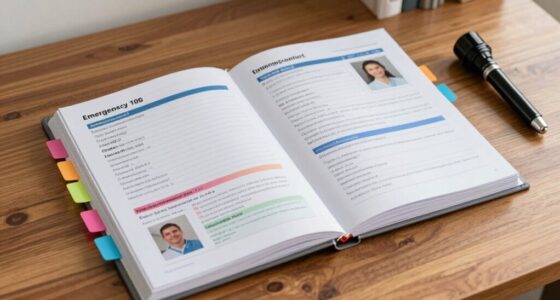
To turn a mess of papers into a real care plan, start by scanning important documents and organizing them into clearly labeled digital folders using consistent naming conventions. Create standardized templates for assessments and care details to guarantee completeness and accuracy. Use digital tools with automatic categorization to keep everything tidy. Share and update files regularly for collaboration, and set secure access controls for sensitive info. Keep learning how to refine your system for the best results.

Get health and wellness essentials delivered free with Prime
- Fast, free delivery on millions of items
- Prime Video, Amazon Music and more included
- Member-only deals all year
Key Takeaways
- Digitize all important papers using scanners and organize them into clearly labeled, structured folders.
- Use standardized templates for care plans and documentation to ensure consistency and completeness.
- Implement consistent naming conventions and color coding for easy identification and retrieval of files.
- Share digital folders with care teams for real-time updates, collaboration, and improved communication.
- Apply digital organization principles and security measures to maintain a coherent, protected care plan.

Ever wondered how to transform a chaotic pile of papers into a clear, actionable care plan? The key lies in digital organization. Instead of sifting through stacks of documents, you can streamline everything by digitizing your files. Start by scanning important papers and saving them in organized folders on your computer or a secure cloud service. This way, you won’t waste time hunting for critical information and can access files anytime, anywhere. Digital organization also makes it easier to keep everything current, ensuring your care plan reflects the latest updates and changes. Incorporating color accuracy into your digital setup can also help ensure that important visual documents, such as charts or diagrams, are easily interpretable.
Digitize and organize your care files for quick access, updates, and secure, seamless collaboration.
Once your documents are digitized, focus on creating a system that’s easy to navigate. Use clear naming conventions and folder structures so you can quickly locate what you need. To keep things consistent, leverage documentation templates—standardized formats for care plans, assessments, medication lists, and progress notes. These templates not only save you time but also guarantee that nothing important gets overlooked. They serve as a reliable framework, helping you document each aspect of care clearly and exhaustively. Plus, templates make it easier to update information over time, maintaining an accurate, ongoing record. Additionally, digital tools often include features that can automatically organize and categorize your files, making management even more efficient. Understanding digital organization principles can further optimize your system for better efficiency.
Integrating documentation templates into your digital organization system also reduces errors and inconsistencies. When every document follows the same format, you can easily compare progress or spot missing details. This uniformity enhances communication among caregivers, healthcare professionals, and family members, ensuring everyone stays on the same page. It’s an efficient way to turn scattered notes and papers into a coherent, actionable plan.
Furthermore, digital tools often come with features that facilitate collaboration. You can share folders or documents with relevant parties, allowing for real-time updates and feedback. This collaborative approach keeps your care plan dynamic rather than static, adapting quickly to changing needs. Plus, many platforms offer secure access controls, so sensitive information remains protected.
document scanner for home office
As an affiliate, we earn on qualifying purchases.
As an affiliate, we earn on qualifying purchases.
Frequently Asked Questions
What Tools Can Help Organize My Papers Effectively?
To organize your papers effectively, use tools like labeled folders or file organizers for paper sorting. Invest in a sturdy filing system, such as a filing cabinet or portable file box, to keep everything accessible. Consider using color-coded labels or dividers to categorize documents quickly. Digital tools like scanning apps can also help you convert paper into digital files, reducing clutter and making your care plan easier to manage.
How Often Should I Update the Care Plan?
You should review your care plan at least every three to six months. Regular care plan review ensures documentation accuracy and keeps the plan aligned with the patient’s current needs. Did you know that 80% of healthcare errors stem from outdated or incorrect documentation? To avoid this, update your care plan promptly after any significant change in the patient’s condition, guaranteeing it remains effective and reliable.
How Do I Prioritize Care Tasks in a Plan?
You should start by performing a priority assessment to identify urgent and essential tasks. Use task categorization to organize care activities into categories like critical, important, and routine. Focus on high-priority tasks first, such as safety and health needs, then move to less urgent activities. Regularly reviewing and updating your priority assessment guarantees your care plan remains effective and responsive to changing needs.
What Legal Considerations Are Involved in Care Plans?
You need to guarantee your care plan meets legal requirements, such as adhering to local regulations and standards. Maintain confidentiality compliance by securely storing and sharing patient information only with authorized individuals. Always document care accurately and obtain necessary consents. Regularly review and update the plan to stay compliant. By following these legal considerations, you protect your clients’ rights and avoid potential legal issues.
How Can I Involve the Care Recipient in Planning?
They say two heads are better than one, and involving your care recipient in planning is key. You can encourage their Care recipient involvement by asking about their preferences, listening actively, and including them in decision-making. Emphasize collaborative planning to guarantee the plan truly reflects their needs and wishes. This approach not only empowers them but also creates a more personalized and effective care plan you both can trust.
digital folder organization software
As an affiliate, we earn on qualifying purchases.
As an affiliate, we earn on qualifying purchases.
Conclusion
Turning a jumble of papers into a clear care plan might seem intimidating, but with organization and focus, you can create something truly effective. Remember, studies show that structured care plans improve patient outcomes by up to 25%. By categorizing, prioritizing, and regularly updating your documents, you’ll guarantee everyone stays on the same page. It’s a small effort for a big difference, helping you provide better care and peace of mind for both you and your patients.
care plan templates for healthcare
As an affiliate, we earn on qualifying purchases.
As an affiliate, we earn on qualifying purchases.
secure cloud storage for sensitive documents
As an affiliate, we earn on qualifying purchases.
As an affiliate, we earn on qualifying purchases.
Fall Picks
fall essentials
As an affiliate, we earn on qualifying purchases.