
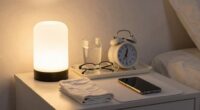
To create a comfortable bedroom for home care, set a calming environment with adjustable lighting and a cool room temperature of 60-67°F. Use supportive, suitable bedding and modify bed height for safety and ease of mobility. Incorporate safety features like grab bars and support pillows, and use nightlights or motion-activated lighting for visibility. Prioritizing comfort, safety, and accessibility helps promote restful sleep and independence—exploring these tips further can make a real difference.
Key Takeaways
- Maintain a cool, dark, and quiet environment with adjustable lighting and blackout curtains for optimal sleep comfort.
- Use supportive bedding, proper mattress, and adjustable bed height to enhance safety and ease of movement.
- Incorporate temperature regulation solutions like water-cooled mattress pads and breathable bedding for personalized comfort.
- Install safety features such as grab bars, support pillows, and appropriate household lighting to prevent falls and injuries.
- Regularly assess and modify the space to ensure a relaxing, accessible, and safety-oriented environment.

Creating a comfortable bedroom setup for home care is essential for ensuring safety, ease, and overall well-being. One of the first steps is to focus on sleep hygiene, which means establishing a routine that promotes restful sleep. You want to create an environment that encourages relaxation and minimizes disruptions. Keep the bedroom cool, ideally between 60-67°F (15-19°C), as a cooler room helps your body prepare for sleep. Avoid caffeine or heavy meals before bedtime, and try to stick to a consistent sleep schedule, even on weekends. Using comfortable, supportive bedding and a well-chosen mattress can make a significant difference in sleep quality. If mobility is a concern, consider bed-height adjustments to make getting in and out easier, reducing the risk of falls or strain. Additionally, exploring water-cooled mattress pads can help regulate body temperature for enhanced comfort during sleep. Incorporating temperature regulation options into your bedding choices can further improve sleep quality and overall comfort.
Lighting options are equally important in creating a comfortable, safe space. You should prioritize soft, adjustable lighting that can be tailored to different needs throughout the day and night. Install bedside lamps with dimmer switches or use smart lighting systems that allow you to control brightness easily. During the night, avoid harsh, bright lights that can disrupt sleep or cause disorientation. Instead, opt for low-wattage nightlights or motion-activated lights that turn on when you get out of bed. Proper lighting not only helps with visibility but also enhances safety, especially if you need to get up during the night. You may want to think about blackout curtains to block out early morning or streetlight glare, ensuring that your sleep remains uninterrupted. For daytime tasks, make sure ample natural light or bright, diffuse artificial lighting to keep the room lively and reduce feelings of gloom or depression. Additionally, incorporating appropriate household lighting can help prevent accidents and improve overall safety in the bedroom.
Furthermore, considering lighting placement can significantly influence how safe and comfortable the space feels, especially for those with mobility challenges or visual impairments. Creating a bedroom that supports good sleep hygiene and offers versatile lighting options sets the foundation for effective home care. Make adjustments based on individual needs, whether that’s adding support pillows, installing grab bars, or choosing a bed height that minimizes strain. Remember, the goal is to foster an environment that feels safe, calming, and functional. By paying attention to these details, you’ll not only improve sleep quality but also enhance overall comfort and safety, making daily routines smoother and more manageable. Your environment should serve your health and well-being, encouraging restful nights and accessible days.
adjustable bed risers for safety
As an affiliate, we earn on qualifying purchases.
As an affiliate, we earn on qualifying purchases.
Frequently Asked Questions
How Can I Improve Bedroom Safety for Elderly Caregivers?
To improve bedroom safety for elderly caregivers, you should install assistive technology like grab bars and motion sensor lights to aid movement and prevent falls. Keep pathways clear of clutter, secure loose rugs, and add non-slip mats. Guarantee furniture is sturdy and at a comfortable height. Regularly check the room for hazards, and use fall prevention strategies to create a safer environment, giving both you and your loved one peace of mind.
What Are the Best Lighting Options for a Care-Friendly Bedroom?
You should opt for smart lighting options that allow you to easily adjust brightness and color temperature, ensuring the room is well-lit without causing glare or discomfort. Incorporate mood lighting, such as dimmable lamps or LED strips, to create a calming atmosphere during evenings. These choices enhance safety by providing adequate illumination when needed and promote relaxation, making the bedroom more care-friendly and comfortable for elderly occupants.
How Can I Customize Storage for Medical Supplies?
Like a seasoned librarian, you can customize your storage by installing organized shelving tailored to your needs. Use a clear labeling system to easily identify supplies, reducing chaos and saving time. Consider adjustable shelves for flexibility and small containers or baskets for smaller items. This setup keeps medical supplies accessible, safe, and tidy, ensuring everything you need is at your fingertips without cluttering your space or complicating daily routines.
What Bedding Materials Are Best for Sensitive Skin?
For sensitive skin, choose bedding made from hypoallergenic fabrics like cotton or bamboo, which reduce irritation. Opt for soft bedding materials that feel gentle against your skin, such as high-thread-count cotton sheets or silk pillowcases. These materials help prevent allergic reactions and provide comfort throughout the night. Always wash bedding regularly to remove allergens, and select breathable fabrics that promote airflow and keep your skin dry and comfortable.
How Do I Reduce Noise Levels in a Caregiving Bedroom?
To reduce noise levels in a caregiving bedroom, start with soundproofing techniques like sealing gaps around windows and doors, adding heavy curtains, or using acoustic panels. Incorporate noise-reducing furniture such as upholstered chairs, plush rugs, and bookcases filled with books to absorb sound. Keep electronic devices on silent and consider white noise machines to mask residual sounds, creating a peaceful environment for comfort and rest.
As an affiliate, we earn on qualifying purchases.
Conclusion
Creating a comfortable bedroom setup for home care guarantees safety and promotes well-being. For example, imagine adjusting bed height and adding non-slip rugs—these simple steps can prevent falls and boost confidence. Personalizing the space with familiar items makes a big difference, too. By paying attention to details like lighting and accessibility, you make the room a safe, cozy haven that supports health and independence every day.
As an affiliate, we earn on qualifying purchases.
As an affiliate, we earn on qualifying purchases.