

In the first 30 days of becoming a caregiver, focus on establishing a strong foundation by practicing self-care like taking breaks, staying hydrated, and getting enough sleep. Gather essential information about your loved one’s needs, routines, and medical requirements to build confidence. Create a consistent routine to manage unpredictability and reduce stress. Build a support network and develop coping skills to handle emotional challenges. Keep learning and adjusting—there’s more to discover as you continue to support your loved one.
Key Takeaways
- Establish a self-care routine to maintain emotional resilience and prevent burnout.
- Gather information about your loved one’s medical needs and daily routines.
- Create a consistent schedule to provide stability and reduce stress.
- Build a support network by reaching out to family, friends, or professionals.
- Continuously educate yourself about caregiving resources and evolving needs.
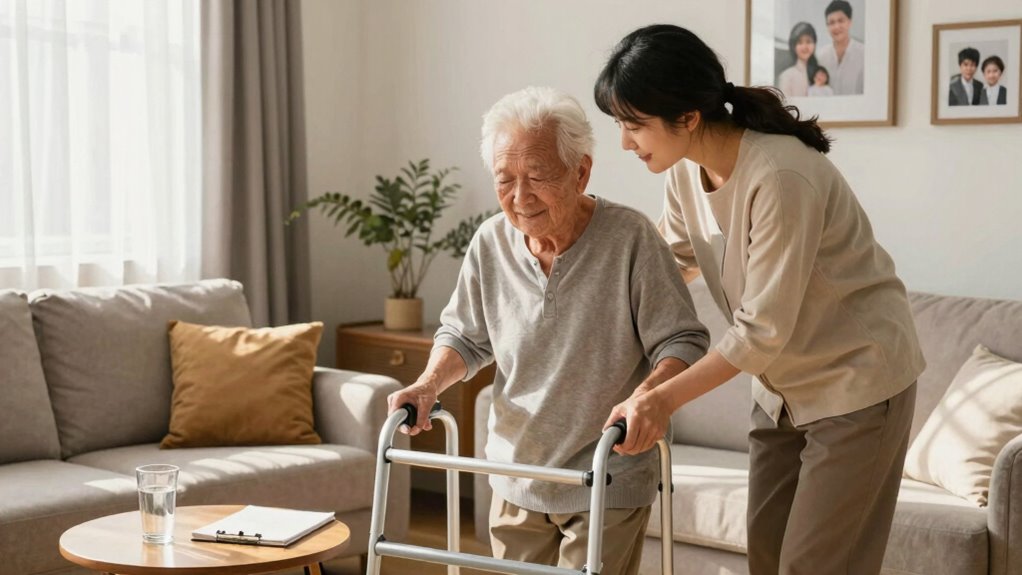
Becoming a caregiver can feel overwhelming at first, but the first 30 days are essential for establishing a solid foundation. This initial period sets the tone for how you’ll handle the challenges ahead and helps you build emotional resilience. It’s normal to feel a mix of anxiety, guilt, or even exhaustion, but focusing on self-care strategies early on can make a significant difference. Prioritize small, consistent acts of self-kindness, like taking breaks, staying hydrated, and getting enough sleep. These routines help you maintain your strength and clarity, which are crucial when supporting someone else.
Within these first few weeks, it’s important to learn as much as possible about your loved one’s needs and condition. Gather resources, ask questions, and develop a basic understanding of their medical requirements and daily routines. This knowledge empowers you to become more confident in your caregiving role and reduces feelings of uncertainty. As you navigate this new responsibility, remember that emotional resilience isn’t about being perfect; it’s about bouncing back from setbacks. Recognizing and understanding your emotional responses—whether frustration, sadness, or fatigue—and practicing mindfulness or grounding techniques to stay centered can significantly bolster your resilience. Connecting with other caregivers or support groups can also provide reassurance and practical advice, reminding you that you’re not alone.
Learn about your loved one’s needs, ask questions, and build confidence through understanding and support.
Creating a structured routine early on helps manage the unpredictable nature of caregiving. Consistency alleviates stress for both you and your loved one, giving a sense of stability amidst chaos. Incorporate self-care strategies into this routine, such as scheduling time for exercise, hobbies, or simply quiet moments. Even brief periods of relaxation can recharge your emotional resilience and prevent burnout. It’s essential to set boundaries and communicate your limits, ensuring you don’t sacrifice your well-being for caregiving duties. Remember, caring for yourself isn’t selfish; it’s a necessary part of being an effective caregiver. Building a support network and knowing when to seek professional help can further ease your burden and provide additional guidance. Developing coping skills through various techniques can also enhance your ability to manage stress and emotional challenges more effectively. Additionally, staying informed about caregiving resources and educational materials can empower you to make better decisions and advocate for your loved one’s needs.
In these first 30 days, also focus on building a support network. Reach out to family, friends, or professional services that can lighten your load. Delegating tasks allows you to conserve your energy and emotional strength, giving you space to process your feelings. Keep a journal or track your experiences, so you can reflect on your progress and identify areas where you might need additional help or self-care. As you establish routines, gather resources, and strengthen your emotional resilience, you’ll create a foundation that makes caregiving more manageable and sustainable. The effort you put in now will pay off in your ability to provide compassionate, effective care while maintaining your own health and well-being. Remember that seeking professional support early on can prevent burnout and provide reassurance during challenging moments. Recognizing the importance of ongoing education can also help you adapt to changing needs over time.

Birthday Gifts for Women, Relaxing Spa Gift Baskets for Women, Warm Vanilla Self Care Package Gifts, Mothers Day Bath and Body Inspirational Gift Set for Mom, Her, Wife, Best Friend, Sister, Coworker
- Complete 9-Piece Spa Gift Set: Includes body lotion, soap, candle, and more
- Elegant Gift Packaging: Bright yellow box with greeting card included
- High-Quality Glass Cup: 16oz BPA-free, keeps beverages warm or cold
As an affiliate, we earn on qualifying purchases.
As an affiliate, we earn on qualifying purchases.
Frequently Asked Questions
How Do I Handle Emotional Stress as a New Caregiver?
To handle emotional stress as a new caregiver, focus on building emotional resilience and practicing stress management techniques. Take deep breaths, set boundaries, and allow yourself time to recharge. Talk openly with friends or support groups to share your feelings. Remember, caring for yourself isn’t selfish. By maintaining your emotional health, you’ll better support your loved one and stay strong through challenging moments.
What Legal Documents Should I Prepare Early On?
Start with legal planning by gathering essential documents like wills, power of attorney, and healthcare directives. Organize these documents in a secure, accessible location to simplify future decisions. Update any outdated paperwork and consult a legal professional to make sure everything aligns with your loved one’s wishes. Proper document organization early on minimizes stress and helps you navigate legal responsibilities confidently, providing peace of mind for both you and your loved one.
How Can I Balance Caregiving With My Personal Life?
Balancing caregiving with your personal life is essential, especially since studies show caregivers often experience higher stress levels. To manage this, prioritize time management by scheduling regular breaks and setting boundaries. Don’t forget self-care—taking time for yourself helps you recharge and stay effective. Reach out for support when needed, and remember that maintaining your well-being enables you to provide better care without sacrificing your personal happiness.
When Should I Seek Professional Help or Counseling?
You should seek professional help or counseling when your mental health starts to decline, and you feel overwhelmed or unable to cope. Don’t hesitate to reach out if you notice persistent stress, anxiety, or depression. Support networks are essential, so connect with others who understand caregiving challenges. Professional guidance can provide strategies to manage your mental health and help you maintain a healthier balance between caregiving and your personal well-being.
How Do I Manage Conflicting Family Opinions?
To manage conflicting family opinions, you need to understand family dynamics and practice effective communication strategies. Stay calm and listen actively to each person’s perspective, validating their feelings. Share your viewpoint honestly but respectfully, and seek common ground. If disagreements persist, consider involving a neutral mediator or family counselor to facilitate constructive conversations. Remember, maintaining open communication helps reduce tension and promotes collaborative decision-making.
medical information organizer for caregivers
As an affiliate, we earn on qualifying purchases.
As an affiliate, we earn on qualifying purchases.
Conclusion
In those first 30 days, you’ve learned to juggle appointments, medications, and emotions—yet somehow, amid the chaos, you find that caring deeply is what keeps everything afloat. Ironically, the very act of caring for someone else often leaves you feeling a little lost yourself. But don’t forget: in this whirlwind, you’re building resilience, one moment at a time. Soon, you’ll realize that in giving so much, you’re also discovering how strong you truly are.
daily routine planner for caregivers
As an affiliate, we earn on qualifying purchases.
As an affiliate, we earn on qualifying purchases.

Coping Skills Cards for Anxiety & Stress Relief – Mindfulness, Meditation & Self-Care Tools for Trauma, BPD, DID, PTSD | Mental Health Therapy Gift for Adults & Teens
- Supports Emotional Crisis Management: Alleviates panic, trauma, anxiety, and depression
- Suitable for Various Mental Health Conditions: Ideal for BPD, DID, PTSD, and more
- Includes 20+ Coping Skills: Visual, tactile, sensory, and movement techniques
As an affiliate, we earn on qualifying purchases.
As an affiliate, we earn on qualifying purchases.