If you want to make your home smarter in 2025, I recommend checking out the 14 best thread-enabled devices like smart plugs, scene controllers, hubs, and sensors. These devices support reliable mesh networks, work with popular ecosystems, and prioritize privacy with local control. They’re easy to set up and expand for future automation. Stick around, and you’ll discover more about how these innovative devices can transform your smart home experience.
Key Takeaways
- Thread-enabled devices like smart plugs, contact sensors, and locks offer reliable, low-latency connectivity for seamless smart home automation.
- Multi-protocol hubs support Thread, Zigbee, and Matter, enabling cross-platform device compatibility and easy integration.
- Local LAN control and encrypted mesh networks ensure privacy, security, and operation independent of internet outages.
- Innovative control devices such as Tile Control enhance user experience with fast, responsive scene activation.
- Upcoming smart home products in 2025 will leverage Thread to create more reliable, efficient, and scalable smart home ecosystems.
TP-Link Tapo Matter Supported Smart Plug Mini (3-Pack)
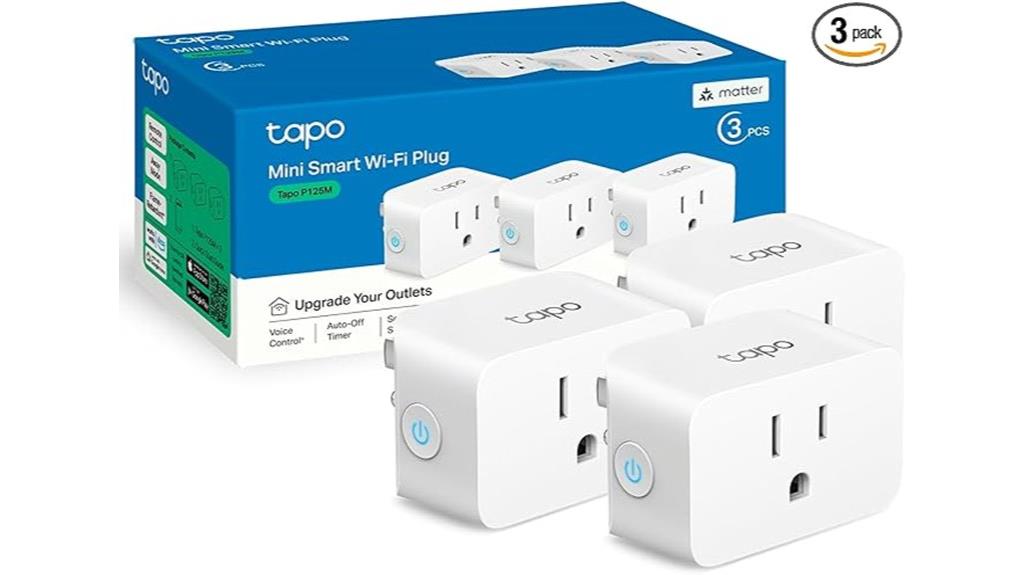
If you’re looking to build a reliable, future-proof smart home system, the TP-Link Tapo Matter Supported Smart Plug Mini (3-Pack) is an excellent choice. Its compact design fits easily into any outlet, and it handles up to 15A/1800W, making it versatile for various devices. With UL certification and 2.4G Wi-Fi, setup is quick, and control is seamless via app or voice—compatible with Siri, Alexa, Google Assistant, and SmartThings. Its Matter support guarantees compatibility with current and future devices, plus local LAN control enhances reliability during internet outages. This 3-pack simplifies expanding your smart home while promoting energy efficiency and security.
Best For: smart homeowners seeking a reliable, future-proof, and easy-to-use device to automate and control various household appliances across multiple platforms.
Pros:
- Seamless compatibility with all major smart home ecosystems via Matter protocol, including Apple Home, Alexa, Google, and SmartThings
- Compact design that fits easily into outlets without blocking adjacent sockets
- Supports advanced scheduling and local LAN control for reliable operation even during internet outages
Cons:
- Only rated for 120V AC, limiting use to regions with this voltage standard
- IP00 protection rating offers minimal water or dust resistance, suitable mainly for indoor use
- Requires 2.4G Wi-Fi, which may not be compatible with some existing network configurations
Onvis Matter Over Thread Smart Plug (4 Pack)
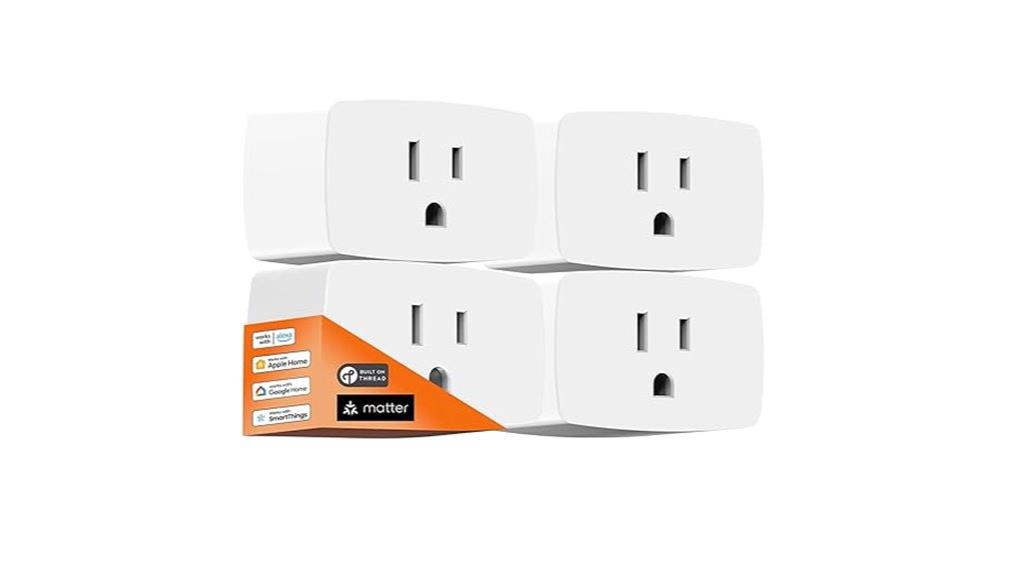
The Onvis Matter Over Thread Smart Plug (4 Pack) stands out as an ideal choice for homeowners seeking reliable, local control of their devices without relying on cloud services. Fully compatible with Matter, it works effortlessly with Apple Home, Amazon Alexa, Google Home, and Samsung SmartThings. Its Thread technology ensures quick responsiveness and efficiency, even during internet outages, when controlled via HomePod mini or Apple TV. The compact, stackable design saves space and allows multiple plugs in a single outlet. With app control, scheduling, grouping, and no cloud dependency, it guarantees privacy and convenience for managing lights and appliances effortlessly.
Best For: homeowners looking for reliable, local control of smart devices with privacy-focused features and seamless compatibility across popular smart home platforms.
Pros:
- Fully compatible with Matter, Apple Home, Amazon Alexa, Google Home, and Samsung SmartThings for versatile integration.
- Local control with no cloud dependency ensures privacy and reliable operation during internet outages.
- Compact, stackable design maximizes space and allows multiple devices in a single outlet.
Cons:
- Supports a maximum load of 15A/1800W, which may not suit high-power appliances.
- Requires compatible smart home hubs like HomePod mini or Apple TV for remote control via Thread.
- Limited to controlling devices within a local network, which may not suit users seeking cloud-based remote access.
Onvis Smart Button, Scene Controller for Apple HomeKit
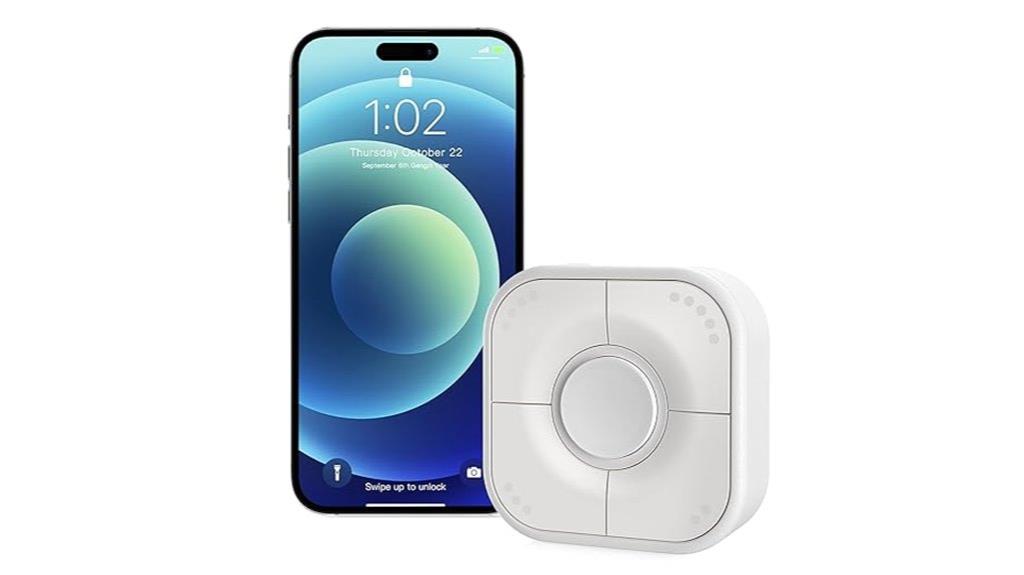
The Onvis Smart Button stands out for those seeking seamless control and privacy in their smart home. With five customizable keys supporting single, double, and long presses, it can trigger up to 15 scenes per button, giving you all-encompassing control over your devices. It connects via Thread and Bluetooth, ensuring fast, reliable performance, especially when paired with a Thread-enabled Apple hub. Privacy is a top priority, as all data stays local with end-to-end encryption. Easy to set up through the Home or Onvis App, its compact design allows flexible placement with included mounting options, making your smart home both smarter and more secure.
Best For: those seeking a secure, customizable, and reliable scene controller for their Apple HomeKit smart home setup.
Pros:
- Supports Thread and Bluetooth for faster, more reliable connections
- Allows up to 15 scenes per key with customizable single, double, and long press actions
- Ensures complete privacy with local, end-to-end encrypted data storage
Cons:
- Requires a Thread-enabled Apple Home hub for optimal performance
- Limited to Apple HomeKit ecosystem, not compatible with other smart home platforms
- Setup and customization may be complex for non-technical users unfamiliar with HomeKit or Thread technology
Linkind Matter Smart Plug 4 Pack
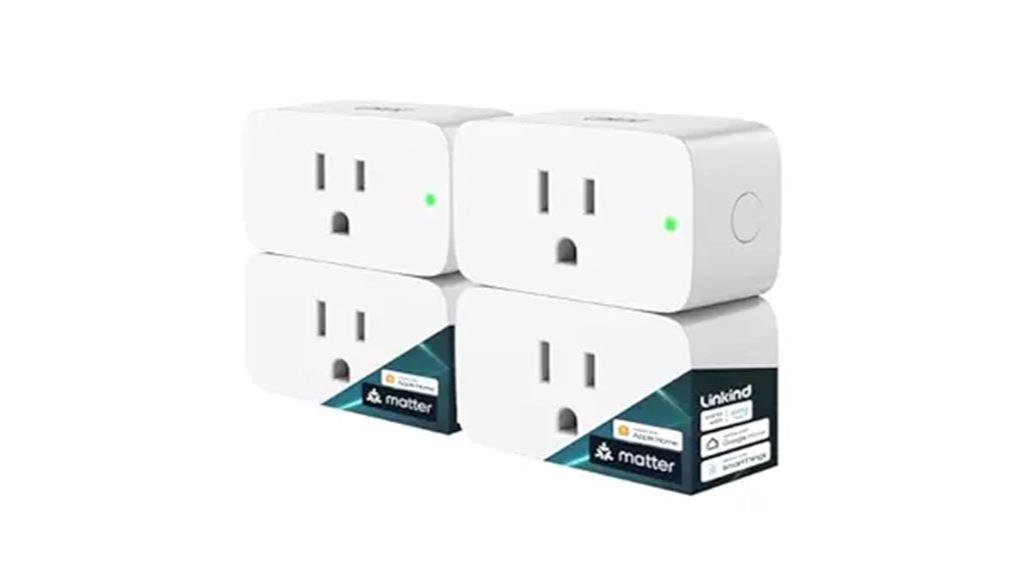
For anyone seeking reliable, versatile smart plugs that work seamlessly across multiple platforms, the Linkind Matter Smart Plug 4 Pack is an excellent choice. It’s Matter-certified, so it pairs effortlessly with Apple Home, Siri, Alexa, Google, SmartThings, and AiDot, either through a hub or directly via the app. Setup is simple—just connect to 2.4GHz Wi-Fi. Once on LAN, it communicates directly, ensuring control even during internet outages. You can manage devices remotely, set schedules, and activate voice commands with ease. Its fire-resistant design supports up to 1800W, offering safety and convenience in a compact, space-saving form.
Best For: those seeking a versatile, easy-to-setup smart plug compatible with multiple smart home platforms and capable of remote control during internet outages.
Pros:
- Seamless compatibility with Apple Home, Siri, Alexa, Google, SmartThings, and AiDot without needing a hub
- Direct device communication over LAN ensures reliable control even during internet disruptions
- Compact, fire-resistant design supports up to 1800W, combining safety with space-saving convenience
Cons:
- Only supports 2.4GHz Wi-Fi networks, limiting compatibility with dual-band setups
- Requires a Matter-certified hub or controller for full platform integration, which could add to setup complexity
- No physical switch on the device, relying solely on app or voice commands for operation
Eve Energy (Matter) Smart Plug with Voice and App Control
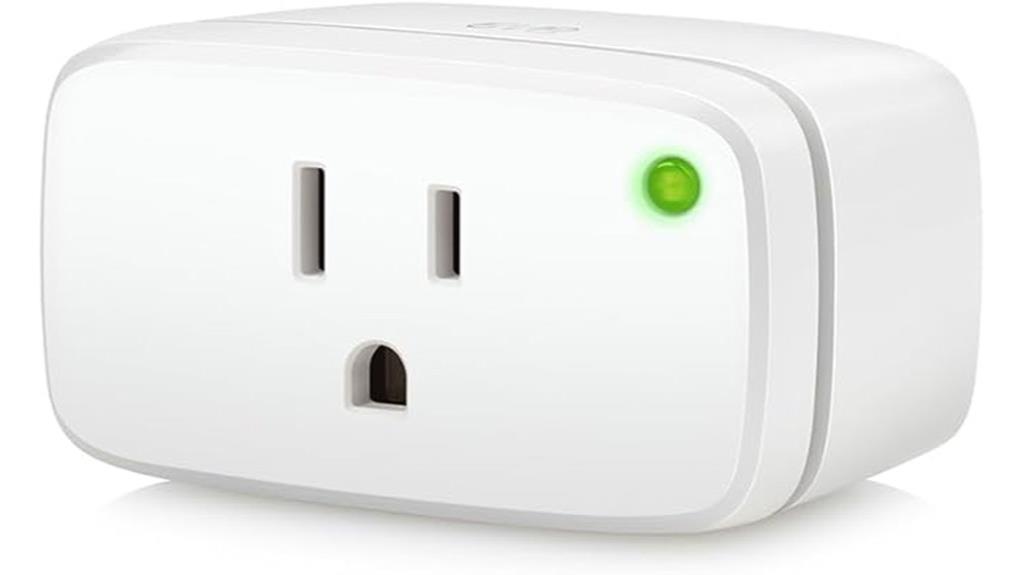
If you’re looking to integrate a reliable, privacy-focused smart plug into a modern smart home, Eve Energy (Matter) stands out as an excellent choice. It offers seamless app and voice control across Apple Home, Alexa, Google, and SmartThings, supporting local communication with no cloud dependency. Setup is quick, thanks to its Thread network technology, which guarantees strong connectivity and stability. You can easily control lights and appliances remotely or automate them based on presence. Certified for safety and privacy, Eve Energy keeps your data local and secure, making it a versatile, future-proof addition to any smart home ecosystem.
Best For: smart home enthusiasts seeking a privacy-focused, reliable, and easy-to-integrate smart plug compatible with multiple voice assistants and platforms.
Pros:
- Seamless control via app and voice across Apple Home, Alexa, Google, and SmartThings
- Prioritizes privacy with no cloud dependence, local communication only
- Quick setup utilizing advanced Thread network technology for stable connectivity
Cons:
- Requires iOS 16.4+ or Android 8.1+ for setup and use
- Limited to controlling appliances within the capabilities of a smart plug
- May necessitate compatible hubs or devices for full platform integration
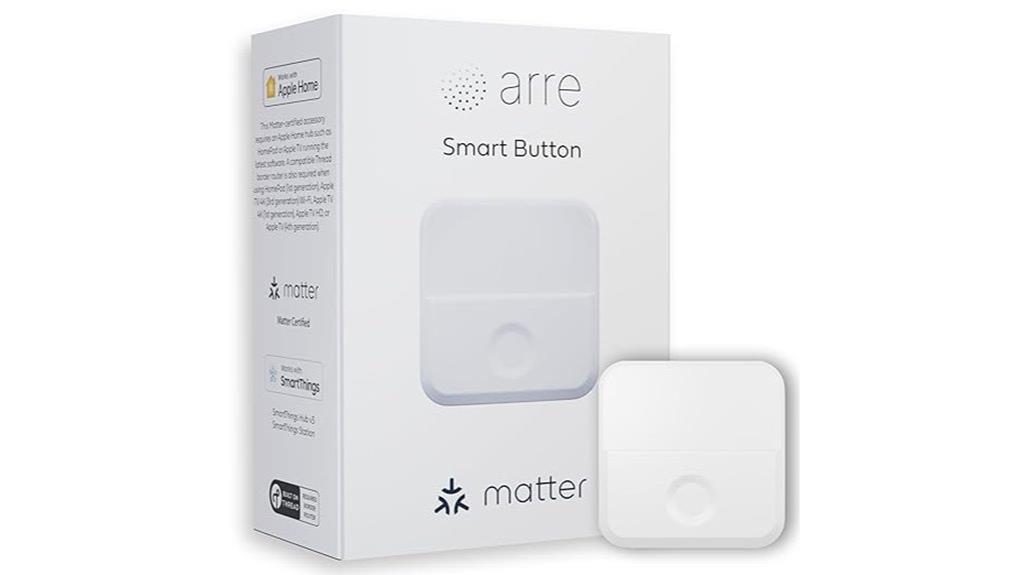
Designed for those who want reliable, seamless control over their smart home accessories, the arre Smart Button with Matter and Thread support offers instant responsiveness and broad compatibility. It works smoothly with Apple HomeKit and Samsung SmartThings Thread-enabled devices, ensuring low-latency communication and effortless integration. Certified for Matter, it guarantees superior interoperability across major platforms. The button supports multiple press options—single, double, and long press—giving you versatile control. Plus, with customizable decorative stickers like glow-in-the-dark options, you can personalize its appearance. Overall, this device simplifies managing your smart home, making automation more intuitive and dependable.
Best For: smart homeowners seeking reliable, seamless control and customization of their smart home accessories through versatile press options and broad ecosystem compatibility.
Pros:
- Compatible with Apple HomeKit and Samsung SmartThings, ensuring versatile ecosystem integration
- Supports Thread protocol for fast, low-latency communication and reliable connectivity
- Customizable with decorative stickers, including glow-in-the-dark options for personalization
Cons:
- Requires a Thread Border Router for proper Thread protocol functionality
- Limited to three press options (single, double, long press), which may not suit all control needs
- May involve additional setup steps for optimal interoperability across platforms
Home Assistant Green Smart Home Hub
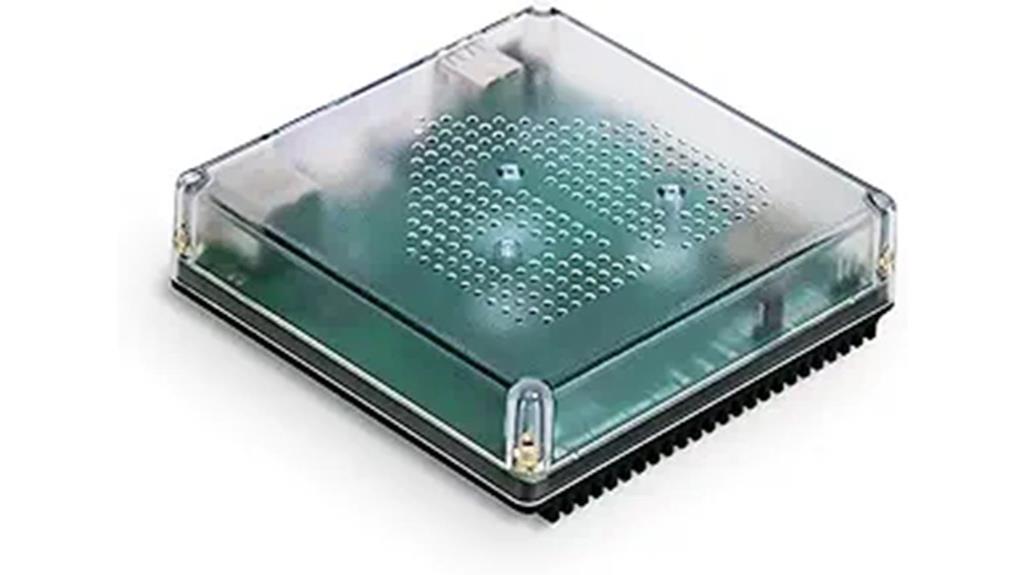
The Home Assistant Green Smart Home Hub stands out as an ideal choice for those seeking a reliable, centralized control point for their smart home ecosystem. It’s officially supported by Nabu Casa and comes pre-installed with Home Assistant, requiring just a power supply and Ethernet to get started. Its compact, fanless design guarantees silent operation, perfect for any home environment. With a powerful quad-core processor, 32GB storage, and 4GB RAM, it handles automation tasks effortlessly. Plus, it supports USB expansion for Z-Wave, Zigbee, and Thread devices, making it highly adaptable. It keeps your data local, ensuring privacy and security while simplifying home automation management.
Best For: smart home enthusiasts seeking a reliable, privacy-focused, and easily expandable central hub for their automated ecosystem.
Pros:
- Seamless integration with various smart home devices supported by Z-Wave, Zigbee, and Thread.
- Compact, fanless, and silent operation ideal for home environments.
- Keeps data local, ensuring privacy and security of personal information.
Cons:
- Requires Ethernet connection, which may limit placement options.
- Limited to the hardware specifications; may not support extremely demanding automation tasks.
- Needs USB expansion for additional connectivity, which may add to setup complexity.
X1 Apple Home Key Tap to Unlock Smart Keyless Door Lock
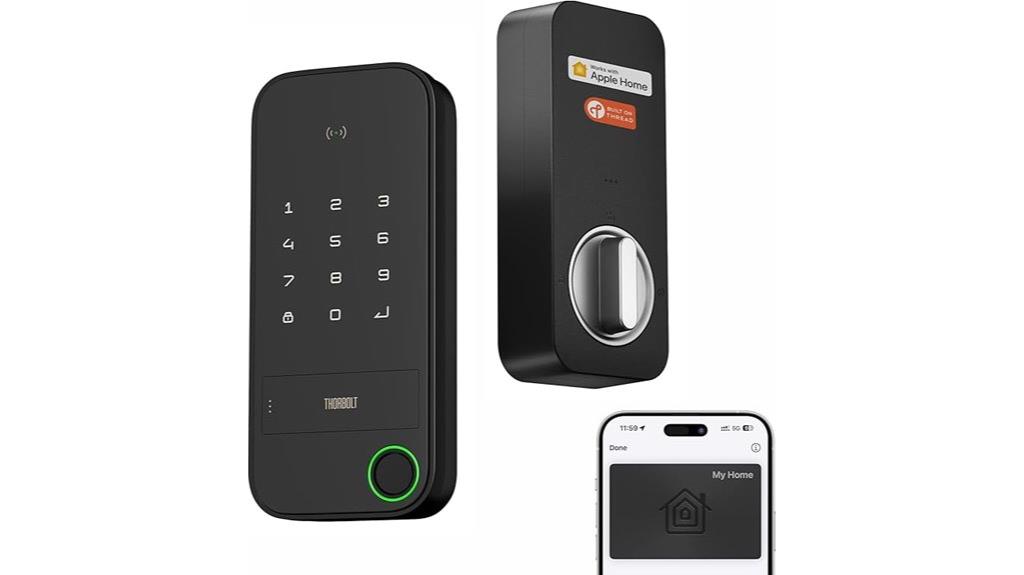
The X1 Apple Home Key Tap to Access Smart Keyless Door Lock stands out for users already immersed in the Apple ecosystem, offering seamless integration with HomeKit and the innovative Thread protocol. With its dedicated NFC zone, it opens quickly and securely using the Apple Home Key. Support for Thread ensures reliable, energy-efficient communication, even when devices are out of power. You can control it remotely via the Sleekpoint app, managing multiple users and passcodes. Featuring six unlocking methods—including fingerprint, Siri, and passcode—it combines convenience with security. Its sleek, weatherproof design makes it perfect for various doors, making your home smarter and more secure effortlessly.
Best For: Apple ecosystem users seeking a sleek, secure, and smart keyless door lock with seamless HomeKit and Thread protocol integration.
Pros:
- Supports multiple unlocking methods including Apple Home Key, fingerprint, Siri, passcode, app, and traditional key for versatile access.
- Provides reliable, energy-efficient communication within the Apple ecosystem thanks to Thread protocol.
- Easy DIY installation with included tools, templates, and comprehensive security features like activity logs and user management.
Cons:
- Premium price point may be a barrier for budget-conscious consumers.
- Requires 8 AA batteries, which need replacement approximately once a year.
- Compatibility limited to standard US/Canada deadbolts and specific door thicknesses, restricting use on some doors.
Eve Door & Window Smart Contact Sensor
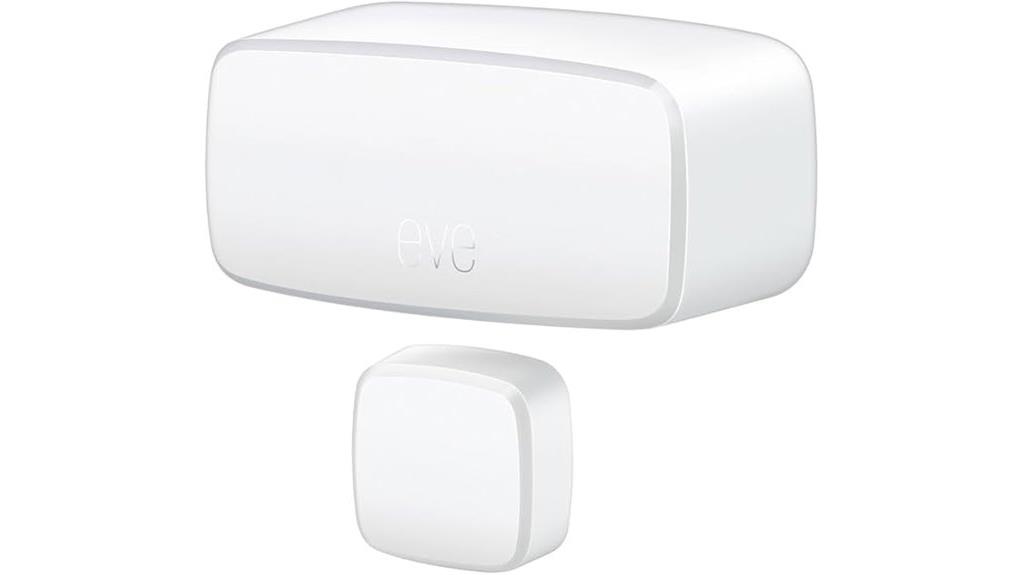
If you’re looking for a reliable way to monitor your doors and windows with smart automation, Eve Door & Window Smart Contact Sensor is an excellent choice. It provides real-time open or closed status, enabling seamless automation with connected devices. The sensor supports Matter over Thread, ensuring a robust, low-latency connection, and prioritizes privacy by communicating locally without cloud reliance. Compatible with Apple Home, Alexa, Google Home, and SmartThings, it’s easy to integrate into your existing setup. With a two-year battery life and simple installation, this compact sensor offers a dependable, privacy-focused solution to keep your home secure and smarter.
Best For: homeowners seeking a privacy-focused, easy-to-install smart contact sensor for doors and windows that integrates seamlessly with major smart home platforms.
Pros:
- Supports Matter over Thread for reliable, low-latency connectivity
- Prioritizes privacy with local communication and no cloud dependency
- Long-lasting battery life of approximately 2 years with simple installation
Cons:
- Requires a compatible hub for operation, which may add complexity or cost
- Limited to indoor use, not suitable for outdoor environments
- Slightly higher price point compared to basic contact sensors
Matter Smart Home Hub, Zigbee & Tuya Control Hub
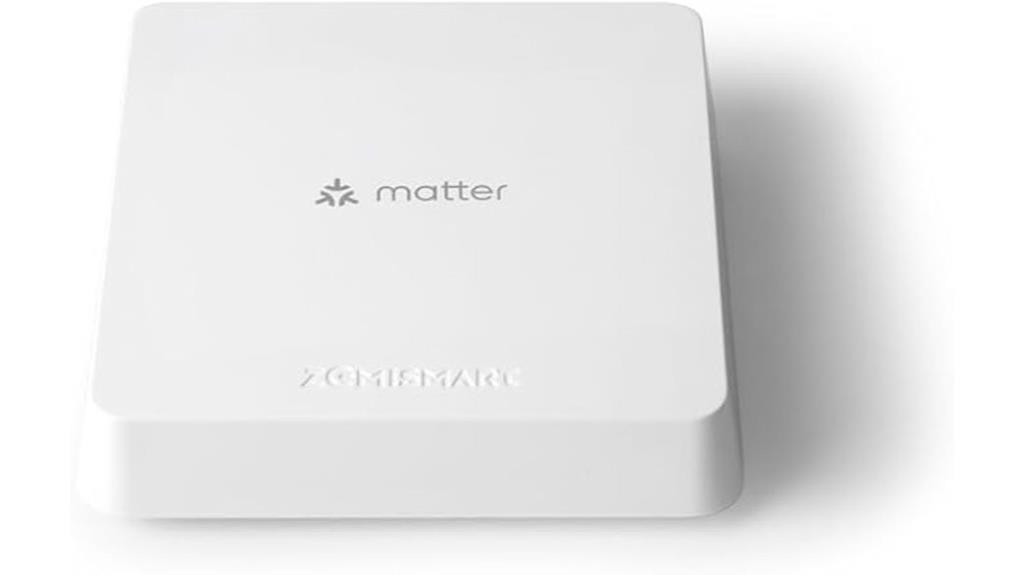
For anyone looking to create a truly interconnected smart home, the Matter Smart Home Hub, Zigbee, and Tuya Control Hub offer robust multi-protocol support that simplifies device management. The M1 Hub supports Tuya Zigbee 3.0, Thread, and Matter devices, but only controls specific Zigbee and Thread devices like Zemismart. It enables seamless operation across platforms like Google Home and Apple Homekit via QR code sharing, making device control flexible. Acting as a Matter border router, it enhances device interoperability within a Matter-enabled ecosystem. Plus, you can remotely manage devices through various apps and enjoy voice commands with Siri or Google Home, boosting convenience and hands-free operation.
Best For: those seeking a versatile smart home hub with multi-protocol support for seamless device integration and remote control.
Pros:
- Supports multiple protocols including Tuya Zigbee 3.0, Thread, and Matter, increasing device compatibility.
- Acts as a Matter border router, enhancing interoperability within a Matter-certified ecosystem.
- Enables remote management and voice control via popular apps and voice assistants like Siri and Google Home.
Cons:
- Only controls specific Zigbee and Thread devices such as Zemismart, limiting compatibility with other Zigbee devices.
- Not all Zigbee devices are compatible, requiring verification for optimal performance.
- Requires QR code sharing for cross-platform control, which may be less straightforward for some users.
Aqara Smart Home Hub M3 for Automation and Compatibility
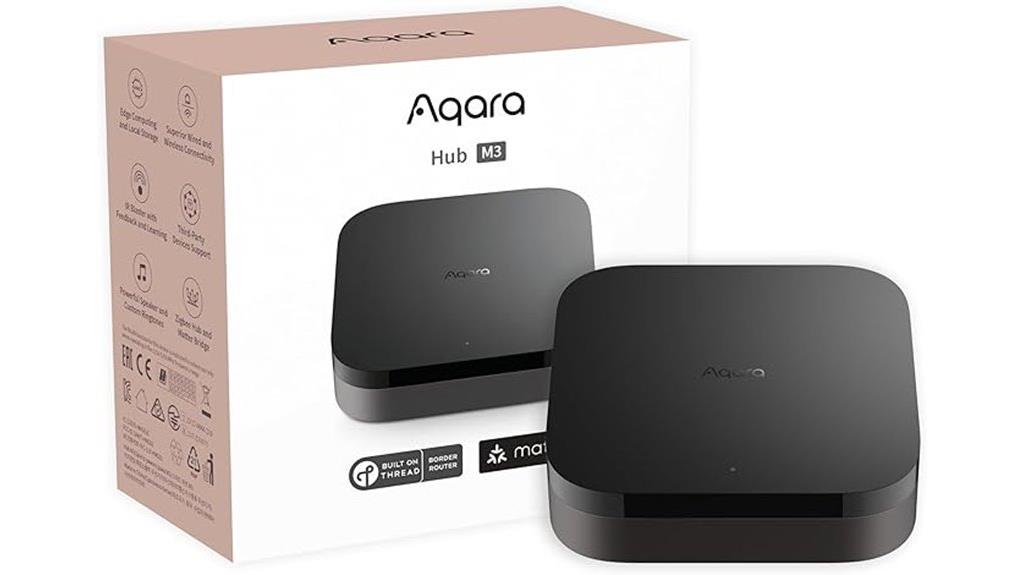
The Aqara Smart Home Hub M3 stands out as an ideal choice for anyone seeking a highly compatible and locally controlled smart home hub. It supports multiple protocols, including Matter, Thread, Zigbee, Bluetooth, Wi-Fi, IR, and PoE, making it versatile for various devices. The hub integrates third-party gadgets into the Aqara app and manages up to 127 Aqara Zigbee devices and 127 Thread devices (with repeaters). Designed as an edge hub, it ensures fast local automation and device migration. Its IR blaster, dual-band Wi-Fi, and secure local storage provide practical, privacy-focused features, making it a powerful centerpiece for a smarter home.
Best For: smart home enthusiasts seeking a highly compatible, locally controlled hub with extensive protocol support and privacy-focused features.
Pros:
- Supports multiple protocols including Matter, Thread, Zigbee, Bluetooth, Wi-Fi, IR, and PoE for versatile device integration
- Prioritizes local control and automation, reducing reliance on internet connectivity
- Includes an IR blaster and secure local storage, enhancing privacy and control options
Cons:
- Can only support up to 127 Aqara Zigbee devices, not third-party Zigbee devices
- Requires positioning between 6-19 feet from the router for optimal stability
- Lacks built-in microphones and cameras, which may limit some remote monitoring capabilities
Kasa Smart Plug Mini 15A, Apple HomeKit Supported, App Control & Scheduling (EP25P4)
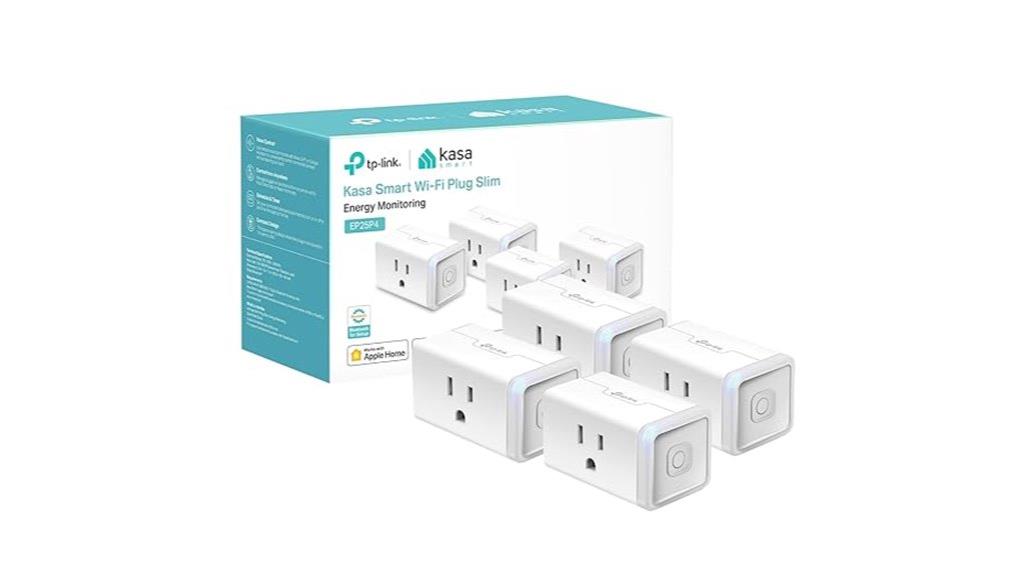
Technology enthusiasts who want seamless integration with Apple’s ecosystem will find the Kasa Smart Plug Mini 15A an excellent choice, thanks to its full support for Apple HomeKit and Siri voice control. This compact, UL-certified plug supports up to 15A and 1800W, making it suitable for most household devices. You can control it remotely via the Kasa app or through voice commands with Siri, Alexa, or Google Assistant. Its scheduling and timer features enable automation, while energy monitoring helps track power consumption. Easy to set up with multiple compatibility options, this mini plug is perfect for enhancing your smart home without blocking outlets.
Best For: tech-savvy Apple users seeking seamless smart home integration with voice control, scheduling, and energy monitoring.
Pros:
- Fully compatible with Apple HomeKit and Siri for effortless voice control
- Supports up to 15A and 1800W, suitable for most household devices
- Compact design prevents blocking adjacent outlets
Cons:
- Requires a 2.4G Wi-Fi network for setup and operation
- Limited to Android 5.0+ and iOS 10+ system requirements, which may exclude older devices
- Only includes a 4-pack, potentially requiring additional purchases for larger setups
Eve Energy Outlet (Matter) Smart Outlet & Power Meter
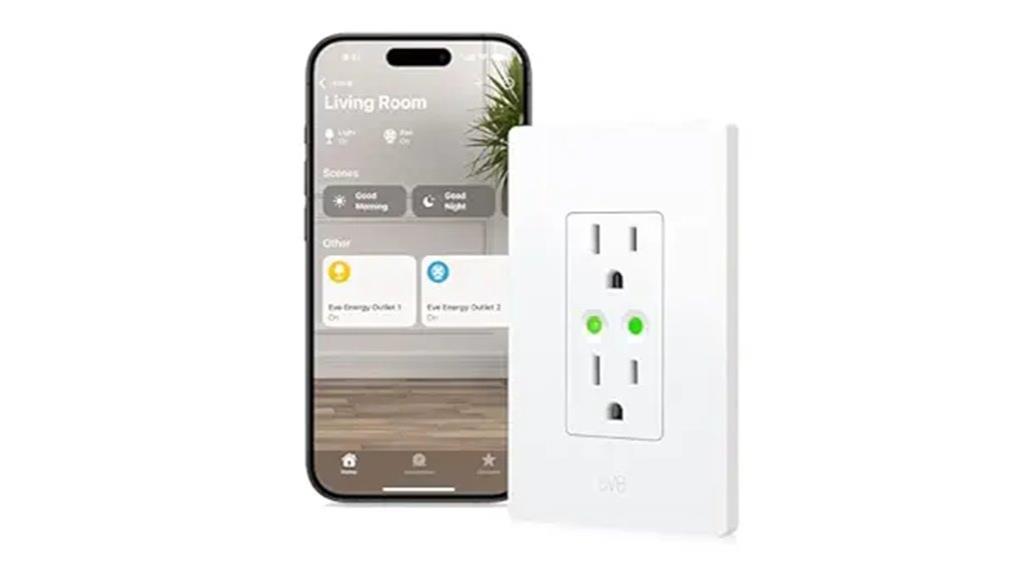
If you’re looking to upgrade your smart home with reliable, privacy-focused control over your appliances, the Eve Energy Outlet (Matter) stands out as a top choice. This smart outlet offers individual control of two sockets via app or voice commands, allowing you to manage lights and appliances remotely or on schedules. It supports voice control and integrates seamlessly with Apple Home, Alexa, Google Home, and SmartThings. Using Thread network technology, it provides stable, extended connectivity without a hub or cloud reliance. Plus, it guarantees privacy with local communication and no data tracking, making it a secure and efficient addition to any modern smart home.
Best For: smart home enthusiasts seeking reliable, privacy-focused control over their appliances with seamless integration across multiple platforms.
Pros:
- Supports individual control of two outlets via app or voice commands
- Utilizes Thread network technology for stable, extended connectivity without a hub or cloud reliance
- Prioritizes privacy with local communication and no data tracking or cloud dependency
Cons:
- Requires a Thread Border Router for optimal performance, which may add complexity for some users
- Compatibility limited to devices running iOS 16.4+ or Android 8.1+ and specific hubs
- Does not include a built-in bridge or additional smart home features beyond outlet control
Aqara Smart Hub M100 for Home Automation
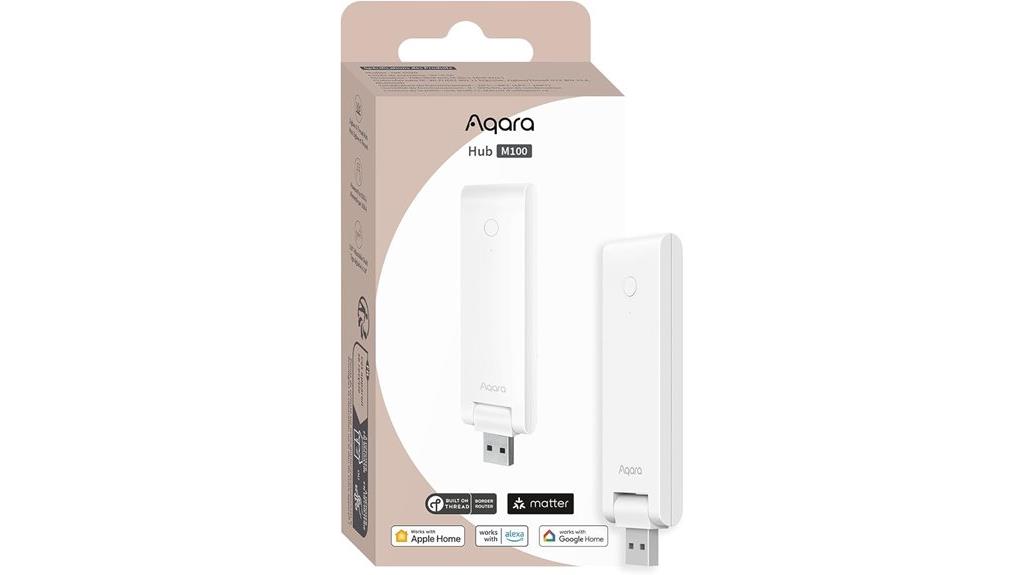
For anyone looking to create a reliable and versatile smart home setup, the Aqara Smart Hub M100 stands out by supporting both Zigbee and Thread devices, with the added benefit of functioning as a Matter Bridge. It manages up to 20 Zigbee and 20 Thread devices, connecting a wide range of sensors, switches, lights, and thermostats. The hub enables seamless integration with ecosystems like Apple Home, Amazon Alexa, and Home Assistant, supporting local automations with fast response times. Its universal USB-A port offers flexible power options, and Wi-Fi 6 ensures secure, high-speed connectivity. Overall, the M100 simplifies smart home expansion and automation across multiple platforms.
Best For: smart home enthusiasts seeking a versatile, secure, and reliable hub that supports multiple ecosystems and device types for seamless automation.
Pros:
- Supports both Zigbee and Thread devices, expanding compatibility options
- Functions as a Matter Bridge, enabling integration across major platforms like Apple Home, Alexa, and Home Assistant
- Offers local automation execution with fast response times, ensuring reliable performance even without internet
Cons:
- Requires a 5V⎓0.5A power adapter (not included), which may be an extra purchase
- Wi-Fi 6 placement recommended within 6 to 19 feet from the router for optimal performance
- Limited to managing up to 20 Zigbee and 20 Thread devices, which might be restrictive for larger setups
Factors to Consider When Choosing Thread‑Enabled Smart Home Devices

When selecting Thread-enabled smart home devices, I focus on how well they fit into my existing ecosystem and the security features they offer. I also consider their power needs, ease of setup, and how smoothly they communicate with other devices. Making the right choice depends on balancing compatibility, security, and convenience.
Compatibility With Ecosystems
Choosing a Thread-enabled device requires verifying its compatibility with your existing smart home ecosystem to guarantee seamless operation. I look for devices that support standard Thread protocols and are certified to work with my hub or controller, like Apple HomeKit, Google Nest, or Amazon Eero. Compatibility often depends on whether the device can connect directly or needs a specific border router or hub. Many ecosystems require device certification for Thread to enable local, low-latency control without relying on cloud services. I also check if the device supports multiple protocols, such as Zigbee and Thread, to improve cross-compatibility. Ensuring these factors helps me avoid integration issues and guarantees my smart home remains cohesive, reliable, and easy to control across various platforms.
Network Security Features
Ensuring robust security features is vital when selecting Thread-enabled smart home devices, as these components are integral to protecting my network and personal data. Many devices use AES encryption, which secures data during transmission and prevents eavesdropping. Support for network segmentation and access controls helps limit device connectivity, reducing the risk of unauthorized access. Built-in device authentication ensures only verified devices join the network, strengthening overall security. Firmware updates play a critical role by providing security patches that fix vulnerabilities and improve resilience. Additionally, the decentralized nature of Thread networks minimizes single points of failure, making it harder for hackers to compromise the entire system. Prioritizing these features gives me confidence that my smart home remains safe and secure against evolving threats.
Power and Connectivity
Power and connectivity are crucial factors to consider when selecting Thread-enabled smart home devices, as they directly impact performance and reliability. These devices use a low-power, mesh networking protocol that boosts connection stability and extends network range without relying solely on Wi-Fi or Bluetooth. To connect to broader smart home ecosystems, they typically need a Thread border router, which acts as a bridge to other devices and networks. Thread also ensures secure, encrypted communication, protecting your data from unauthorized access. Plus, its fast response times and low latency make these devices ideal for real-time automation and control. Importantly, many Thread devices can operate independently during internet outages, maintaining local control and automation without disruption.
Device Interoperability Standards
When selecting Thread-enabled smart home devices, understanding device interoperability standards is essential for creating a cohesive and future-proof ecosystem. Thread operates on a low-power, IPv6-based protocol that forms reliable mesh networks, improving coverage and responsiveness without relying solely on a central hub. Compatibility often depends on a Thread border router, which connects the mesh to other IP-based networks like Wi-Fi or Ethernet. To ensure seamless integration across different protocols, look for devices supporting multi-protocol hubs or bridges that facilitate interoperability with Zigbee, Wi-Fi, or other standards. Choosing devices that adhere to Thread standards also means they’re likely to be Matter-certified, ensuring cross-platform compatibility and safeguarding your investment as the smart home ecosystem evolves.
Setup and Installation Ease
Choosing Thread-enabled smart home devices that are easy to set up can save you time and frustration. Look for devices with straightforward installation processes, like app-guided setup or automatic detection features, which simplify the process. Quick onboarding methods such as Bluetooth pairing or scanning QR codes can minimize setup time. It’s also important to verify if the device is compatible with your existing hub or ecosystem, making integration seamless. Clear, detailed instructions or setup guides are a big help to ensure a smooth installation. Additionally, opt for devices that require minimal wiring or are DIY-friendly, so you can install them yourself without needing professional help. These features not only make setup faster but also reduce the chances of errors, getting your smart home up and running effortlessly.
Future Expansion Potential
Considering future expansion is essential when selecting Thread-enabled smart home devices, as their mesh networking capabilities provide a scalable foundation for your ecosystem. These devices support seamless, low-latency communication, making it easy to add new gadgets without sacrificing performance. Devices with Thread can act as network extenders, expanding coverage across larger homes and ensuring reliable connectivity everywhere. Compatibility with the latest Matter protocol means they can integrate smoothly with a broad range of products and ecosystems, future-proofing your setup. Investing in Thread-enabled devices simplifies incorporating upcoming technologies, avoiding the need for hardware replacements down the line. Their mesh network supports growth and feature expansion, making your smart home more adaptable and resilient over time. This flexibility ensures your system stays current as new devices and features emerge.
Frequently Asked Questions
How Does Thread Improve Smart Home Device Reliability?
Thread improves smart home device reliability by creating a self-healing mesh network that keeps devices connected even if some go offline. I’ve noticed my devices respond faster and stay consistently connected because Thread automatically routes signals around any issues. It’s designed for low power and high security, so I feel confident my smart home stays reliable, efficient, and secure without constant manual adjustments.
Are Thread-Enabled Devices Compatible With Existing Smart Home Ecosystems?
Think of Thread-enabled devices as universal translators for your smart home. They’re designed to be compatible with many existing ecosystems, like Apple HomeKit, Google Home, and Amazon Alexa, making integration smoother. While some setup might be needed, most Thread devices work seamlessly alongside your current system. This compatibility means you can expand your smart home without replacing everything, creating a more connected and effortless living experience.
What Security Features Are Integrated Into Thread-Enabled Smart Home Devices?
Thread-enabled smart home devices come with robust security features like end-to-end encryption, device authentication, and secure firmware updates. I appreciate how these devices prioritize my privacy by ensuring data stays protected during transmission. Plus, their ability to automatically detect and isolate suspicious activity gives me peace of mind. Overall, these security measures make me feel confident that my smart home remains safe and private.
Can Thread Devices Work Without an Internet Connection?
Yes, Thread devices can work without an internet connection. They form a mesh network, so as long as there’s power and other Thread devices nearby, they communicate directly with each other. This means your smart home stays functional even if your Wi-Fi goes down. I love this feature because it adds reliability and guarantees my devices keep working smoothly, no matter what happens to my internet connection.
How Does Thread Compare to Zigbee and Z-Wave Protocols?
Oh, sure, comparing Thread to Zigbee and Z-Wave is like choosing between a sporty car, a rugged SUV, or a trusty motorcycle. Thread’s IPv6-based protocol offers lower latency, better security, and seamless mesh networking, making it more future-proof. Zigbee and Z-Wave are reliable but older tech, often requiring hubs. Honestly, if you’re aiming for a smarter home, Thread’s the sleek, modern choice.
Conclusion
Think of these Thread-enabled devices as the seasoned navigators guiding my smart home ship through a complex sea. With their reliable connections and seamless integration, they turn what once felt like uncharted waters into familiar, friendly shores. As I chart my course into 2025, I feel confident these tools will anchor my home’s intelligence, making every corner smarter and more responsive—transforming my living space into a well-orchestrated symphony of connected harmony.