
If you’re looking to make your home smarter, I recommend exploring the top smart thermostats with learning features. Devices like the ecobee Smart Thermostat Premium, Google Nest Learning Thermostat, and Honeywell T9 adapt to your routines, helping you save energy and boost comfort automatically. Many models also offer features like air quality monitoring and remote control via apps or voice commands. Keep exploring, and you’ll discover more options that perfectly fit your home and lifestyle.
Key Takeaways
- Many top smart thermostats, like Nest and ecobee, feature AI-driven learning algorithms for automatic temperature adjustments.
- Learning-enabled models adapt to user routines, optimizing comfort and energy savings over time.
- Integration with voice assistants and smart home ecosystems enhances automation and remote control capabilities.
- Sensors for occupancy, humidity, and temperature improve personalized climate control and efficiency.
- Additional features like energy reports and auto-scheduling make these thermostats ideal for smarter home management.
ecobee Smart Thermostat Premium 2-Pack
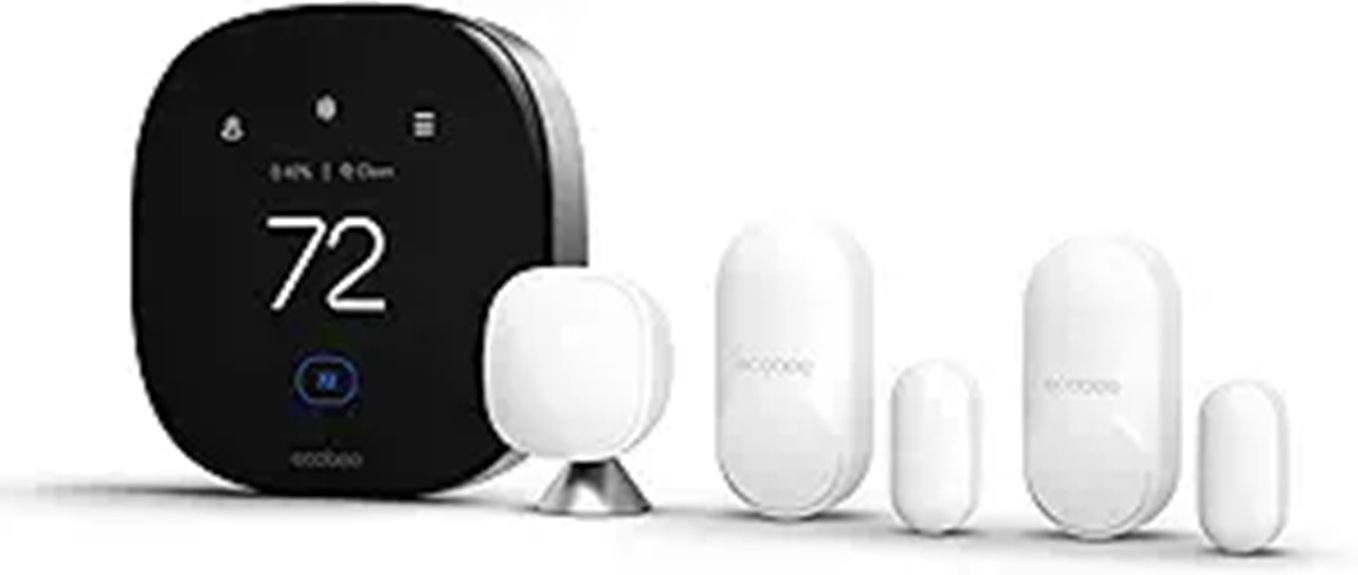
If you’re looking to maximize energy savings while maintaining comfort in multiple rooms, the ecobee Smart Thermostat Premium 2-Pack is an excellent choice. It can save you up to 26% annually on heating and cooling costs and includes a SmartSensor for key rooms, preventing hot or cold spots. The thermostat features an air quality monitor that detects poor conditions and offers tips, plus reminders to change filters. With Wi-Fi connectivity, voice control through Alexa and Siri, and a user-friendly display, you can easily control your home’s climate remotely. Plus, the package’s sensors enhance security and automation, making your home smarter and more comfortable.
Best For: homeowners seeking energy-efficient, smart climate control across multiple rooms with integrated air quality monitoring and home automation features.
Pros:
- Up to 26% annual savings on heating and cooling costs
- Includes SmartSensor to prevent hot or cold spots in key rooms
- Compatible with voice control via Alexa and Siri, with remote access
Cons:
- Subscription required for customizable alerts and some advanced features
- Higher upfront cost for a 2-pack compared to single units
- Requires hardwiring and Wi-Fi connection, which may not be suitable for all homes
Honeywell T9 WiFi Smart Thermostat with Sensor
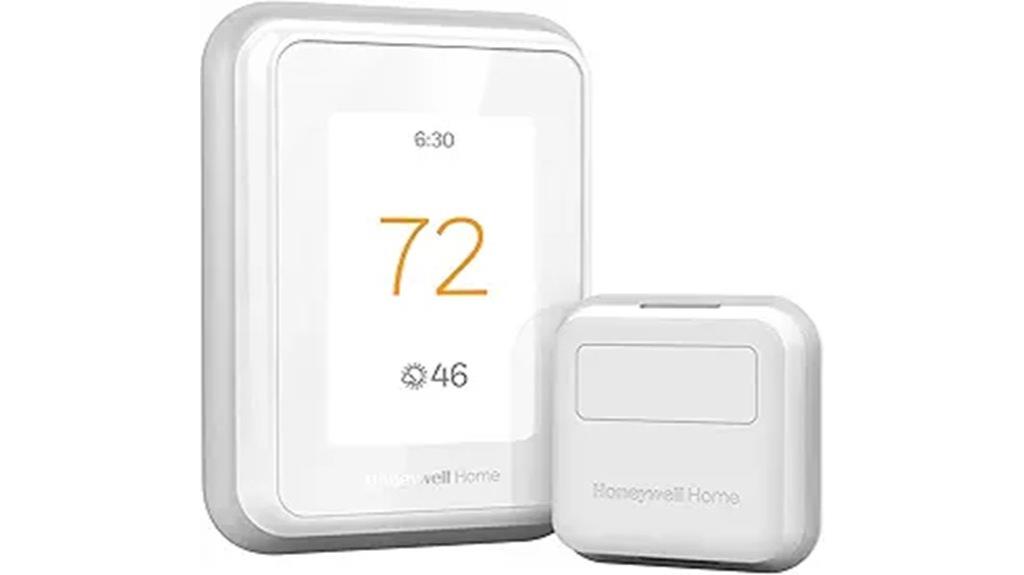
The Honeywell T9 WiFi Smart Thermostat with Sensor stands out as an excellent choice for homeowners seeking precise multi-room climate control. Its sleek touchscreen display and compatibility with various heating and cooling systems make it versatile. The device pairs with Honeywell’s Smart Room Sensors, which detect occupancy and humidity, allowing automatic adjustments and balanced comfort across multiple rooms. Controlled remotely via the app or voice assistants like Alexa, Google, and Apple HomeKit, it offers convenience and energy savings. Installation is straightforward, especially with the included power adapter for homes lacking a C-wire. Overall, it’s a reliable, feature-rich thermostat that enhances home automation and comfort.
Best For: homeowners seeking precise multi-room climate control with smart features and easy installation.
Pros:
- Compatible with a wide range of heating and cooling systems, including heat pumps and hot water systems
- Integrates seamlessly with Honeywell Smart Room Sensors for occupancy and humidity detection
- Remote control via app and voice assistants for convenient temperature management
Cons:
- Not compatible with electric baseboard heat or heating-only oil systems without a C-wire
- Requires a C-wire or included adapter for installation in homes lacking low-voltage wiring
- Limited to Wi-Fi connectivity; may experience signal issues in homes with thick walls or construction barriers
RV Thermostat Replacement for Coleman Mach 8330D3351
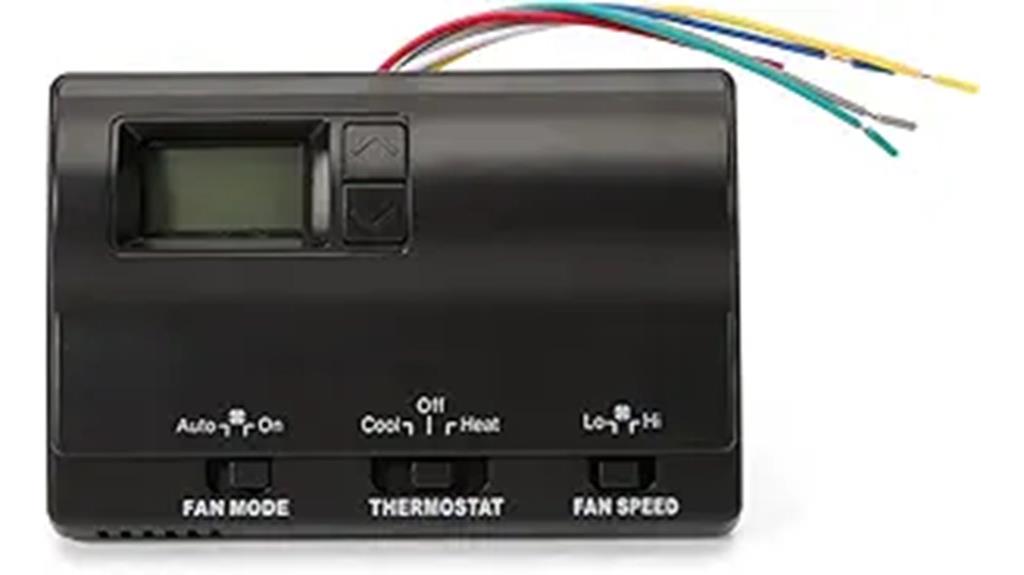
When replacing the RV thermostat for Coleman Mach 8330D3351, choosing a model with digital controls and a user-friendly interface is essential for seamless climate management. This thermostat is a direct replacement, guaranteeing easy compatibility with Coleman Mach systems. Its digital heat and cool controls allow precise temperature adjustments, while the bright display and intuitive buttons make operation straightforward for all users. The compact, wall-mount design simplifies installation and fits neatly in limited spaces. Built with durable materials to withstand vibrations and movement, it’s designed for travel readiness, providing reliable performance in various mobile environments. This replacement ensures comfortable, consistent climate control on the go.
Best For: RV owners and travelers seeking a reliable, easy-to-install digital thermostat replacement for Coleman Mach 8330D3351 systems to maintain precise climate control on the go.
Pros:
- Seamless compatibility as a direct replacement for Coleman Mach 8330D3351
- Digital heat and cool controls for accurate temperature management
- Compact wall-mount design for quick and space-efficient installation
Cons:
- May require basic technical knowledge for installation
- Limited customization options compared to advanced thermostats
- Dependence on digital interface, which could be less intuitive for some users
Ventamatic Adjustable Programmable Thermostat with Firestat

For homeowners seeking a straightforward, reliable solution to control attic ventilation, the Ventamatic Adjustable Programmable Thermostat with Firestat stands out. This device manages up to three attic fans, turning them on or off based on temperature settings between 50°F and 120°F. It features a simple manual control, a durable aluminum body, and a safety cutoff at 183°F to prevent overheating. Designed for both gable and roof ventilators, it’s easy to install and adjust with a screwdriver. With a 10-year warranty and high customer ratings, this thermostat offers dependable performance, energy efficiency, and peace of mind for maintaining ideal attic temperatures.
Best For: homeowners and property managers seeking a dependable, easy-to-install thermostat to efficiently control attic ventilation and prevent overheating.
Pros:
- Simple manual adjustments with a screwdriver for easy customization
- Supports up to three attic fans, ideal for larger ventilation systems
- Durable aluminum body with a 10-year warranty ensures long-term reliability
Cons:
- Limited temperature range of 50°F to 120°F may not suit all climate needs
- Manual control may require frequent adjustments in changing conditions
- Not compatible with systems exceeding 1200 watts or fans over 10 amps each
Google Nest Learning Thermostat – 3rd Gen Smart Thermostat
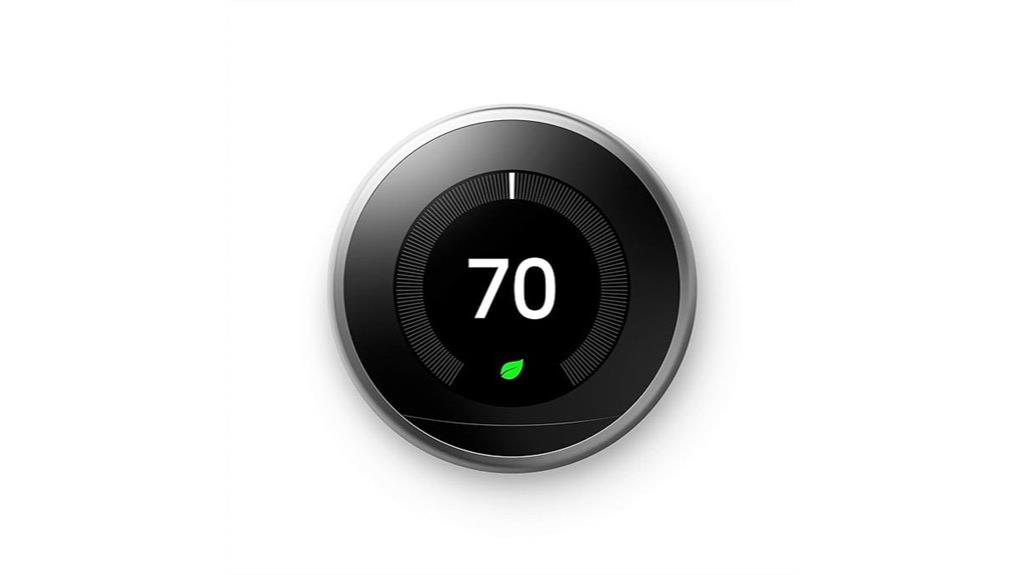
If you’re looking for a smart thermostat that automatically adapts to your routines, the Google Nest Learning Thermostat 3rd Gen stands out as an excellent choice. It learns your preferences through Auto-Schedule, adjusting itself over time without manual input. The sleek stainless steel finish adds a modern touch, and it’s compatible with Alexa for voice control. It offers energy-saving features like the Leaf indicator and energy history insights, helping you reduce consumption. Plus, with Home/Away Assist and remote control via the Nest app, you can manage your home’s temperature from anywhere, making it both smart and convenient.
Best For: homeowners seeking an intelligent, energy-efficient thermostat that adapts to their routines and offers remote control capabilities.
Pros:
- Learns user preferences automatically with Auto-Schedule, reducing the need for manual adjustments.
- Provides energy-saving insights through Energy History and the Leaf indicator, helping to cut costs.
- Supports remote management via the Nest app and integrates with Alexa for voice control.
Cons:
- Requires compatible HVAC system; compatibility should be verified before purchase.
- May have a learning curve for users unfamiliar with smart thermostats.
- Limited to the Stainless Steel finish, which may not match all decor styles.
Google Nest Thermostat, Programmable Wi-Fi Smart Thermostat
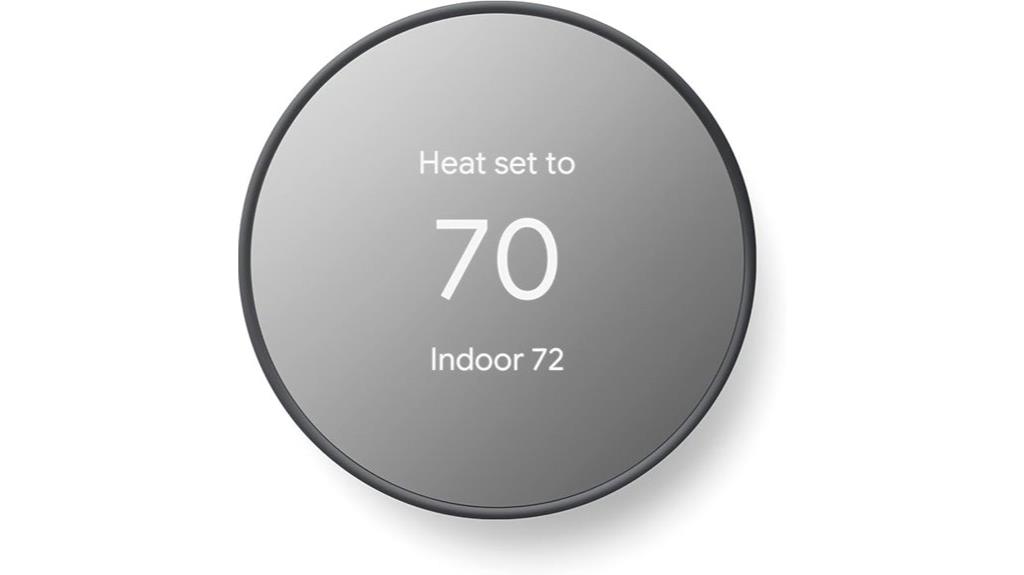
The Google Nest Thermostat stands out as an excellent choice for homeowners seeking a smart, energy-efficient device that’s easy to install and use. It’s ENERGY STAR certified, helping you save energy while maintaining comfort. Setup typically takes under 30 minutes, and most homes don’t need a C wire thanks to its compatibility. You can control it remotely via the Google Home app, voice commands, or the LCD display. It also works with Alexa and other smart home platforms. With features like adjustable schedules, HVAC monitoring, and energy-saving suggestions, it’s a practical upgrade for any connected home.
Best For: homeowners seeking an easy-to-install, energy-efficient smart thermostat compatible with various smart home systems and without the need for a C wire.
Pros:
- ENERGY STAR certified, promoting energy savings and cost efficiency
- Easy installation, typically completed within 30 minutes, with most homes compatible without a C wire
- Compatible with multiple control options including remote app, voice commands, and LCD display
Cons:
- Some heating-only, cooling-only, or zone-controlled systems may require additional power accessories or a C wire
- Battery-powered with 2 AA batteries may require occasional replacement
- Limited to certain smart home ecosystems unless integrated with compatible platforms
Honeywell Wi-Fi Smart Color Thermostat
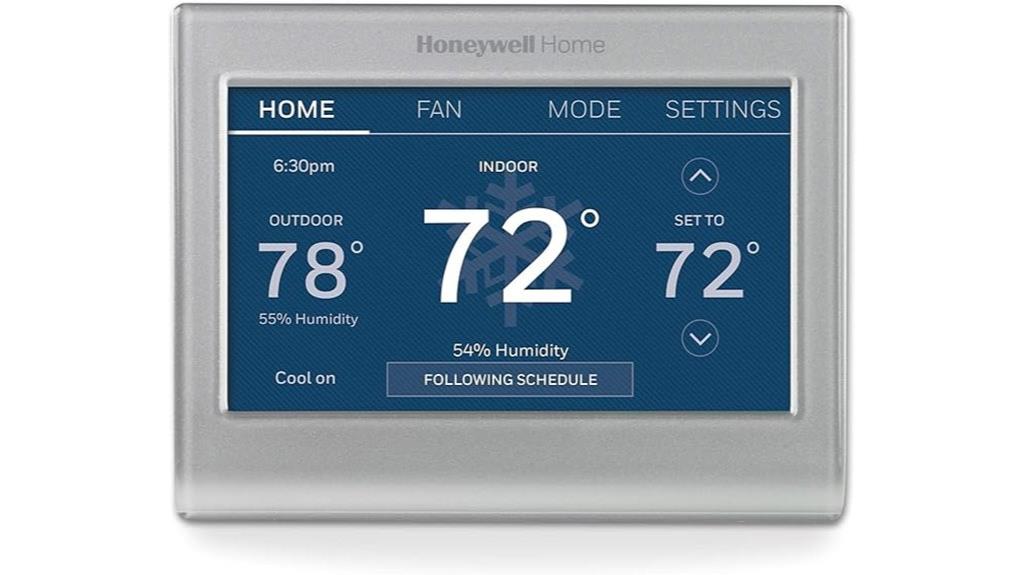
Looking for a smart thermostat that combines customizable design with advanced energy management? The Honeywell Wi-Fi Smart Color Thermostat is a great choice. It features a color touchscreen you can personalize, along with a 7-day programmable schedule to optimize your comfort and savings. Compatible with various systems like gas, oil, electric, and heat pumps, it offers auto changeover and remote control via smartphone or voice assistants like Alexa and Google Home. It displays local weather, forecasts, and sends alerts for filters or extreme temperatures. Easy to install with a C-wire, it helps reduce energy use through reports and utility programs, making home management smarter and more efficient.
Best For: homeowners seeking a customizable, energy-efficient smart thermostat compatible with multiple heating and cooling systems and integrated with voice assistants.
Pros:
- Personalizable color touchscreen for easy control and aesthetic customization
- Supports a wide range of HVAC systems, including heat pumps and forced air systems
- Features energy-saving tools like reports, tips, and utility program integration
Cons:
- Requires a C-wire for installation; not suitable for electric baseboard heating or certain oil systems without one
- Electric baseboard heating and some heating-only oil systems are incompatible
- Slightly higher price point compared to basic thermostats due to advanced features
Google Nest Thermostat, Programmable Wifi Thermostat
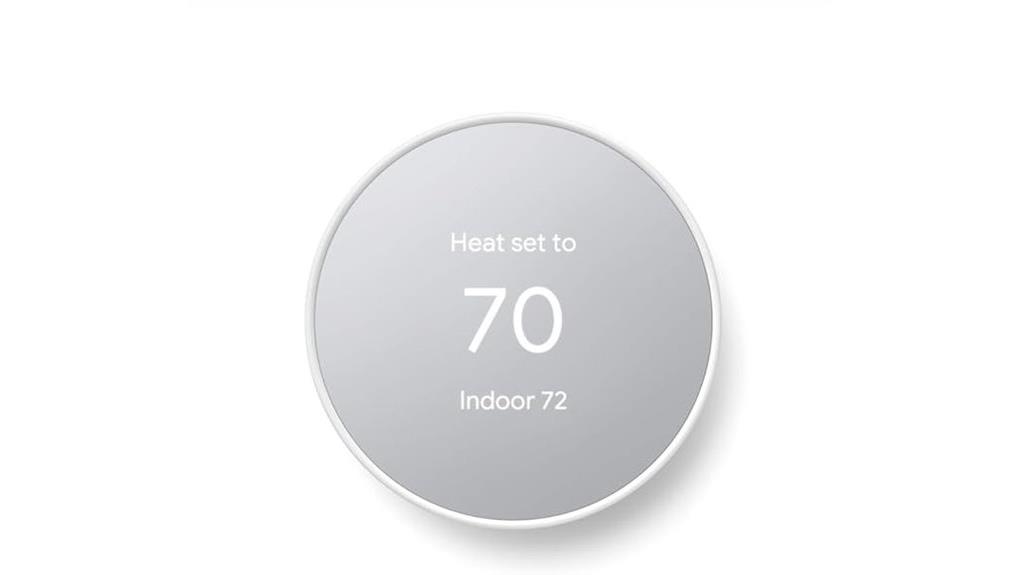
For homeowners seeking an easy-to-install, energy-efficient thermostat with smart control capabilities, the Google Nest Thermostat stands out. It’s ENERGY STAR certified and supports Wi-Fi (2.4 and 5 GHz), allowing remote control via the Google Home app or voice commands through Google Assistant, Alexa, or Matter-certified devices. Designed for quick, self-guided installation taking about 30 minutes, it works without a C wire in most homes. It offers programmable schedules, HVAC monitoring alerts, and energy-saving features like the Savings Finder. Integration with Nest Renew promotes sustainable energy use, making it a versatile, user-friendly choice for smarter home climate management.
Best For: homeowners seeking an easy-to-install, energy-efficient smart thermostat with remote control and voice command capabilities.
Pros:
- ENERGY STAR certified, promoting energy savings and environmental sustainability
- Supports Wi-Fi (2.4 and 5 GHz) and works with major voice assistants like Google Assistant and Alexa
- Self-guided installation typically takes around 30 minutes, suitable for DIY setup
Cons:
- Some heating-only, cooling-only, or zone-controlled systems may require additional wiring or accessories
- Monitoring alerts are informational and not diagnostic, potentially limiting issue resolution
- Battery-powered with AAA batteries that may need replacement over time
Google Nest Thermostat and Temperature Sensor (4th & 2nd Gen)

If you want a smart thermostat that seamlessly combines advanced learning features with easy installation, the Google Nest Thermostat (4th and 2nd Gen) is an excellent choice. It boasts a sleek design with a larger display and Dynamic Farsight that shows useful info from across the room. It’s compatible with most 24V systems, often without needing a C wire, making setup simple. The thermostat learns your habits, adjusts for sunlight, and uses outdoor data to optimize energy use. Plus, the included Nest Temperature Sensor helps manage hot and cold spots, enhancing comfort and saving on energy bills.
Best For: homeowners seeking an energy-efficient, easy-to-install smart thermostat with advanced learning and customizable features.
Pros:
- Sleek design with a larger display and Dynamic Farsight for easy viewing from across the room
- Compatible with most 24V systems, often without the need for a C wire, simplifying installation
- Learns habits, adjusts for sunlight, and uses outdoor data to optimize energy savings
Cons:
- May require additional sensors or setup for managing multiple zones or complex HVAC systems
- Some users might find the learning curve or app interface less intuitive initially
- Limited compatibility with certain non-standard or older HVAC systems
ecobee Smart Thermostat Essential, Wi-Fi Programmable Thermostat

The ecobee Smart Thermostat Essential stands out as an excellent choice for homeowners seeking an affordable yet feature-rich Wi-Fi programmable thermostat. It can save up to 23% annually on energy costs by adjusting temperatures based on your schedule and preferences. With easy DIY installation, it’s compatible with most HVAC systems and works seamlessly with Apple HomeKit, Google Assistant, and Alexa. The color touchscreen makes control simple, or you can use the ecobee app remotely. Optional SmartSensors enhance comfort in key rooms, and the thermostat’s energy-saving features, like preheating during off-peak hours, help reduce bills while maintaining ideal climate control.
Best For: homeowners seeking an affordable, easy-to-install smart thermostat that offers energy savings and seamless compatibility with popular smart home ecosystems.
Pros:
- Easy DIY installation with no C-wire required using the Power Extender Kit
- Compatible with a wide range of HVAC systems (gas, electric, heat pumps, boilers)
- Supports voice control through Siri, Alexa, and Google Assistant for hands-free operation
Cons:
- Lacks a built-in sensor; SmartSensors are sold separately for enhanced room-specific control
- No advanced learning algorithms found in higher-end ecobee models
- Limited customization options compared to more premium thermostats
Sensi Smart Thermostat
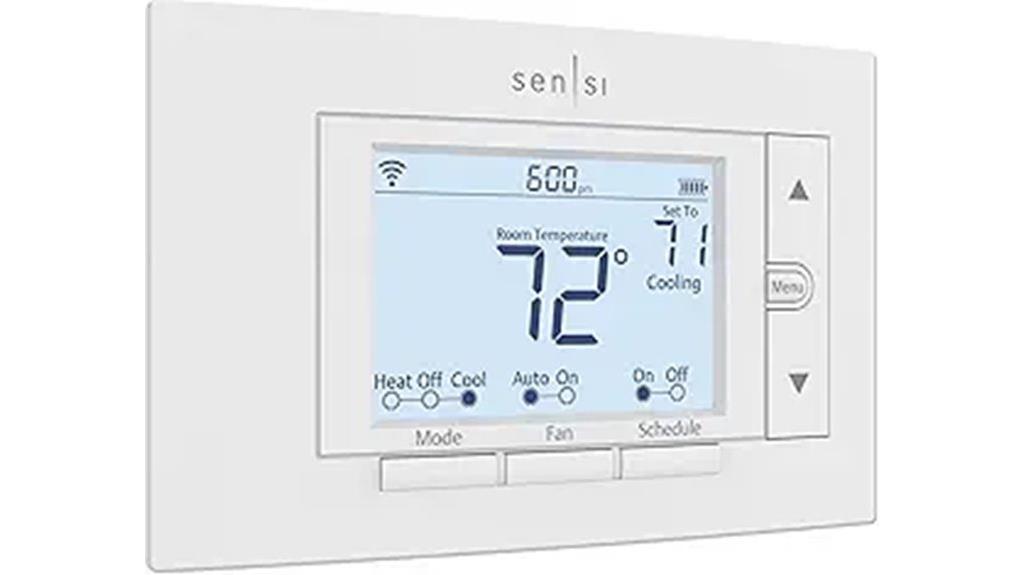
Sensi Smart Thermostat stands out for those seeking an easy-to-install, energy-efficient device that doesn’t compromise on smart features. It offers Wi-Fi connectivity, programmable schedules, and compatibility with Alexa, Google Assistant, SmartThings, and Vera, making it versatile for any setup. Designed for DIY installation, it fits standard wall spaces without patching or painting, and often doesn’t require a c-wire. With a sleek LED display and a compact size, it’s simple to operate. Certified Energy Star, it helps save around 23% on energy costs and provides useful reports and alerts. Plus, it prioritizes privacy and security, ensuring your data stays protected.
Best For: homeowners seeking an easy-to-install, energy-efficient smart thermostat with versatile compatibility and robust features.
Pros:
- Easy DIY installation that fits standard wall spaces without patching or painting
- Compatible with multiple smart home platforms including Alexa, Google Assistant, SmartThings, and Vera
- Helps save approximately 23% on energy costs with programmable schedules and usage reports
Cons:
- Requires 24V AC power, which may not be available in all HVAC systems
- Limited display size with a 5-inch LED screen may not suit all preferences
- No touchscreen interface, relying on buttons and app for configuration and control
Google Nest Learning Thermostat + Sensor (4th & 2nd Gen)
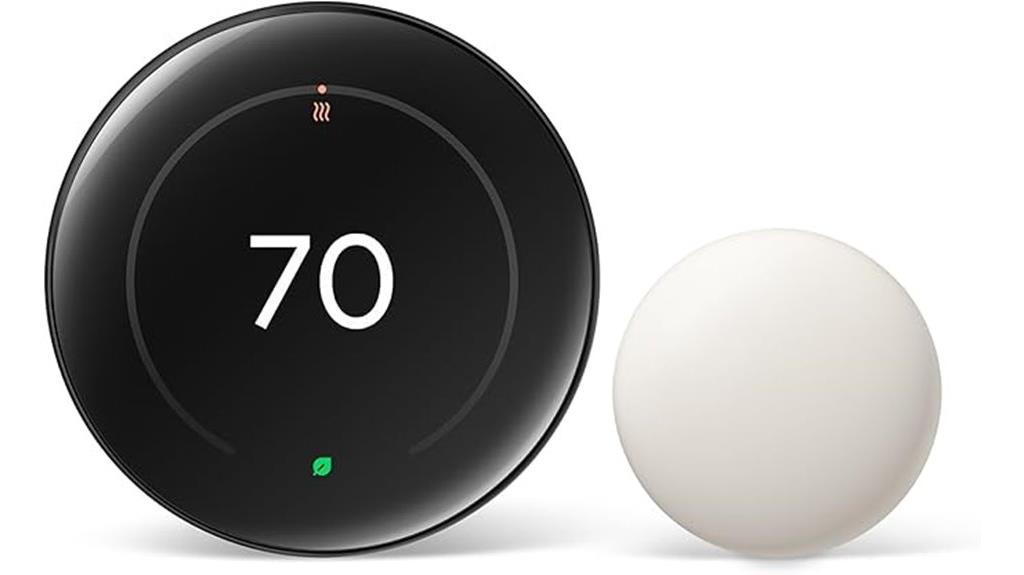
For homeowners seeking an intelligent thermostat that seamlessly adapts to their routines, the Google Nest Learning Thermostat + Sensor (4th & 2nd Gen) stands out as an excellent choice. Its sleek design features a larger touchscreen with Dynamic Farsight, making it easy to see from across the room. It learns your preferences and outdoor conditions to optimize heating and cooling, saving you money. The device supports voice commands through Alexa, Siri, or Google Assistant and connects via Wi-Fi for remote control. Compatible with most 24V systems and capable of managing multiple rooms with sensors, it offers both convenience and energy efficiency in a modern package.
Best For: homeowners seeking an intelligent, energy-saving thermostat that adapts seamlessly to their routines and offers remote control and room-specific temperature management.
Pros:
- Learns user preferences and outdoor conditions to optimize heating and cooling, saving on energy bills
- Large, dynamic touchscreen with visibility from across the room and customizable display options
- Supports voice commands via Alexa, Siri, and Google Assistant, and integrates with various smart home ecosystems
Cons:
- Requires a Wi-Fi connection for optimal functionality, which may be an issue in areas with poor connectivity
- May be complex to install for those unfamiliar with smart thermostats, despite included mounting hardware
- Some advanced features, like multiple sensors and integrations, may require additional purchases or setup complexity
ecobee Smart Thermostat Premium with Sensors and Air Quality Monitor
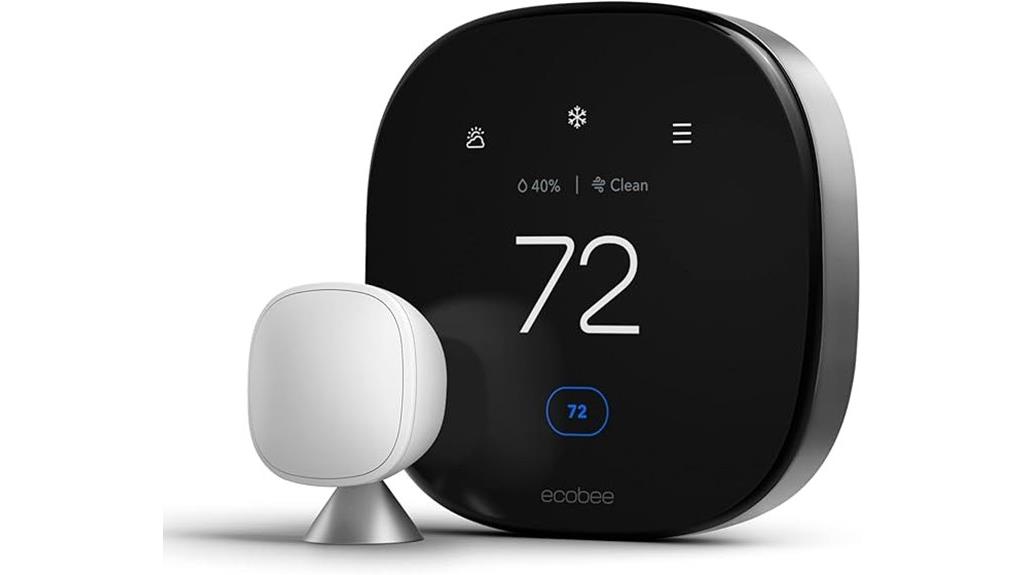
If you’re looking for a smart thermostat that combines advanced air quality monitoring with seamless compatibility, the ecobee Smart Thermostat Premium stands out as an excellent choice. It offers up to 26% energy savings annually, is ENERGY STAR certified, and features a large, vibrant display with a cinematic interface. Compatible with most 24VAC HVAC systems, it includes a Power Extender Kit for easy installation in wire-free homes. The thermostat supports control via app, Bluetooth, and integrates with major smart home platforms like Apple HomeKit, Alexa, and Google Assistant. Its built-in sensors and air quality monitor ensure ideal comfort and healthy indoor air.
Best For: homeowners seeking an energy-efficient, smart, and health-conscious thermostat with advanced air quality monitoring and seamless smart home integration.
Pros:
- Offers up to 26% energy savings annually and ENERGY STAR certification for efficiency.
- Includes built-in air quality monitor and SmartSensor for optimal comfort and air health.
- Compatible with major platforms like Apple HomeKit, Alexa, and Google Assistant, supporting voice control and app management.
Cons:
- Requires a stable Wi-Fi connection for full functionality and updates.
- Some advanced features may need additional setup or compatible smart home hubs (e.g., Apple Home Hub for Siri).
- Price point may be higher compared to basic thermostats with fewer features.
Google Nest Learning Thermostat, 3rd Gen
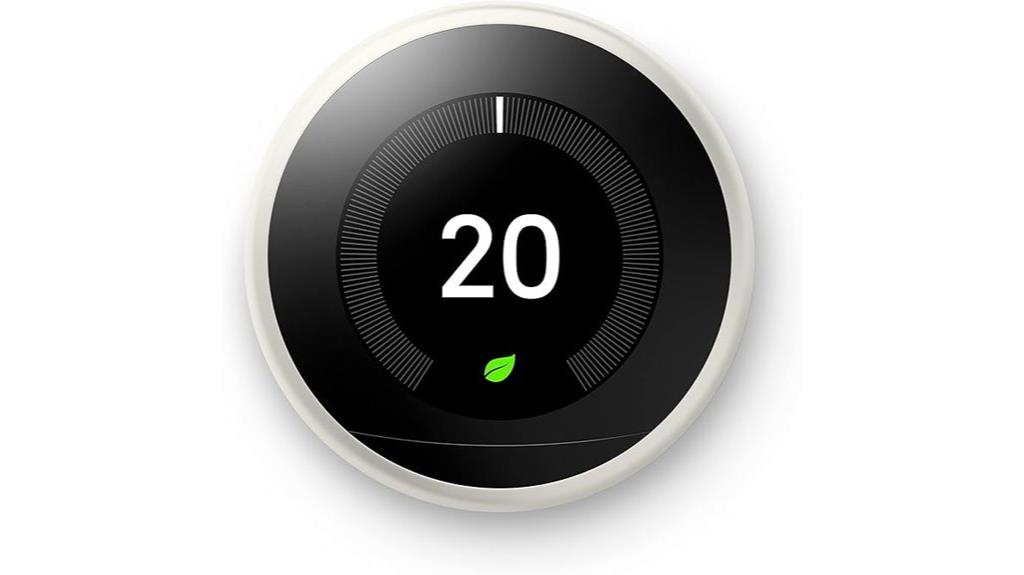
The Google Nest Learning Thermostat (3rd Gen) stands out as an ideal choice for homeowners seeking an intuitive, self-programming system that maximizes energy savings. Its sleek, round design features a bright, high-resolution display with Farsight technology that shows temperature, weather, or time when you enter the room. It’s compatible with 95% of 24V HVAC systems, including gas, electric, heat pumps, and more. The thermostat learns your schedule, adjusts automatically, and provides energy usage insights. With remote control via the Nest app, voice command support, and Home/Away Assist, it offers effortless convenience and efficiency, making home automation smarter and more responsive.
Best For: homeowners seeking an easy-to-use, energy-efficient smart thermostat that adapts to their schedule and integrates with voice assistants.
Pros:
- Learns user habits and programs itself to optimize energy savings
- Compatible with a wide range of 24V HVAC systems, including heat pumps and multi-stage setups
- Supports remote control, voice commands, and energy usage insights via the Nest app
Cons:
- Requires a 24V power connection and a CR2 battery for operation
- May be more expensive than basic thermostats without advanced features
- The optional Nest Temperature Sensor must be purchased separately for room-specific temperature control
Amazon Smart Thermostat

Anyone looking to upgrade their home’s comfort and energy efficiency will find the Amazon Smart Thermostat a smart choice, especially since it learns your habits through Thermostat Hunches. It easily replaces traditional thermostats, creating customizable zones with select Echo devices or an Amazon Smart Air Quality Monitor. It adjusts heating and cooling based on temperature readings or presence detection, saving energy and money. You can control it remotely via the Alexa app, and it supports scheduling, vacation mode, and emergency heat. Built on Honeywell’s reliable technology, it offers indoor humidity sensing, air filter ordering, and energy monitoring, making home automation smarter and more efficient.
Best For: homeowners seeking an easy-to-install, energy-efficient smart thermostat that learns their habits and offers remote control via the Alexa app.
Pros:
- Learns user habits with Thermostat Hunches to optimize comfort and energy savings
- Supports customizable zones and scheduling for personalized heating and cooling
- Compatible with most 24V HVAC systems and backed by Honeywell’s reliable technology
Cons:
- Not compatible with 110-240V systems like electric baseboard heating
- Requires a C-wire or power adapter for installation, which may necessitate additional tools
- Does not support 5GHz Wi-Fi networks or ad-hoc Wi-Fi connections
Factors to Consider When Choosing Smart Thermostats With Learning Features
When choosing a smart thermostat with learning features, I consider how well it works with my HVAC system and how accurate its algorithms are. Ease of installation and options for control and connectivity are also important to me, along with energy-saving features. These factors help guarantee I pick a device that fits my needs and maximizes efficiency.
Compatibility With HVAC Systems
Choosing a smart thermostat with learning features requires ensuring it’s compatible with your existing HVAC system, so I always check a few key factors first. First, I verify the system’s voltage, heating type, and control wiring to avoid installation problems. Next, I confirm if the thermostat supports multi-stage heating and cooling systems for more advanced climate control. I also look for a C-wire or a compatible power adapter or extender kit to guarantee continuous power supply. Compatibility with my smart home ecosystem, like Alexa or Google Assistant, is also vital for seamless integration. Finally, I review the manufacturer’s specifications to see if the thermostat can learn routines for my specific HVAC setup and supports additional sensors if needed. These steps help me choose a compatible, efficient device.
Learning Algorithm Accuracy
The accuracy of a smart thermostat’s learning algorithm hinges on the quality and consistency of user input and behavior patterns. When I set routines and stick to them, the thermostat learns more effectively, predicting my preferred temperatures accurately. Advanced algorithms that leverage machine learning improve over time, adapting to subtle changes in my schedule. The presence of sufficient occupancy data and thoughtful temperature adjustments also boosts prediction precision. External data, like weather forecasts and sunlight exposure, further refine the schedules, making them smarter. However, frequent manual overrides or inconsistent habits can hinder the algorithm’s ability to learn and adapt, reducing long-term accuracy. To choose the best, look for a thermostat with robust learning capabilities that can handle real-world variability without losing efficiency.
Ease of Installation
Installing a smart thermostat with learning features can seem intimidating, but many models are designed for easy DIY setup. They often include step-by-step guides that simplify the process. Some models are compatible with common wiring setups, while others come with accessories like C-wire adapters, making installation smoother even in homes lacking certain wiring. Typically, installation involves mounting the device, connecting wires to clearly labeled terminals, and configuring settings via a mobile app or touchscreen. Features like built-in guides or automated wiring detection can further streamline setup, reducing the need for professional help. Clear instructions, online support resources, and user-friendly design help minimize errors and installation time, ensuring you can enjoy your smart thermostat’s benefits without hassle.
Control and Connectivity Options
When selecting a smart thermostat with learning features, it’s important to contemplate how you’ll control and connect with the device. Most models offer control via mobile apps, voice assistants, and on-device interfaces, giving you flexible options to manage your home’s temperature. Connectivity options typically include Wi-Fi, Bluetooth, and proprietary protocols, allowing seamless integration with your smart home ecosystem and remote access from anywhere. Compatibility with popular voice platforms like Amazon Alexa, Google Assistant, and Apple Siri further enhances control convenience. Many thermostats support scheduling and adaptive routines, which you can access and adjust through connected apps or devices. These features ensure you can effortlessly communicate with your thermostat, automate routines, and enjoy a more integrated, user-friendly smart home experience.
Energy Saving Features
Smart thermostats with learning features can substantially cut your energy bills by automatically adjusting temperatures based on your routines. They analyze daily habits to optimize heating and cooling, reducing energy use when you’re away or asleep. These devices use sensors and sophisticated algorithms to create personalized schedules that enhance efficiency, potentially saving up to 26% annually. They also monitor HVAC system performance and usage patterns, offering insights and adjustments that prevent unnecessary energy waste. Many models include eco-friendly modes and demand response programs, shifting energy consumption to off-peak hours for additional savings. The adaptive learning capabilities allow these thermostats to fine-tune their settings over time, ensuring you stay comfortable while minimizing energy consumption. This combination of features makes them a smart choice for energy-conscious homeowners.
Sensor Integration Capabilities
Sensor integration plays a pivotal role in maximizing the benefits of smart thermostats with learning features. Effective integration allows these devices to monitor multiple rooms or zones, enhancing overall climate control and comfort. Compatibility with various sensor types, such as temperature, humidity, and occupancy sensors, helps the thermostat adapt in real-time to environmental changes. Advanced sensors that detect occupancy and motion enable automatic adjustments based on presence, which can save up to 23% of energy. Seamless sensor integration depends on compatibility with communication protocols like Zigbee, Z-Wave, or proprietary standards. The number and placement of sensors greatly influence the accuracy of temperature and air quality readings, directly impacting the learning algorithms’ effectiveness and the thermostat’s ability to optimize home comfort efficiently.
User Interface Design
Choosing a smart thermostat with learning features hinges largely on its user interface design, as this determines how easily you can interact with the device. A user-friendly interface with clear menus and intuitive controls makes adjustments simple, saving you time and frustration. Touchscreens with responsive feedback and customizable display options enhance interaction and allow you to personalize the look according to your preferences. Visual indicators and alerts should be visible at a glance, so you can quickly see system status or identify issues without digging through menus. Voice control integration is also beneficial, enabling hands-free operation—especially for those with mobility or accessibility needs. Additionally, the display should automatically adjust brightness and contrast for ideal readability in different lighting environments.
Frequently Asked Questions
How Do Smart Thermostats Improve Energy Efficiency in Homes?
Smart thermostats improve energy efficiency by learning my schedule and adjusting the temperature automatically. They optimize heating and cooling, so I don’t waste energy when I’m away or asleep. I can also control them remotely, ensuring I only use energy when needed. Their real-time data helps me identify patterns and make smarter choices, ultimately reducing my utility bills and my home’s carbon footprint without sacrificing comfort.
Can Smart Thermostats Be Integrated With Existing Home Automation Systems?
Absolutely, I can tell you that smart thermostats are like the conductors of your home’s automation symphony. They seamlessly integrate with existing systems through Wi-Fi and compatible platforms like Alexa, Google Home, or Apple HomeKit. I’ve found setup straightforward, and once connected, they work in harmony with your smart devices, making your home feel like a well-choreographed dance where everything moves smoothly and smartly.
What Is the Typical Setup Process for a Learning Thermostat?
Setting up a learning thermostat is straightforward. I start by turning off my HVAC power, then remove the old thermostat and connect the new one using the provided wiring diagram. Once mounted, I turn the power back on and follow the on-screen prompts to connect it to Wi-Fi. The thermostat then self-learns my schedule, adjusting temperature automatically for comfort and efficiency. It’s simple and makes home automation smarter.
How Do Smart Thermostats Handle Multiple Users’ Preferences?
Smart thermostats handle multiple users’ preferences by creating individual profiles and learning each person’s schedule and temperature preferences over time. I find they adapt seamlessly by recognizing who’s home through sensors or smartphone presence, then adjusting settings accordingly. They often allow manual overrides and can even send notifications for different users, ensuring everyone’s comfort is prioritized without constant manual adjustments. It’s a smart way to keep your home cozy for everyone.
Are There Any Privacy Concerns With Smart Thermostat Data Collection?
Yes, there are privacy concerns with smart thermostat data collection. I make sure to check each device’s privacy policy and choose brands that prioritize data security. I also regularly review my data sharing settings and use strong, unique passwords. It’s essential to stay informed about how your data is used and to limit sharing to protect your privacy while enjoying the convenience of smart home tech.
Conclusion
Imagine coming home to a perfectly cozy house, where your smart thermostat gently learns your preferences, adjusting the temperature as you walk through the door. With these top picks, you’ll effortlessly create a warm, inviting space that feels just right every time. Whether it’s the quiet hum of the eco-friendly ecobee or the sleek touch of the Nest, these thermostats turn your home into a sanctuary of comfort and smart convenience.