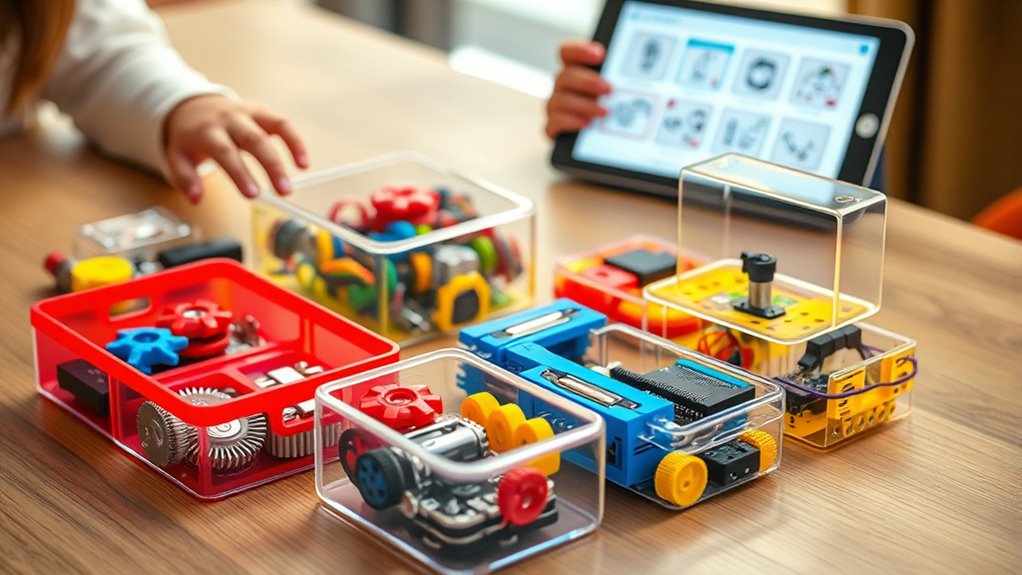

Finding the right educational STEM kit for kids involves balancing complexity, engagement, and learning value. The Doctor Jupiter My First Science Kit stands out as the best overall choice for introducing young children to science through simple, fun experiments. For slightly older kids, the JOVA Klever Kits 36-in-1 Motor Robotic Kit offers versatile building activities that foster engineering skills. The main tradeoffs include choosing between beginner-friendly kits that focus on basic concepts and more complex kits that challenge older kids with advanced projects. Continue reading for a detailed breakdown that helps match each kit to your child’s age and interests.

Get health and wellness essentials delivered free with Prime
- Fast, free delivery on millions of items
- Prime Video, Amazon Music and more included
- Member-only deals all year
Key Takeaways
- The top kits balance ease of use with enough challenge to keep kids engaged over time.
- Versatility in project types—such as robotics, chemistry, and environmental science—appears to be a key differentiator.
- Higher price often correlates with more comprehensive and durable kits, but budget options still offer great value.
- Age-specific design matters; kits tailored for younger children focus on simple experiments, while those for older kids include complex builds.
- Including both educational content and creative elements enhances sustained interest in STEM activities.





More Details on Our Top Picks
Doctor Jupiter My First Science Kit for Kids Ages 4-8
This kit stands out for its extensive collection of over 100 experiments designed to ignite a child’s curiosity in science, making it ideal for introducing young children to STEM. Compared to the National Geographic Earth Science Kit, it focuses more on hands-on experiments tailored for early learners, though it might fall short for older kids seeking more complex projects. The clear, illustrated instructions are perfect for early readers, but some experiments may need adult help, which could limit independent play. Its safety standards meet ASTM F963-17, providing peace of mind for parents. This kit is best suited for children aged 4-8 who are just starting their STEM journey, but it may be too simple or limited for older or more advanced kids.
Pros:- Over 100 engaging experiments to foster early science interest
- Includes easy-to-follow, illustrated instructions
- Meets high safety standards for children’s toys
Cons:- Limited to ages 4-8, not suitable for older kids
- Some experiments may require adult supervision
Best for: Parents seeking a comprehensive, safe, and engaging science introduction for children aged 4-8
Not ideal for: Older children or those looking for more challenging experiments beyond basic science activities
- Ages:4-8
- Experiments:100+
- Safety Standards:ASTM F963-17
Our verdict“This kit is perfect for parents wanting a safe, broad introduction to science for young children just starting their STEM exploration.”
JOVA Klever Kits 36-in-1 Motor Robotic Kits for Kids, Educational STEM Toys for Ages 8-13
This kit excels at encouraging engineering and problem-solving skills through the construction of 36 different robots, including motorized models like racing cars and walking machines. It surpasses simpler kits like Doctor Jupiter by offering complex, multi-model projects suitable for older children, although its assembly process can be time-consuming. The inclusion of clear instructions and video tutorials makes it accessible, but younger children may need adult help to complete the builds. The organized parts tray simplifies setup and cleanup, promoting independence once assembled. This kit makes the most sense for children aged 8-13 who love building and tinkering with robotics, but younger or less patient kids might find it frustrating.
Pros:- Encourages STEM learning and creativity with 36 models
- Includes clear instructions and video tutorials
- Organized parts tray for easy sorting and storage
Cons:- Requires adult supervision for younger children
- Assembly can be time-consuming and complex for some users
Best for: Older kids and pre-teens interested in robotics, engineering, and hands-on problem-solving
Not ideal for: Children under 8 or those seeking quick, easy projects without extensive assembly
- Number of Models:36
- Motorized Models:14
- Recommended Age:8-13 years
Our verdict“This kit is ideal for curious kids aged 8-13 who enjoy detailed building projects and robotics, but it may not suit younger or impatient children seeking quick results.”
Thames & Kosmos Mega Cyborg Hand STEM Experiment Kit
This hands-on kit teaches kids about pneumatic and hydraulic systems by building a mechanical hand operated without motors or batteries, setting it apart from electronic-based kits like Snap Circuits Jr.. Its adjustable design allows for different configurations, providing a versatile learning experience, though the assembly process can be complex for younger children. The focus on pneumatic principles makes it highly educational for those interested in robotics and industrial systems. Adult supervision is recommended for some steps, and its mechanical nature limits electronic exploration. This kit suits older children (8+) eager to understand mechanical systems, but may be too challenging for early elementary students.
Pros:- Teaches pneumatic and hydraulic system principles
- Adjustable to fit various hand sizes and configurations
- No motors or batteries required, emphasizing hands-on understanding
Cons:- Assembly may be complex for younger children
- Limited to mechanical operation without electronic parts
Best for: Children aged 8+ fascinated by robotics, hydraulics, and pneumatic systems
Not ideal for: Younger children or those seeking electronic or motorized projects
- Material:Plastic
- Includes:Hydraulic pistons, adjustable joints
- Configurations:Right hand, left hand, claw
- Age Range:8+
Our verdict“This kit is best for older kids interested in mechanical engineering and pneumatics, but less suitable for beginners or early elementary students.”
STEM Kits for Kids Ages 6-12, 5-in-1 Robot Building Science Kit for Boys Girls
This versatile kit offers five different robot models, from crawlers to obstacle-avoiding cars, making it ideal for kids who love variety and repeatable play. It surpasses single-robot kits by providing multiple building options, which keeps children engaged longer and promotes continuous learning. The included screwdriver, step-by-step instructions, and colorful illustrations make it accessible for kids as young as six, while the durable, non-toxic materials ensure safe handling. However, the assembly process can be lengthy, especially for younger or less experienced builders. This kit encourages parent-child collaboration and fosters skills like patience and fine motor control. It makes the most sense for curious boys and girls ages 6-12 who enjoy building different robots and exploring engineering concepts.
Pros:- Includes 5 different robot building options for endless fun
- Easy-to-follow instructions and colorful illustrations
- Safe, durable, and non-toxic materials
Cons:- Assembly can be time-consuming for younger children
- Requires adult supervision for some steps
Best for: Kids aged 6-12 who love robotics, building, and variety in STEM projects
Not ideal for: Children under 6 or those preferring simpler, single-project kits
Our verdict“This kit is perfect for active, curious kids who want to explore multiple robotics projects in one package, but may be too complex for very young or beginner builders.”
Creativity for Kids Grow ‘N Glow Terrarium Kit – Educational Science & STEM Craft for Kids Ages 6+
This kit combines arts and science by letting children create a mini ecosystem inside a glow-in-the-dark terrarium, making it a unique STEM craft experience. It promotes responsibility and independence as kids plant, decorate, and watch their plants grow, with the added fun of glow-in-the-dark features for nighttime display. Compared to more technical kits like Thames & Kosmos Mega Cyborg Hand, it emphasizes creativity and nurturing. Its all-in-one package includes supplies for two planting cycles, but it requires supervision for planting and watering, and plants may need specific care. Its indoor-only design limits outdoor exploration. This kit suits younger children (6+) interested in nature, arts, and science combined, but may not appeal to kids seeking high-tech projects.
Pros:- Encourages creativity, science learning, and responsibility
- Includes all supplies for two planting cycles
- Glow-in-the-dark features add nighttime fun
Cons:- Requires supervision for planting and watering
- Plants may need specific care to thrive
Best for: Parents seeking a creative, screen-free STEM activity that fosters responsibility and artistic expression in children aged 6+
Not ideal for: Older children or those looking for more technical or electronic STEM kits
- Ages:6+
- Includes:Terrarium jar, seeds, decorations
- Plant Cycles:2
- Glow Features:Glow-in-the-dark figurines
- Growth Time:3-4 days
Our verdict“This kit is ideal for young children who enjoy hands-on nature projects combined with arts and crafts, but less suitable for those seeking advanced STEM experiences.”
National Geographic Earth Science Kit – 100+ Science Experiments & Activities for Kids, Crystal Growing, Volcano Science Kit, Rock Collection, STEM Project Toy for Boys & Girls (Amazon Exclusive)
This extensive kit stands out for its wide array of over 15 experiments, including volcano eruptions, crystal growing, and geologic digs, making it ideal for kids who crave in-depth hands-on learning. Compared to the Thames & Kosmos Mega Cyborg Hand, which focuses more narrowly on engineering, this kit offers a broader scope of Earth sciences, fostering a deeper appreciation for geology and planetary science. Its detailed, colorful learning guide enhances understanding, while the variety of activities encourages prolonged engagement. The main tradeoff is that the large number of experiments can be overwhelming for younger children or those new to science kits, potentially requiring adult supervision. Overall, this kit is perfect for curious kids eager to explore multiple facets of Earth science in one package.
Pros:- Over 15 diverse experiments covering multiple Earth science topics
- Includes a detailed, engaging full-color learning guide
- High-quality, durable materials suitable for sharing
Cons:- The volume of activities might be overwhelming for beginners
- Requires some adult oversight for younger children
Best for: Kids ages 8-12 with a strong interest in geology, earth science, and long-term exploration
Not ideal for: Younger children under 8 or those seeking quick, simple experiments, as the complexity and volume may be daunting
- Number of experiments:15+
- Age range:8-12
- Includes:Crystal growing, volcano model, rock collection, geologic dig kits
- Materials:High-quality educational toys
- Guides:Full-color learning guide
- Educational focus:Earth and geological sciences
Our verdict“This kit is ideal for older kids who want a comprehensive, multi-experiment Earth science experience.”
STEM Kits for Kids Ages 8-14 – Solar Car, Plane, Wind Car & Electric Fan Building Kits – Educational Science Projects & Gift Set
This set offers four engaging wooden STEM projects that teach kids about solar and wind energy, making it a practical choice for introducing renewable energy concepts. Unlike the National Geographic Earth Science Kit, which covers broad Earth sciences, this set emphasizes physics and energy conversion through easy-to-assemble models. Its straightforward instructions make it accessible for children 8 and up, while the inclusion of multiple kits encourages extended play and learning. A key drawback is that it focuses mainly on solar and wind projects, limiting exposure to other science fields, and small parts may pose a choking risk for very young children. Overall, this kit makes a great gift for eco-conscious kids ready to explore renewable energy hands-on.
Pros:- Includes four different solar and wind-powered models
- Easy to assemble with detailed instructions
- Encourages understanding of energy conversion and physics
Cons:- Limited to basic solar and wind projects
- Small parts may require supervision for younger children
Best for: Children aged 8-14 interested in renewable energy and simple engineering projects
Not ideal for: Young kids under 8 or those seeking complex or multidisciplinary science activities
- Set Includes:Solar car, solar plane, wind car, electric fan
- Age Range:8-14
- Number of Kits:4
- Material:Wood
- Assembly:No welding, easy instructions
- Educational focus:Energy conversion, physics
Our verdict“This kit suits kids eager to learn about renewable energy with simple, engaging projects.”
STEM Toys Pixel Art Kit for Kids – Arts and Crafts for Boys & Girls – Educational Science Kits & STEM Activities for Kids Ages 5-8-12 Gifts for 5, 6, 7, 8, 9, 10 Year Old – Brain Teasers Toy (Medium)
This pixel art kit stands out for fostering creativity alongside STEM learning, offering multiple difficulty levels and over 50 patterns to challenge kids aged 5-12. Unlike the National Geographic Earth Science Kit, which emphasizes earth sciences, this set focuses on art, pattern recognition, and fine motor skill development, making it ideal for younger children or classroom activities. Its bright colors and easy-to-use components spark artistic expression, while also introducing basic coding concepts in a playful manner. The main downside is that it might not satisfy older kids looking for more advanced science experiments, and some younger children may need help with small pieces. Overall, it’s a versatile, engaging option for early STEM art projects.
Pros:- Over 50 patterns and multiple difficulty levels
- Encourages fine motor skills and creativity
- Safe, durable, and easy to use
Cons:- Limited science content—more art-focused
- May require adult supervision for younger children
Best for: Kids ages 5-12 interested in art, pattern design, and early STEM concepts
Not ideal for: Older children seeking complex science experiments or engineering projects
- Number of Patterns:Over 50
- Age Range:5-12
- Includes:Vibrant colors, pattern templates
- Educational focus:Creativity, fine motor skills, basic coding
- Materials:Non-toxic, durable
- Difficulty Levels:3
Our verdict“This kit makes a perfect choice for young children blending art and early STEM learning through creative pixel design.”
Sillbird 12-in-1 Solar Robot Building Kit STEM Gift for Boys Aged 8-13, DIY Science Educational Robotic Toys for Kids Teens Birthday, Powered by the Sun with 190 Pieces
This kit offers 12 different robot models, each powered by solar energy, making it a compelling choice for kids curious about robotics, engineering, and renewable power. Compared with the Klutz Lego Gear Bots, which emphasizes gears and mechanical motion, this set leans into solar-powered movement, encouraging outdoor activity and environmental awareness. Its 190 pieces provide ample scope for experimentation, but assembly can be complex for younger children, and it requires bright sunlight or artificial light to operate effectively. This limits use indoors or on cloudy days, which is a notable tradeoff. Overall, it’s a flexible, eco-friendly robotics kit suited for older kids or those with some prior building experience.
Pros:- Builds 12 different solar-powered robots
- Includes 190 pieces for extensive experimentation
- Promotes outdoor play and renewable energy learning
Cons:- Requires sunlight or strong artificial light
- Assembly might challenge younger children
Best for: Kids aged 8-13 interested in robotics, renewable energy, and outdoor STEM activities
Not ideal for: Younger children under 8 or those seeking simple or indoor-only projects
- Number of Models:12
- Pieces:190
- Suitable Age:8+
- Power Source:Solar and artificial light
- Educational focus:Robotics, renewable energy
- Assembly Difficulty:Moderate to challenging
Our verdict“This solar robot kit is perfect for kids wanting versatile, eco-friendly robotics with an outdoor focus.”
Klutz Lego Gear Bots Science/STEM Activity Kit for 8-12 years
This kit provides the opportunity to build eight different kinetic creatures using LEGO Technic bricks and a detailed 64-page guide, combining engineering principles with creative design. Unlike the National Geographic Earth Science Kit, which covers natural sciences, this set emphasizes mechanical motion, gears, and engineering, offering a focused STEM experience. The use of familiar LEGO elements makes it accessible and appealing, especially for kids interested in building and robotics. However, the complexity of gear mechanisms and the need to follow detailed instructions might challenge younger or less experienced builders, and some may find the models less varied in scientific scope. Nevertheless, it offers a hands-on introduction to engineering concepts through play.
Pros:- Builds 8 different kinetic LEGO models
- Includes comprehensive step-by-step instructions
- Introduces core engineering concepts
Cons:- Focused mainly on gears and motion, limited other sciences
- Complex assembly may be difficult for beginners
Best for: Children aged 8-12 who enjoy mechanical building and kinetic art
Not ideal for: Younger kids under 8 or those seeking broader scientific topics beyond mechanics
- Number of Models:8
- Pieces:190+
- Suitable Age:8-12
- Educational focus:Gears, mechanics, engineering
- Includes:LEGO Technic bricks, step-by-step manual
- Build Type:Kinetic models
Our verdict“This LEGO gear kit is ideal for kids interested in mechanical engineering and kinetic design.”
Doctor Jupiter My First Science Kit for Kids Ages 4-8 | Educational STEM Toy with 50+ Experiments
This kit stands out for its engaging variety of over 50 experiments tailored specifically for young children, making it a strong choice for parents seeking an age-appropriate, hands-on STEM experience. Compared with more complex kits like the National Geographic Chemistry Set, it offers simpler experiments that foster curiosity without overwhelming younger users. The included components are comprehensive and designed for safety, but some parts may need replacement after repeated use, and adult supervision remains essential for certain activities. This makes it an excellent gift for children aged 4-8 who are just beginning to explore science through tactile play.
Pros:- Engages children with over 50 fun and educational experiments
- Includes comprehensive, easy-to-follow instructions
- Meets high safety standards for children’s toys
Cons:- Requires adult supervision for some experiments
- Limited to children aged 4-8, may not suit older kids
Best for: Parents of children aged 4-8 who want a safe, easy-to-understand introduction to science at home
Not ideal for: Older kids beyond age 8 or those seeking more advanced, complex experiments, as the content may feel too basic
- Age Range:4-8 years
- Included Components:Food Essences, Cups, Stirring Sticks, Spatula, Beaker, Test Tube, Mini Volcano, Tray, Spray Bottle, Funnel, Dinosaur Mould, Dropper, Food Colours, Ingredients, Instruction Manual
- Number of Experiments:50+
- Safety Standards:ASTM F963-17
Our verdict“Best suited for parents seeking a safe, beginner-friendly STEM kit that fosters early science interest.”
Snap Circuits Jr. SC-100 Electronics Exploration Kit, Over 100 Projects, Full Color Project Manual, 28 Parts, STEM Educational Toy for Kids 8 +
Compared to the National Geographic Chemistry Set, the Snap Circuits Jr. kit emphasizes electrical engineering with over 100 projects that develop real circuitry skills. Its color-coded, snap-together parts make complex concepts accessible for children 8 and up, but it lacks the extensive variety of chemical experiments found in other kits. The kit’s straightforward design and clear instructions appeal to kids interested in electronics, although older children might find it less challenging if they’re ready for more advanced robotics or coding. It is ideal for those who want hands-on electrical projects that translate to real-world skills.
Pros:- Over 100 projects to keep kids engaged and learning
- No soldering or tools required, safe and easy to use
- Color-coded parts simplify assembly and understanding
Cons:- Limited to electrical projects, less variety in scientific disciplines
- Requires batteries (not included), adding to setup
Best for: Children aged 8+ interested in electronics and circuitry with beginner-level complexity
Not ideal for: Younger children under age 8 or kids seeking chemistry experiments, as the focus is primarily on electrical circuits
Our verdict“Best for kids interested in practical electronics who want to build and experiment safely without extra tools.”
National Geographic Amazing Chemistry Set – Chemistry Kit with 100+ Science Experiments Including Crystal Growing and Reactions, Science Kit for Kids, STEM Gift for Boys and Girls (Amazon Exclusive)
This kit excels at providing over 100 exciting chemistry experiments, including crystal growing and color-changing solutions, making it ideal for kids who crave a deeper scientific challenge. When compared to the Doctor Jupiter kit, it offers a broader range of chemical reactions and more sophisticated tools, appealing to children aged 8 and above. The included bonus of 85 additional experiments encourages prolonged engagement, but the kit’s complexity may require adult supervision and is less suited for very young children. It’s a great choice for curious learners ready to explore the exciting world of chemistry in detail.
Pros:- Over 100 experiments plus 85 bonus activities for extended fun
- Includes real scientific tools like test tubes and pipettes
- Fosters hands-on learning with engaging chemical reactions
Cons:- Requires adult supervision for some experiments
- The set may be overwhelming for complete beginners or younger children
Best for: Older children (8+) who are ready for more complex, detailed chemistry experiments
Not ideal for: Children under age 8 or those who prefer simple, quick experiments, since the kit involves more detailed procedures
Our verdict“Best for ambitious kids eager to dive into detailed chemistry experiments and scientific discovery.”
Smartivity DIY 2in1 Hydraulic Paper Airplanes & Darts Launcher STEM Toy for Kids Ages 6-14 Years I Birthday Gifts for Smart Kids | Science Kit for Boys & Girls 6, 8,10,12,14 Years Old
This kit offers a dynamic, action-packed experience with its hydraulic paper airplane and darts launcher, making it a compelling choice for children interested in mechanics and engineering. Compared with the Doctor Jupiter kit, it emphasizes building and launching devices that combine STEM principles with active play. The included instructions guide kids through constructing a durable, functional toy, fostering confidence and problem-solving skills. However, the focus on building toys rather than scientific concepts limits its use for purely science-focused learning. It’s ideal for kids who enjoy engineering projects combined with physical activity.
Pros:- Develops key skills like building, engineering, and problem-solving
- Includes all parts plus a lifetime supply of replacements
- Made from durable, safe engineered wood
Cons:- Focuses more on mechanical play than scientific theory
- Requires some adult help for younger children
Best for: Kids aged 6-14 who love mechanical toys, building, and active STEM play
Not ideal for: Children under 6 or those seeking detailed scientific experiments, as this kit centers on mechanical construction and launching
Our verdict“Best for active kids who enjoy engineering and constructing their own mechanical toys.”
Dan&Darci Root Viewer Kit for Kids – Grow Your Own Plant for Boys & Girls Gifts – Science STEM Toy & Craft Growing Kits for Ages 4-8 Birthday Gifts for Boy, Girl 4, 5, 6, 7, 8, Year Old
The Root Viewer Kit offers a unique window into plant growth, making it a standout for young children curious about nature and botany. Its transparent design provides a clear view of underground roots, unlike traditional gardening kits that focus solely on plant care. Compared with chemical or electronic kits, this emphasizes hands-on learning about plant development, with interactive growth tracking that keeps kids engaged. However, it is limited to younger children and doesn’t involve complex scientific experiments. It makes an excellent gift for budding naturalists seeking a gentle, educational gardening experience.
Pros:- Unique transparent design reveals root growth
- Complete gardening kit with seeds, soil, and stickers
- Interactive with growth tracking stickers for engagement
Cons:- Limited scope to gardening and botany
- Not suitable for older children or those wanting more scientific complexity
Best for: Children aged 4-8 with an interest in plants, nature, and indoor gardening
Not ideal for: Older children or those seeking high-tech or chemical science experiments, as this kit emphasizes botany and gardening
Our verdict“Best for young children who love nature and want to observe plant growth firsthand in a fun, educational way.”

How We Picked
To determine the best educational STEM kits for kids, I evaluated each product based on performance, durability, ease of use, and educational value. I prioritized kits that offer a good balance of engaging activities and teach core STEM concepts. The variety in age appropriateness and project diversity was also important, ensuring options suit different developmental stages. Cost-to-value ratio played a role, as did customer reviews and brand reputation. The ranking reflects how well each kit meets these criteria while providing a meaningful learning experience for kids.Factors to Consider When Choosing Educational Stem Kits For Kids
Choosing the right STEM kit involves more than just picking the most popular or expensive option. It’s important to consider your child’s age, interests, and learning style. Safety features and the quality of components also matter, especially for younger children. Think about whether the kit encourages creativity or focuses on specific skills like engineering or chemistry. Compatibility with other kits or expandability can extend the value. Lastly, consider your budget and how much time you want to dedicate to the activities—some kits are quick projects, while others require longer-term engagement.Age Appropriateness and Skill Level
Matching the kit to your child’s age ensures they stay engaged and can successfully complete projects. Kits designed for younger children tend to have simpler instructions and safer materials, while those for older kids often include more complex tasks that challenge their problem-solving skills. Picking a kit that aligns with your child’s current abilities prevents frustration and encourages continued interest. Also, consider future growth—some kits are expandable or compatible with other sets to grow with your child’s skill level.
Educational Focus and Content
Different kits emphasize various STEM fields such as robotics, chemistry, environmental science, or physics. Think about what sparks your child’s curiosity. If they love building, a robotics kit might be best; for budding chemists, a detailed chemistry set offers hands-on experiments. Kits with clear educational outcomes and step-by-step instructions tend to be more effective, especially for independent learning. Avoid kits that prioritize just fun over learning, as the goal is to foster curiosity and understanding in STEM topics.
Durability and Component Quality
High-quality materials and sturdy construction are important for long-term use, especially if you plan to share the kit among siblings or multiple sessions. Cheaper kits may use fragile parts that break easily, leading to frustration. Look for sets with well-made tools and components that can withstand repeated use. While durability might increase the price, it often translates into better value over time. Remember, a well-built kit not only lasts longer but also provides a safer and more satisfying experience for your child.
Safety and Age Restrictions
Always check the recommended age and safety warnings before purchasing. Small parts can pose choking hazards for younger children, and some chemicals or materials may not be suitable for all ages. Kits that include non-toxic, BPA-free, and child-safe components are preferable. Proper supervision during activities is essential, especially with kits involving electronics, chemicals, or mechanical parts. Ensuring safety standards are met provides peace of mind and a safer environment for learning and exploration.
Price and Value
While a higher price can often mean more comprehensive content and durable materials, it’s important to evaluate whether the features justify the cost. Budget kits can still offer valuable learning experiences but may lack durability or variety. Conversely, premium kits tend to include advanced projects, better quality components, and longer-lasting materials. Consider your budget in relation to your child’s interest level and how often you plan to use the kit. Sometimes investing a bit more upfront saves money in the long run, especially if the kit can be expanded or used for multiple age groups.
Frequently Asked Questions
Are STEM kits safe for young children?
Yes, most STEM kits designed for children are tested for safety and include non-toxic, BPA-free, and child-safe materials. Always check the manufacturer’s age recommendations and supervise younger children during activities involving small parts, chemicals, or electronics. Proper supervision and following safety instructions can greatly reduce any risks, making STEM kits a safe way for kids to explore science and engineering concepts.
How do I choose a STEM kit that keeps my child interested long-term?
Look for kits that offer variety and expandability, allowing your child to explore different STEM fields or build on previous projects. Kits with multiple activities, adjustable difficulty levels, or optional add-ons tend to hold interest longer. Additionally, selecting a kit aligned with your child’s specific interests—such as robotics, chemistry, or environmental science—can foster sustained curiosity and engagement over time.
Are more expensive STEM kits worth the investment?
Higher-priced kits often include better quality materials, more complex projects, and longer-lasting components, which can provide a more enriching experience. However, budget-friendly options can still be very effective, especially for introductory use or younger children. It’s important to match the kit’s features with your child’s age and interests. Sometimes, investing in a slightly more expensive kit pays off through increased durability and educational value.
Can STEM kits be used for homeschooling or classroom settings?
Absolutely, many STEM kits are designed with educational standards in mind and include comprehensive instructions suitable for independent or guided learning. They are great for homeschooling environments because they offer structured activities that foster critical thinking. In classroom settings, these kits can supplement lessons, provide hands-on experiences, and encourage collaborative learning. Choosing kits with clear instructions and ample components makes them versatile for different educational contexts.
What features should I look for in a STEM kit for an older child?
For older children, look for kits that include more complex projects, such as robotics, electronics, or chemical experiments that require critical thinking and problem-solving. Kits with detailed manuals, programmable components, or expandability options can challenge their skills and keep their interest high. Durability and high-quality parts are also important, as older kids tend to handle projects more intensively. Finally, consider if the kit aligns with their specific STEM interests to ensure sustained motivation.
Conclusion
For parents seeking a straightforward, engaging introduction to science, the Doctor Jupiter My First Science Kit offers an excellent starting point. If your child shows a keen interest in robotics or engineering, the JOVA Klever Kits 36-in-1 Motor Robotic Kit provides versatile, long-term value. For those willing to invest in a premium experience, the National Geographic Chemistry Set or Thames & Kosmos Mega Cyborg Hand deliver advanced projects that inspire deeper exploration. Beginners and younger children will benefit from simpler, safe kits like the Doctor Jupiter series, while older kids interested in electronics or complex engineering should consider options like Snap Circuits or the Sillbird Solar Robot Kit. Ultimately, your choice depends on your child’s age, interests, and your educational goals—these selections cover the range from fun starter kits to comprehensive STEM learning tools.
Halloween Picks
halloween
As an affiliate, we earn on qualifying purchases.