
If you’re looking to upgrade your baseboard heaters for cozy, energy-efficient warmth, I recommend checking out the top smart thermostat controls like Mysa, meross, Honeywell, and MOES. These models offer easy installation, remote management, voice control, and smart scheduling, making heating more convenient and cost-effective. Each one supports high-voltage systems and integrates with popular smart home platforms. If you stick around, I’ll share more details on choosing the best fit for your home.
Key Takeaways
- Compatibility with high-voltage electric baseboard systems ensures reliable and safe operation.
- Advanced control features like scheduling, geofencing, and energy monitoring optimize comfort and save energy.
- Integration with major smart home platforms (Alexa, Google, Apple HomeKit) enables seamless voice and app control.
- Easy installation with clear wiring requirements and comprehensive guides simplifies DIY setup.
- Notable models offer customizable displays, remote access, and safety features for cozy, energy-efficient heating.
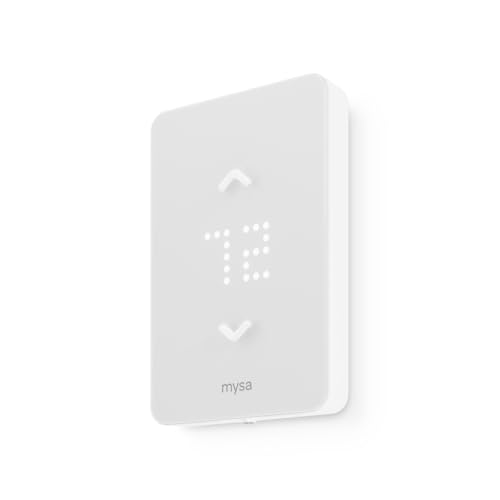
Mysa Smart Thermostat LITE - Line Voltage Electric Baseboard Heater Thermostat 120V/240V | DIY Install | HomeKit, Alexa, Google | Wi-Fi Programmable | App Control
WIFI CONNECTED SMART THERMOSTAT FOR 120V-240V electric baseboard heaters, fan-forced heaters, wall heaters, and convector units.
As an affiliate, we earn on qualifying purchases.
Mysa Smart Thermostat LITE for Baseboard Heaters
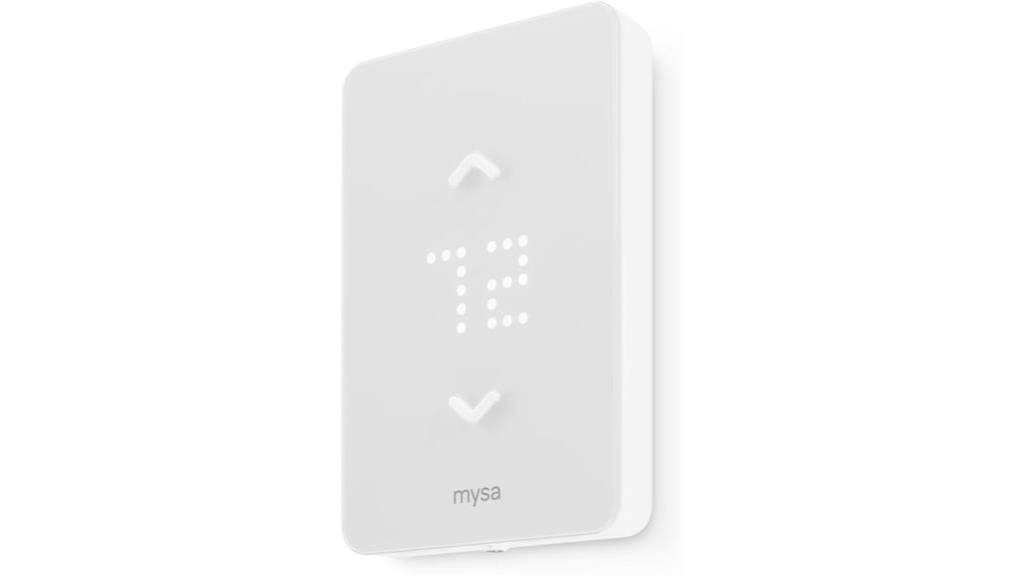
If you’re looking for an easy-to-install and energy-efficient thermostat for your electric baseboards, the Mysa Smart Thermostat LITE is an excellent choice. It controls line voltage systems like electric baseboards, fan-forced heaters, wall heaters, and convectors operating at 120V-240V. Designed for DIY installation, it replaces standard 4-wire thermostats in junction boxes with a quick 15-minute setup. Compatible with high-voltage systems, it supports both single and double pole configurations. Its sleek design includes an LCD display and touch controls, making it simple to manage your heating remotely via Wi-Fi—perfect for hard-to-heat spaces like garages or sunrooms.
Best For: homeowners and DIY enthusiasts seeking an easy-to-install, energy-efficient smart thermostat for electric baseboard and high-voltage heating systems.
Pros:
- Simple 15-minute installation with comprehensive video guide, no professional electrician needed.
- Supports remote control, scheduling, and integration with voice assistants like Alexa, Google, and Apple HomeKit.
- Compatible with various high-voltage systems (120V-240V) and supports multiple zones for customized heating.
Cons:
- Requires at least four wires, including a neutral or second live wire; not suitable for two-wire or low-voltage systems.
- Does not support older or incompatible wiring setups, limiting its use in some existing installations.
- Limited to line voltage electric heating systems; unsuitable for hydronic or low-voltage heating solutions.

meross Smart Thermostat for Electric Baseboard and in-Wall Heaters Work with HomeKit, Alexa and Google Home, 120V-240V Wi-Fi Programmable Thermostat with Easy Install, Energy Saving, 4 Wires Needed
Easy to Install: It takes less than 30 mins to install your smart thermostat, compatible with the Electric...
As an affiliate, we earn on qualifying purchases.
meross Smart Thermostat for Electric Baseboard and In-Wall Heaters
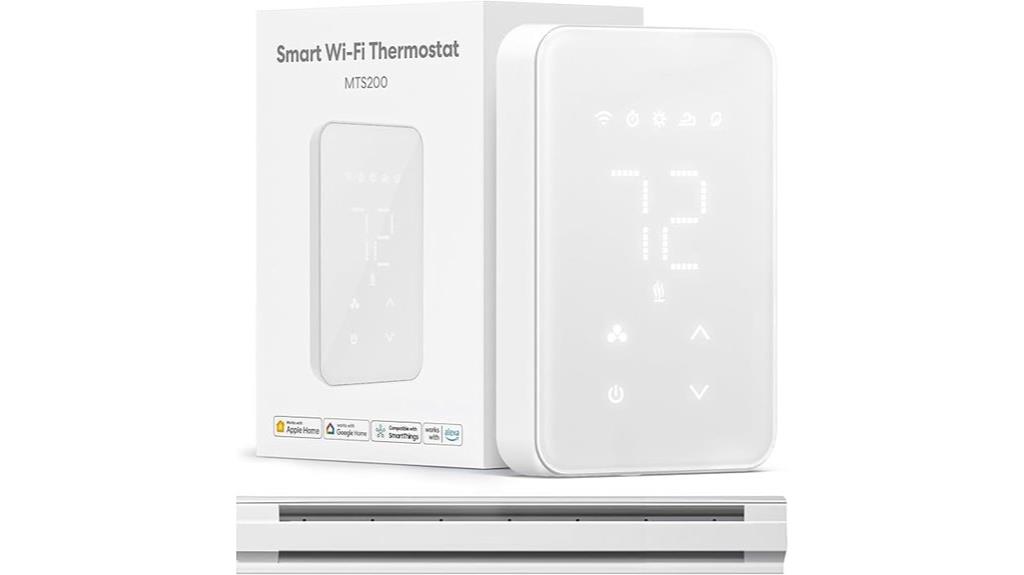
The meross Smart Thermostat is an excellent choice for homeowners seeking precise control over high-voltage electric baseboard and in-wall heaters. It supports 120V-240V systems with a maximum load of 16A, making it compatible with various electric heating setups. Easy to install in under 30 minutes, it features a sleek white LCD display and backlight for easy visibility. With integrations for Apple HomeKit, Alexa, Google Home, and SmartThings, it offers voice control and automation. Its accurate temperature regulation—within 1°F—plus energy monitoring and features like summer mode and open window detection, help optimize comfort and save energy effortlessly.
Best For: homeowners seeking precise, energy-efficient control of high-voltage electric baseboard and in-wall heaters with smart home integration.
Pros:
- Supports 120V-240V systems with up to 16A load, suitable for various high-voltage electric heaters
- Easy installation under 30 minutes with a sleek design and clear LCD display
- Compatible with multiple smart home platforms (Apple HomeKit, Alexa, Google Home, SmartThings) for versatile automation
Cons:
- Requires a 4-wire installation; not suitable for systems with fewer wires or without high-voltage capability
- Electric baseboard heater not included, so additional purchase may be necessary
- Limited to high-voltage electric heating systems, not compatible with low-voltage or other types of heaters

Mysa Smart Thermostat for Electric Baseboard Heaters 240V | Remote Control with 100% Free APP | Easy Install | HomeKit, Alexa, Google Home | Wi-Fi Programmable | Temp. & Humidity Alerts
About this item Before You Buy: Mysa works only with high/line voltage electric heating systems, including 120–240V electric...
As an affiliate, we earn on qualifying purchases.
Mysa Smart Thermostat for Electric Baseboard Heaters
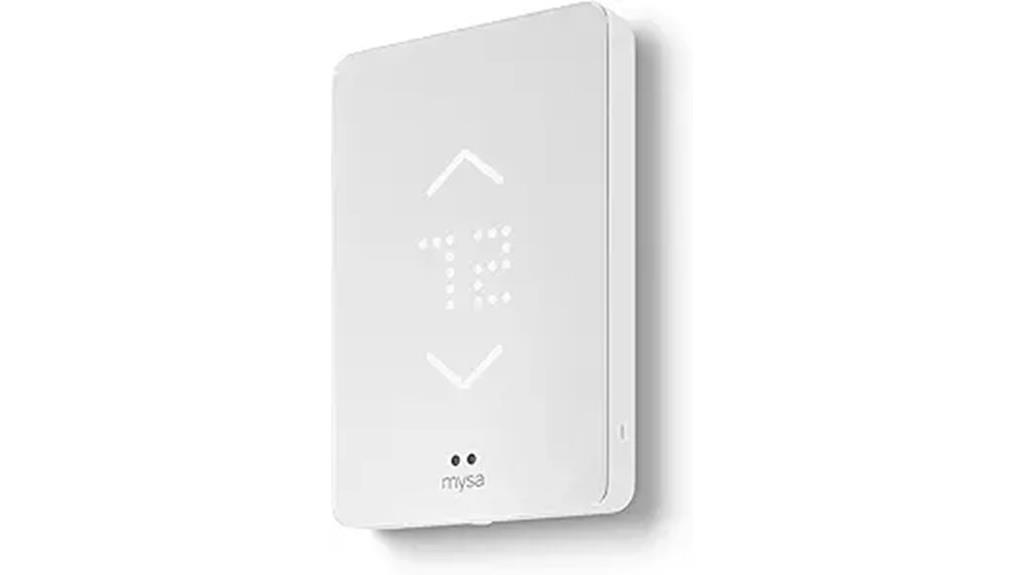
Designed specifically for high-voltage electric heating systems, the Mysa Smart Thermostat is ideal for homeowners seeking precise control over their baseboard, convector, or radiant ceiling heaters. It supports loads up to 1900W at 120V or 3800W at 240V, requiring at least four wires, including a neutral or second live wire. The sleek 3.5-inch LED display and adaptive technology make it easy to read and adjust settings. With app-based scheduling, voice control via Alexa, Google Assistant, and Apple HomeKit, plus energy insights and geofencing, the Mysa offers efficient, remote control for a comfortable, energy-saving home.
Best For: homeowners with high-voltage electric baseboard, convector, or radiant ceiling heaters seeking precise, remote, and energy-efficient temperature control.
Pros:
- Supports multiple smart home integrations including Alexa, Google Assistant, and Apple HomeKit for versatile voice control.
- Features adaptive display technology and app-based scheduling for easy, customizable operation.
- Provides energy insights, geofencing, and temperature/humidity alerts to optimize home comfort and efficiency.
Cons:
- Requires at least four wires, including neutral or second live wire, making installation incompatible with some existing low-voltage systems.
- Limited to high-voltage electric heating systems; not suitable for other types of heating or cooling setups.
- Slightly larger and heavier than basic thermostats, which may impact installation in tight spaces.

MOES Programmable Smart Thermostat for Electric Baseboard Heaters, 2.4G WiFi Compatible with 120V/240V Electric Heating, Remote Control via Smart Life/TUYA APP, Compatible with Alexa/Google Home
【NOTE】 Requires at least four wires in the electrical box, including a neutral or a second live wire,...
As an affiliate, we earn on qualifying purchases.
MOES Programmable Smart Thermostat for Electric Heaters
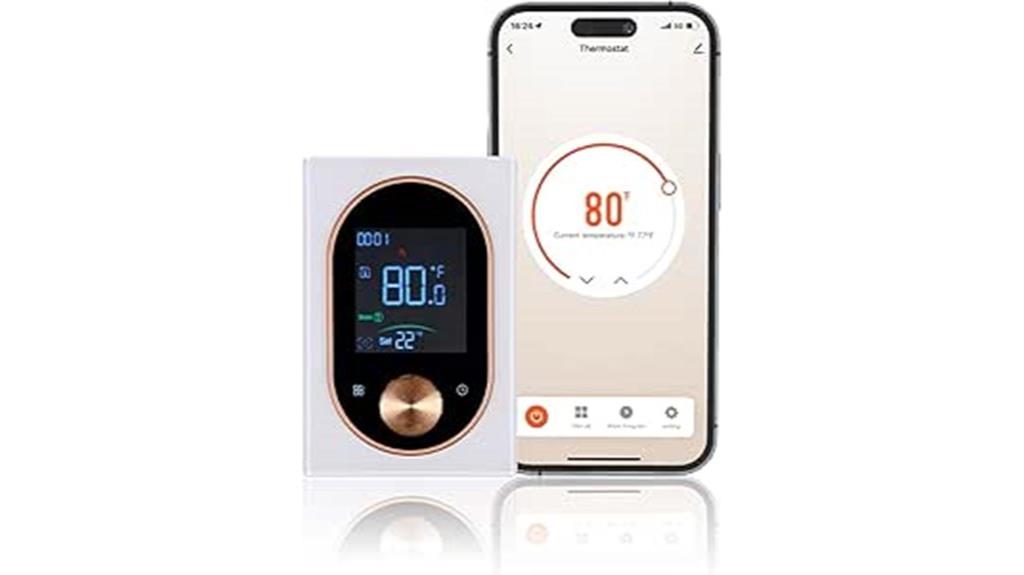
For homeowners seeking precise temperature control and remote access, the MOES Programmable Smart Thermostat is an excellent choice for electric baseboard heaters. It connects via 2.4G WiFi, allowing control through the Smart Life or TUYA app, and works with Alexa and Google Home for voice commands. Designed for high-voltage systems, it’s suitable for 120V or 240V setups. The frosted display reduces glare, while the easy-grip knob offers manual adjustments. You can schedule heating remotely, helping save energy and costs. With straightforward installation requirements, it’s a reliable, modern option that combines convenience, efficiency, and user-friendly features.
Best For: homeowners seeking precise, remote-controlled temperature management for electric baseboard heaters to improve energy efficiency and comfort.
Pros:
- Supports remote control via popular apps (Smart Life/TUYA) and voice assistants (Alexa, Google Home).
- Easy to install with clear compatibility requirements for high-voltage systems.
- Features a frosted display and manual knob for user-friendly operation.
Cons:
- Requires at least four wires, including a neutral or second live wire, for installation.
- Designed specifically for electric baseboard heaters, limiting versatility for other heating types.
- May have a learning curve for users unfamiliar with smart thermostats or app-based controls.
meross Matter Smart Thermostat for Electric Baseboard Heater
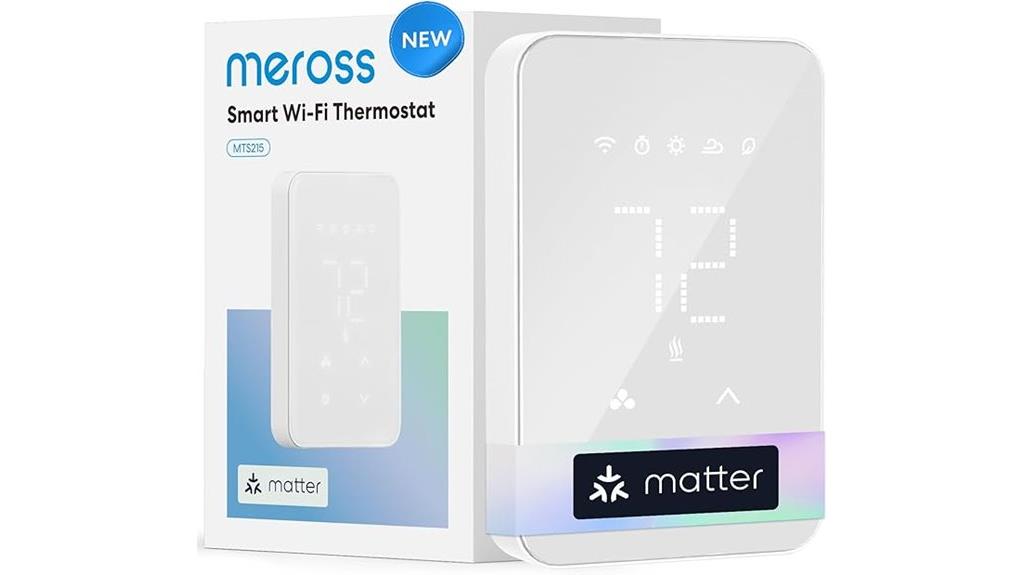
If you want to upgrade your electric baseboard heating with smart control, the meross Matter Smart Thermostat is an excellent choice for high-voltage systems. Designed for 120-240 VAC systems like baseboards, convectors, and fan-forced heaters, it seamlessly integrates with Alexa, Apple HomeKit, Google Home, and SmartThings. You can control it via voice or the Meross app from anywhere. Its smart scheduling and energy monitoring features help reduce waste and save on costs. Plus, it automatically detects open windows to prevent unnecessary heating. Overall, it offers a reliable, flexible, and energy-efficient solution to keep your home cozy with smart convenience.
Best For: homeowners with high-voltage electric heating systems seeking flexible, energy-efficient smart control compatible with major smart home platforms.
Pros:
- Seamless integration with Alexa, Apple HomeKit, Google Home, and SmartThings for versatile voice and app control
- Smart scheduling and energy monitoring features help reduce energy waste and lower costs
- Automatic open window detection prevents unnecessary heating, enhancing efficiency
Cons:
- Not compatible with 24V HVAC systems, such as heat pumps or traditional air conditioning units
- Designed specifically for high-line voltage systems; incompatible with low-voltage or 24V setups
- Requires Wi-Fi connection for remote control and automation, which may be a limitation in areas with poor internet connectivity
Honeywell Home CT410B Manual Thermostat

The Honeywell Home CT410B Manual Thermostat stands out as an excellent choice for those seeking a reliable, straightforward control solution for electric baseboard heaters without the need for programming features. Its mechanical dial offers simple, precise temperature adjustments within a 40°F to 80°F range, making it easy to maintain comfort. Designed for 120-240V systems, it supports controlling single or multiple heaters up to 5280W. With a durable, UL- and CSA-listed build, it ensures safety and reliable operation. Installation is straightforward thanks to its 4-wire configuration, and its backlit display provides clear visibility. Overall, it’s a dependable, no-fuss option for effective baseboard heating control.
Best For: homeowners or DIY enthusiasts seeking a reliable, simple, manual control solution for electric baseboard or convector heating systems without the need for programming.
Pros:
- Easy to install with a straightforward 4-wire configuration.
- Mechanical dial allows precise temperature adjustments within a broad 40°F to 80°F range.
- Durable, UL- and CSA-listed construction ensures safety and long-term reliability.
Cons:
- Lacks programmable features for automatic scheduling.
- Limited to line voltage systems (120-240V), not suitable for low-voltage setups.
- Does not include a digital display or advanced control options.
Electric Thermostat with LCD Display for Electric Baseboard Heaters
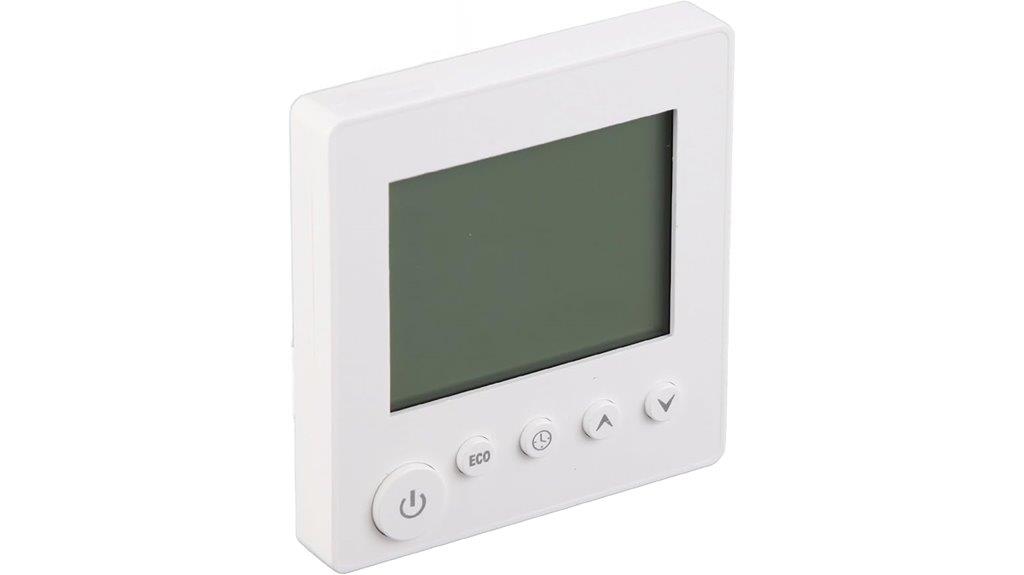
Electric thermostats with LCD displays are ideal for homeowners seeking precise and easy-to-read temperature control for their baseboard heaters. I find the programmable LCD display makes adjusting and monitoring temperature effortless, thanks to its clear, scratch-resistant screen. The high-accuracy sensor guarantees temperatures stay within ±1℃ across a 0-50℃ range, providing reliable comfort. With microcomputer control, it resists interference, enhancing performance. Its modern, surface-mount design is simple to install, and the push-button interface offers straightforward operation. Overall, this thermostat combines precision, ease of use, and durability, making it a smart choice for efficient electric heating management.
Best For: homeowners seeking precise, easy-to-read temperature control for electric baseboard heaters with reliable performance and simple installation.
Pros:
- High accuracy temperature control within ±1℃ across a 0-50℃ range.
- Clear, scratch-resistant LCD display for easy monitoring and adjustment.
- Microcomputer control enhances resistance to interference, ensuring consistent operation.
Cons:
- Rated 3.4 out of 5 stars based on user reviews, indicating moderate satisfaction.
- Limited to electric heating systems, which may not suit other heating types.
- Availability and price may vary, requiring price tracking for the best deal.
Wi-Fi Smart Thermostat for Electric Baseboard Heaters
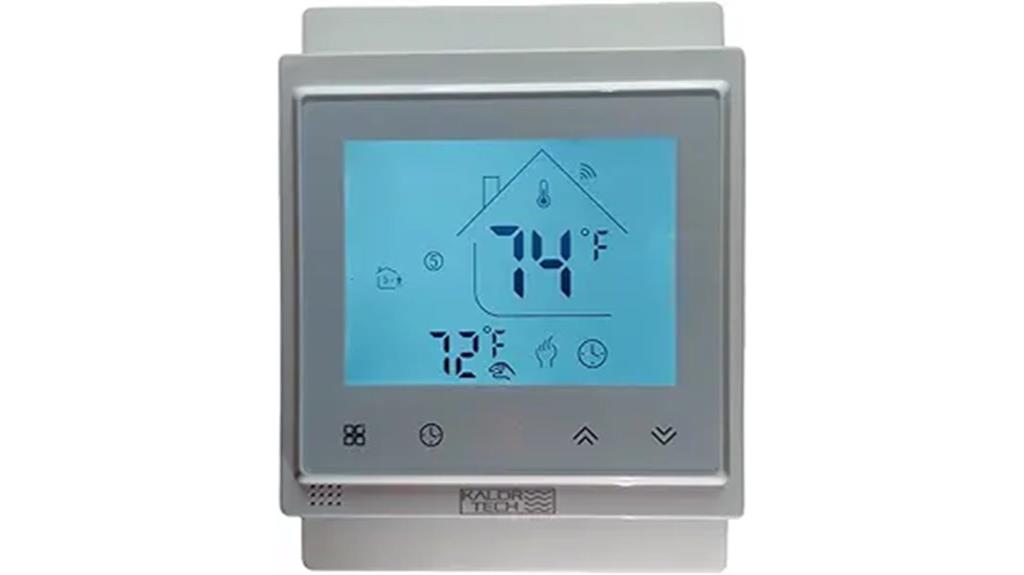
A Wi-Fi smart thermostat for electric baseboard heaters is an excellent choice for homeowners seeking convenient, remote control over their heating systems. Designed specifically for 120-240V setups, it offers easy installation with all necessary components included. The LCD display shows current and target temperatures, along with Wi-Fi status, making it simple to monitor. Through the app or voice commands with Alexa and Google Assistant, you can schedule, adjust, and control your heat from anywhere. This thermostat helps save energy by programming only when needed, while maintaining safety by preventing freezing. Its compact size and user-friendly features make it a smart, efficient upgrade for your home heating.
Best For: homeowners with electric baseboard heating systems seeking convenient remote control, scheduling, and energy savings.
Pros:
- Easy to install with all necessary components included, suitable for 120-240V systems.
- Remote management via app and voice control with Alexa and Google Assistant enhances convenience.
- Keeps room temperature slightly above freezing, preventing plumbing damage and ensuring safety.
Cons:
- Compatible only with electric baseboard heaters and not suitable for 24V central or single pole systems.
- Customer ratings are moderate at 3.9 out of 5 stars, indicating some users may experience issues.
- Requires a 2.4 MHz Wi-Fi network for setup and operation, which may not be available in all homes.
Honeywell Wi-Fi Smart Color Thermostat
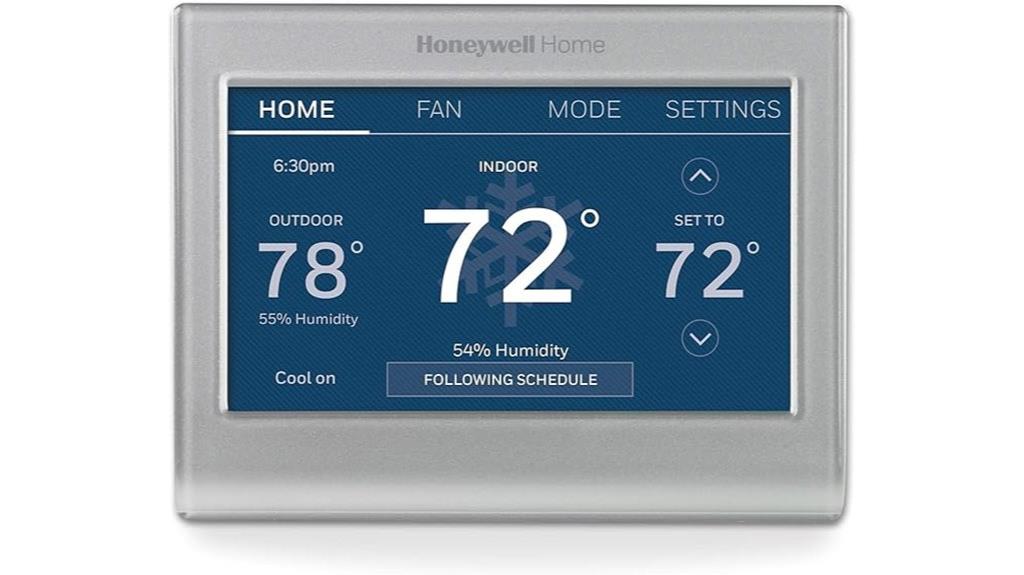
If you’re looking to upgrade your home’s heating control with a versatile, energy-efficient device, the Honeywell Wi-Fi Smart Color Thermostat is an excellent choice. It features a customizable color touchscreen, allowing you to match your decor and easily manage your schedule with flexible programming. Compatible with most heat/cool systems—excluding electric baseboards—it offers remote control via app and voice assistants like Alexa and Google Home. With energy reports, alerts for filter changes, and weather forecasts, it helps optimize comfort and efficiency. Its sleek design, energy savings features, and seamless integration make it a top smart thermostat for cozy, cost-effective heating.
Best For: homeowners seeking a customizable, energy-efficient smart thermostat compatible with most heating and cooling systems (excluding electric baseboards) for remote control and scheduling.
Pros:
- Customizable color touchscreen for personalized decor matches and easy interface.
- Compatible with popular voice assistants like Alexa and Google Home for seamless voice control.
- Offers energy reports, alerts, and weather forecasts to optimize comfort and reduce energy costs.
Cons:
- Requires a C-wire for installation, which may not be present in all homes.
- Not compatible with electric baseboard heating or heat pumps with electric backup.
- Limited to 7-day programmable scheduling, which may not suit all user preferences.
Stelpro Z-Wave KI STZW402WB+ Thermostat for Electric Baseboards and Convectors
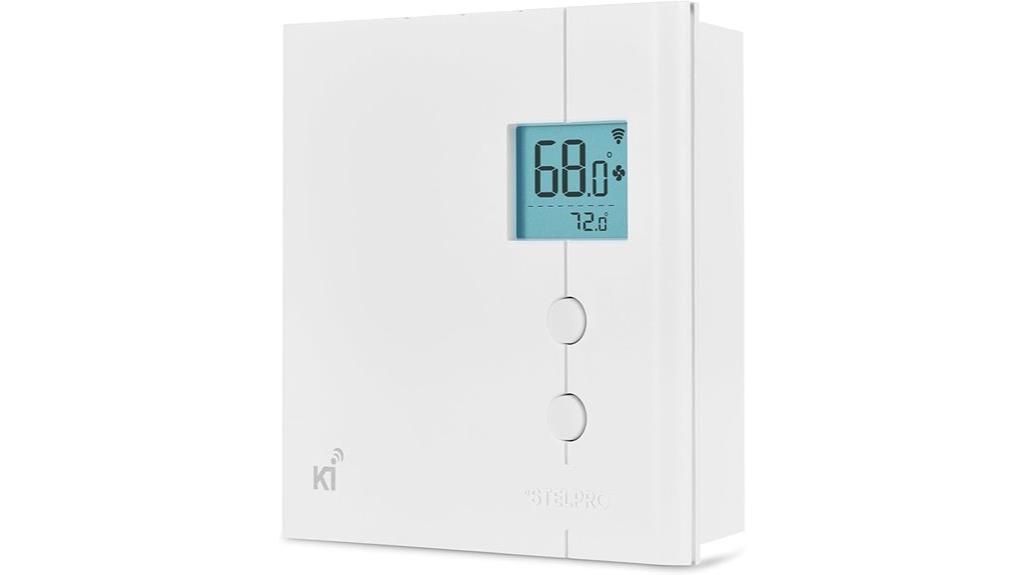
The Stelpro Z-Wave KI STZW402WB+ Thermostat is an excellent choice for homeowners seeking seamless remote control and automation of their electric baseboard heating systems. It’s compatible with major smart home platforms like SmartThings, Vera, HomeSeer, Nexia, and Wink, allowing easy integration into existing Z-Wave networks. With remote access via mobile or computer, you can set schedules, adjust temperatures, and activate ECO mode for energy savings. Its sleek design features an LCD display and backlit buttons, powered directly through line voltage without batteries. Certified to UL standards, it offers reliable, safe operation with a 5-year warranty, making it a smart and efficient heating control solution.
Best For: homeowners seeking a reliable, remotely controllable Z-Wave thermostat for electric baseboards and convectors that integrates seamlessly with popular smart home platforms.
Pros:
- Compatible with major smart home platforms like SmartThings, Vera, HomeSeer, Nexia, and Wink for easy integration
- No batteries required; powered through line voltage, simplifying installation and maintenance
- Certified to UL standards with a 5-year warranty ensuring safety and reliability
Cons:
- Discontinued model, which may limit availability and support options
- Only supports 2-wire connection, which may not be suitable for all existing setups
- Lacks advanced display features or touch controls found in some modern thermostats
meross Smart Thermostat for Home with WiFi, Alexa, Apple Home, Google Assistant, Scheduling & Energy Saving
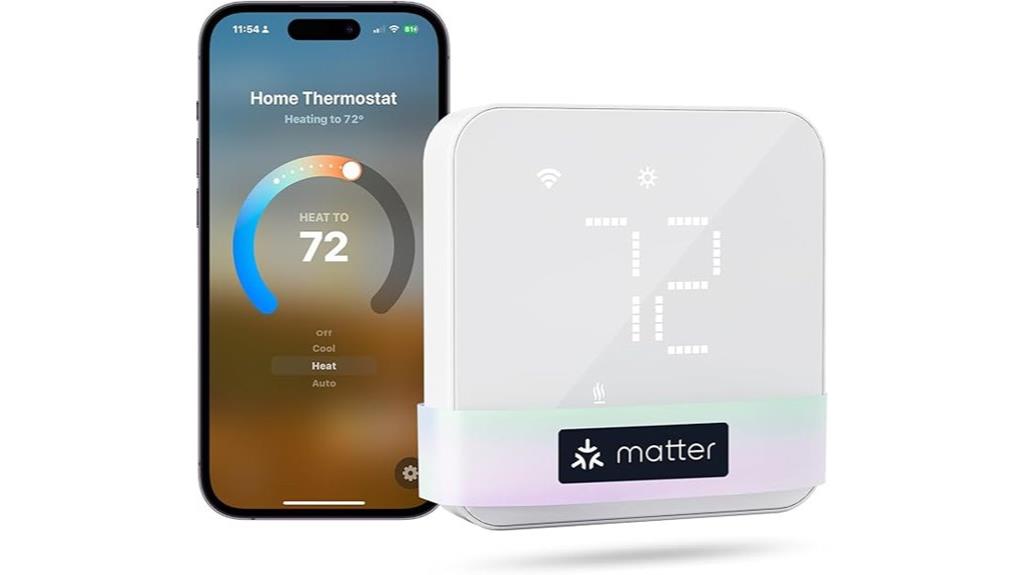
For homeowners seeking seamless control over their heating and cooling systems, the meross Smart Thermostat stands out with its compatibility with popular voice assistants like Alexa, Apple Home, and Google Assistant. It supports most HVAC systems, including heat pumps and conventional setups, though it needs a C-wire for installation. The setup is straightforward, taking about 30 minutes with the meross app. You can remotely manage your system, set schedules, and receive alerts for maintenance or malfunctions. Plus, it tracks energy use, helping you save on bills. Its sleek design and reliable connectivity make it an excellent choice for energy-efficient, smart home heating control.
Best For: homeowners seeking a versatile, energy-efficient smart thermostat compatible with popular voice assistants and most HVAC systems, including heat pumps and conventional setups.
Pros:
- Compatible with Alexa, Apple Home, Google Assistant, and Matter for seamless voice control
- Supports customizable 7x24h scheduling to optimize comfort and energy savings
- Easy DIY installation within 30 minutes using the Meross app and includes smart alerts for maintenance
Cons:
- Requires a C-wire for proper installation; incompatible with electric baseboard heaters
- Only supports 2.4GHz Wi-Fi networks, limiting connectivity options in some environments
- No batteries needed, but power dependency on 24V may require additional setup for certain systems
Cadet F Series Double Pole Built-In Thermostat
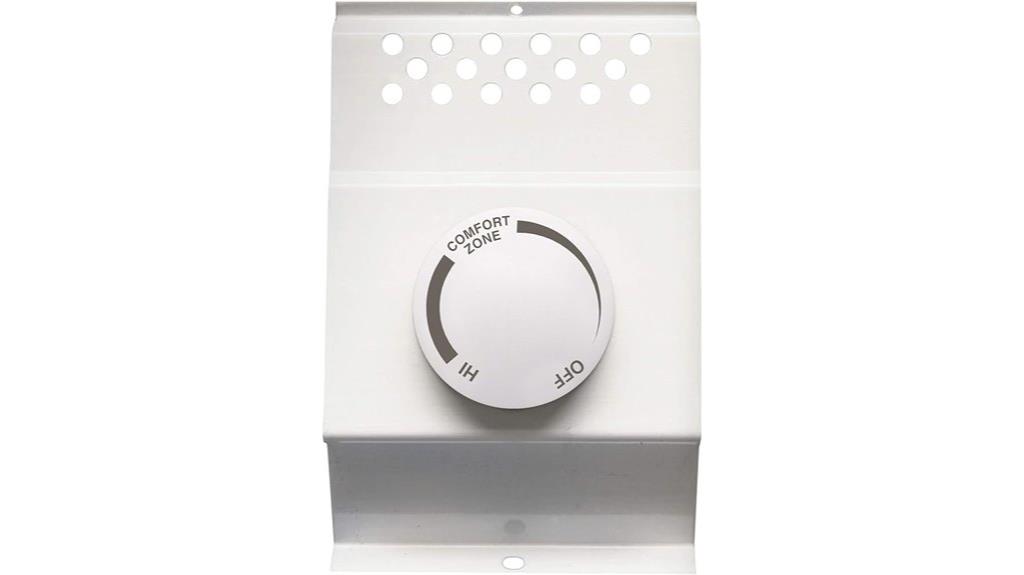
The Cadet F Series Double Pole Built-In Thermostat is an excellent choice for those seeking reliable, precise temperature control in their electric baseboard heating systems. It features a 22 Amp capacity and works with 120/208/240 Volt systems, ensuring versatile compatibility. The thermostat offers an adjustable temperature range from 45º to 80ºF, controlled easily via a large twist dial. Its sleek white finish matches the heaters seamlessly, and it mounts conveniently to either end of the baseboard, simplifying installation. Designed specifically for Cadet F series heaters, this thermostat provides simple, consistent control with a low setting for energy efficiency.
Best For: Homeowners or contractors seeking a reliable, easy-to-install thermostat for Cadet F series electric baseboard heaters to achieve precise temperature control.
Pros:
- Compatible with 120/208/240 Volt systems for versatile use
- Adjustable temperature range from 45º to 80ºF for customizable comfort
- Easy installation without additional wiring by mounting to either end of the heater
Cons:
- Designed specifically for Cadet F series heaters, limiting compatibility with other models
- Manual twist dial may require frequent adjustment for optimal comfort
- Single pole operation may not be suitable for all electrical setups
Meross Smart Wi-Fi Thermostat Controlled Outlet Plug
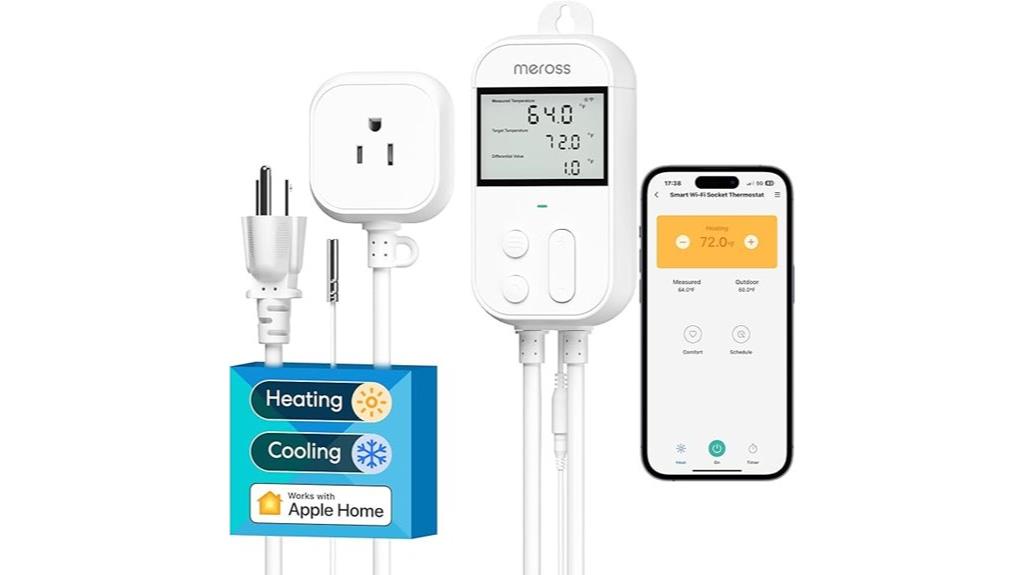
If you’re looking to effortlessly control your heating and cooling appliances remotely, the Meross Smart Wi-Fi Thermostat Controlled Outlet Plug is an excellent choice. It offers easy operation via buttons, the free Meross app, or voice commands with Alexa, Google Home, Apple Home, and SmartThings. The LCD display with backlight guarantees visibility in the dark, and support for Celsius and Fahrenheit makes temperature adjustments simple. With features like timer modes, cycle scheduling, and compressor protection, it keeps your appliances safe and efficient. Its compatibility with various devices and remote control capabilities make managing your home’s climate both convenient and energy-efficient.
Best For: homeowners seeking an easy-to-use, remote-controlled thermostat outlet for managing heating and cooling appliances safely and efficiently.
Pros:
- Supports multiple voice control platforms including Alexa, Google Home, Apple Home, and SmartThings for seamless smart home integration.
- Features an LCD backlit display for clear visibility in dark environments and customizable temperature units (Celsius/Fahrenheit).
- Includes safety features like compressor protection, child lock, and sensor failure alerts to ensure appliance safety and reliable operation.
Cons:
- The LCD display may flash or turn off after prolonged inactivity, requiring hold Mode Button for activation.
- Maximum load capacity is 15A (1800W at 120V), which may limit use with high-power appliances.
- Requires Wi-Fi connectivity for full remote control and automation features, which may not be suitable for environments with unstable internet.
MAXKOSKO WiFi Smart Thermostat for Electric Floor Warming System
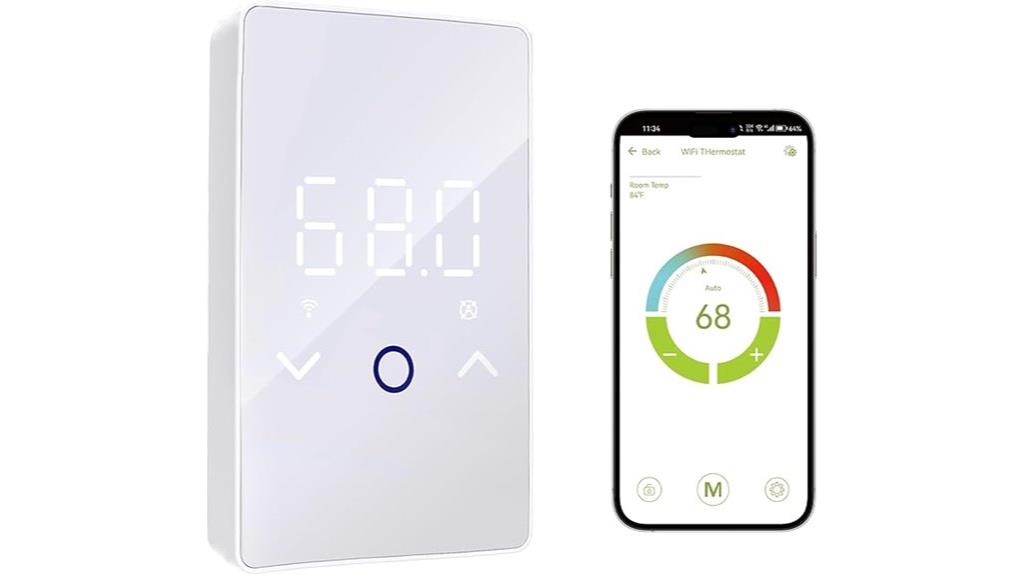
When looking to upgrade your electric floor heating system with smart technology, the MAXKOSKO WiFi Smart Thermostat stands out as an ideal choice. It features a sleek touchscreen LED display and is compatible with 120V and 240V systems, making it versatile for most setups. You can control it remotely via the Smart Life app, adjusting temperatures from anywhere, or use voice commands through Alexa and Google Assistant for hands-free convenience. Its customizable scheduling helps maximize energy savings while maintaining comfort. Easy to install with a clear manual and a 15-foot floor sensor, it offers reliable performance and insightful energy data, ensuring efficient, user-friendly control.
Best For: homeowners seeking an easy-to-install, energy-efficient smart thermostat for their electric floor heating system with remote control and voice command capabilities.
Pros:
- Compatible with 120V and 240V systems for versatile installation options
- Easy DIY installation with a clear manual and reliable 15 ft floor sensor
- Supports remote control via the Smart Life app and voice commands through Alexa and Google Assistant
Cons:
- May require WiFi connectivity for full functionality, which could be a limitation in weak signal areas
- Compatibility is broad but not guaranteed with all underfloor heating systems; some setups may need additional adjustments
- Limited to electric floor warming systems; not suitable for other heating types
Honeywell Smart Color Thermostat with Wi-Fi and Alexa Compatibility

For homeowners seeking precise control and energy savings, the Honeywell Smart Color Thermostat with Wi-Fi and Alexa compatibility stands out as an ideal choice. It features an ENERGY STAR certification, helping reduce energy use and costs, while its customizable, high-definition color touchscreen displays indoor/outdoor temperature, humidity, and weather forecasts. The thermostat learns your habits with Honeywell’s Smart Response technology, optimizing comfort and efficiency. It supports remote management via app or voice assistants like Alexa, Google, and Cortana. Designed for various heating and cooling systems, it offers flexible programming, alerts, and auto daylight savings updates, making it a smart, user-friendly addition to energy-conscious homes.
Best For: homeowners seeking precise temperature control, energy savings, and smart home integration with customizable displays and remote management.
Pros:
- ENERGY STAR certified for energy efficiency and cost savings
- High-definition, customizable color touchscreen display with weather and humidity info
- Compatible with various smart home platforms like Alexa, Google Assistant, and Cortana
Cons:
- Requires a C-wire for power, which may not be available in all systems
- Not compatible with electric baseboard heating (120-240V) or certain oil systems without C-wire
- Slightly larger size may require more wall space and proper installation planning
Factors to Consider When Choosing a Baseboard Heater Thermostat Smart Control
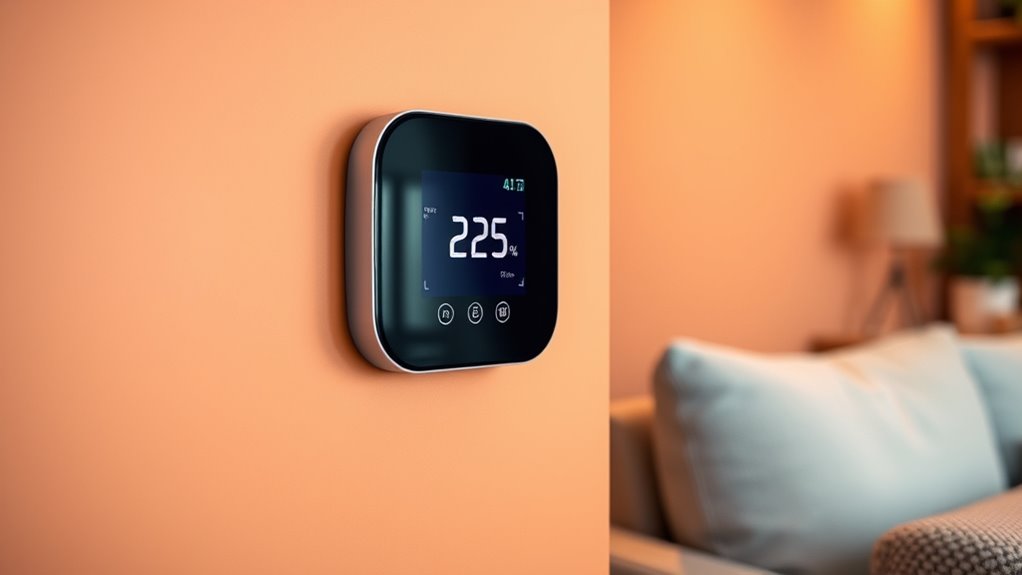
When selecting a smart thermostat for your baseboard heater, I consider compatibility with my current system and how easily it integrates with my smart home setup. I also look at how accurately it can control temperature, how simple it is to install, and what power requirements it has. These factors help guarantee I choose a control that’s reliable and fits seamlessly into my home.
Compatibility With Systems
Choosing a smart control thermostat for your baseboard heater requires ensuring it’s compatible with your existing electrical system and smart home devices. Most electric baseboard heaters operate on high voltages between 120V and 240V, so your thermostat must support this range. Verify that it supports the correct wiring setup, usually needing at least four wires, including a neutral or second live wire—low-voltage or two-wire systems won’t work. It should be designed explicitly for line voltage electric heating systems like baseboards or radiant heaters. Additionally, check if the thermostat integrates with your smart home ecosystem—whether that’s Apple HomeKit, Alexa, Google Assistant, or Z-Wave—to enable voice control and automation. Finally, confirm that its wattage and amperage ratings match your heater’s specifications to avoid overloads.
Smart Home Integration
Are you making sure your smart control thermostat for your baseboard heater works seamlessly with your existing smart home system? It’s essential to verify that the thermostat supports your preferred ecosystem, whether that’s Apple HomeKit, Alexa, Google Assistant, or SmartThings, for smooth integration. Check if it’s compatible with your Wi-Fi network, especially if you use 2.4GHz or 5GHz bands, to avoid connectivity issues. Also, confirm the device supports communication protocols like Z-Wave, Zigbee, or Matter, which are common standards for smart devices. Look for features like voice control, remote app access, and automation capabilities—these make managing your heating more convenient and efficient. Additionally, smart scheduling, geofencing, and scene integration help optimize comfort and energy savings within your smart home setup.
Temperature Accuracy
How precisely your smart thermostat maintains the desired temperature can substantially impact both comfort and energy savings. A accurate thermostat should keep the room within about ±1°C or ±1°F, ensuring consistent comfort without wasting energy. Exact temperature sensing is essential to prevent overheating or underheating, especially in tricky areas or sensitive spaces. High-quality thermostats use sensitive sensors combined with microprocessor control to detect and respond to temperature changes quickly and reliably. Many models offer calibration options or adjustable offset settings, helping fine-tune accuracy based on sensor placement or room variability. Regular calibration and maintenance also play a role in sustaining ideal accuracy over time. Selecting a thermostat with high temperature precision ensures your heating remains comfortable and efficient, avoiding unnecessary energy use and temperature fluctuations.
Installation Ease
When selecting a smart control thermostat for your baseboard heater, installation simplicity can guarantee you time and frustration. Look for models that come with clear, detailed instructions or a helpful video guide to streamline setup. Choose thermostats that support standard wiring configurations, usually requiring four wires, including a neutral or second live wire. Make sure the thermostat is compatible with your existing high-voltage system (120V-240V) to avoid electrical issues. Opt for units with user-friendly mounting options, whether directly on the heater or on the wall, to simplify installation. Additionally, select models with accessible control panels or touchscreens, allowing quick setup and adjustments without needing specialized tools. Prioritizing these features assures a smoother, more manageable installation process.
Power Requirements
Choosing a smart thermostat for your baseboard heater requires paying close attention to power requirements to guarantee safe and reliable operation. First, confirm the thermostat supports your heater’s voltage, typically 120V or 240V, to avoid compatibility issues. Confirm the device’s power input needs, such as whether it requires a neutral wire or a second live wire, matching your existing wiring setup. It’s also essential to verify that the thermostat can handle your heater’s maximum wattage load, which can reach up to 3800W, to prevent overloads. Additionally, check if it needs a dedicated power source or can share a circuit with other devices. Lastly, verify the thermostat operates on AC power only, as some models aren’t suitable for low-voltage or DC systems.
Scheduling Features
Smart thermostats with robust scheduling features can markedly enhance your comfort and energy savings. I look for models that let me set different temperatures for specific times and days, so I’m not heating unnecessarily. Advanced options like vacation modes, holiday settings, and room-by-room schedules give me flexibility and improve efficiency. Some thermostats even learn my habits over time, automatically adjusting to my preferences. The ability to modify schedules remotely via a smartphone app means I can adapt my heating plans anytime, anywhere. Clear, user-friendly interfaces and visual schedule displays help me understand and tweak my routines easily. Overall, good scheduling features make it simple to customize my heating, ensuring comfort when I need it and saving energy when I don’t.
Energy Monitoring
Energy monitoring features add a valuable layer to smart thermostats, allowing me to see how much power my baseboard heater uses in real time. This insight helps me identify when my heater consumes the most energy, so I can adjust usage accordingly. The historical data provided also reveals long-term trends, helping me optimize my heating schedule and improve efficiency. Accurate energy monitoring can highlight inefficiencies, enabling me to make tweaks that lower my energy bills. Some thermostats even display detailed energy reports directly on their app or interface, making it easy to understand my savings. By choosing a thermostat with these features, I can promote eco-friendly living and reduce my carbon footprint, all while maintaining a cozy home.
Security and Safety
Have you considered how crucial safety and security are when selecting a baseboard heater thermostat with smart controls? Ensuring the thermostat has UL or CSA certification is essential for meeting electrical safety standards. Look for models with overheat protection to prevent fire hazards and damage. Proper wiring compatibility, including neutral or second live wires, guarantees safe installation. It’s also essential to choose devices that support safety alerts like temperature or humidity warnings, helping you prevent system failures. Additionally, prioritize thermostats with secure Wi-Fi and app connectivity to avoid unauthorized access. These features not only protect your home but also give you peace of mind, knowing your heating system is both safe and secure. Safety should always come first when upgrading your heating controls.
Frequently Asked Questions
How Do Smart Thermostats Integrate With Existing Home Automation Systems?
Smart thermostats typically integrate with existing home automation systems via Wi-Fi or Zigbee/Z-Wave protocols. I connect them through dedicated apps or hubs, allowing me to control heating remotely and automate routines. I appreciate how seamlessly they sync with my smart lights, locks, and sensors, giving me a unified experience. This integration not only boosts convenience but also helps me save energy by optimizing heating schedules based on my daily habits.
Can These Thermostats Be Controlled Remotely Without Internet Access?
Absolutely, you can control these thermostats remotely without internet. I had a client who used a smart thermostat with a local Wi-Fi network to adjust her heater while camping nearby. As long as your device stays connected to your home’s Wi-Fi, you can control the thermostat through your phone or tablet without needing internet access. It’s perfect for quick adjustments or when internet goes down.
What Is the Typical Installation Process for These Smart Baseboard Heater Controls?
I typically start by turning off the power at the breaker to guarantee safety. Then, I remove the existing thermostat and connect the smart control’s wires according to the manufacturer’s instructions, usually matching color-coded wires. After securing everything, I mount the smart thermostat on the wall, turn the power back on, and follow the setup prompts. It’s straightforward, but I always double-check wiring and consult a professional if unsure.
Are There Any Compatibility Issues With Specific Baseboard Heater Models?
Say you have an older baseboard heater—compatibility can be tricky. I’ve seen cases where smart thermostats don’t fit or connect properly with certain models, like those with integrated wiring or unique voltage specs. Always check the manufacturer’s compatibility list first. For example, some newer thermostats work great with standard 120V heaters but may need adapters or professional wiring for others. It’s worth verifying before installation.
How Do Smart Thermostats Impact Overall Energy Savings and Utility Bills?
Smart thermostats greatly cut energy use and lower utility bills by optimizing heating schedules and adjusting temperatures based on my habits. I love how they learn my preferences and turn the heat down when I’m away or sleeping, preventing waste. This personalized control ensures I stay cozy while saving money, making my home more energy-efficient and reducing environmental impact. I highly recommend smart thermostats for smarter, cost-effective heating.
Conclusion
Choosing the right smart thermostat is like finding the perfect key to open cozy, energy-efficient warmth. With options ranging from simple controls to advanced Wi-Fi connectivity, you can tailor your heating system to fit your lifestyle. Whether you prefer a sleek design or smart home integration, there’s a control out there for you. Invest a little time now, and you’ll enjoy a warmer, more efficient home—like a gentle hug on a chilly day.