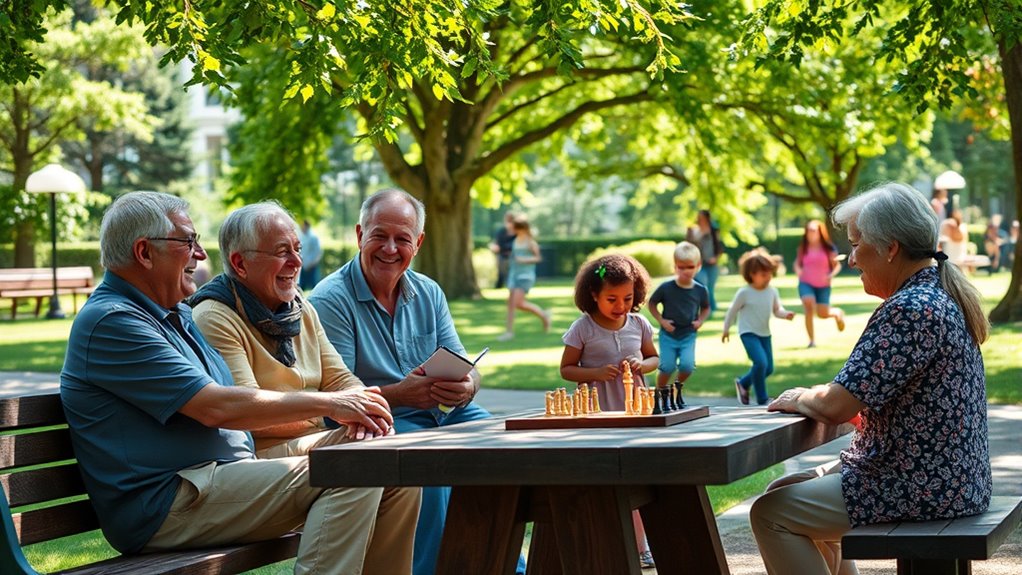

Engaging in social activities regularly boosts your memory and overall cognitive health by stimulating your brain, reducing loneliness, and creating meaningful emotional bonds. These interactions challenge your brain with conversations, planning, and learning new perspectives, which support neuroplasticity. Staying socially connected also helps you manage stress, which benefits brain function. The more you participate in diverse social settings, the stronger your cognitive resilience becomes. Keep exploring, as expanding your social engagement can profoundly protect your mental sharpness over time.
Key Takeaways
- Engaging in social activities stimulates neural pathways, helping to preserve cognitive functions and memory.
- Social interactions challenge the brain through recall, planning, and communication, supporting memory retention.
- Diverse social experiences promote neuroplasticity, encouraging the growth of new brain connections vital for memory health.
- Positive emotional interactions during socializing reduce stress and enhance brain resilience, benefiting memory function.
- Regular social engagement counters loneliness, which is linked to brain volume loss and increased dementia risk.

Engaging in social activities can considerably influence your memory health, especially as you age. When you stay socially active, you reduce feelings of elderly loneliness, which can otherwise negatively impact your mental sharpness. Loneliness isn’t just about feeling isolated; it’s linked to cognitive decline and a higher risk of memory problems. By participating in group events, conversations, or community projects, you create opportunities for meaningful interactions that keep your brain engaged. This cognitive engagement isn’t just about passing the time; it actively stimulates neural pathways, helping to preserve your memory and overall mental function.
When you make efforts to stay connected with friends, family, or community groups, you provide your brain with challenging tasks, like recalling names, planning activities, or solving social dilemmas. These mental exercises improve your cognitive resilience, making your memory more robust over time. In contrast, prolonged periods of loneliness can lead to decreased brain volume in areas associated with memory, increasing the risk of conditions like dementia. That’s why social engagement isn’t merely about socializing; it’s a crucial part of maintaining your cognitive health.
Participating in social activities also gives your brain a break from routine, allowing you to experience new environments, ideas, and perspectives. This variety stimulates different parts of your brain and fosters neuroplasticity—the brain’s ability to adapt and rewire itself. As you learn new skills or engage in different social settings, you enhance your cognitive engagement, which is directly linked to better memory retention. You don’t have to join large groups or attend every event; even small, consistent interactions can have significant benefits. Whether it’s a weekly coffee date, a hobby club, or volunteering, these activities keep your mind active and your social network strong.
Furthermore, social interactions often involve emotional components like laughter, empathy, and shared experiences, which also support brain health. Positive emotions released during social engagement can reduce stress levels, a factor known to impair memory over time. That’s why fostering social bonds is important—not just for your mental health but for your cognitive longevity. Interestingly, brain plasticity can be enhanced through consistent social engagement, further supporting memory preservation. In summary, staying socially active helps combat elderly loneliness and promotes ongoing cognitive engagement. This dual benefit supports your memory health, making it easier to recall information, process new data, and enjoy a higher quality of life as you age. So, make an effort to connect regularly—your brain will thank you.
Frequently Asked Questions
How Do Social Activities Affect Different Types of Memory?
Social activities boost different types of memory by promoting social bonding and cognitive engagement. When you participate in conversations or group events, you strengthen your episodic and working memory as you recall details and stay mentally active. Social bonding helps reduce stress, which benefits overall brain health. Engaging with others keeps your mind sharp, improves recall, and supports long-term memory retention, making social activities a key part of maintaining your memory health.
Can Online Social Interactions Improve Memory Health?
Yes, online social interactions can improve your memory health. Virtual friendships and digital communication keep your brain engaged by stimulating conversations, encouraging cognitive effort, and fostering emotional connections. These activities challenge your memory, attention, and language skills, helping to maintain mental agility. By regularly participating in virtual interactions, you give your brain valuable exercise, which can slow cognitive decline and support overall memory health.
What Role Does Loneliness Play in Memory Decline?
Loneliness considerably contributes to cognitive decline by increasing the effects of social isolation on your brain. When you feel lonely, your risk of memory problems rises because it can lead to stress and reduced mental engagement. Addressing loneliness through social activities or support networks helps mitigate these effects, promoting better memory health. Staying connected keeps your brain active, reducing the negative impact of social isolation and loneliness on cognitive function.
Are Certain Social Activities More Beneficial for Memory Retention?
Ever wonder if some social activities boost your memory more than others? Engaging in community events and social bonding activities can be especially beneficial for memory retention. These interactions challenge your brain, improve cognitive skills, and foster emotional connections. Participating regularly helps keep your mind sharp. So, why not prioritize activities that promote community engagement and social bonding? They’re not just fun—they’re essential for maintaining your memory health.
How Does Age Influence Social Activity’s Impact on Memory?
As you age, your age-related cognitive changes can influence how social activity impacts your memory. Engaging in social activities helps maintain cognitive function, but patterns may shift with age, making some activities more effective than others. Staying socially active encourages mental stimulation, which supports memory health. You should focus on maintaining consistent social interactions, adapting activities to your abilities, and staying connected to help counteract age-related cognitive decline.
Conclusion
By staying socially active, you strengthen your memory like a gardener tending to delicate blooms, ensuring they flourish amidst life’s seasons. Every conversation and shared moment plants seeds of cognitive resilience, helping you weather the storms of aging. Remember, social interactions are the sunlight that nurtures your mind’s growth. Embrace connections now, because they’re the bridges that carry your memories safely across the river of time. Stay engaged, and watch your mind blossom.