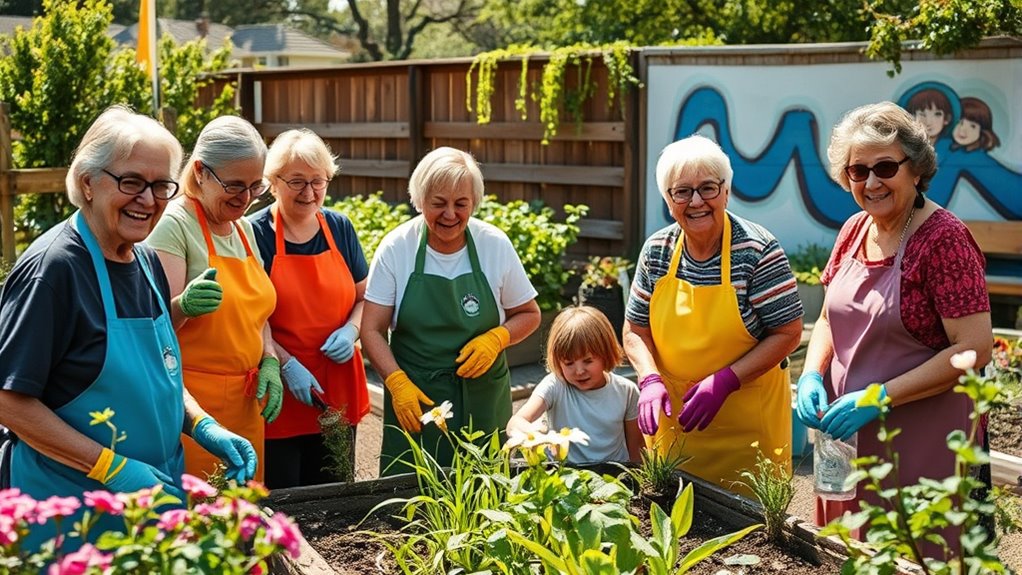

Getting involved in community volunteering provides you with meaningful social outlets, helping you build connections and combat loneliness. It can boost your mental well-being, keep your mind sharp, and give you a sense of purpose and achievement. By engaging with others who share your interests, you create a supportive environment that nurtures your emotional health. If you want to discover more ways to enhance your social life and mental health through volunteering, there’s plenty to explore ahead.
Key Takeaways
- Community volunteering offers seniors meaningful social interactions, reducing loneliness and fostering a sense of belonging.
- Participating in volunteer activities helps seniors develop new skills and boosts their confidence.
- Regular volunteering routines promote mental stimulation and emotional well-being.
- Engaging with others through community service strengthens social bonds and promotes inclusiveness.
- Volunteering contributes to seniors’ overall mental health by providing purpose and a positive self-image.

Have you ever wondered how community volunteering can positively impact seniors’ lives? When you get involved in volunteer activities, you’re not just helping others; you’re also enriching your own life and enhancing your overall well-being. For seniors, volunteering can serve as an essential social outlet, providing opportunities for meaningful social engagement that might otherwise be limited by health concerns or mobility issues. Engaging with others helps combat feelings of loneliness and isolation, which are common challenges faced by many seniors. When you participate in community programs, you create regular interactions that foster a sense of belonging and purpose, both of which are fundamental for maintaining good mental health.
Social engagement through volunteering offers seniors a chance to connect with people who share similar interests or values. These interactions can be as simple as chatting with fellow volunteers, assisting in community gardens, or participating in local events. Such activities stimulate the mind and encourage emotional well-being, reducing the risk of depression and anxiety. As you spend time volunteering, you’re likely to notice improvements in mood and outlook, because social connections are proven to boost mental health. The routine of volunteering can also provide structure to daily life, which is important for mental stability and resilience. Additionally, high refresh rates in projectors can help create a more immersive viewing experience during leisure activities, contributing to relaxation and mental engagement.
Moreover, volunteering allows seniors to develop new skills or rekindle old passions, which can boost confidence and foster a sense of achievement. This sense of purpose is essential because it helps seniors feel valued and useful, counteracting feelings of uselessness or decline. When you help others, it’s easy to see the tangible impact of your efforts, reinforcing a positive self-image. Plus, the social aspect of volunteering encourages ongoing interaction, which keeps cognitive functions sharp and promotes mental agility. These activities often involve problem-solving, planning, or teamwork, all of which contribute to maintaining mental acuity.
Participating in community volunteering isn’t just about giving back; it’s about creating a supportive environment where seniors can thrive emotionally and socially. The benefits extend beyond individual health—volunteering also strengthens community bonds, making neighborhoods more inclusive and caring. If you’re looking for a way to help seniors stay connected and mentally healthy, volunteering provides an accessible, rewarding avenue. By encouraging seniors to participate in community efforts, you help foster social engagement that nurtures mental health, keeps minds active, and creates a vibrant, supportive environment where seniors can enjoy a richer, more connected life.
Frequently Asked Questions
How Can Seniors Find Suitable Volunteer Opportunities in Their Area?
You can find suitable volunteer opportunities in your area by exploring local volunteer directories online or at your community center. These resources list various options tailored to seniors’ interests and schedules. Additionally, visiting your community center allows you to ask staff about upcoming volunteer projects. By actively seeking out these resources, you’ll discover meaningful ways to engage, connect, and contribute to your community while enjoying social interactions.
What Are the Health Benefits of Volunteering for Seniors?
Volunteering offers seniors numerous health benefits, including improved mental stimulation and increased social engagement. When you volunteer, you keep your mind active, reducing the risk of cognitive decline. It also helps you connect with others, combat loneliness, and build a supportive community. These social interactions boost your mood and overall well-being. By giving back, you stay mentally sharp and socially connected, which contributes to a healthier, more fulfilling life.
Are There Age Restrictions for Senior Volunteer Programs?
You might think age restrictions in senior volunteer programs are strict, but they’re usually quite flexible. Most programs set age eligibility based on general senior age brackets, like 55 or 60+, with some having specific program restrictions depending on physical or skill requirements. Always check each program’s guidelines, as they aim to include as many seniors as possible, making it easier for you to find a perfect fit for your interests and abilities.
How Can Seniors Balance Volunteering With Other Commitments?
You can balance volunteering with other commitments by practicing effective time management and flexible volunteer scheduling. Prioritize your tasks and set aside specific times for volunteering that fit your routine. Communicate your availability clearly with volunteer coordinators, so they can accommodate your schedule. Remember, it’s okay to adjust your volunteer hours as needed, ensuring you enjoy your social outlet without feeling overwhelmed or neglecting other responsibilities.
What Training or Support Is Available for Senior Volunteers?
You can access training like volunteer orientation sessions that cover your roles and expectations. Additionally, many organizations offer mentorship programs, where experienced volunteers guide newcomers, helping you build confidence and skills. These supports guarantee you’re well-prepared and comfortable, making your volunteering experience more enjoyable and impactful. Don’t hesitate to ask the organization about available training and mentorship opportunities—they’re there to help you succeed.
Conclusion
As you consider joining a community volunteer project, remember that every moment you dedicate could open unexpected connections and opportunities. The true impact isn’t just on those you help, but also on your own sense of purpose and belonging. Will you discover a new passion, or perhaps form a friendship that changes everything? The choice is yours—step into the unknown, and see what surprises await. Your next chapter might be just one volunteer moment away.