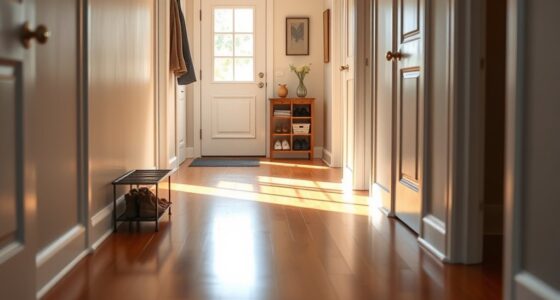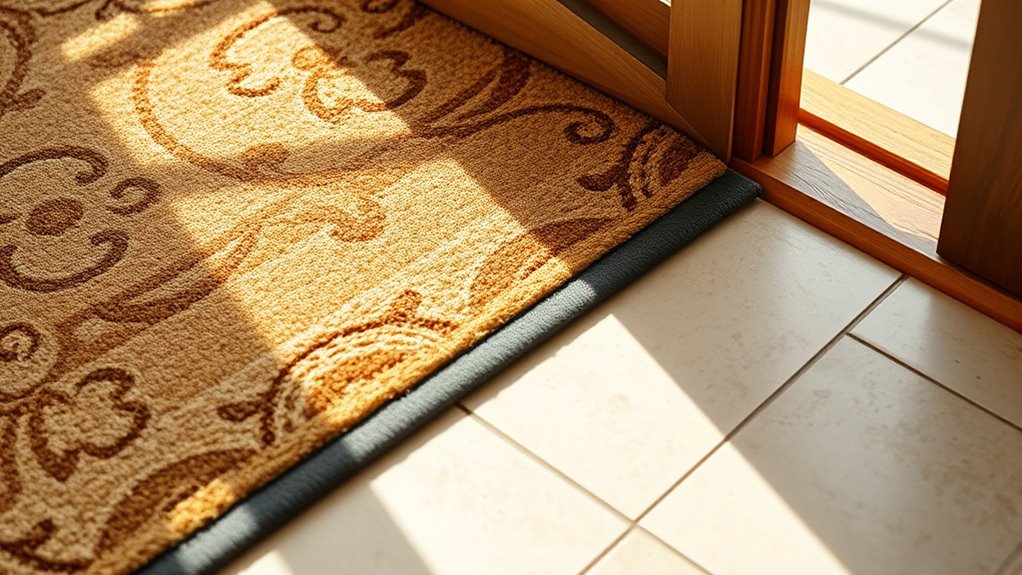

To evaluate rugs, mats, and thresholds for hazards, check their materials and grip to prevent slips, guaranteeing they’re securely anchored with non-slip pads or tape. Inspect thresholds regularly for uneven edges, damage, or debris that could cause trips. Maintain proper placement in high-traffic or moisture-prone areas, and assure transitions are level and smooth. Attention to these details helps eliminate hazards—continue to explore ways to keep your space safer and more secure.
Key Takeaways
- Select slip-resistant mats, like rubber-backed options, to enhance safety on various flooring types.
- Securely anchor rugs with non-slip pads or tape to prevent movement and tripping hazards.
- Regularly inspect thresholds for wear, debris, and uneven surfaces, repairing or replacing as needed.
- Use ramps or beveled edges at transitions to ensure smooth, safe floor height changes.
- Maintain cleanliness and flat positioning of rugs, mats, and thresholds to reduce slip and trip risks.

Ensuring safety in your home or workplace starts with evaluating rugs, mats, and thresholds to identify potential hazards. These areas often seem harmless but can pose significant risks if not properly assessed. One of the primary concerns is slip prevention, which hinges on selecting the right materials and placement. You need to consider how well a rug or mat adheres to the floor, especially in high-traffic or moisture-prone areas. For example, rubber-backed mats often provide better slip resistance compared to smooth fabric options, reducing the chances of slips and falls. Additionally, making sure that rugs are flat and securely anchored prevents tripping hazards. You can use non-slip pads or tape underneath to keep them in place, especially on slippery surfaces like tile or hardwood floors.
Another critical aspect is flooring compatibility. Not all rugs and mats are suited for every type of flooring. For instance, some adhesives or backing materials may damage delicate surfaces like hardwood or vinyl, leading to costly repairs. Conversely, certain flooring types may require specific types of mats to ensure stability and safety. Understanding the compatibility guarantees that you don’t inadvertently create new hazards while trying to prevent others. For example, you wouldn’t want a rug with a rough backing on a polished wood floor, as it might scratch or stain the surface. Conversely, a thin mat with poor grip on a tile floor can slide easily, increasing the risk of accidents. When choosing rugs and mats, always verify that their materials are compatible with your flooring type and that they offer sufficient slip resistance.
Thresholds, doorways, and transitions between different flooring surfaces also demand attention. These areas are often overlooked but are common spots for tripping or slipping. Make sure thresholds are flush with the floor and free of sharp edges or uneven surfaces. You might consider adding ramped transitions or beveled edges to smooth out height differences, especially where carpets meet hard floors. Regularly inspect these zones for wear and tear, as damaged thresholds can become trip hazards. Keep them clean and free of debris, which can cause slipping or obstruction. Incorporating smart design solutions into these transition areas can further improve safety and reduce accident risks.
Frequently Asked Questions
How Often Should I Replace Worn-Out Rugs and Mats?
You should replace worn-out rugs and mats when their rug lifespan nears, typically every 1-3 years, depending on usage and wear. Regularly inspect for fraying, thinning, or loose fibers, as these signs indicate it’s time for a replacement. Maintaining a proper replacement frequency ensures safety and cleanliness, preventing trips and falls. Don’t wait until damage is obvious—proactively swap out mats to keep your space safe and attractive.
Are There Specific Materials Best for Slip Resistance?
Choosing the right rug material is like picking a reliable partner—you want one that won’t slip away. Non-slip materials like rubber, vinyl, or textured silicone are best for slip resistance. Look for high-traction surfaces that grip the floor firmly, reducing fall risks. These materials are designed to stay put even in wet or high-traffic areas, giving you peace of mind and safer surroundings.
What Are the Legal Safety Standards for Thresholds?
You need to follow threshold regulations that guarantee safety compliance, which typically require thresholds to be slip-resistant, clearly visible, and flush with flooring to prevent tripping hazards. Local building codes specify height limits and surface materials, so check your area’s regulations. By adhering to these standards, you help create a safer environment and reduce liability. Always stay updated on your jurisdiction’s safety compliance requirements for thresholds to ensure full legal adherence.
How Can I Identify Hidden Hazards Under Rugs?
To identify hidden hazards under rugs, you should perform thorough rug inspection techniques. Start by lifting and carefully examining the edges and corners for loose fibers or uneven surfaces. Check for hidden objects or debris that could cause tripping. Use a flashlight to reveal any uneven padding or protrusions. Regular hidden hazard detection helps prevent slips and falls, ensuring a safer environment for everyone.
Do Weather Conditions Affect Threshold Safety and Durability?
Weather conditions do impact threshold safety and durability. Moisture, snow, and rain can cause thresholds to become slippery or weaken over time, leading to potential hazards. Extreme temperatures may cause materials to crack or warp, raising durability concerns. You should regularly inspect thresholds, especially after harsh weather, and consider using weather-resistant materials to maintain safety and prolong their lifespan. Proper maintenance helps prevent accidents and extends threshold durability.
Conclusion
By taking the time to carefully evaluate and maintain your rugs, mats, and thresholds, you’re gently guiding your space toward safety and comfort. Small adjustments can make a big difference, subtly reducing the risk of mishaps. Remember, a little extra care goes a long way in creating a welcoming environment where everyone can move around with confidence. Embrace these simple steps, and you’ll foster a safer, more inviting home for all who enter.