To prevent falls, check that your doorways are wide and smooth, with ramps for step thresholds to improve access. Secure loose carpets and rugs with backing or tape to avoid trips, and remove high-pile carpets in busy areas. Improve lighting by installing bright bulbs or motion sensors in hallways, stairs, and entryways to enhance visibility. Making these adjustments can considerably reduce risks; explore more ways to keep your home safer and fall-free.
Key Takeaways
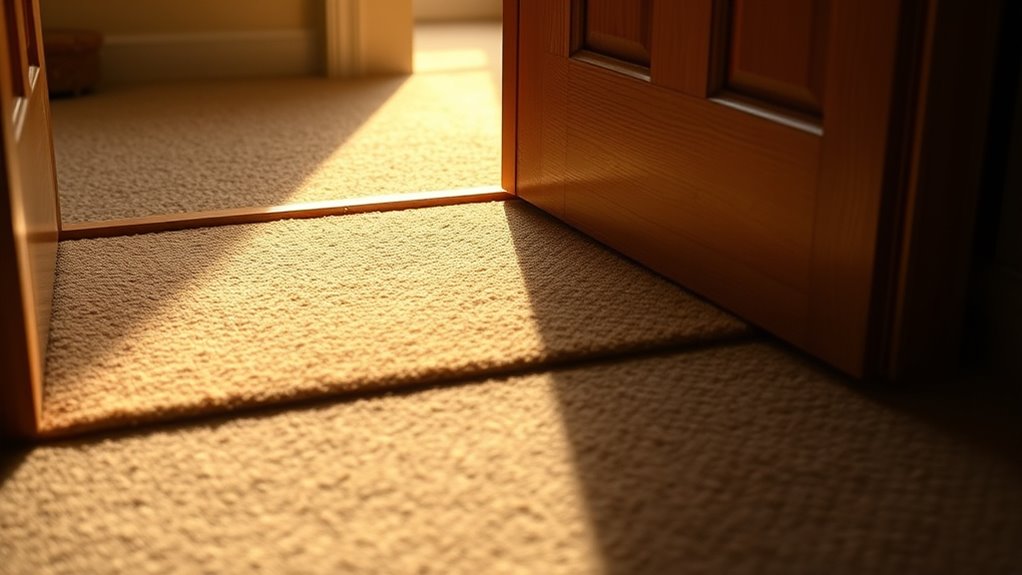
- Narrow or uneven doorways can cause trips; installing ramps and widening entrances improve safety.
- Loose or wrinkled carpets increase fall risk; securing edges and removing hazards enhances stability.
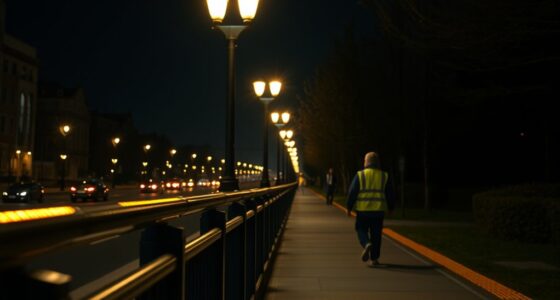
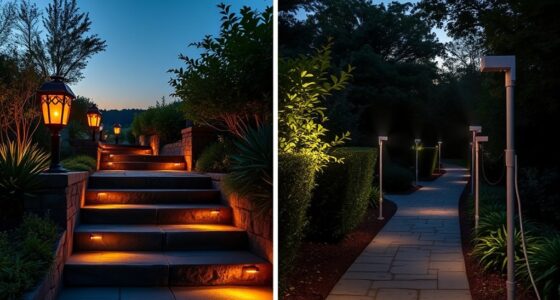
- Poor lighting diminishes obstacle visibility; installing bright, motion-sensor lights reduces trips and falls.
- High-pile carpets and cluttered pathways contribute to slips; regular maintenance and decluttering promote safety.
- Safety modifications like handrails and non-slip mats support fall prevention in key areas.
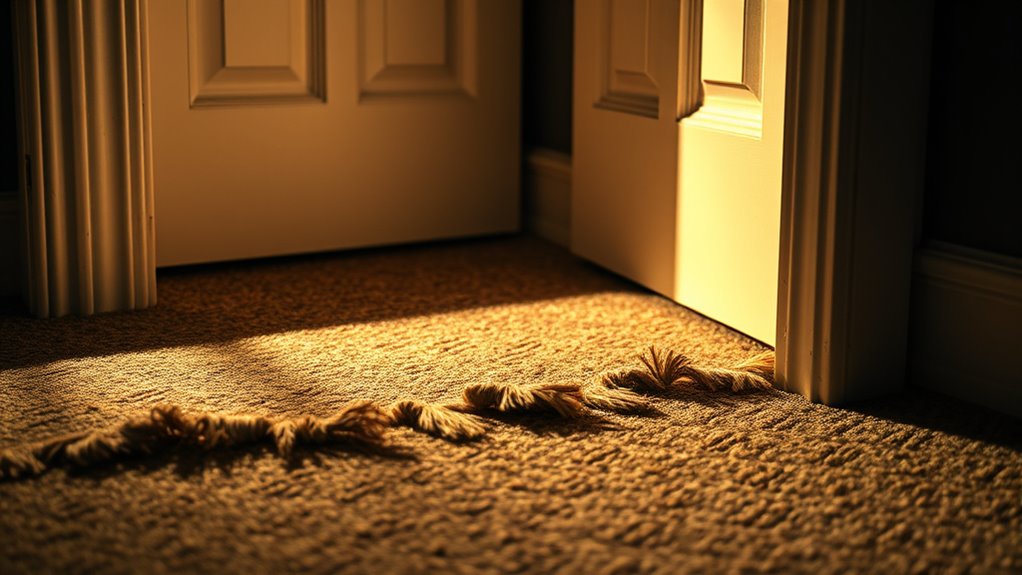
Falls remain a leading cause of injury, especially among older adults, and many accidents happen right at home. Recognizing potential hazards in your living environment is vital for preventing falls. One of the first steps you should take is hazard identification—carefully inspecting your home for elements that could cause slips, trips, or falls. Pay attention to doorways that are narrow or uneven, as they can be difficult to navigate, particularly if you use mobility aids. Carpets and rugs often seem harmless but can become significant hazards if they are loose, wrinkled, or lack proper backing. These surfaces can cause you to trip or lose your footing unexpectedly. Lighting also plays an essential role; dimly lit areas make it harder to see obstacles or changes in floor level, increasing the risk of falls.
Once you’ve identified these hazards, safety modifications become your best tools for fall prevention. For doorways, consider widening narrow entries or installing ramps if step thresholds are present. These adjustments make passage easier and reduce the chance of stumbling. When it comes to carpets and rugs, secure loose edges with double-sided tape or non-slip rug pads. Removing or replacing high-pile or plush carpets in frequently used areas can also reduce trip risks. For better lighting, install brighter bulbs and ensure all rooms are well-lit, especially hallways, staircases, and entry points. Motion-sensor lights are an excellent addition, automatically illuminating the space as you enter, which can prevent accidental trips in dark areas. Additionally, choosing HEPA-filtered air purifiers with advanced filtration can help improve indoor air quality and reduce allergens that may affect your health and comfort.
Beyond these modifications, maintaining a clutter-free environment helps you spot potential dangers before they cause trouble. Keep pathways clear of cords, furniture, or other objects that could trip you up. Regularly check your home for new hazards, especially if you notice changes in your mobility or vision. Simple adjustments like adding handrails along stairs and in bathrooms or using non-slip mats in wet areas can further enhance safety. Remember, hazard identification isn’t a one-time task—making ongoing assessments and safety modifications creates a safer living space and gives you peace of mind. Being proactive about these changes allows you to navigate your home confidently and reduces the likelihood of falls. By paying close attention to doorway, carpet, and lighting risks, you take meaningful steps toward preserving your independence and preventing injuries at home.
Frequently Asked Questions
How Can I Identify Hidden Fall Hazards in Doorways?
To identify hidden fall hazards in doorways, you should actively perform doorway obstacle identification by inspecting for uneven flooring, loose rugs, or clutter that could cause trips. Use good lighting to enhance visibility and look closely for any hidden hazard detection issues, such as loose thresholds or low-clearance objects. Regularly test the area and keep it clear of obstructions, ensuring safe passage and minimizing fall risks.
What Are the Best Materials for Slip-Resistant Carpets?
Imagine installing a hallway carpet treated with slip-resistant fibers and an anti-slip coating. This combination creates a safer surface by increasing traction and reducing slips. The best materials for slip-resistant carpets include those with embedded slip-resistant fibers like rubber or polypropylene, and carpets coated with anti-slip solutions. These options help prevent falls, especially in high-traffic or damp areas, giving you peace of mind and added safety.
How Does Lighting Affect Elderly Fall Risk?
Good lighting design plays a vital role in reducing elderly fall risk by enhancing visibility. When you guarantee well-lit pathways and eliminate shadows, you help seniors see obstacles clearly, which prevents trips and slips. Adequate lighting improves elderly visibility, making it easier for them to navigate safely indoors and outdoors. By prioritizing proper lighting, you create a safer environment that minimizes fall hazards and boosts confidence for older adults.
Are There Specific Doorway Modifications for Wheelchair Users?
Sure, because nothing screams elegance like a wheelchair doorway that’s a nightmare to navigate. You should consider widening your doorway or installing an accessible entry with no thresholds. Removing obstructions and ensuring smooth, level progressions make it easier for wheelchair users to pass through safely. Think of it as giving your home a stylish upgrade while preventing accidental spills onto the floor—no more awkward maneuvers or unexpected falls.
What Maintenance Routines Prevent Lighting and Carpet Hazards?
You should regularly perform floor cleaning to keep surfaces free of dust, debris, and spills that can cause slips. Inspect carpet padding to make certain it’s secure and level, replacing or repairing any loose or uneven areas. Keep lighting fixtures clean and functional to improve visibility. Consistent maintenance like these minimizes hazards, helping you prevent falls and maintain a safe environment. Schedule routine checks to catch issues early and keep your space safe.
Conclusion
By paying attention to doorway hazards, carpets, and lighting, you can considerably reduce your fall risks. Did you know that falls are the leading cause of injury among older adults, with over 36 million falls reported annually? Staying vigilant about these common hazards not only helps keep you safe but also boosts your confidence at home. Simple changes like adding better lighting or secure rugs can make a big difference. Stay proactive—your safety is worth it!