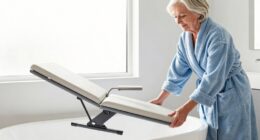
To prevent falls in your bedroom and at night, guarantee you have proper lighting—use nightlights or bedside lamps with easy switches to improve visibility. Wear slip-resistant slippers and keep them close by, and keep your walkways clutter-free, securing loose rugs and cords. Regularly check your environment for hazards and keep essential items within reach. Following these safety tips can greatly reduce your risk of falling—keep going to explore more helpful strategies.
Key Takeaways
- Install soft, accessible lighting near the bed to improve visibility and prevent trips at night.
- Wear non-slip slippers and keep them within easy reach to reduce slipping hazards.
- Keep pathways clear of clutter, cords, and loose rugs to ensure safe nighttime navigation.
- Regularly inspect and secure furniture and flooring to prevent tripping over uneven surfaces.
- Use safety assessments and assistive devices, like walkers or canes, for added stability during nighttime movements.

Falls can happen unexpectedly and pose serious risks, especially as you age. Being mindful of your bedroom layout and nighttime routine can substantially reduce the chances of a fall. One of the most effective ways to do this is by guaranteeing proper bedside lighting. When you wake up during the night, stumbling around in darkness increases your risk of losing your balance or tripping over furniture. Installing a soft, accessible light near your bed can help you see clearly as you move around. A low-wattage nightlight or a bedside lamp with a simple switch makes it easy to illuminate your path without disturbing your sleep. Good bedside lighting not only helps you navigate safely but also prevents accidental bumps or falls that could lead to injuries. Incorporating safety-focused design principles into your bedroom setup can further enhance your fall prevention efforts.
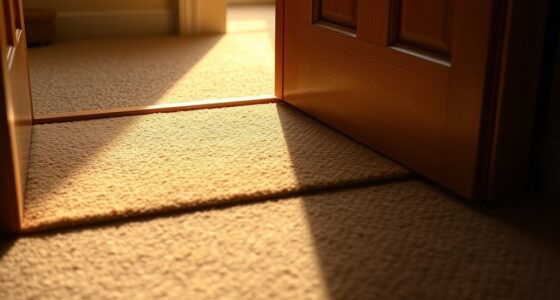
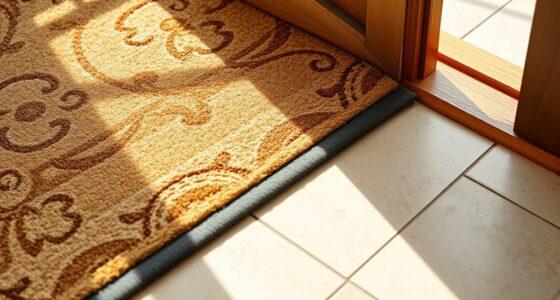
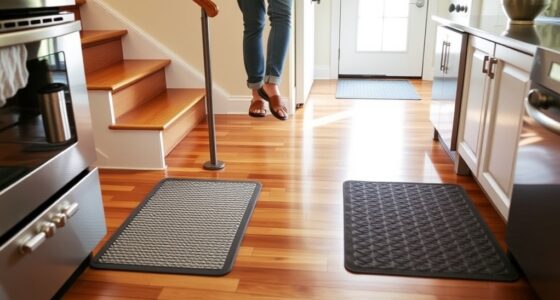
Slipper safety is equally important. When you get out of bed, slipping on slick floors or loose rugs can cause a fall. To improve slipper safety, choose footwear with non-slip soles designed for indoor use. Avoid walking around in socks or smooth slippers that lack traction, especially on hardwood or tile floors. If you prefer going barefoot, ensure your floors are dry and free of clutter. Keep slippers nearby so you can slip into them easily when getting up at night. Make sure your slippers fit well and are in good condition; worn-out soles or loose slippers can increase your risk of slipping. It’s also wise to remove any loose rugs or secure them with double-sided tape to prevent tripping hazards. Keeping your slippers handy and your floors safe creates a more secure environment as you move through your bedroom during nighttime hours.
Creating a safe nighttime environment isn’t just about lighting and slippers. Clear clutter from your walking path, guarantee that cords are tucked away, and move furniture that could be in your way. If you use a cane or walker, keep it within easy reach so you don’t have to stretch or search for it when you need to get up. Regularly check your bedroom for hazards, like loose carpets or uneven flooring, that could cause a stumble. Maintaining good lighting, guaranteeing slipper safety, and keeping the pathway clear are simple but essential steps in preventing falls. When you implement these precautions, you’ll feel more confident steering your space at night, reducing your risk of injury and promoting a safer, more comfortable environment.

FAHREN H11 9005 Light Bulbs Combo, 110000LM 11X Super Bright H9 H8 HB3 Off-Road Use or Fog Light Bulbs, 6500k White Non-Polarity Plug and Play, Pack of 4
【99%+ Vehicle Compatibility】FAHREN H11 9005 Bulbs combo Equipped with the latest upgraded linear decoding technology and built-in intelligent...
As an affiliate, we earn on qualifying purchases.
Frequently Asked Questions
How Can I Improve My Bedroom Lighting for Safety?
To enhance your bedroom lighting for safety, you should add ambient illumination that provides soft, consistent light throughout the room. Installing motion sensors near the entrance and by your bedside guarantees the lights turn on automatically when you get up, reducing the risk of trips. Keep bulbs bright enough but gentle to avoid harsh glare, and consider layered lighting options to create a safer, more comfortable environment at night.
Are There Specific Flooring Materials That Reduce Fall Risk?
You should choose slip-resistant flooring, like textured vinyl or rubber, to reduce fall risk. Cushioned surfaces, such as foam or carpet, also provide extra padding and shock absorption, making falls less severe. Avoid smooth, hard surfaces like tile or polished wood, which can be slippery. By selecting these safer flooring materials, you create a more secure environment, helping you prevent falls, especially at night or when mobility is limited.
What Are the Best Ways to Organize Night-Time Essentials?
A place for everything, and everything in its place. To organize your nighttime essentials, keep bedside storage tidy and within reach. Use a well-arranged nightstand with designated spots for your glasses, medications, and a glass of water. Consider using small trays or containers to keep items organized. This way, you minimize clutter and reduce the risk of searching or knocking things over, making your nighttime routine safer and smoother.
Can Exercise Help Prevent Falls in Older Adults?
Yes, exercise can help prevent falls in older adults. You should focus on balance training and strength exercises, which improve stability and muscle strength. Regular practice helps you move more confidently and reduces the risk of losing your footing. Incorporate activities like tai chi or resistance exercises into your routine. Staying active keeps your muscles strong and your balance sharp, making falls less likely.
How Often Should I Review My Fall Prevention Measures?
You should review your fall prevention measures as often as you dust your furniture—at least every few months—and definitely after any change in your health or home safety. Regular risk assessments keep you one step ahead of potential hazards, preventing falls before they happen. Staying vigilant ensures your home remains a safe haven, and you’re always prepared to avoid those unexpected tumbles. Don’t wait—make safety reviews a regular part of your routine!
Amazon Product B0DG5FQ651
As an affiliate, we earn on qualifying purchases.
Conclusion
By taking simple steps to keep your bedroom safe, you’re doing yourself a favor. Clear clutter, install proper lighting, and secure loose rugs to avoid unnecessary falls. Remember, prevention is better than cure—it’s better to be safe than sorry. Don’t wait until it’s too late; small changes can make a big difference in keeping you on your feet and your nights worry-free. Stay proactive and protect yourself before an accident happens.

SEALIGHT 9005 H11 Fog Light Bulbs
Easy Installation : Sealight 9005 H11 light adopt a 1:1 OEM - matching mini design, requiring no external...
As an affiliate, we earn on qualifying purchases.

OXILAM H11 H8 H9 LED Bulb, 900% Ultra-Brightness, 5 Min Quick Install, 70000 Hours Lifespan, No Flicker, Plug and Play, Pack of 2
【9X Brighter Illumination】: Experience exceptional visibility with OXILAM H11 H8 H9 bulbs, featuring 16 upgraded high-power chips that...
As an affiliate, we earn on qualifying purchases.