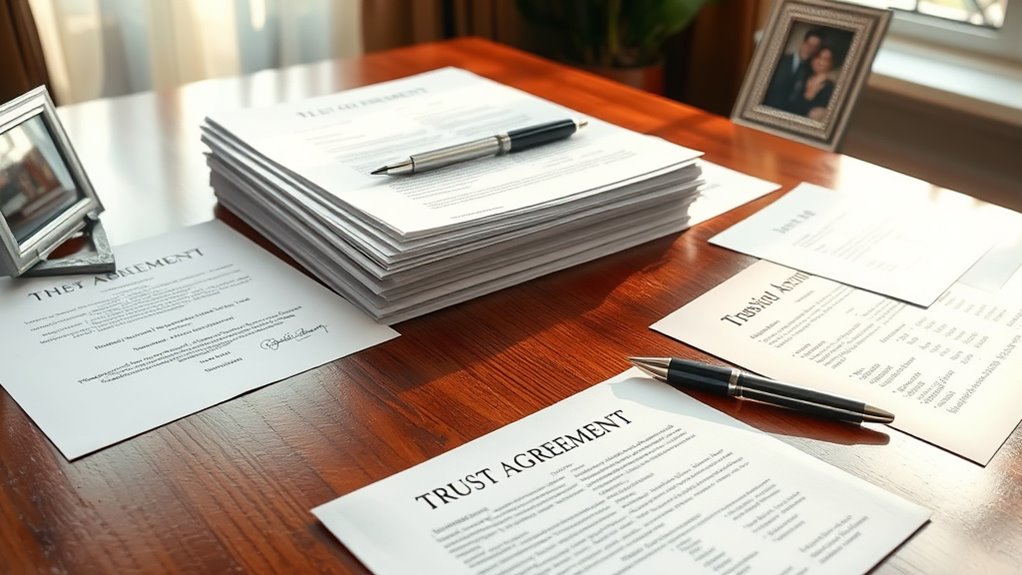

Regularly revisiting your wills, trusts, and beneficiary designations is essential to guarantee they reflect your current wishes and life changes. If you experience events like marriage, divorce, or the birth of a child, updating these documents helps prevent conflicts and legal delays. Keeping your estate plan current also ensures your assets go to the right people and function as intended. Continuing this process can protect your legacy and provide peace of mind for you and your loved ones.
Key Takeaways
- Regularly reviewing estate documents ensures they reflect current life circumstances and wishes.
- Life changes like marriage, birth, or divorce require updates to Wills, Trusts, and beneficiary designations.
- Outdated documents may cause disputes, delays, and legal challenges during estate settlement.
- Updating estate plans maintains legal compliance and aligns asset distribution with current intentions.
- Periodic revisions simplify probate, protect assets, and provide peace of mind for beneficiaries and estate owners.

When planning your estate, it’s vital to regularly revisit your Wills, Trusts, and beneficiary designations to confirm they still reflect your wishes. Life changes—marriage, divorce, the birth of a child, or even a new career—can all impact how you want your assets distributed. Keeping these documents up-to-date helps guarantee your estate plan aligns with your current intentions and minimizes potential conflicts. If your documents aren’t current, your loved ones might face unnecessary complications during the probate process, which can delay the distribution of your estate and increase legal costs. Reviewing your estate plan periodically is a proactive step to avoid such issues and guarantee your wishes are clearly documented.
Regularly review your estate documents to ensure they reflect your current wishes and life changes.
Estate planning isn’t a one-and-done task. As circumstances evolve, so should your documents. For example, if you’ve recently remarried, you might want to revisit your beneficiary designations on life insurance policies or retirement accounts. These designations often override what’s specified in your Will, so neglecting to update them can result in assets going to unintended parties. Similarly, if you’ve had children since creating your original estate plan, you’ll want to update guardianship provisions or add new beneficiaries. Regularly revisiting these documents prevents surprises and ensures your estate plan remains extensive and effective.
Failing to update your estate plan can complicate the probate process, which is designed to validate your Will and oversee the distribution of your assets. An outdated Will might not account for recent life changes, creating ambiguities and potential disputes among heirs. Trusts, on the other hand, can help streamline the probate process, but they need to be properly maintained and updated. If not, they may not function as intended, risking unnecessary delays or legal challenges. By revisiting and revising your estate planning documents periodically, you help reduce the chances of probate complications and ensure your estate is settled smoothly according to your wishes. Additionally, understanding the importance of regular updates can help you avoid unintended consequences and protect your legacy.
Ultimately, revisiting your estate plan isn’t just about ticking boxes; it’s about safeguarding your legacy. It gives you peace of mind that your loved ones will be taken care of without added stress or legal hurdles. Regular reviews also provide an opportunity to consult with estate planning professionals who can advise on new laws or strategies to optimize your plan. When you keep your Wills, Trusts, and beneficiary designations current, you simplify the legal process for your heirs and make sure your estate is handled exactly as you intend. This ongoing effort makes your estate plan a living document that accurately reflects your life and wishes at every stage.

AmazingSpark 25 Pack Estate Planning Documents Pocket Folders, Gold Foil Stamped, Blue 9 x 12 Inches Estate Planning Organizer for Legal Professionals
Set for Comprehensive Planning: our estate planning file folders come in a convenient package of 25, providing ample…
As an affiliate, we earn on qualifying purchases.
As an affiliate, we earn on qualifying purchases.
Frequently Asked Questions
How Often Should I Review My Estate Planning Documents?
You should review your estate planning documents at least every three to five years or whenever a major life event occurs, like marriage, divorce, birth, or death. Regularly updating your documents guarantees they reflect your current wishes and circumstances. Life changes can impact your estate planning goals, so stay proactive with document updates. This way, you protect your assets and provide clear instructions for your loved ones when it matters most.
Can I Change Beneficiaries on Retirement Accounts?
Yes, you can change beneficiaries on your retirement accounts anytime, but you should do so carefully to make certain your estate plan remains current. Regularly updating your retirement account beneficiaries is vital for accurate estate plan updates. Check your beneficiary designations periodically, especially after major life events, to make sure they reflect your wishes. Keep in mind that these updates help your estate plan stay aligned with your intentions.
What Happens if a Will Conflicts With a Trust?
If your will conflicts with a trust, the trust generally takes precedence because of its direct control over assets. Conflicting provisions can create confusion, but courts typically prioritize the trust’s validity and terms over a will’s instructions. You should review your documents regularly to verify consistency. If conflicts arise, consulting an estate planning attorney can help clarify which document governs your estate and resolve any issues efficiently.
Are Handwritten Wills Legally Valid?
Handwritten wills, also known as holographic wills, are legally valid if they meet state-specific requirements. Usually, they must be entirely in your handwriting and signed. Some states require witnesses, while others don’t. To guarantee your holographic will is valid, follow your state’s witness requirements and clearly express your intentions. Always check local laws, as rules vary, and consider having a formal will drafted for added clarity and security.
How Do Taxes Affect Inheritance Through Trusts?
You should know that taxes like estate tax and gift tax can impact your inheritance through trusts. When your estate exceeds certain thresholds, estate tax may reduce your inheritance. Gift tax applies when assets are transferred into the trust during the grantor’s lifetime, possibly affecting the overall estate value. Proper planning helps minimize these taxes, ensuring more of the assets pass to your beneficiaries without unnecessary tax burdens.
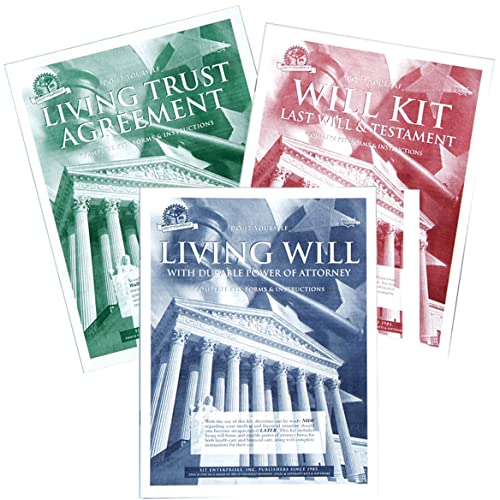
Do-It-Yourself Will Kit – Includes Last Will & Testament, Living Will and Living Trust Booklets
Three piece Do-it-yourself Will Kit – Prepares for the future without involving a costly lawyer – Set includes…
As an affiliate, we earn on qualifying purchases.
As an affiliate, we earn on qualifying purchases.
Conclusion
By understanding how wills, trusts, and beneficiary designations work together, you can guarantee your assets go exactly where you want. Imagine Sarah, who thought her will covered everything, only to discover her life insurance named a different beneficiary. Updating all documents prevented family disputes. Take control now—review your designations regularly to avoid surprises. Clear, coordinated planning protects your loved ones and keeps your wishes intact long after you’re gone.
beneficiary designation update form
As an affiliate, we earn on qualifying purchases.
As an affiliate, we earn on qualifying purchases.

Quicken WillMaker & Trust Latest Version – Estate Planning Software – Will, Living Trust, Health Care Directive, Financial, Power of Attorney – Legally Binding- CD,PC/Mac Download,Online/Not for iPads
America's #1 estate planning software — Install from CD, Download (Windows or Mac), or Access Online. Create a…
As an affiliate, we earn on qualifying purchases.
As an affiliate, we earn on qualifying purchases.