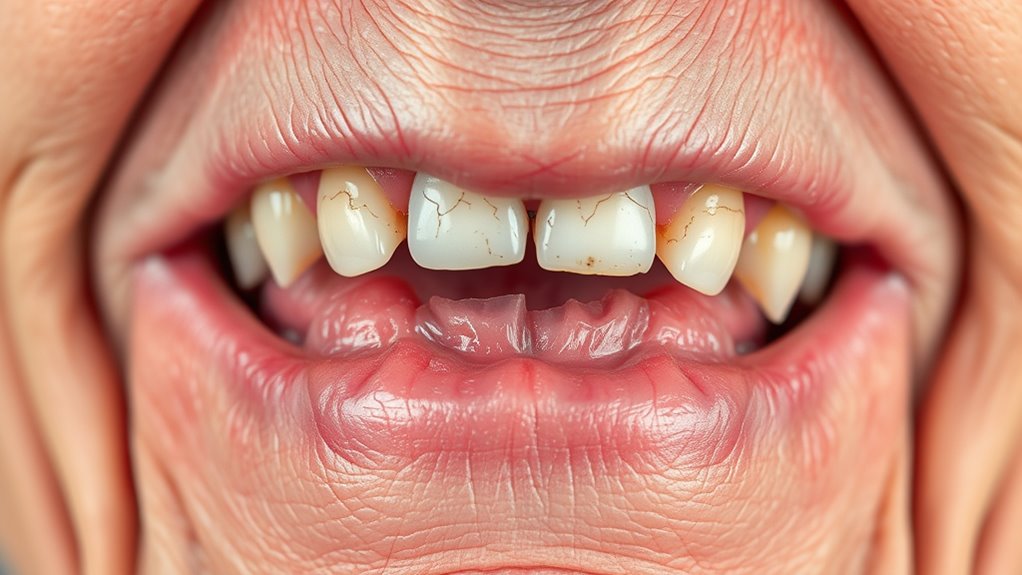

To manage oral health challenges like dentures, dry mouth, and gum health, you should clean your dentures daily with gentle brushes and soak them overnight. Stay hydrated, chew sugar-free gum, and use saliva substitutes to combat dry mouth. Practice good gum care by brushing gently and flossing regularly. Following these steps helps prevent discomfort, infections, and damage. Keep exploring for essential tips that can help you maintain a healthy, comfortable smile long-term.
Key Takeaways
- Regular denture cleaning and proper handling prevent irritation, infections, and extend denture lifespan.
- Staying hydrated, chewing sugar-free gum, and using saliva substitutes help manage dry mouth symptoms.
- Consistent brushing, flossing, and using mouthwash support healthy gums and prevent periodontal issues.
- Regular dental visits ensure dentures fit well, reducing discomfort and oral health risks.
- Avoiding sugary foods, tobacco, and alcohol minimizes plaque buildup and promotes overall oral health.
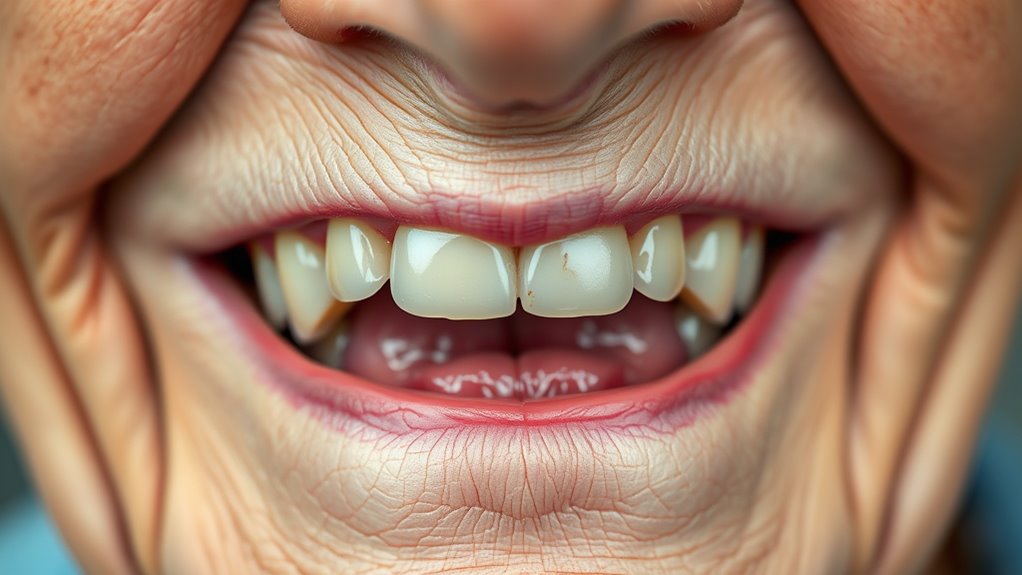
Maintaining good oral health can be challenging in today’s busy world, where many people overlook regular dental care. Yet, taking care of your mouth is essential, especially if you wear dentures or struggle with dry mouth. Proper denture maintenance isn’t just about keeping your smile looking good; it prevents infections, sores, and bad odors. You should clean your dentures daily with a soft brush and denture cleaner, avoiding harsh toothpaste that can scratch the surface. Soaking them overnight in a cleaning solution helps remove plaque and bacteria. When handling your dentures, be gentle to prevent cracks or damage. Regular visits to your dentist ensure your dentures fit well and are in good condition, reducing discomfort and preventing oral sores. Remember, neglecting denture upkeep can lead to irritation, bad breath, and even nutritional issues if you avoid eating due to discomfort. Incorporating routine checkups and proper cleaning techniques can significantly extend the lifespan of your dentures and maintain oral comfort.
Dry mouth remedies are equally important, especially since reduced saliva flow can cause discomfort, bad breath, and an increased risk of cavities. To combat dry mouth, stay well-hydrated by drinking plenty of water throughout the day. Chewing sugar-free gum or sucking on lozenges stimulates saliva production, providing temporary relief. You can also use over-the-counter saliva substitutes, which mimic natural saliva and help keep your mouth moist. Avoid caffeinated beverages, alcohol, and tobacco, as these can worsen dry mouth symptoms. Maintaining good oral hygiene becomes even more critical when you have dry mouth because the lack of saliva impairs your mouth’s natural ability to wash away bacteria and food particles. Brushing at least twice a day with fluoride toothpaste and flossing daily helps prevent plaque buildup and cavities. Using a humidifier at night can also keep your mouth moist during sleep hours. If dry mouth persists despite these remedies, consult your dentist or healthcare provider, as it may be linked to medications or underlying health issues that need addressing. Proper management of dry mouth can prevent further oral health complications and improve overall comfort.
Gum health is another essential aspect of your oral care routine. Healthy gums support your teeth and prevent periodontal disease, which can cause bleeding, swelling, and even tooth loss. To keep your gums healthy, brush gently along the gumline, and don’t forget to floss daily to remove debris lodged between your teeth. Rinsing with an antimicrobial mouthwash can reduce bacteria and improve gum health. Avoid sugary snacks and drinks that promote plaque buildup. If you notice redness, swelling, or bleeding gums, seek professional advice promptly. Regular dental checkups allow your dentist to monitor your gum health and catch any issues early. Combining good denture maintenance, effective dry mouth remedies, and diligent gum care helps you maintain a healthy, comfortable smile, even amid today’s hectic lifestyle.
Frequently Asked Questions
How Often Should I Replace My Dentures?
You should replace your dentures every 5 to 8 years to guarantee proper fit and function. Regular denture maintenance helps identify signs of wear or damage early. Follow your dentist’s recommended replacement schedule, and schedule routine check-ups. Over time, dentures can become loose or uncomfortable, impacting your oral health. Replacing them on schedule keeps your smile comfortable, functional, and healthy.
What Are Natural Remedies for Dry Mouth?
To ease dry mouth naturally, try sipping herbal teas like chamomile or ginger, which can soothe your mouth. Drinking plenty of water throughout the day is essential—I recommend setting hydration tips like carrying a water bottle. Chewing sugar-free gum or sucking on sugar-free candies stimulates saliva flow. These simple remedies help keep your mouth moist and comfortable, supporting your overall oral health.
Can Gum Disease Be Reversed at Any Stage?
Think of gum disease as a slowly advancing storm—you can often halt it if caught early. At initial stages, you can reverse periodontal damage through professional treatment and good oral hygiene. However, as gum disease progression worsens, reversing becomes difficult and may require more intensive care. Acting promptly allows you to stop its progression and protect your oral health, but ignoring it risks irreversible damage.
How Does Saliva Affect Oral Health?
Saliva plays a crucial role in your oral health by aiding digestion, neutralizing acids, and washing away food particles. Its composition includes enzymes that fight bacteria, while saliva production regulation ensures enough saliva is produced to protect your mouth. When saliva flow decreases, your risk of cavities, gum disease, and dry mouth increases. Maintaining good hydration and regular dental check-ups help keep saliva production efficient, supporting your overall oral health.
Are There Specific Foods to Improve Gum Health?
You should eat nutrient-rich foods like leafy greens, berries, and lean proteins to boost gum health. Crunchy vegetables such as carrots and celery help clean your gums naturally and stimulate blood flow. Avoid sugary snacks and processed foods, which can harm your gums. Staying hydrated and maintaining a balanced diet supports healthy gum tissue and reduces inflammation, keeping your mouth healthier overall.
Conclusion
Taking care of your oral health is essential to avoid issues like dentures, dry mouth, and gum problems. By maintaining good habits and staying vigilant, you can keep your smile healthy and vibrant. Don’t you want to enjoy confident conversations and tasty meals without discomfort? Remember, your mouth’s health impacts your overall well-being—so take action today and prioritize your oral care!