
When you have limited mobility, assisting with personal hygiene involves using adaptive tools like grab bars, shower chairs, and long-handled brushes to promote safety and independence. Proper caregiver techniques are essential, including gentle handling and proper positioning to prevent discomfort or injury. Combining these tools with caregiver training helps ensure routines are respectful, safe, and comfortable. Continuing with this guide will reveal how to create a supportive and dignified hygiene routine tailored to your needs.
Key Takeaways
- Use adaptive tools like grab bars, shower chairs, and long-handled brushes to enhance safety and independence during hygiene routines.
- Proper caregiver training ensures safe, respectful assistance while minimizing discomfort and reducing fall risks.
- Personalize hygiene routines with assistive devices and techniques suited to individual mobility limitations.
- Incorporate safety features such as non-slip mats and handheld shower heads to prevent injuries and improve comfort.
- Prioritize patience, clear communication, and privacy to maintain dignity and confidence in hygiene assistance.

For individuals with limited mobility, maintaining personal hygiene can be a daily challenge that impacts health and dignity. When movement is restricted, simple tasks like bathing, brushing teeth, or grooming become complex, often requiring assistance. Fortunately, adaptive tools and proper caregiver training can make these routines more manageable and comfortable. Adaptive tools include grab bars, transfer benches, long-handled brushes, and shower chairs, all designed to compensate for limited strength or range of motion. These devices provide stability and independence, reducing the risk of falls and injuries while making hygiene routines safer and more efficient. Using the right adaptive tools allows you to participate actively in your hygiene routine or makes it easier for caregivers to assist without causing discomfort or strain.
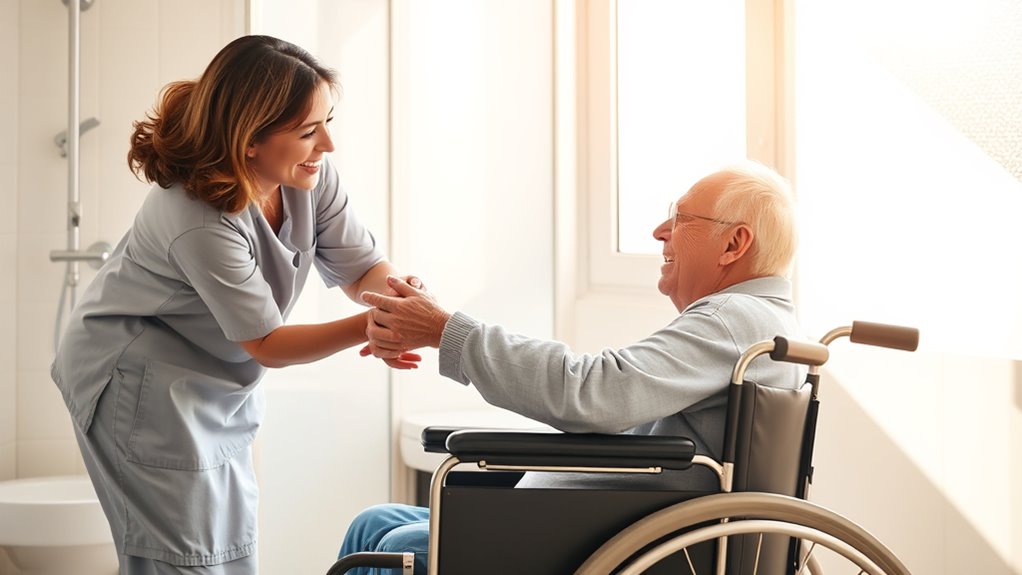
Adaptive tools like grab bars and shower chairs enhance safety and independence for those with limited mobility.
Caregiver training plays a vital role in ensuring hygiene assistance is effective, safe, and respectful. A well-trained caregiver understands how to adapt techniques to suit your specific needs, using gentle approaches and proper body mechanics to prevent injury to both parties. They learn how to position you comfortably, transfer you safely from a wheelchair to a shower chair, or help with bathing without causing pain or embarrassment. Training also covers infection control practices, ensuring that hygiene routines are hygienic and that the risk of infections is minimized. When caregivers are educated on your particular preferences and limitations, they can offer personalized assistance that maintains your dignity and promotes independence as much as possible.
Implementing adaptive tools and caregiver training together creates a supportive environment where daily hygiene routines become less overwhelming. You might find that using a handheld shower head makes bathing easier, or that a non-slip mat and grab bars provide added safety in the shower. Properly trained caregivers know how to communicate effectively, respecting your privacy and comfort while assisting with personal care tasks. They are also equipped to troubleshoot common issues, such as adjusting equipment or modifying techniques if your needs change over time. This combined approach empowers you to maintain your personal hygiene with greater confidence, reducing stress for both you and your caregiver.
Ultimately, addressing hygiene challenges for those with limited mobility involves more than just equipment; it requires understanding, patience, and skill. Adaptive tools and caregiver training work hand-in-hand to create a routine that supports health, preserves dignity, and fosters independence whenever possible. Incorporating assistive devices into daily routines can significantly improve safety and ease of use. By investing in these resources, you make daily hygiene a safer and more respectful experience, helping you feel more comfortable and confident in your daily life.
Frequently Asked Questions
How Can I Prevent Skin Infections During Hygiene Care?
To prevent skin infections during hygiene care, you should keep the skin clean and dry, focusing on maintaining the skin barrier. Use gentle soaps and lukewarm water, avoiding harsh scrubbing. Pat the skin dry and apply moisturizer to prevent cracking. Regularly check for signs of irritation or redness. Proper hygiene and infection prevention techniques help protect the skin and reduce the risk of infection, especially when mobility is limited.
What Are the Best Ergonomic Tools for Hygiene Assistance?
Imagine transforming your caregiving routine with the right tools. Ergonomic design adaptive equipment, like angled brushes, long-handled sponges, and supportive grab bars, make hygiene assistance safer and easier. These tools reduce strain on your body and improve comfort for your loved one. Invest in ergonomic equipment that’s thoughtfully designed, and you’ll notice a significant difference—less fatigue, better control, and a smoother, more dignified hygiene experience for both of you.
How Do I Manage Hygiene Needs During Travel?
When managing hygiene needs during travel, you should pack travel essentials like moist wipes, a portable bidet, and a small, easy-to-carry soap and sanitizer. Keep personal hygiene items organized in a compact bag for quick access. Plan bathroom stops strategically and consider using ergonomic tools designed for mobility support. This way, you maintain cleanliness comfortably, ensuring your personal hygiene stays intact while on the go.
What Are Signs of Skin Irritation to Watch For?
You should watch for signs of skin irritation like skin redness, which indicates inflammation, and blister formation, signaling skin damage. If you notice these symptoms, it’s important to address them promptly by keeping the area clean and dry, avoiding further friction or pressure. If irritation worsens or blisters develop, seek medical advice to prevent infection and guarantee proper care. Early detection helps maintain skin health and comfort.
How Can I Maintain Hygiene With Limited Water Access?
You can maintain hygiene with limited water access by practicing water conservation techniques and using alternative cleaning methods. Use a damp cloth or pre-moistened wipes to clean your skin, focusing on key areas. Prioritize hygiene education to understand effective routines and avoid skin irritation. Remember, small efforts like quick sponge baths or spot cleaning can make a big difference in keeping your skin healthy and clean despite water limitations.
Conclusion
Taking care of your hygiene when mobility is limited shows your resilience and dignity. Remember, sometimes the smallest acts of kindness and patience can make a world of difference. Embrace each moment as an opportunity to nurture yourself, even when things feel challenging. With gentle support and understanding, you can maintain your comfort and confidence. Keep in mind, true self-care is about nurturing your spirit just as much as your body.