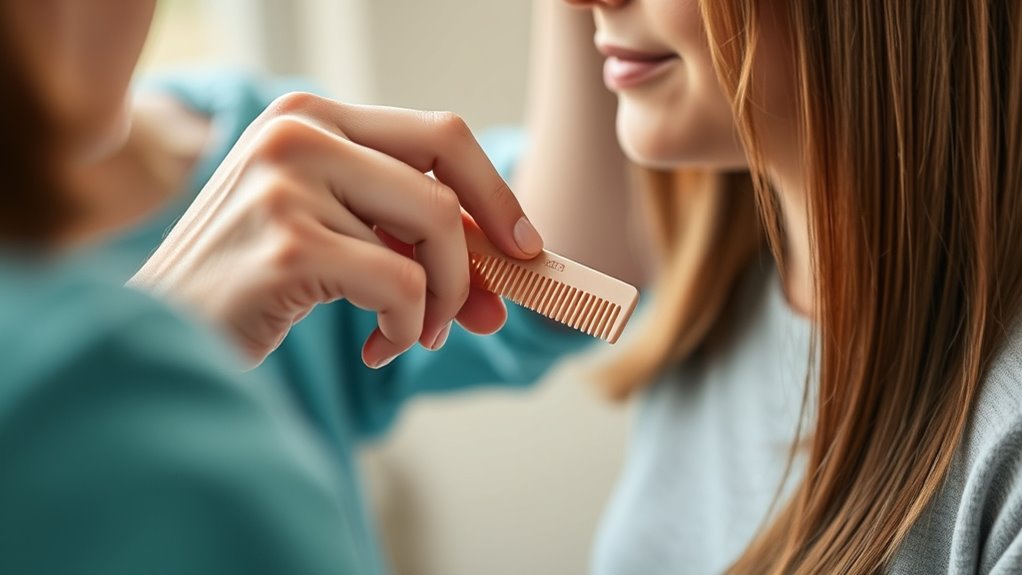

To make grooming and hair care easier for those with limited reach, use adaptive tools like long-handled brushes and combs. Create a calming environment with gentle lighting and soft music, and choose gentle, sensory-friendly products. Support positioning with cushions and adjustable chairs to guarantee comfort and safety. Communicate clearly and patiently, respecting sensitivities to foster trust. Keep going to discover more tips for making grooming a positive experience for everyone involved.
Key Takeaways
- Use adaptive tools like long-handled brushes and combs to improve reach and reduce physical strain during grooming.
- Choose gentle, hypoallergenic grooming products suited for sensitive skin and sensory sensitivities.
- Create a calming environment with soft lighting, minimal noise, and familiar routines to ease anxiety.
- Properly position and support the individual with cushions and adjustable chairs for better access and comfort.
- Communicate clearly and patiently, offering reassurance and allowing time to accommodate limited mobility.
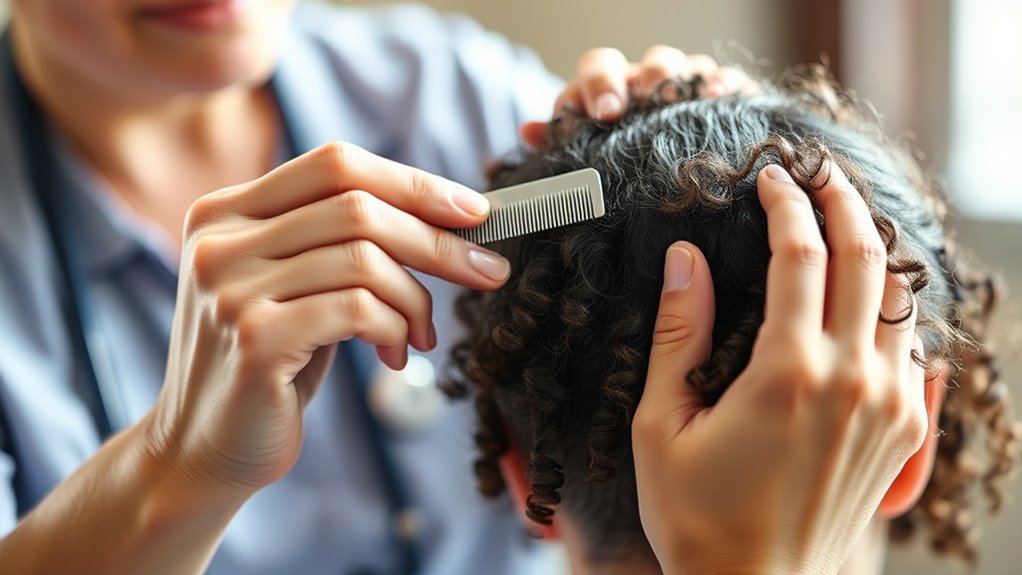
Have you ever wondered how to make grooming and hair care easier for someone with special needs? When caring for individuals with limited reach or sensory sensitivities, applying adaptive techniques can considerably improve the experience for both of you. These techniques help overcome physical challenges and create a more comfortable environment, ensuring grooming sessions are less stressful and more effective.
Start by evaluating the person’s specific needs and preferences. For someone with limited reach, using tools like long-handled brushes, combs, and sponges can make a big difference. These adaptive tools allow you to reach areas that might otherwise be difficult to access, reducing the need for awkward stretching or repositioning. For example, a long-handled brush can help smooth hair without forcing the individual into uncomfortable positions. Incorporating sensory considerations is equally important. Some people may find certain textures or sensations overwhelming, so choosing gentle, non-irritating products can make grooming more pleasant. Opt for soft-bristled brushes and mild shampoos that are hypoallergenic, and always check for any allergies or sensitivities beforehand.
Use long-handled grooming tools and hypoallergenic products to enhance comfort and accessibility for individuals with limited reach.
Creating a calming environment can also ease sensory overload. Keep the lighting soft, minimize noise, and maintain a consistent routine to provide familiarity. Before starting, explain each step in simple terms, and offer reassurance throughout the process. If the individual has sensory sensitivities, consider using calming techniques such as gentle touch, soft music, or aromatherapy to help them relax. Pay close attention to their reactions and adjust your approach accordingly. For example, if they recoil at certain textures or sounds, try alternative methods or products to accommodate their comfort levels. Additionally, being aware of anxiety reduction techniques can further improve the grooming experience.
Positioning also plays a key role in effective grooming. Use supportive cushions, adjustable chairs, or non-slip mats to stabilize the person and keep them comfortable. Proper positioning not only makes it easier to reach and groom but also minimizes discomfort or anxiety. Remember to communicate clearly and patiently, giving them time to adapt to each step. This respectful, adaptive approach fosters trust and cooperation, making future grooming sessions smoother.
Frequently Asked Questions
How Can I Assist With Grooming for Clients With Limited Mobility?
You can assist clients with limited mobility by using assistive devices like long-handled brushes or adaptive grooming tools, making tasks easier. Communicate clearly and patiently, using simple language and visual cues to guarantee understanding. Encourage clients to participate as much as possible to maintain independence, and always respect their comfort and preferences. Your gentle support and effective communication help make grooming a safe and positive experience for them.
What Tools Are Best for Hair Care on Sensitive Scalps?
You should choose gentle brushes and soothing shampoos for hair care on sensitive scalps. Opt for soft-bristled brushes to prevent irritation and promote comfort during brushing. Use gentle, sulfate-free shampoos that soothe the scalp and reduce irritation. These tools help maintain scalp health while making hair care easier and more comfortable for your clients with sensitive skin. Always select products designed for delicate scalps to verify a positive grooming experience.
How Do I Manage Grooming Anxiety in Special Needs Individuals?
To manage grooming anxiety in special needs individuals, you should focus on behavior management and sensory strategies. Create a calm environment, use visual schedules, and give plenty of warning before starting. Incorporate sensory tools like weighted blankets or calming textures to help ease discomfort. Be patient, speak softly, and allow breaks when needed. This approach helps build trust, reduces anxiety, and makes grooming a more positive experience for both of you.
Are There Safe Grooming Products for Skin With Allergies?
Yes, there are safe grooming products for skin with allergies. Look for hypoallergenic products that are free from common irritants like fragrances and dyes. You can also consider natural remedies, such as coconut oil or aloe vera, which gently soothe sensitive skin. Always check labels carefully and do a patch test before using new products to confirm they won’t cause a reaction.
How to Coordinate Grooming Routines With Caregivers or Family Members?
You should coordinate grooming routines by involving family members and caregivers early on. Use clear communication strategies like shared schedules, checklists, or visual aids to guarantee everyone stays on the same page. Regularly discuss preferences, needs, and safety concerns to make grooming smooth and comfortable. By fostering teamwork and open dialogue, you create a supportive environment that benefits everyone and maintains consistent, respectful care.
Conclusion
Taking care of grooming and hair needs for someone with special needs can be challenging, but with patience and the right techniques, you can make it easier. Remember, about 1 in 54 children in the U.S. has autism, which can affect grooming routines. By understanding their unique needs and adapting your approach, you create a more comfortable experience. Your efforts not only promote hygiene but also boost confidence, making a meaningful difference in their daily life.