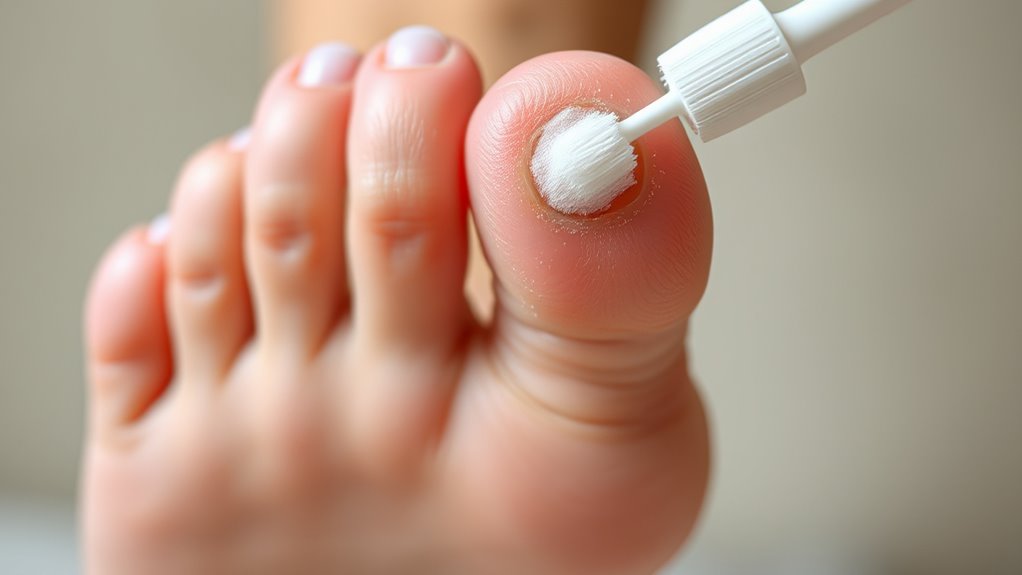

To maintain proper nail, skin, and foot hygiene as a diabetic, wash your feet daily with warm water and gentle soap, dry thoroughly, especially between your toes, and moisturize without overdoing it. Keep your nails trimmed straight across and avoid cutting cuticles. Wear well-fitting shoes that support your feet and prevent injuries. Managing blood sugar levels also helps your feet heal faster and stay healthier. If you’d like to learn more, there’s useful information to explore further.
Key Takeaways
- Wash feet daily with warm water and gentle soap, then dry thoroughly, especially between toes, to prevent fungal infections.
- Keep toenails trimmed straight across and avoid cutting cuticles to prevent ingrown nails and infections.
- Moisturize feet regularly to maintain skin elasticity, but avoid applying lotion between toes.
- Wear well-fitting, breathable footwear that provides support and reduces pressure points.
- Monitor blood sugar levels to promote healing, reduce infection risk, and support overall foot health.
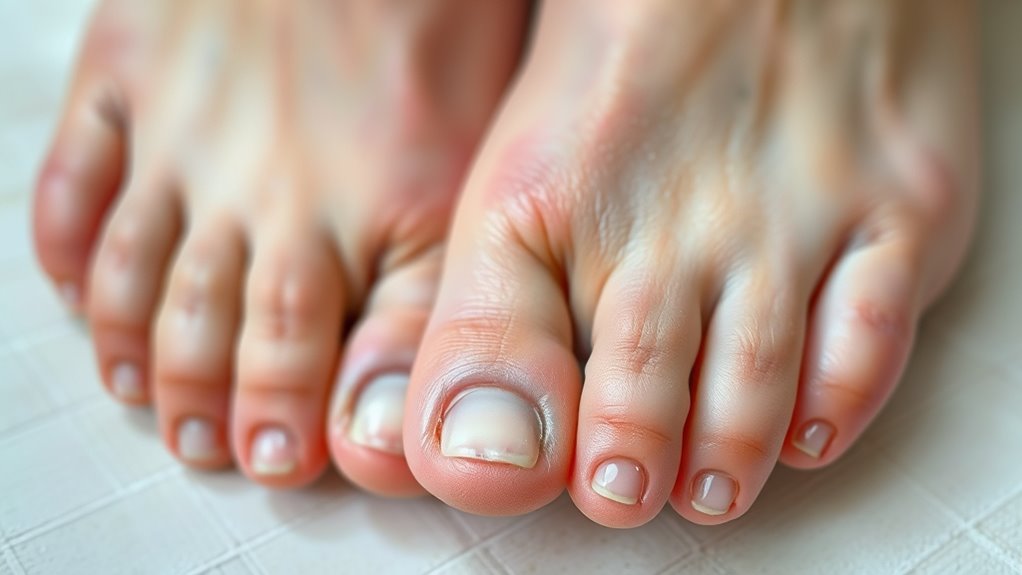
Are you aware of how essential proper nail, skin, and foot hygiene is for managing diabetes? Keeping your feet healthy is a crucial part of your overall diabetes care, and it starts with understanding the importance of footwear selection and how it impacts blood sugar management. Wearing the right shoes isn’t just about comfort; it helps prevent injuries, blisters, and pressure points that can lead to infections. Opt for shoes that fit well, provide good arch support, and have breathable materials to reduce moisture and prevent skin breakdown. Tight or poorly fitting footwear can cause friction, leading to blisters or calluses that might go unnoticed if you have nerve damage. These small injuries can quickly become infected, especially if blood sugar levels are high, impairing your body’s ability to heal.
Proper footwear also plays a role in blood sugar management. When your shoes fit well and support your feet properly, you’re less likely to develop foot ulcers or other complications that could require medical intervention. Maintaining good foot health reduces the risk of infections that can raise blood sugar levels further, creating a dangerous cycle. It’s essential to inspect your shoes regularly for signs of wear or damage, and always choose footwear suitable for different weather conditions or activities. Avoid walking barefoot, even indoors, because it’s easier to miss cuts or sores that could worsen without your awareness.
Alongside footwear, hygiene practices are vital. Daily washing of your feet with warm water and gentle soap helps remove dirt and bacteria. Dry your feet thoroughly, especially between the toes, to prevent fungal infections. Moisturize your skin to keep it supple, but avoid applying lotion between the toes, where excess moisture can develop. Regularly check your feet for cuts, blisters, redness, swelling, or any abnormalities. If you notice anything unusual, don’t delay seeking medical advice. Early intervention can prevent minor issues from escalating into serious infections.
Nail care also plays a key role. Keep your toenails trimmed straight across to reduce pressure and prevent ingrown toenails. If you have difficulty trimming your nails, ask a healthcare professional for help. Never cut the cuticles, as this can cause infections. Proper hygiene, combined with careful nail grooming and the right footwear, creates a powerful defense against foot problems. Managing your blood sugar levels is equally important—keeping them within recommended ranges supports your immune system and promotes faster healing of minor injuries. Additionally, proper footwear technology can significantly reduce the risk of developing foot issues by providing optimal support and reducing pressure points. By integrating good hygiene, appropriate footwear, and blood sugar control, you substantially lower your risk of complications and maintain healthier feet.

VOCIC Sit to Stand Lift, One-Step Stand Assist Lift for Elderly, Patient Lift Chair Transport Unit with Wheels, Fall Prevention & Muscle Building, AY03 2026 Upgraded
SMOOTH PATIENT TRANSFER & LIFT: Simplify daily transitions for seniors or patients with limited mobility. This stand assist...
As an affiliate, we earn on qualifying purchases.
Frequently Asked Questions
How Often Should Diabetics Visit a Podiatrist for Foot Care?
You should visit a podiatrist for routine foot exams at least once a year, or more often if you have any foot problems or risk factors. Regular annual podiatrist visits help catch issues early and prevent complications. If you notice any changes like pain, cuts, or numbness, schedule an appointment sooner. Consistent foot care is crucial to maintaining healthy feet and avoiding serious complications related to diabetes.
Are There Specific Nail-Cutting Tools Recommended for Diabetics?
You should use diabetic-specific nail tools designed for safe nail cutting, such as curved or nipper clippers, to prevent injury. These tools help you cut nails accurately and reduce the risk of cuts or ingrown nails. Always choose sharp, sterilized tools and avoid tearing or ripping nails. Properly maintaining your diabetic nail tools guarantees safe nail cutting, promoting healthier feet and preventing complications. Regularly inspect your tools and clean them after each use.
Can Skin Infections Be Prevented With Daily Hygiene Routines?
Think of your skin as a fortress, and daily hygiene as the vigilant guards protecting it. By maintaining consistent, thorough daily hygiene, you strengthen your defenses against invaders like bacteria and fungi. This routine is essential for infection prevention, reducing the risk of skin infections. Keep your skin clean and dry, check regularly for any issues, and you’ll help keep your fortress intact, safeguarding your health and well-being.
What Signs Indicate the Need for Urgent Foot Care?
If you notice signs of infection like redness, swelling, warmth, or pus, you should seek urgent foot care. Also, pay attention to foot pain indicators such as persistent or increasing pain, numbness, or tingling. These symptoms can signal a serious issue that needs prompt attention. Don’t ignore any unusual changes or discomfort in your feet, as early intervention can prevent complications. When in doubt, see a healthcare professional immediately.
Are There Special Moisturizers Suitable for Diabetic Skin?
Yes, there are special moisturizers suitable for diabetic skin. Look for diabetic skincare products with gentle, nourishing ingredients like glycerin, urea, or ceramides, which help retain moisture and repair the skin barrier. Avoid fragrances and harsh chemicals that can irritate sensitive skin. Using a moisturizer with these ingredients daily can prevent dryness, cracking, and infections, keeping your skin healthy and protected.

MAHOMICO Power Lift Recliner Chair for Elderly with Vibration Massage and Lumbar Heating, Electric Lift Recliner Single Sofa with Side Pocket, Two Cup Holders and USB Charge Port for Living Room
𝗣𝗼𝘄𝗲𝗿 𝗟𝗶𝗳𝘁 𝗥𝗲𝗰𝗹𝗶𝗻𝗲𝗿 𝗖𝗵𝗮𝗶𝗿: Elevate your relaxation with the MAHOMICO power recliner chair. This advanced lift chair recliner...
As an affiliate, we earn on qualifying purchases.
Conclusion
Taking care of your nails, skin, and feet keeps you healthy, but neglecting them risks infections and complications. Think of your hygiene routine as a shield—protecting you from harm—yet ignoring it leaves you vulnerable, like an unguarded fortress. Stay vigilant with daily care, and you’ll enjoy comfort and confidence. Remember, your feet carry you through life; treat them with the attention they deserve. Good hygiene isn’t just routine—it’s your first line of defense.

Achairgo Patient Lift Transfer Chair - Electric Assist Lift Aid for Home Care Use - Portable Folding for Car - Transport Wheelchair for Seniors, Adults & Disabled
3-Year Guarantee eligibility: allowing customers to have the product reliability. Purchase now with confidence!
As an affiliate, we earn on qualifying purchases.

Vive Mobility Sit to Stand Patient Lift for Handicapped - Stand Assist Lift Aid for Home Care Use - Elderly Lift Assist Transfer Device - Transport Chair Stand Assist for Seniors, Adults & Disabled
EASILY TRANSFER & LIFT PATIENTS: Designed to help transfer patients who can stand enough to support 60-70% of...
As an affiliate, we earn on qualifying purchases.