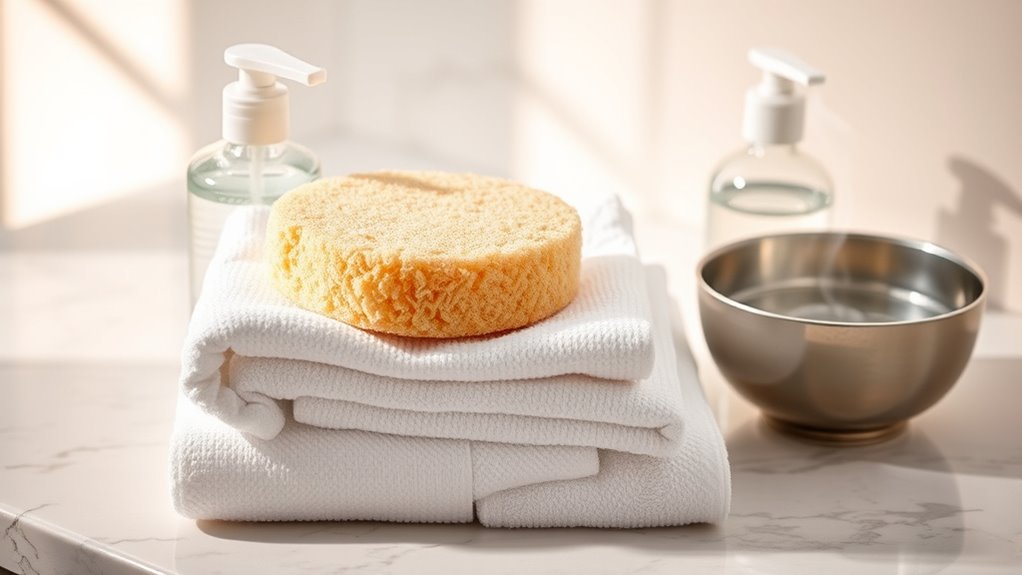

If water access is limited or you need a quick, effective way to stay clean, sponge baths and no-rinse options are great solutions. You can use soft cloths or sponges to wash your body, often with gentle, moisturizing soaps, and follow up with no-rinse cleansers or wipes for convenience. These methods help you maintain hygiene without traditional showers or baths. Keep exploring to discover the best techniques and products for your needs.
Key Takeaways
- Sponge baths provide a water-efficient, convenient method for personal hygiene without needing a full shower or bath.
- No-rinse cleansing products allow effective skin cleaning without water, ideal for limited water access situations.
- Combining sponge baths with no-rinse products offers a versatile, efficient solution for maintaining hygiene in diverse environments.
- These alternatives are perfect for travel, recovery, or resource-limited settings, reducing water waste and drying time.
- Waterless hygiene methods support personal cleanliness when traditional bathing options are unavailable or impractical.
Have you ever considered other ways to stay clean beyond traditional baths or showers? If you’re looking for convenient, efficient options, waterless hygiene might be just what you need. One popular method is the sponge bath, which offers numerous benefits, especially when a full shower isn’t feasible. Sponge baths are simple, effective, and can help you maintain good personal hygiene without the need for running water. They’re especially useful during travel, illness, or in situations where access to a shower is limited. The key advantage of a sponge bath is its flexibility—you can clean your body thoroughly using just a sponge, some soap, and water, or even with no-rinse cleansing products.
The benefits of sponge baths extend beyond convenience. They help conserve water, making them an eco-friendly choice, and they don’t require the same setup as a traditional shower or bath. When you opt for a sponge bath, you avoid the mess and water waste associated with filling a tub or standing under a showerhead. This method also reduces the need for extensive drying afterward, which can be particularly helpful if you’re in a hurry or managing limited resources. Additionally, sponge baths are gentle on the skin, especially when you choose mild, moisturizing soaps, and they can be performed in small spaces, such as hotel rooms, hospitals, or outdoor settings.
Furthermore, the effectiveness of sponge baths can be enhanced with the use of projector technology to better visualize areas needing cleaning, which can be particularly helpful for individuals with mobility challenges. Waterless hygiene products, like no-rinse body washes and wipes, complement sponge baths perfectly. These products are designed to clean your skin effectively without the need for rinsing with water. Using such no-rinse options can make your hygiene routine even quicker and more straightforward. They’re excellent for situations where water access is restricted or when you want to minimize water usage. The sponge bath benefits combined with waterless hygiene products create a versatile, practical approach to staying clean. Whether you’re on a camping trip, recovering from surgery, or just seeking a more efficient way to refresh yourself, these alternatives help you maintain personal cleanliness without sacrificing comfort or hygiene standards.
Frequently Asked Questions
Are Sponge Baths Suitable for All Skin Types?
Sponge baths work well for many skin types, but you should consider your skin sensitivity and product compatibility. If you have sensitive skin, choose gentle, fragrance-free sponges and products to avoid irritation. Always test new products on a small area first. For those with specific skin conditions, consult your healthcare provider to verify sponge baths are suitable and won’t cause adverse reactions.
How Often Should No-Rinse Bathing Products Be Used?
You should use no-rinse bathing products as often as needed to maintain skin hydration and odor control, typically once daily or whenever you’re feeling sweaty or dirty. Overusing these products can lead to dryness or irritation, so it’s best to balance their use with regular water-based baths. Pay attention to your skin’s response, and adjust frequency accordingly to keep your skin healthy and fresh.
Can Sponge Baths Replace Traditional Showers Entirely?
You can’t rely solely on sponge baths to replace traditional showers entirely. While they’re useful for maintaining bathroom hygiene during illness or limited mobility, they don’t thoroughly clean your skin like showers do. Regular showers help remove dirt, sweat, and oils, reducing skin irritation and infection risk. For complete hygiene, incorporate both methods depending on your needs; sponge baths are a helpful supplement but shouldn’t replace showers long-term.
Are There Any Risks Associated With No-Rinse Bathing Options?
Like a knight wary of dragon, you should know no-rinse bathing options carry risks. You might face skin irritation if products aren’t suited for your skin, or an increased infection risk if bacteria aren’t effectively removed. Always guarantee proper use, choose gentle, hypoallergenic products, and consult your healthcare provider if skin issues or infections develop. Staying vigilant helps you enjoy the convenience without compromising your health.
What Supplies Are Essential for Effective Sponge Bathing?
You need essential supplies like soft washcloths, mild soap, and a basin of warm water for effective sponge bathing. Use gentle sponge bath techniques, focusing on areas prone to sweat and dirt buildup. Always follow bathing safety tips, such as ensuring water isn’t too hot and supporting the person’s body properly. Keep supplies within reach, and be gentle to avoid skin irritation or discomfort during the process.
Conclusion
In brief, exploring bathing alternatives like sponge baths and no-rinse options can make personal hygiene easier and more comfortable, especially when traditional showers aren’t possible. Did you know that over 65% of healthcare facilities now use no-rinse bathing products to help residents maintain cleanliness? Embracing these methods can save time, reduce water use, and still keep you feeling fresh. Give them a try—you might find they’re just what you need for a convenient, effective clean.