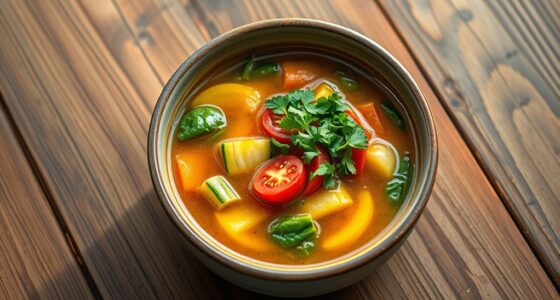
To perfect smooth purees and soft foods, blend thoroughly and pass the mixture through a fine sieve to eliminate lumps, ensuring a silky, uniform texture. During preparation, gradually add liquids for a creamy consistency and use molds or piping for attractive presentation. Use soft, diffused lighting and proper angles to highlight the food’s natural softness and gloss. Mastering these techniques will help you create appealing dishes that look fresh and inviting—keep exploring to learn more.
Key Takeaways
- Use a blender or food processor to thoroughly blend ingredients until silky and uniform.
- Pass purees through a fine sieve or strainer to eliminate lumps and achieve smoothness.
- Gradually add liquids during mixing to enhance creaminess and softness.
- Employ proper lighting and angles to highlight the food’s natural luster and texture.
- Present soft foods using molds or piping techniques for neat, appealing shapes.

Have you ever wondered how to perfect the look and feel of your digital images? When it comes to food photography, achieving the right texture can make all the difference. Texture modification plays a *vital* role in creating appealing images, especially when you’re working with smooth purees, soft foods, and other texture adjustments. The goal is to showcase the food’s natural appeal while making it look fresh, inviting, and appetizing.
To start, understanding food consistency is essential. Different dishes require specific textures to emphasize their appeal. For example, a velvety puree needs to look completely smooth and uniform, without visible lumps or streaks, which can distract the viewer. Achieving this involves carefully controlling the texture modification process. You might use a blender or food processor to break down ingredients thoroughly, ensuring the final product has a silky, even consistency. Sometimes, passing the mixture through a fine sieve or strainer helps eliminate any remaining lumps, giving it that perfect, smooth finish.
Achieve perfect, smooth textures by blending thoroughly and straining for a silky finish.
Soft foods, like mashed potatoes or pudding, also demand precise texture adjustments. The challenge here is to make them look luscious and inviting. If a dish appears too dense or uneven, it can detract from its visual appeal. To enhance their food consistency, you can add liquids gradually while mixing, ensuring a creamy and uniform appearance. For visual interest, consider the way you plate these foods—using molds or piping bags can help create neat, attractive shapes that highlight their softness.
When working with texture modification, lighting and angles are equally important. Proper lighting can emphasize the smoothness or softness of the food, making it look even more appealing. Avoid harsh shadows that might reveal imperfections or uneven textures. Instead, opt for soft, diffused light that highlights the food’s natural luster. Angles also matter—overhead shots often work well for purees and soft foods, allowing the viewer to appreciate their consistency and surface detail.
Finally, don’t forget that the visual cues of texture are a powerful tool in food photography. By carefully controlling food consistency and mastering texture modification techniques, you inspire viewers’ senses even before they taste. The key is to keep the food looking fresh and natural, which often involves subtle adjustments in preparation and presentation. Understanding food consistency is essential in achieving the desired visual appeal and ensuring that the food looks appetizing and realistic. Whether you’re creating smooth purees or soft dishes, focusing on these details will make your images stand out and truly capture the essence of the food’s texture.
Frequently Asked Questions
Can I Add Seasonings to Pureed Foods Without Affecting Texture?
Yes, you can add seasonings to pureed foods without affecting texture if you choose seasoning compatibility carefully. Use small amounts of liquid seasonings like broth, lemon juice, or vinegar to enhance flavor without altering consistency. For flavor balancing, avoid adding dry spices directly; instead, incorporate them into liquids first. This way, you maintain a smooth texture while boosting taste, making your pureed foods more appealing and enjoyable.
How Can I Enhance Flavor in Smooth Purees?
You can enhance flavor in smooth purees by adding spice blends like cumin, paprika, or curry, which boost taste without affecting texture. Incorporate fresh herbs such as basil, cilantro, or parsley at the end of blending to add brightness and freshness. Just add small amounts gradually, tasting as you go, to find the perfect balance. This way, your purees become more flavorful without compromising their smooth consistency.
Are There Specific Tools Recommended for Making Purees at Home?
You need the ultimate kitchen weapon for homemade puree techniques—either a high-powered blender or a versatile food processor. A blender excels at creating ultra-smooth purees with minimal effort, while a food processor handles chunkier textures effortlessly. Choose based on your preferred consistency, but both tools turn simple ingredients into silky, restaurant-quality purees in seconds. With these, you’ll elevate your cooking game and impress everyone with irresistibly smooth creations.
How Do I Store Pureed Foods Safely?
You should store pureed foods in airtight containers, ensuring they’re labeled with the date. Keep them in the refrigerator if you plan to use them within 1-2 days, and for longer storage, freeze in small portions. Follow food storage safety tips by avoiding cross-contamination and reheating thoroughly. Always check for signs of spoilage before consuming. Proper storage keeps your purees safe and fresh for your next meal.
What Are Healthy Ingredient Options for Texture-Modified Diets?
Did you know that choosing nutrient-dense ingredients can boost your texture-modified diet? You should incorporate options like mashed avocados, cooked lentils, or pureed sweet potatoes, which offer essential nutrients and flavor. Be mindful of allergen considerations—avoid common triggers like nuts or dairy if needed. These healthy ingredients help guarantee you get crucial vitamins and minerals without compromising safety or taste in your soft foods.
Conclusion
Now that you’re familiar with these texture adjustments, the next step could change everything. Imagine discovering the perfect consistency that not only makes eating easier but also transforms mealtime into something truly enjoyable. Are you ready to experiment and reveal new flavors and textures? The possibilities are endless, and your journey toward better eating experiences is just beginning. Stay curious—you never know what delicious surprises lie ahead when you dare to explore further.