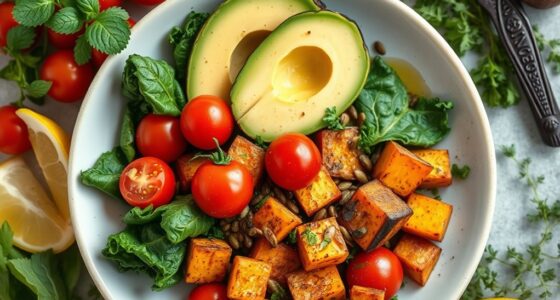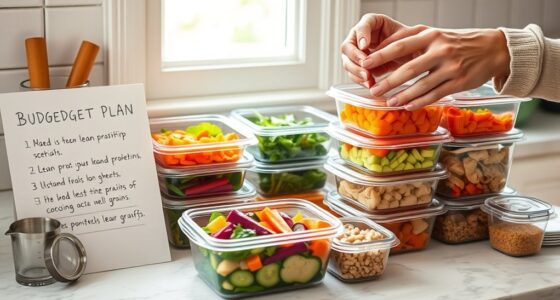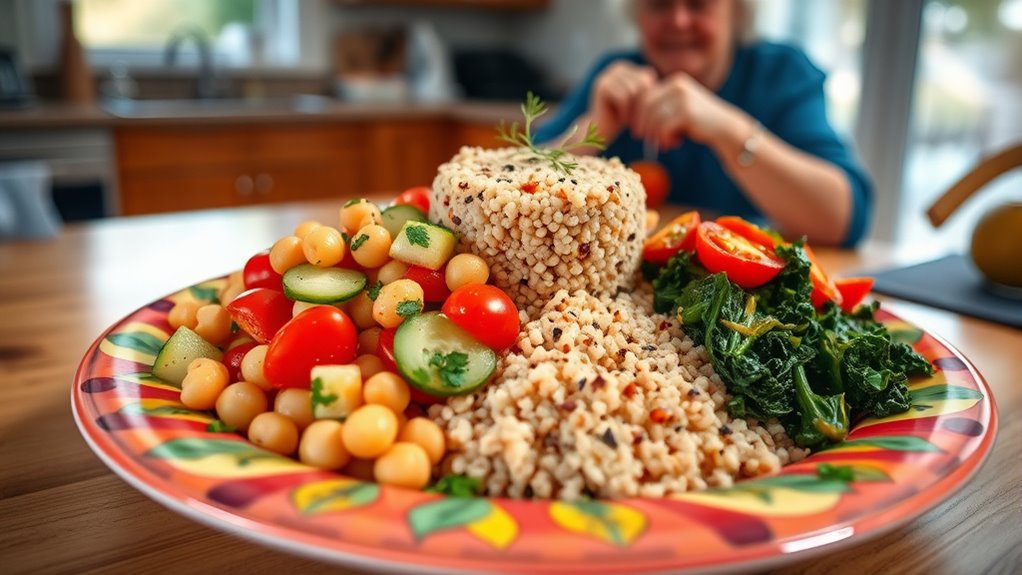

To boost your protein intake with vegetarian meals, try incorporating high-protein grains like quinoa, farro, and brown rice paired with legumes such as black beans or lentils. Add nuts, seeds, or soy products like tofu for extra muscle support. Incorporate nutrient-dense vegetables to round out the meals while supporting heart health and digestion. If you want practical ideas and tips on creating balanced, plant-based dishes for seniors, there’s more to explore below.
Key Takeaways
- Incorporate protein-rich grains like quinoa, farro, and brown rice into meals to support muscle maintenance and energy.
- Add legumes such as lentils, chickpeas, and black beans for complete plant-based protein sources.
- Include nuts, seeds, and nut butters as snacks or toppings to boost daily protein intake.
- Prepare meals with a variety of vegetables, grains, and plant-based proteins for balanced, nutrient-dense options.
- Use simple recipes combining these ingredients to create satisfying, high-protein vegetarian meals tailored for seniors.

Are vegetarian meals a good choice for seniors? Absolutely, especially when you focus on adding nutrient-dense options that support your health and vitality. As you age, maintaining muscle mass, energy levels, and overall wellness becomes more important, and incorporating plant-based snacks and protein-rich grains can make a significant difference. These foods not only provide essential nutrients but are also versatile and easy to include in your daily diet.
Plant-based snacks are a convenient way to boost your protein intake without relying on animal products. Think nuts, seeds, dried fruits, or even veggie dips paired with whole-grain crackers. These snacks are rich in healthy fats, fiber, vitamins, and minerals, all of which contribute to better digestion, heart health, and sustained energy. They’re portable, quick to prepare, and can be enjoyed between meals to keep your blood sugar levels stable. Incorporating such snacks into your routine helps you stay full longer and prevents overeating during main meals, ensuring you get enough nutrients throughout the day.
Protein-rich grains are another cornerstone of a high-protein vegetarian diet for seniors. Foods like quinoa, farro, barley, and brown rice are excellent sources of plant-based protein and complex carbs. They help support muscle maintenance, which is *essential* as muscle mass declines with age. These grains are also high in fiber, aiding digestion and helping to regulate blood sugar levels. You can easily add them to salads, soups, or serve them as side dishes to diversify your meals. Combining these grains with vegetables, legumes, or nuts enhances their protein content, creating complete protein profiles that are comparable to animal-based sources.
Including proper storage techniques for perishable foods like fresh spinach or fruits helps maintain their nutrient quality and reduces waste. Balancing your meals with these ingredients *guarantees* you get a steady supply of *indispensable* nutrients without overly relying on processed foods. For example, a simple dish of cooked quinoa mixed with black beans, chopped vegetables, and a sprinkle of seeds or nuts makes for a hearty, satisfying meal rich in protein and fiber. Incorporating plant-based snacks throughout the day supports your overall nutritional goals, keeps you energized, and helps prevent nutrient deficiencies common in older adults.
Frequently Asked Questions
What Are the Best Plant-Based Protein Sources for Seniors?
You should incorporate plant-based protein sources like beans, lentils, chickpeas, tofu, tempeh, quinoa, nuts, and seeds into your diet for ensure senior nutrition. These options are rich in protein, fiber, and essential nutrients, supporting muscle maintenance and overall health. Including a variety of these foods ensure you get enough protein while keeping meals interesting and satisfying, helping you stay active and healthy as you age.
How Can Seniors Ensure Adequate Iron Intake From Vegetarian Meals?
Imagine a gentle breeze guiding you toward iron-rich foods. To guarantee adequate iron intake, you should pair plant-based enhancers like vitamin C-rich fruits and vegetables with iron sources, which boosts iron absorption. Incorporate foods such as citrus, bell peppers, and tomatoes into your meals. Avoid tea or coffee during iron-rich meals, as they can hinder absorption. This simple approach helps you maintain healthy iron levels naturally.
Are There Specific Vegetarian Recipes Suitable for Senior Dietary Restrictions?
You can choose senior-friendly recipes that focus on easy-to-digest ingredients and nutrient density. Incorporate vegetarian meal planning with beans, lentils, tofu, and leafy greens to boost protein and vitamins. Look for recipes that are low in sodium and added sugars, and adjust textures for easier chewing. Many recipes are tailored for seniors, making it simple to enjoy flavorful, nutritious vegetarian meals that meet your dietary needs comfortably.
How Do Vegetarian Meals Impact Seniors’ Energy Levels?
Think of vegetarian meal planning as your secret weapon—like a Swiss Army knife for boosting seniors’ energy. When you choose nutrient-dense, high-protein vegetarian options, you support better energy levels and overall well-being. These senior nutrition strategies help maintain life force and prevent fatigue. By fueling their bodies with the right balance of protein, fiber, and vitamins, you enable seniors to stay active and engaged, just like a hero in a classic story.
What Supplements Might Seniors Need to Meet Protein Requirements?
You might need supplements like plant-based protein powders or amino acids to meet your protein requirements. Focus on supplement timing, consuming them with meals to enhance protein absorption. Incorporate options like pea, rice, or hemp protein, and consider consulting a healthcare provider for personalized advice. Proper timing and choosing the right supplements help make sure you get enough protein to support your health and energy levels.
Conclusion
Now that you’ve discovered these high-protein vegetarian meals, you’re unstoppable in boosting your health and vigor. Imagine fueling your body with more power than a rocket launch, transforming your aging days into an energetic adventure. These meals don’t just nourish—they revolutionize your well-being, making each day feel like a celebration of strength and agility. Embrace these recipes and watch your life become an unstoppable force of health, vitality, and unstoppable zest!